
Outdoor Wicker Furniture Seat Cushions
A complete research guide to choosing replacement seat cushions for wicker patio sofas, chairs, and sectionals — covering fit, foam, fabric, weather resistance, and long-term care.
Why this guide matters: Wicker frames are built to last for years, but the seat cushions that make them comfortable wear out far sooner. If you have reached the research stage, you likely already own a wicker set or have chosen a frame and now need to understand cushion specification. This guide walks through measurement, foam types, fabric grades, climate considerations, and maintenance so you can make a confident, well-informed decision.
Why the Right Seat Cushions Make or Break a Wicker Set
Wicker furniture — whether natural rattan, synthetic resin, or woven polymer — provides the structure and visual character of an outdoor seating area. The cushions deliver the comfort. A well-specified cushion set transforms a rigid woven frame into a lounge-worthy seat, while a poorly chosen cushion flattens within a season, traps moisture, or slides out of place every time someone sits down.
Outdoor cushions face conditions that indoor upholstery never encounters: direct sun, rain, humidity, temperature swings, and repeated compression from daily use. Understanding how cushion construction handles those pressures is the core of a smart purchase. The sections below break the decision into manageable parts, from measuring your frame to selecting the right filling and cover material.
How to Measure Your Wicker Furniture for Seat Cushions
Measurement is the single most common point of failure in cushion replacement. Wicker frames vary widely between manufacturers, and even models from the same brand can differ across production years. Always measure the actual frame in front of you rather than relying on a product label or an old cushion that may have compressed over time.
The Three Essential Dimensions
- Seat width: Measure the interior width of the seat frame from left to right at the widest point.
- Seat depth: Measure from the front edge of the seat platform to the backrest, following the flat seating surface.
- Seat height (thickness): Measure from the seat platform upward to your preferred sitting height, or measure the thickness of the existing cushion if it still provides the comfort you want.
Measurement Tips That Prevent Returns
- Measure at multiple points — wicker frames are hand-woven and can vary by a quarter inch or more across a single seat.
- Round to the nearest half inch and never round up more than necessary; an oversized cushion will buckle and wear at the seams.
- Account for fabric thickness: a cushion with a thicker cover will fit more snugly than the raw foam dimensions suggest.
- If your wicker set has curved or rounded seats, measure the maximum width and depth and note the curvature when ordering.
- For deep seating wicker sofas, confirm whether you want a single long cushion or individual seat cushions; both are available, and the choice affects both comfort and replacement cost over time.
Foam and Filling: The Core of Cushion Comfort
The filling determines how a cushion feels on day one and how it performs after a hundred sittings. Outdoor wicker seat cushions generally use one of several foam constructions, each with distinct strengths.
High-Density Polyurethane Foam
The standard choice for most mid-range outdoor cushions. Dense enough to resist bottoming out, comfortable enough for long lounging sessions, and widely available in custom sizes. It holds its shape well when paired with a quality cover.
Quick-Dry Reticulated Foam
An open-cell foam structure that lets water pass straight through instead of soaking in. The preferred option for uncovered patios and rainy climates, because cushions dry far faster after a downpour.
Fiber-Wrapped Foam
Foam core wrapped in polyester fiber for a softer, plusher surface feel. Common in premium and high-end tier cushions where a tailored, upholstered look is desired. The fiber wrap adds loft and a smooth crown.
Memory Foam Blends
Less common outdoors because heat softens the foam, but some top-tier sets use blended memory foam for contouring comfort. Best suited to covered porches where temperature extremes are moderate.
Foam density is the key specification to understand. Higher-density foam resists compression and lasts longer; lower-density foam feels soft initially but flattens quickly. Entry-level cushions often use lower-density foam that may need replacement after a couple of seasons, while mid-range and premium cushions use denser cores built for multi-season durability. When comparing cushions, ask about foam density by weight per cubic foot rather than relying on the "high density" label alone.
Fabric and Cover Materials: Weather Resistance and Style
The cover is the cushion's first line of defense against sun, rain, and stains. Outdoor cushion fabrics fall into a few broad categories, and the differences in performance are significant.
| Fabric Type | Best For | Key Strengths | Considerations |
|---|---|---|---|
| Solution-Dyed Acrylic | Sun-exposed patios and long-term use | Color is dyed into the fiber, so it resists fading and holds up to UV exposure exceptionally well | Typically a premium or top-tier option; verify the brand's warranty coverage |
| Solution-Dyed Polyester | Everyday family patios | Good fade resistance at a more accessible position in the market; easy to clean | Slightly less colorfast than acrylic over many seasons |
| Olefin | Humid climates and poolside areas | Naturally moisture-resistant and quick-drying; resists mildew | Can feel less soft than acrylic blends |
| Textilene or PVC-Coated Mesh | Sling-style wicker chairs and modern frames | Extremely durable, breathable, and easy to hose down | Firmer feel; usually used without a separate foam cushion |
Beyond the fiber itself, look for features like UV-stabilized yarns, mildew-resistant treatments, and removable, machine-washable covers with zippered closures. A zippered cover extends the usable life of the cushion significantly because you can clean it thoroughly without soaking the foam core.
Matching Cushions to Your Climate
The right cushion in a dry, shaded porch is not necessarily the right cushion on a fully exposed, humid patio. Consider these climate-driven priorities:
- Hot, sunny, dry climates: Prioritize solution-dyed acrylic covers for fade resistance and a dense foam core that will not soften excessively in high heat.
- Humid, rainy climates: Quick-dry reticulated foam and olefin or solution-dyed polyester covers are the safer combination. Breathable construction prevents trapped moisture and mildew.
- Coastal environments: Salt air accelerates corrosion in metal hardware and zippers, so look for rust-proof zipper pulls and marine-grade stitching.
- Four-season regions: Removable covers and stackable or storable cushions make it practical to bring the cushions inside during harsh weather.
Fit, Attachment, and Visual Style
A cushion that matches the frame measurement but not the frame design can still disappoint. Wicker furniture spans a wide range of styles, from traditional rolled-arm sofas to clean-lined modern sectionals, and cushion shapes should match the frame's character.
- Tie attachments: Fabric ties at the rear corners are the simplest way to keep cushions from sliding forward on smooth wicker seats. Look for reinforced tie loops rather than ties sewn directly into the seam.
- Box versus knife-edge construction: Box cushions with piped edges look tailored and hold their shape well; knife-edge cushions have a softer, more casual profile. Box construction is generally more durable for high-traffic wicker seating.
- Contrast piping and welting: Piping adds structure and can introduce a subtle color accent that ties the cushion to other outdoor textiles like an outdoor rug.
- Color strategy: Neutral covers — sand, charcoal, stone, olive — tend to age gracefully and pair easily with throw pillows. Bold colors make a stronger statement but show wear and fading more visibly over time.
If your wicker set is a sectional, consistent cushion depth across all segments keeps the seating line visually clean. For a coordinated look across the whole patio, match cushion covers with the fabric used on other outdoor seating, such as an outdoor fabric sofa or a wicker couch, so the space reads as one designed composition rather than a collection of mismatched pieces.
Care and Maintenance for Long Cushion Life
Outdoor cushions reward a modest maintenance routine with several extra seasons of service. The essentials are straightforward.
- Brush off debris weekly. Leaves, pollen, and grit work into seams and abrade the fabric. A soft brush removes them before they cause damage.
- Spot clean promptly. Blot spills with a clean cloth and mild soap solution. Avoid harsh bleach on solution-dyed fabrics unless the manufacturer explicitly permits it.
- Wash removable covers per instructions. Most outdoor covers can be machine-washed on a gentle cycle and air-dried. Never machine-dry outdoor fabric at high heat, which can shrink seams and damage UV treatments.
- Rotate cushions regularly. Flipping and rotating seat cushions distributes wear and prevents permanent compression marks in high-use spots.
- Store during off-season or storms. Bring cushions indoors or into a dry storage box when heavy rain or winter weather is expected. Breathable covers are better than airtight plastic, which traps condensation.
- Inspect foam annually. If foam has lost more than a quarter of its original loft, replacement is usually more effective than trying to revive it.
Replacement Cushions Versus a New Wicker Set
When existing cushions wear out, the natural question is whether to replace the cushions or the entire furniture set. In most cases, replacing cushions is the more efficient long-term decision if the wicker frame remains structurally sound.
Check the frame for loose weave, cracked resin, rusted joints, or a wobbling base. If the frame is solid, a new cushion set — especially one with solution-dyed acrylic covers and high-density or quick-dry foam — restores both comfort and appearance for years. If the frame is failing, however, new cushions cannot compensate, and a full set replacement becomes the better path. For homeowners refreshing an entire patio, it often makes sense to coordinate cushion replacement with updates to other seating, such as an outdoor sectional or a patio couch, so the whole space feels renewed at once.
Recommended Outdoor Wicker Furniture Seat Cushions
⚠️ AFFILIATE DISCLOSURE: This website contains affiliate links. As an affiliate Associate, we earn from qualifying purchases. If you make a purchase through these links, we may receive a small commission at no additional cost to you. Read our full affiliate policy.

DANGHOOGY Wicker Chair Cushions, Waterproof Outdoor Loveseat Cushions for Patio Furniture, 3 Pieces Wicker Furniture Cushions, 1 Loveseat and 2 U-Shaped Cushions, Blue
Check price on Amazon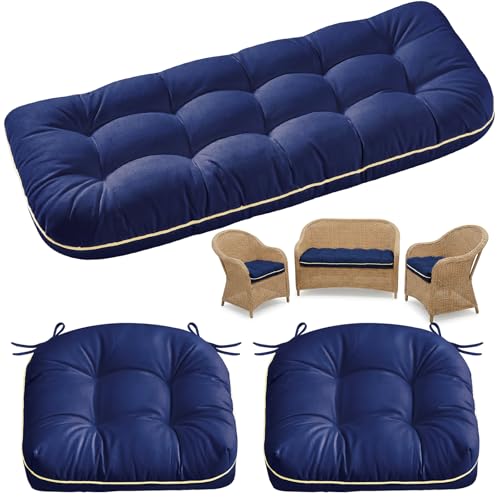
1 MIDDLE ONE Wicker Chair Cushions 3 Pieces Set for Outdoor Furniture, Replacement Patio Wicker Furniture Cushions, 1Pc Loveseat Cushion & 2Pcs Chair Cushions (Oxford-Blue)
Check price on Amazon
MTMR 2Pcs Outdoor Chair Cushions, Patio Furniture Seat Pads, Waterproof | 2Pcs , waterproof cover, PP cotton, u-shaped,thick patio seat pads for outdoor wicker furniture in yard, 19x19x4
Check price on Amazon
Aegisun Wicker Chair Cushions of 3 Pieces, Waterproof Cushions for Patio Furniture, Tufted Wicker Outdoor Furniture Cushions, 1 Patio Loveseat Cushion and 2 U-Shaped Cushions, 44"x19"x5", Navy Blue
Check price on Amazon
Yddsky 3Pcs Wicker Chair Cushion Sets for Patio Furniture,Khaki,47*19*4'' | Khaki Patio Loveseat Chaise Cushion Sets,Waterproof Wicker Bench Cushions,Wicker Chair Cushions,Wicker Furniture Cushions
Check price on Amazon
cnsmak Outdoor Chair Cushions, Patio Wicker Furniture Seat Pads, Waterproof | 3Pcs , 1 loveseat & 2 U-shaped seat pads, waterproof cover, PP cotton, no-fading, thick patio cushions for outdoor furniture
Check price on Amazon
TheKorva Outdoor Wicker Chair Cushions, 44×19×4 In, Waterproof, Navy Blue | 3 Piece Patio Cushions Set, Bench Cushions for Outdoor Furniture, Outdoor Cushions for Swing, Settee, Fade Resistant
Check price on Amazon
Zonamat Outdoor Loveseat Cushion Set, 46" x 26" Loveseat Cushions for Outdoor Furniture, Waterproof & Fade-Resistant Patio Furniture Cushions, Deep Seat Cushion for Bench, Swing and Couch, Navy Blue
Check price on AmazonCushion Tiers at a Glance
Outdoor wicker seat cushions generally fall into three broad market positions. The table below summarizes what each tier typically offers so you can match the cushion specification to how you actually use your patio.
| Tier | Best For | Typical Construction | Durability Outlook |
|---|---|---|---|
| Entry-level | Covered porches and occasional use | Standard polyester covers, lower-density foam, basic tie attachments | Good value for its tier; expect replacement sooner in exposed conditions |
| Mid-range | Everyday family patios | Solution-dyed polyester or olefin covers, high-density foam, box construction with piping | Balanced tier with solid multi-season performance |
| Premium / top-tier | Full-sun patios and long-term investment | Solution-dyed acrylic covers, fiber-wrapped high-density or quick-dry foam, reinforced stitching and zippers | High-end tier built for extended service life with proper care |
Frequently Asked Questions
How do I measure my outdoor wicker furniture for replacement seat cushions?
Measure the seat width from left to right, the seat depth from front to back, and the seat height from the platform to the top of the frame. Add a small allowance for fabric thickness and always round to the nearest half inch before ordering.
What is the best cushion filling for outdoor wicker furniture?
High-density polyurethane foam wrapped in polyester fiber is the most common choice for outdoor wicker seating. Quick-dry reticulated foam is the better option for uncovered patios because it allows water to pass through instead of holding it.
Are outdoor wicker seat cushions waterproof?
Most outdoor cushions are water-resistant rather than fully waterproof. Solution-dyed acrylic covers repel water and resist fading, while quick-dry foam cores shed moisture quickly. Fully waterproof shells can trap water inside the foam, so breathability matters.
How often should outdoor wicker seat cushions be replaced?
With regular care, mid-range outdoor cushions typically last three to five seasons, while premium solution-dyed acrylic sets can last considerably longer. Foam compression, seam failure, and persistent mildew are the main signs that replacement is due.
Can I use indoor cushions on an outdoor wicker sofa?
Indoor cushions are not recommended for outdoor wicker furniture. Standard upholstery foam absorbs moisture and standard fabrics fade quickly under UV exposure. Choose outdoor-grade covers and quick-dry foam instead.
Continue Your Outdoor Furniture Research
Explore related guides to complete your patio planning:
- Outdoor Wicker Couch Guide
- Outdoor Furniture Cushions for Couch
- Outdoor Furniture Cushions for Sectional
- Waterproof Outdoor Lounge Chair Cushions
- Outdoor Fabric Sofas
- Outdoor Patio Couch
- Outdoor Sectional Couch with Storage
- Outdoor Furniture Guide
- Outdoor Sofas
Ready to Refresh Your Wicker Seating?
Use the measurement and specification guidance above to narrow your options, then explore the recommended cushions featured on this page to find a set that fits your frame, your climate, and your style.