
Plastic Cover for Couch: The Complete Protection Guide
Everything you need to know before buying a plastic couch cover — material grades, breathability, sizing, and the right tier for your home, pets, and lifestyle. Understand the trade-offs so you can protect your sofa with confidence.
Explore Recommended OptionsWhat a Plastic Couch Cover Actually Does
A plastic cover for a couch is a protective barrier placed over the upholstery. Its primary job is to block liquids, dust, pet hair, and debris from reaching the fabric or leather beneath. Unlike decorative slipcovers, plastic covers are utilitarian — they are typically used during moving, long-term storage, home renovation, or as a temporary shield in busy households with children and pets.
The protective role is especially relevant if your sofa sits in a high-traffic zone. If you are also weighing broader seating changes, our guide to the perfect couch for a small living room explains how layout and upholstery choice interact with protection needs. For households with animals, the logic is even simpler — a dedicated pet-proof couch strategy usually combines a durable upholstery choice with a removable protective layer.
It is important to separate two use cases. Short-term protection — moving day, painting week, a rainy season — tolerates a non-breathable plastic film. Long-term protection — months or years — demands a breathable or ventilated cover, because trapped humidity is the number one cause of mold, mildew, and leather cracking under plastic.
Plastic Cover Materials Explained
Not all plastic films behave the same way. The material grade determines tear resistance, flexibility, breathability, and how the cover feels against skin. Below is a practical comparison of the most common options you will encounter when shopping for a plastic cover for a couch.
| Material | Tier | Best For | Key Consideration |
|---|---|---|---|
| Polyethylene (PE) film | Entry-level | Moving, storage, short-term dust protection | Not breathable; thin grades tear easily at seams |
| PVC (vinyl) sheet | Mid-range | Heavy spill zones, kids' play areas, temporary shielding | Durable and wipe-clean, but traps moisture; choose phthalate-free grades |
| Micro-perforated PE/PVC | Premium | Extended use where airflow matters | Vented design reduces condensation risk; slightly higher outlay for the tier |
| Fabric-backed plastic laminate | Premium to luxury | Long-term protection with a softer hand-feel | Best balance of protection and breathability; heavier and less packable |
| Heavy-duty reinforced film | High-end tier | Pets with claws, frequent repositioning | Puncture-resistant; stiffer drape and louder crinkle |
When comparing tiers, remember that mid-range models usually offer a better balance of tear resistance and flexibility than entry-level films, while premium and high-end tiers add breathability and reinforced construction. If your couch is a significant long-term investment, the protection layer should match that investment — see our broader guidance on performance fabric couches for how upholstery choice and cover choice work together.
Choosing the Right Tier for Your Situation
Match the cover tier to the duration and intensity of protection you need. The three categories below use a consistent classification system so you can compare options without relying on numerical figures.
Short-Term Shield
Ideal for moving day, storage, painting projects, or a single rainy season. Thin polyethylene film gets the job done when protection is measured in days or weeks. Not suitable for long-term use because trapped moisture becomes a risk.
Everyday Household Protection
PVC and reinforced films for homes with young children or clumsy drink habits. Wipe-clean surface, good tear resistance, and reasonable flexibility. Choose a breathable variant if you plan to leave it on for more than a few weeks at a time.
Long-Term & Pet-Heavy Use
Micro-perforated or fabric-backed laminates that allow airflow while blocking liquids. The worthwhile investment for leather sofas, premium upholstery, and households where the cover stays on for months. Puncture-resistant grades handle claws and daily repositioning.
If your primary concern is a pet that scratches or sheds, pair a reinforced plastic layer with a purpose-built pet cover for a couch with chaise for better coverage of extended seating. For sectional owners, pet couch covers for sectionals address the L-shape coverage problem that a single flat plastic sheet cannot solve.
The Breathability Question: Why It Matters More Than Thickness
The most common mistake buyers make is assuming that thicker plastic equals better protection. In reality, breathability matters more than thickness for anything beyond short-term use. A non-breathable plastic cover traps the natural humidity emitted by upholstery and the room itself. That trapped moisture creates condensation on the underside of the film, which then wicks back into fabric — the ideal environment for mildew.
Leather is even more sensitive. Non-breathable plastic against leather can accelerate drying and cracking because the leather cannot regulate its moisture balance. If you own a leather sofa, read our professional leather furniture cleaning guidance alongside this article — proper cleaning before covering is essential to avoid sealing in oils and dirt.
Practical rule of thumb: if the cover will stay on for more than two weeks, choose a micro-perforated, ventilated, or fabric-backed option. If you must use a non-breathable film longer, remove and air the couch weekly, and ensure the room is well ventilated.
How to Measure and Size a Plastic Couch Cover
Sizing errors are the second most common cause of disappointment. A cover that is too tight will tear at the seams the first time someone sits down; an oversized cover will bunch, slide, and expose the corners it was meant to protect. Follow this measurement sequence before ordering:
- Measure the full width of the couch from outer arm to outer arm.
- Measure the depth from the front of the seat cushion to the backrest.
- Measure the height from floor to the top of the backrest.
- Add a few inches of clearance on each side for drape and tuck-in.
- For sectionals, measure each segment separately, not just the overall footprint.
- For recliners, measure with the footrest fully extended.
- Account for removable cushions — measure with them in place.
- Check whether the cover is designed for tuck-in or full drape.
Sectional owners should also account for the chaise or corner segment, which behaves differently from a straight sofa. Our patio sectional couch breakdown is a useful reference for how segmented seating dimensions are typically handled, and the same logic applies indoors. If your couch is a compact model, the small living room couch guide explains how clearance and walkway planning interact with cover drape.
Safety, Material Quality, and What to Avoid
Plastic covers sit in close contact with upholstery, skin, and sometimes children. Material quality is not a minor detail. Prefer covers labeled non-toxic and phthalate-free, especially in homes with toddlers or pets that chew. Avoid very thin, flimsy film that shreds easily — torn plastic creates small pieces that can become a hazard.
Heavy-duty and reinforced grades are the better fit for households with clawed pets. If the cover will be repositioned frequently, look for reinforced edges and welded seams rather than glued seams, which fail first under repeated stress. For fabric upholstery that has already seen wear, a professional clean before covering is the safer sequence — our professional couch cleaner overview explains when a deep clean is warranted versus a routine surface clean.
Finally, never seal a damp couch under plastic. Allow the upholstery to dry completely, ventilate the room, and only then apply the cover. This single habit prevents the majority of moisture-related damage attributed to plastic couch covers.
Recommended Plastic Covers for Couch
⚠️ AFFILIATE DISCLOSURE: This website contains affiliate links. As an affiliate Associate, we earn from qualifying purchases. If you make a purchase through these links, we may receive a small commission at no additional cost to you. Read our full affiliate policy.

KEBE Clear Thicker Plastic Couch Cover for Pets, Heavy Duty Waterproof Shield Cat Dog Scratch Proof Protector Plastic Cover for Couch, Non-Slip Sofa Slipcover for Storage and Moving
Check price on Amazon
U-Haul Sofa Covers - 2 Pack – Plastic Moving and Storage Covers for Couches Up to 8’ Long – 134” x 42” Covers – Water Resistant
Check price on Amazon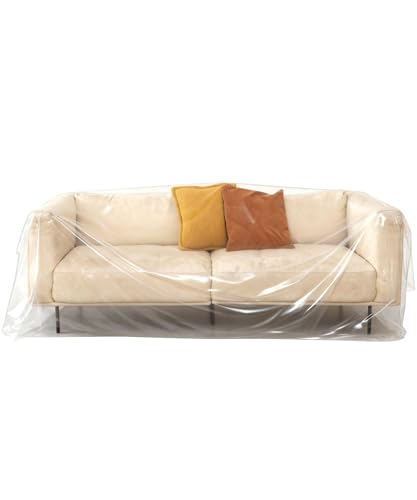
Magicheap Plastic Couch Cover 2 Pack, 150" H x 47" W, Clear | Dust-Proof Sofa Cover for Move and Storage, Extra Large, Waterproof, Furniture Moving Bags for Sectional Couch Sofe Loveseat
Check price on Amazon
wokire Clear Thicker Couch Cover Water Proof Sofa/Heavy Duty Couch Cover-Protection Against Cat Dog Clawing, Vinyl Sofa Slipover -for Storage and Moving
Check price on Amazon
Magicheap Extra Thick 4mil Plastic Couch Cover, 84"H x 43"W x 84"D, Clear | Dust-Proof Sofa Cover for Sectional Couch Loveseat Furniture,Waterproof,Furniture Moving Bags for Moving Storage
Check price on Amazon
Evelots Clear Vinyl Couch Cover, Waterproof 3-Seat Sofa Protector | Heavy-duty vinyl protects 3-seat sofas from pet claws, stains, dust and spills; ideal for everyday use, moving and storage.
Check price on Amazon
2 Pack Plastic Couch Cover for Moving & Storage, 134" x 42" Sofa Covers | Waterproof, Dust-proof, Clear Plastic Couch Covers for Sofa Up to 8' Long, Plastic Furniture Cover Moving Supplies
Check price on Amazon
Wowfit Furniture Cover for Sofa & Boxes, 92W x 42D x 62/41H Inches | With Tape Strips & Labels, Heavy Duty, Tear-Resistant, Waterproof, Reusable, Oversized/3-Seat Sofa, Long-Term Garage Storage
Check price on AmazonMaintenance, Removal, and Reuse
Plastic covers are reusable when handled correctly. Wipe spills promptly with a damp cloth and mild soap, then dry the cover fully before reapplying. Store it flat or loosely rolled — folding along the same crease repeatedly weakens the film and creates tear lines. When removing the cover for good, inspect the upholstery underneath for any moisture, discoloration, or odor, and air the couch for a full day before normal use resumes.
If your couch has a pull-out mechanism, check that the cover does not obstruct the folding hardware. The pull-out couch with chaise reference explains the moving parts that need clearance. For storage-heavy rooms, the patio couch clearance guidance on accessible edges is a useful parallel for keeping protective layers easy to remove and reapply.
Frequently Asked Questions
What is a plastic cover for a couch used for?
Is a plastic couch cover breathable?
How do I choose the right size plastic cover for my couch?
Can a plastic cover damage leather or fabric upholstery?
Are plastic couch covers safe for homes with pets and children?
Can I use a plastic couch cover on a sectional?
Ready to Protect Your Couch?
Compare the recommended plastic covers above, match the tier to your household, and verify breathability before you commit. A well-chosen cover protects your upholstery without trapping moisture — and that is the whole point.
View Recommended Covers