

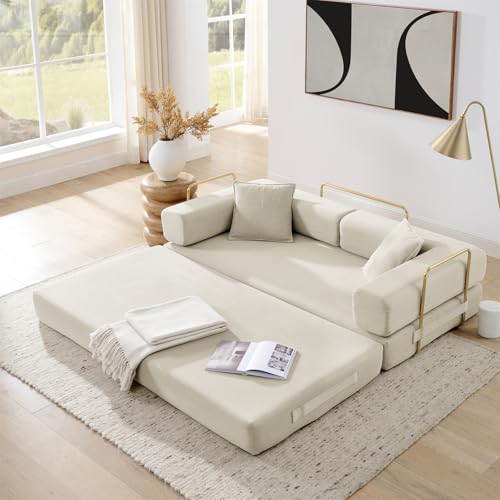


Why a Pull Out Bed Is the Backbone of Studio Apartment Living
Studio apartments compress your entire life into a single room. The living area, the bedroom, the home office, and the entertainment zone all share the same square footage. A fixed bed consumes that space around the clock, even when you are not sleeping. A pull out bed for a studio apartment changes that equation: it is seating during the day and a sleeping surface at night. That single transformation is what makes a small studio feel intentional rather than cramped.
The best studio furniture does more than one job, and a convertible couch is the clearest example. When you choose the right model, you gain a sofa for hosting friends, a bed for nightly rest, and a visual anchor that makes the room look designed. If you are still comparing the broader furniture category, our guide to the pull out couch for studio apartment covers adjacent options in more detail.
What separates a good purchase from a frustrating one is rarely the fabric color. It is the mechanism, the mattress, the frame, and the fit with your floor plan. The sections below address each of those in the order you will face them when shopping.
Understand the Mechanism Before You Shop
Pull out beds are defined by how they unfold. The mechanism determines comfort, durability, and how much clearance you need. There are three main families, and each behaves differently in a studio setting.
1. Traditional Innerspring Sleeper Mechanism
This is the classic pull out sofa design: a folded metal frame with a built-in innerspring mattress that unfolds flat. It is widely available and familiar. The trade-off is that the mattress tends to be thin, and the support bars can be felt through the surface over time. In a studio where the bed is used nightly, an entry-level innerspring sleeper is usually a short-term solution rather than a long-term one.
2. Tri-Fold Memory Foam Sleeper
Tri-fold designs use a thick foam mattress that folds into thirds inside the sofa. When open, the mattress lies flat and provides a more even sleeping surface. Because there are no metal bars under your back, tri-fold memory foam models are generally the most comfortable for daily sleeping. Mid-range and premium tier tri-fold sleepers are the sweet spot for studio residents who need the bed every night.
3. Click-Clack and Futon-Style Convertibles
Click-clack sofas fold flat from a seated position and rely on the seat cushions themselves as the sleeping surface. They are simple, lightweight, and easy to reposition, which makes them appealing in very small studios. The trade-off is a firmer, less cushioned sleep and fewer premium mattress options. They work best as a secondary bed or for light daily use.
Mechanism quality also affects longevity. Look for powder-coated steel frames, smooth gliding tracks, and a mechanism rated for frequent use. A mid-range model with a well-built mechanism usually outlasts an entry-level model with a heavier mattress. For a wider comparison of convertible styles, see our overview of pull out beds couch options.
Mattress Type and Thickness: The Comfort Decision
The mattress is where most pull out beds succeed or fail. In a studio, you cannot add a separate mattress topper permanently, so the built-in mattress has to do the job on its own.
Innerspring vs. Memory Foam vs. Hybrid
- Innerspring: Lighter and familiar, but thinner and prone to sagging. Best for occasional use.
- Memory Foam: Better pressure relief and a flatter surface. Tri-fold foam mattresses in the 4.5 to 6 inch range are the practical standard for daily sleeping.
- Hybrid: Foam over a pocketed coil base. A strong choice when you want support and airflow, typically found in premium and luxury tier sleepers.
A mattress under 4 inches thick will feel like a pad rather than a bed. For nightly use, aim for at least 4.5 inches of foam, and check whether the manufacturer sells replacement mattresses. The ability to replace the mattress later is a major factor in the long-term value of the sofa. If you want to explore mattress-focused options, our guide to the pull out couch mattress explains what to look for.
Sleeping Surface Size
Pull out beds commonly open to full size or queen size. A full-size surface is often the practical choice for a studio because it leaves more floor clearance when open. Queen sleepers are more comfortable for couples but demand more open floor space. Confirm the open dimensions — not just the closed sofa dimensions — before you buy.
| Tier | Typical Mechanism | Mattress Profile | Best For |
|---|---|---|---|
| Entry-level | Basic innerspring or click-clack | Thin, 3–4 in | Occasional guest sleeping |
| Mid-range | Tri-fold foam or improved innerspring | 4.5–5.5 in | Regular use in a small studio |
| Premium | Reinforced tri-fold or hybrid | 5.5–6.5 in | Nightly sleeping and daily seating |
| Luxury | Hybrid with premium frame and glide system | 6+ in, replaceable | Primary bed in a compact studio |
Measure Your Studio Like a Designer
This is the step most buyers rush, and it is the one that causes the most returns. A pull out bed has two footprints: the closed footprint and the open footprint. Both matter.
The Open-Footprint Rule
When the bed is extended, you need a clear walking path around it. A practical rule is to keep at least 24 inches of clearance on the open side and 36 inches on the main traffic path to the door or bathroom. If the open bed blocks your only route to the kitchen, the layout will feel hostile every night.
Doorway and Hallway Clearance
Measure your entry door, interior doorways, stairwell turns, and elevator dimensions. A sofa that fits the room but not the hallway is a delivery failure. Remove the legs or confirm the model ships in sections if clearance is tight. Our measurement guide walks through the full room-by-room measuring process.
Wall and Window Placement
Place the pull out bed against a solid wall, not under a window where curtains and radiators interfere with the fold-out path. Avoid positioning it where an open bed would block heating vents or a closet door. If your studio has a natural focal wall, use it for the sofa and keep the sleeping extension oriented toward open floor.
For layouts with tighter dimensions, the guide to a pull out couch for small space offers arrangement ideas that pair well with this article.
Frame, Fabric, and Daily-Use Durability
A studio pull out bed is used more intensively than a guest-room sleeper. It is sat on every day and slept on most nights. Durability is not a luxury here — it is the baseline.
Frame Material
Look for hardwood or engineered hardwood frames with reinforced corner blocks. Metal mechanisms should be powder-coated to resist rust, and the folding joints should feel tight rather than loose. A heavy-duty mechanism rated for frequent conversion is worth prioritizing over decorative details.
Upholstery for Real Life
In a studio, the sofa is also the dining chair, the reading spot, and sometimes the office. Performance fabric and tightly woven polyester blends resist spills and wear better than delicate fabrics. If you have pets, a performance fabric couch is a practical match — our guide to performance fabric couch options explains the trade-offs. Leather and faux leather are easy to wipe down but can feel cold in a small sleeping space, so consider a fabric with a soft hand.
What to Inspect in Person or in Reviews
- Does the mechanism glide smoothly without wobble?
- Is the mattress replaceable, and are replacement sizes listed?
- Are the seat cushions removable and reversible?
- Does the frame have a stated weight capacity and warranty?
- Do reviews mention sagging, bar feel, or mechanism noise after months of use?
Layout Strategies for a One-Room Apartment
The furniture is only half the solution; the arrangement is the other half. A pull out bed works best when the room is organized around a clear daytime zone and a clear nighttime zone.
The Zone-Switching Layout
Orient the sofa so that its open bed extends into the center of the room, leaving the perimeter for storage and circulation. During the day, the center is open floor. At night, it becomes the sleeping area. This keeps the room from feeling permanently like a bedroom.
The Wall-Aligned Layout
Place the sofa along the longest wall and keep the opposite wall free of tall furniture. When the bed opens, the room reads as a compact suite rather than a cluttered box. Use a slim console behind the sofa for storage and lighting.
Vertical Storage to Protect Floor Space
Every item that lives on the floor competes with the open bed. Wall shelves, floating cabinets, and a tall wardrobe keep the floor clear. Pair the sleeper with a storage ottoman that doubles as a coffee table and blanket storage.
Lighting That Adapts
Use layered lighting — a floor lamp for evening reading, warm ambient light for hosting, and a small bedside lamp that can move to the sofa arm at night. Lighting is what makes a single room feel like two rooms. A well-placed floor lamp does more for a studio than almost any other accessory.
Pull Out Bed vs. Other Studio Sleep Solutions
It helps to compare the pull out bed against the alternatives before committing.
| Solution | Daytime Function | Sleep Comfort | Best For |
|---|---|---|---|
| Pull out bed (sleeper sofa) | Full sofa seating | Good to excellent depending on tier | Daily living plus regular sleeping |
| Murphy bed | Wall space only when closed | Excellent with a real mattress | Rooms with a dedicated wall |
| Daybed | Lounge seating | Good | Very small rooms with one function |
| Futon | Casual seating | Firm, varies widely | Light use and flexible layouts |
A pull out bed remains the most versatile single piece because it delivers genuine sofa comfort during the day. If you want to compare the deeper pull out couch category, our guide to the pull out couch bed covers size and mechanism options in detail.
The Studio Pull Out Bed Checklist
Before You Order
- Measure the closed footprint, the open footprint, and the clearance around the open bed.
- Measure doorways, hallways, stairs, and elevator dimensions for delivery.
- Confirm the sleeping surface size (full or queen) and mattress thickness.
- Identify the mechanism type and whether it is rated for frequent use.
- Check that the mattress is replaceable and that replacement sizes are listed.
- Review the frame material, mechanism finish, and warranty terms.
- Choose a performance fabric or easy-care upholstery that suits your daily routine.
- Plan the layout so the open bed does not block a doorway, vent, or closet.
- Decide where the bed linens will be stored during the day.
- Confirm the return policy and delivery method before purchase.
Common Mistakes to Avoid
- Buying for the closed look only. The open footprint is what you live with every night.
- Underestimating the mattress. A thin mattress turns a good sofa into a poor bed.
- Ignoring the mechanism rating. Occasional-use mechanisms wear out quickly under nightly conversion.
- Skipping the delivery measurement. Many returns happen at the doorway, not in the room.
- Overfilling the room. In a studio, empty floor is a feature, not wasted space.
Frequently Asked Questions
What is the best type of pull out bed for a studio apartment?
A sofa sleeper with a tri-fold memory foam mattress is often the best balance of seating comfort and sleep quality for a studio. It folds compactly, offers a flatter sleeping surface, and avoids the metal bar feel common in older innerspring mechanisms.
How much floor space does a pull out bed need when open?
Most full-size pull out beds extend roughly 70 to 90 inches from the back of the sofa. Leave a clear path of at least 24 to 36 inches around the open bed so you can reach the bathroom, kitchen, or entry without climbing over furniture.
Can a pull out couch be used as the primary bed in a studio apartment?
Yes. Many people use a premium or luxury tier pull out couch as a daily bed. Choose a model with a thick, supportive mattress, a solid frame, and a mechanism rated for frequent use rather than occasional guest sleeping.
What should I check before buying a pull out bed for a small studio?
Measure your doorway and hallway clearance, confirm the open sleeping dimensions, check the mattress thickness and type, review the mechanism's recommended use frequency, and verify the frame material and warranty before ordering.
Is a pull out bed comfortable enough for every night?
A mid-range or premium tier model with a 4.5 to 6 inch memory foam or hybrid mattress is comfortable enough for nightly use. Entry-level innerspring sleepers are better suited to occasional guests. A replaceable mattress is the strongest signal of long-term comfort.
Ready to Reclaim Your Studio Floor Space?
Use the checklist above, measure twice, and choose a pull out bed that works as hard as your studio demands. Your one room can genuinely feel like two.
Explore Pull Out Bed Options