
Pull Out Couch for Studio Apartment: The Complete Guide
Studio living means every piece of furniture must earn its place. A pull out couch is the single most important purchase you can make — it serves as your living room seating by day and your bed by night. This guide walks you through sizing, mattress types, layout planning, and the practical trade-offs so you can choose with confidence.
See Recommended OptionsIf you live in a studio apartment, you already understand the central design challenge: one room must function as bedroom, living room, and sometimes a home office. A pull out couch for studio apartment living solves that problem in a single purchase. Unlike a standard sofa paired with a separate bed, a sleeper sofa consolidates two essential pieces into one footprint — which is exactly what compact living demands.
But not every pull out couch is suited to studio life. Some are too wide for narrow walls. Others have thin mattresses that are uncomfortable for nightly sleeping. Some extend so far when opened that they block entryways or closets. This guide is written for the research stage — you already know you want a convertible couch, and now you need to understand the details that separate a good purchase from a frustrating one.
We will cover the most common sleeper configurations, explain how to measure your studio correctly, compare mattress types, and share layout strategies that make a single room feel like two. By the end, you should be ready to evaluate specific models with a clear checklist in hand.
What This Guide Covers
- Why a pull out couch is the right choice for a studio
- Sleeper sofa types and how they open
- How to measure your studio before buying
- Mattress types: what to look for in a sleeper
- Layout strategies for one-room living
- Durability, fabric, and daily-use considerations
- Final buying checklist
- Frequently asked questions
Why a Pull Out Couch Is the Right Choice for a Studio
A studio apartment forces a conversation about priorities. You cannot dedicate one room to sleeping and another to lounging. Every square foot performs multiple duties. The pull out couch is the most established solution to this constraint because it keeps your daytime space open and your nighttime function hidden inside a single furniture piece.
Compared with a fixed bed, a sleeper sofa preserves daytime floor area, which matters enormously in smaller units. Compared with an air mattress or a folding guest bed, it offers proper seating for everyday use and a more stable sleep surface. And compared with a futon, a traditional pull out couch generally looks more like conventional living room furniture, which helps a studio feel intentional rather than improvised.
For a broader look at compact seating options, our guide on the perfect couch for a small living room covers complementary strategies, and pull out couches for small spaces addresses the tightest floor plans. If your studio doubles as a guest space, a pull out bed for a studio apartment expands on the sleeping-comfort side.
Sleeper Sofa Types and How They Open
The mechanism inside a pull out couch determines how much floor space it needs and how comfortable it is to sleep on. Understanding the three main categories will help you narrow your search quickly.
1. Traditional Pull Out (Innerspring or Memory Foam Fold-Out)
This is the classic sleeper sofa. A metal frame folds out from inside the couch, unfolding a mattress that typically rests on a wire or slat support system. The mattress folds in thirds when closed. Traditional pull outs require clear floor space in front of the sofa equal to roughly the depth of the extended bed — often 70 to 90 inches. They are widely available and come in loveseat, full, and queen sizes.
2. Click-Clack and Fold-Flat Mechanisms
Click-clack sofas use a hinged backrest that folds down to create a flat sleeping surface. They require less extension depth than traditional pull outs because the backrest reclines rather than a frame sliding forward. These are common in apartment sofas and are generally lighter, though the sleeping surface is usually thinner.
3. Trundle and Pop-Up Sleepers
A trundle stores a second mattress underneath the main seating and rolls or lifts out when needed. Pop-up sleepers raise the seat cushion to reveal a folded mattress beneath. Both are space-efficient but generally suit occasional guests rather than nightly sleeping.
| Type | Best For | Floor Clearance Needed | Comfort Tier |
|---|---|---|---|
| Traditional pull out | Nightly sleepers, guest hosting | High (full bed depth in front) | Mid-tier to premium depending on mattress |
| Click-clack / fold-flat | Occasional guests, tight rooms | Moderate (backrest reclines) | Essential tier |
| Trundle / pop-up | Guest overflow, very small studios | Low to moderate | Starter tier |
How to Measure Your Studio Before Buying
Measurement is where most studio sleeper purchases go wrong. The couch may fit against the wall, but the bed may not open. Follow this sequence before you commit to any model.
Step 1: Measure wall space and walkways
Record the length of the wall where the couch will sit. Then measure the width of your primary walking path — the route from the entry door to the kitchen or bathroom. A sleeper sofa should not narrow that path below roughly 30 inches when closed.
Step 2: Measure the open-bed footprint
When a traditional pull out extends, it needs clear floor in front. Measure from the front edge of the sofa position to the nearest obstacle (coffee table, TV stand, opposing wall). Compare that distance to the open depth listed for the model. Leave a few inches of margin.
Step 3: Check doorways and elevators
Measure the width and height of your apartment entry, interior doorways, stairwell turns, and elevator interior. Sleeper sofas are heavier and bulkier than standard sofas because of the metal frame, and some models ship fully assembled. Confirm the delivery path before ordering.
Step 4: Confirm ceiling and window clearance
If the couch sits under a window, check that the back height does not obstruct the sill or a radiator. If it sits below a wall-mounted TV or shelf, confirm the folded height.
For more detail on matching bed dimensions to room constraints, see our guides on pull out couches with a full-size mattress and pull out couches with a queen mattress. If you want the seating to wrap a corner, a L-shaped pull out couch can define a zone more efficiently, and a pull out couch with chaise adds daytime lounging without a separate chair.
Mattress Types: What to Look For in a Sleeper
The mattress is the most important comfort variable in any pull out couch, and it is the component most often downgraded to keep a model at a lower tier. If you plan to sleep on the couch every night, prioritize mattress quality over upholstery style.
Innerspring sleeper mattresses
These use coil support with a thin layer of padding. They are common in entry-level and mid-range sleepers. Innerspring mattresses tend to be firmer and can develop pressure points over time, especially with nightly use. A mattress topper can soften the surface noticeably.
Memory foam sleeper mattresses
Memory foam mattresses conform to the body and eliminate the sensation of metal bars underneath. They are increasingly common in mid-range and premium sleepers. They tend to be heavier and may sleep warmer, but they offer the most consistent comfort for everyday sleeping. Our guide on pull out couches with a memory foam mattress explains the trade-offs in more depth.
Air-over-coil and hybrid designs
Some high-end tier sleepers combine an air chamber with coil support, or use a hybrid foam-and-coil mattress. These are the most comfortable options but also the heaviest and most complex to maintain.
Mattress thickness and folding
Sleeper mattresses are typically 4 to 6 inches thick because they must fold into the couch body. Thicker mattresses generally improve comfort, but confirm that the model's folding mechanism is rated for the thickness. Our overview of pull out couch mattresses covers replacement options if you want to upgrade after purchase.
| Mattress Type | Best For | Comfort Tier | Maintenance Note |
|---|---|---|---|
| Innerspring | Occasional guests | Essential tier | Rotate regularly; may develop sag over years |
| Memory foam | Nightly sleeping | Mid-tier to premium | Heavier; allow ventilation to reduce heat retention |
| Hybrid / air-over-coil | Long-term daily use | High-end tier | More complex; follow manufacturer care instructions |
Layout Strategies for One-Room Living
A studio works best when it reads as distinct zones rather than one undifferentiated box. Your pull out couch is the natural anchor for that division.
Use the couch as a room divider
Place the back of the sofa toward the sleeping area and the seat toward the living area. This creates a psychological boundary without a wall. Ensure the sofa back is finished on both sides, or add a console table behind it for visual polish and extra storage.
Keep the open-bed zone clear
Position the couch so that the extended bed lands in open floor rather than against a coffee table. A nesting or lift-top coffee table that clears the space quickly is a practical companion. Avoid placing the sleeper where it would block the bathroom door, closet, or kitchen entry when open.
Anchor with a rug
An area rug under the living zone helps define it and protects flooring. Choose a rug that stops short of the open-bed area so the mattress does not catch on the edge.
Plan lighting for two functions
Layer lighting: an overhead fixture for general use, a floor lamp beside the couch for reading, and a small bedside lamp or sconce near the sleeping end. This lets the room shift from daytime to nighttime mode with a simple switch.
For broader layout planning, our resources on small space layout and open floor plan arrangement are useful companions to this guide. If you are also furnishing a balcony or patio as an extension of your living space, the patio couch set guides cover outdoor seating.
Durability, Fabric, and Daily-Use Considerations
A studio sleeper is used more intensively than a typical living room sofa. It is sat on daily and slept on nightly. That intensity should shape your material and construction choices.
Frame construction
Look for a hardwood or engineered wood frame with reinforced joints at the stress points where the sleeper mechanism attaches. Metal sleeper frames should be described as heavy-duty and should include a warranty covering the mechanism separately from the upholstery.
Upholstery for high-traffic use
Performance fabrics are the most practical choice for a dual-purpose couch. They resist staining and are easier to clean. If you have pets, our guides on pet proof couches and performance fabric couches explain the specific fabric technologies worth prioritizing. Leather is durable but can be cold in winter and hot in summer, which matters in a small space.
Mechanism quality
Entry-level sleepers often use lighter mechanisms that feel less smooth over time. Mid-range and premium models typically use heavier-gauge steel and smoother folding hardware. If you plan to open and close the bed every day, this is one area where stepping up a tier pays off in long-term reliability.
Cushion support
Seat cushions should use high-density foam or a foam-and-pocket-coil combination. Low-density foam compresses quickly under daily use, leaving the couch looking worn within a year. Removable, reversible cushions extend the usable life of the seating.
Final Buying Checklist
Before you finalize any pull out couch purchase for a studio apartment, run through this checklist. Each item addresses a failure mode that is common in compact living.
- Closed width fits your wall with a few inches of margin on each side for visual breathing room and access to side tables.
- Open depth fits your floor plan without blocking doorways, closets, radiators, or kitchen access.
- Delivery path is confirmed — entry door, interior doors, stairwell turns, and elevator dimensions all checked.
- Mattress type matches your use — memory foam or hybrid for nightly sleeping; innerspring acceptable for occasional guests.
- Mechanism is rated for daily use — look for heavy-duty steel and a separate mechanism warranty.
- Upholstery suits your household — performance fabric for pets and kids; leather only if you accept temperature trade-offs.
- Cushions are removable and reversible to extend seating life and simplify cleaning.
- Back height clears windows and shelves at the intended wall position.
- Assembly requirements are understood — confirm whether the sofa arrives fully assembled or flat-packed.
- Return and warranty terms are clear before the delivery is scheduled.
If you are comparing sleeper styles more broadly, our pages on pull out couch beds, pull out bed couches, and pull out couch and loveseat sets can help you weigh configurations against your room. For studios that also host overnight guests regularly, pull out beds for small rooms adds useful context on guest comfort.
Recommended Pull Out Couches for Studio Apartments
⚠️ AFFILIATE DISCLOSURE: This website contains affiliate links. As an affiliate Associate, we earn from qualifying purchases. If you make a purchase through these links, we may receive a small commission at no additional cost to you. Read our full affiliate policy.

Sofa Bed Pull Out 2 in 1 Sectional Sleeper Sofa L Shaped Couch with Storage | Convertible Sofa Couches for Living Room, USB Charging Ports, Cup Holder (Dark Gray)
Check price on Amazon
KEIKI 73 Inch Corduroy Sleeper Sofa Bed, 3-in-1 Pullout Futon Couch with Charging Ports, Storage Armrests and Rotating Side Table for Studio Apartment, RV, Guest Room or Office
Check price on Amazon
Ahomly 77.2'' Extended Pull Out Sofa Bed, 3-in-1 Sleeper Couch, Dark Gray | Corduroy Convertible Sofa with Space-saving for Apartment, Studio, Loveseat Sleeper Sofa with Side Pockets
Check price on Amazon
KEIKI 65" 3-in-1 Convertible Sofa Bed with 360° Swivel Table, Pullout Sleeper for Living Room, Small Space Apartment, Modern Textured Corduroy Upholstery, USB Charging, Storage Armrests
Check price on Amazon
79" Convertible Sofa Bed, Boneless Sleeper Futon Couch for Living Room | 5-in-1 Sleeper Sofa, Boneless Pull Out Couches with Soft Corduroy, No Assembly Required, Apartment Friendly, Brown
Check price on Amazon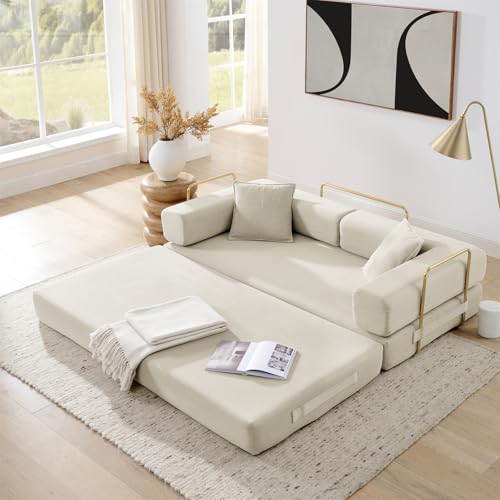
4-in-1 Folding Convertible Sofa Bed, 78 Inch Boneless Couch with Fixed-Shape Frame, Corduroy Loveseat Sleeper with Pull Out Bed, Floor Sofa Modular Futon Couch for Living Room Bedroom Lounge (Beige)
Check price on Amazon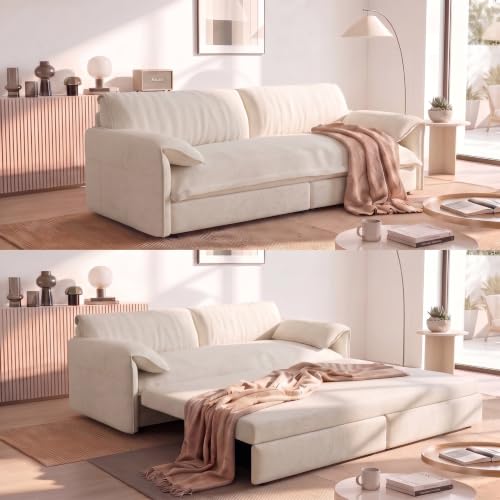
Trygoal 66" Convertible Pull Out Velvet Sofa Bed with Side Pockets, Beige | Soft Velvet Sleeper Loveseat with Pull Out Bed, Ideal for Apartments and Guest Rooms, Breathable Velet Fabric, Side Pockets
Check price on Amazon
Mjkone 64" W Sofa Bed Queen Size with Pull Out Bed, 2-in-1 Modern Linen Living Room Pull Out Sleeper Sofa Couch Beds with Cushions &Throw Pillows for Apartment Office Studio Small Place, Dark Grey
Check price on AmazonFrequently Asked Questions
What size pull out couch fits a studio apartment?
Most studios work best with a loveseat-sized or full-size sleeper, roughly 55 to 75 inches wide. A queen sleeper can work in a larger studio but requires careful measurement of the open-bed footprint and walkways before purchase.
What is the difference between a pull out couch and a futon?
A pull out couch hides a folding metal frame and mattress inside the sofa body, offering a more traditional sofa look and a dedicated sleep surface. A futon uses a hinged frame that folds flat and is generally more compact, but it is typically less cushioned for everyday seating.
How can I make a pull out couch comfortable for everyday sleeping?
Choose a model with a memory foam or high-density foam mattress instead of a thin innerspring version. Adding a mattress topper, using a quilted mattress protector, and rotating the mattress regularly can significantly improve nightly comfort.
Where should I place a pull out couch in a studio apartment?
Place the couch against a solid wall away from entry doors and heating vents, leaving enough clearance in front for the bed to extend fully. Use the couch as a visual divider between living and sleeping zones to give the studio a sense of separate rooms.
Can a pull out couch be used as the primary bed?
Yes, but the mattress quality matters most. Models with memory foam or hybrid mattresses are designed for regular sleeping, while entry-level innerspring sleepers are better suited to occasional guests. Confirm the mechanism is rated for daily open-and-close use.