
Rustic End Tables Set of 2: The Complete Buying Guide
Everything you need to choose a matching pair of rustic end tables that fits your couch, complements your living room style, and holds up to daily life — from material selection to placement and care.
A matching pair of rustic end tables is one of the simplest ways to add warmth and visual balance to a living room. Unlike a single accent piece, a set of two frames your couch symmetrically, gives every seat a place for a lamp or a drink, and reinforces the natural, lived-in character that defines rustic design. This guide walks you through the details that matter when you are comparing options: dimensions relative to your seating, material and finish durability, construction quality, and how to place a pair so the room feels intentional rather than crowded.
Recommended Rustic End Tables Set of 2
⚠️ AFFILIATE DISCLOSURE: This website contains affiliate links. As an affiliate Associate, we earn from qualifying purchases. If you make a purchase through these links, we may receive a small commission at no additional cost to you. Read our full affiliate policy.

oneinmil Farmhouse Nightstand with Charging Station, Couch Side Table Set of 2, Bedside Table with Storage Space, End Tables with Barn Door, Bed Side Tables for Living Room and Bedroom, Rustic Brown
Check price on Amazon
HOOBRO Side Table with Charging Station, Set of 2 End Tables with USB Port and Outlets, Nightstand with 2-Layer Storage Shelves for Small Spaces, Living Room, Bedroom, Rustic Brown BF09UBZP201
Check price on Amazon
LOAKEKEL Night Stand, Nightstands Set of 2 with Charging Station | Bed Side Table with 2 Fabric Drawers for Bedroom, End Tables with Storage Shelf for Small Spaces, Rustic Brown
Check price on Amazon
LOAKEKEL Narrow End Table with Charging Station, Side Tables Living Room | End Tables Living Room Set of 2, Skinny Nightstand with Fabric Drawers for Bedroom, Small Spaces, Rustic Brown
Check price on Amazon
HOKYHOKY Set of 2 Solid Wood End Table, 2-Tier Farmhouse Side Table | Storage Shelf, Square Bedside Tables for Small Spaces, Accent Nightstand, Bedroom, Living Room, Easy Assembly
Check price on Amazon
VIMBER Side Table with Charging Station, Set of 2 End Tables with USB Port and Outlets, Nightstands with 2-Tier Storage Shelves, Sofa Table for Small Space, Living Room, Bedroom, Rustic Brown 102F2
Check price on Amazon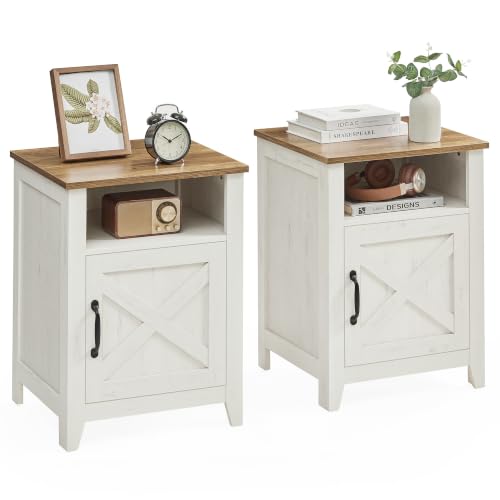
VASAGLE Farmhouse Nightstand with Barn Door, Bedside Table, Set of 2 | Side End Table with Storage, Set of 2, Open Compartment, Rustic White and Honey Brown, LIRY Collection ULET809K41
Check price on Amazon
VASAGLE Farmhouse Nightstands with Charging Station, 1 Drawer, Set of 2 | Bedside Table, Side Table with Open Compartment, for Bedroom, Rustic White and Honey Brown, LIRY Collection ULET859K41
Check price on Amazon1. Why Buy Rustic End Tables as a Set of 2
Buying end tables as a matched pair solves several design problems at once. Symmetry is the fastest route to a composed living room: two identical tables on either side of the couch create a visual anchor that makes the seating arrangement read as deliberate. It also balances lighting, since a lamp on each side distributes light evenly instead of leaving one corner dim.
Functionally, a pair gives every person on the couch a surface within arm's reach — a spot for a mug, a book, a remote, or a phone. In households where the couch is the main gathering point, that convenience matters daily. A set also removes the guesswork of hunting for two pieces that coordinate, since the finish, height, and hardware already match.
If your room layout is tight or asymmetrical, a pair can still work. Slim rustic tables with open frames read as light and airy, and they can be split to serve different zones — one beside the couch, one beside a reading chair — while still sharing a common visual language.
2. Materials and Finishes That Define Rustic Style
"Rustic" is a broad label, and the material mix is what separates a genuinely characterful pair from a table that merely looks distressed. The most common constructions fall into a few families.
Solid and reclaimed wood
Solid wood is the backbone of rustic furniture. Pine, mango, acacia, and reclaimed barnwood are the usual suspects. Reclaimed wood carries authentic history — nail holes, saw marks, and color variation — while new solid wood offers more consistent structural integrity. Mango and acacia are dense and resist everyday knocks well; pine is softer and develops dents more readily, which some owners consider part of the charm.
Live-edge and slab tops
Live-edge tables keep the natural contour of the tree at the table's border. They are striking as a pair beside a low-profile couch, but the irregular edges mean each table in a "set of 2" may differ slightly in width. Confirm dimensions per piece rather than assuming identical footprints.
Metal accents and bases
Wrought iron, hairpin legs, and blackened steel bases are common companions to wood tops. A powder-coated or rust-proof finish is important in humid climates; bare steel will patina, which can be desirable stylistically but should be a deliberate choice. Hairpin and X-frame bases keep the visual weight low, which helps in smaller rooms.
Distressed and whitewashed finishes
Distressing techniques range from hand-rubbed edges to wire-brushing and whitewash. A factory-applied distressed finish is more predictable than a hand-finished one, but both should include a protective topcoat. Ask whether the finish is lacquered, oiled, or waxed — oiled and waxed finishes need periodic reapplication, while lacquer is more forgiving for busy households.
| Material | Character | Durability | Best For |
|---|---|---|---|
| Reclaimed barnwood | Authentic texture, visible history | High (dense, aged wood) | Farmhouse and industrial rustic rooms |
| Mango / acacia solid wood | Rich grain, warm tones | High (hardwood) | Everyday family living rooms |
| Pine | Soft, knotty, casual | Moderate (dents easily) | Low-traffic or adult-only households |
| Live-edge slab | One-of-a-kind natural edge | High (depends on species) | Statement pairs in open-plan rooms |
| Wood + wrought iron | Contrast of warm and dark | High (with coated metal) | Industrial-rustic and loft spaces |
3. Sizing: Matching the Pair to Your Couch and Room
The most common mistake with end tables is buying a pair that is too tall or too wide for the couch. The rule of thumb: the tabletop should sit within one to two inches of the couch arm height. If the table is noticeably higher, reaching for a drink feels awkward; if it is much lower, the lamp will cast light at the wrong angle.
Key measurements to take before you shop
- Arm height of your couch: measure from the floor to the top of the armrest. This is your target table height range.
- Gap between couch arm and wall (or adjacent furniture): the table width must fit with a few inches of breathing room on each side.
- Walkway clearance: aim for at least 30 inches of clear floor between the table edge and any doorway or traffic path.
- Seat height: a table that sits slightly above seat height is easiest to use for drinks and remotes.
| Couch Size | Suggested Table Height | Suggested Table Width | Notes |
|---|---|---|---|
| Loveseat / apartment couch | 20–22 in | 16–18 in | Slim open-frame designs preserve floor space |
| Standard 3-seat couch | 22–24 in | 18–22 in | The most common pairing; matches typical arm height |
| Deep-seat / oversized couch | 24–26 in | 20–24 in | Choose a slightly heavier visual base for balance |
| Sectional with chaise | 22–24 in | 18–22 in | Place the pair at the two outer ends, not at the chaise |
If your couch sits against a wall with no gap for a table, a pair can still work at the two exposed ends of the seating arrangement, or one table can move beside a nearby accent chair. Rustic tables with a lower shelf or drawer add storage without increasing the footprint.
4. Construction Quality and Durability Checkpoints
Rustic style should never be an excuse for flimsy construction. Because a pair of end tables gets used constantly — as a lamp stand, a coaster surface, and occasionally a footrest — the joinery and base deserve close attention.
- Joinery: look for mortise-and-tenon, dovetail, or reinforced corner blocks rather than simple butt joints held by staples.
- Base stability: a table should not wobble when nudged. Four legs with a stretcher or a solid frame base are more stable than thin single-post designs.
- Top thickness: thicker tops (1 inch or more) resist warping and feel substantial. Thin veneer tops are more vulnerable to moisture and impact.
- Hardware: drawer glides should move smoothly; handles and pulls should be firmly attached with through-bolts rather than short screws.
- Finish protection: a topcoat that resists water rings matters in a room where drinks and plants live. Oiled finishes need more upkeep than lacquered ones.
5. Quality Tiers: Entry-Level to High-End
Rustic end table pairs span a wide range of construction quality. Rather than anchoring the comparison to any specific figure, it helps to think in tiers based on materials, joinery, and finish longevity.
| Tier | Typical Construction | Best For | Longevity Outlook |
|---|---|---|---|
| Entry-level | Engineered wood with printed or thin veneer finish; stapled or simple screw joinery | Guest rooms, rental apartments, first living room setup | Solid for light use; finish may show wear sooner |
| Mid-range | Solid wood frame with veneer top; reinforced corner blocks; lacquered finish | Primary family living rooms with daily use | Good durability with basic care |
| Premium | Solid hardwood or reclaimed wood throughout; mortise-and-tenon joinery; hand-finished topcoat | High-traffic rooms; households that want heirloom character | Long-term investment that ages gracefully |
| High-end tier | Live-edge slabs, custom metal bases, artisan finishing, through-bolt hardware | Design-forward spaces where the pair is a focal point | Decades of service with proper maintenance |
A mid-range pair is usually the balanced choice for a main living room: it offers solid wood where it matters, a finish that tolerates everyday life, and enough consistency that the two tables match closely. Entry-level pairs make sense when the tables are decorative more than functional, or when the room is transitional.
6. Placement and Styling Strategies
Once the pair arrives, placement determines whether the room feels balanced or cluttered. The classic arrangement is one table at each end of the couch, aligned so the tabletops sit at matching heights. A few refinements make the setup work better.
- Anchor the pair to the couch arms. Pull each table close enough that a seated person can reach it without leaning forward more than a few inches.
- Leave breathing room from the wall. A two- to four-inch gap prevents scuff marks and makes the tables easier to clean behind.
- Balance the visual weight. If one side has a tall floor lamp, keep the other side's tabletop lighter — a small plant and a book stack rather than another tall object.
- Use the pair to define a conversation zone. In an open-plan room, matching tables on either side of the couch help visually separate the seating area from the dining or kitchen zone.
- Protect the floor and the tabletop. Felt pads under the legs and coasters under drinks go a long way, especially with oiled or waxed finishes.
Lamp pairing
Matching table lamps reinforce symmetry. If you prefer a more collected look, use one lamp and one sculptural object of similar visual height.
Small-room tricks
Choose tables with a lower shelf instead of drawers — they add storage without the bulk of a closed cabinet.
Rug alignment
The front legs of both tables should sit on the area rug, or both should sit off it. Mixed placement makes the room feel off-center.
Texture contrast
Pair wood-toned tables with a soft upholstered couch and a woven rug to keep the rustic look warm rather than heavy.
If you are still deciding on the surrounding seating, our guide to rustic end tables set of 2 works hand in hand with choosing the right couch. For rooms with a more relaxed, outdoor-connected feel, the principles in our outdoor sofa couch guide translate well to indoor-outdoor rustic spaces.
7. Care and Maintenance for Wood and Metal
Rustic furniture is designed to develop character, but it still needs basic care to stay structurally sound. Wood tops should be dusted with a soft, dry cloth and wiped with a lightly damp cloth for spills — never soaked. Oiled and waxed finishes benefit from reapplication every six to twelve months, depending on humidity and sunlight exposure.
Keep the pair out of direct, prolonged sunlight to slow color fading and finish drying. In dry climates, a humidifier in winter helps prevent hairline cracks in solid wood tops. For metal bases, check for scratches in the powder coating; touching up exposed spots prevents rust from spreading. Felt pads under the legs protect both the floor and the table's own finish from vibration wear.
Frequently Asked Questions
What size should a set of 2 rustic end tables be?
Are rustic end tables set of 2 suitable for small living rooms?
What materials define rustic end tables?
Should both tables in the pair be identical?
How do I protect wood end tables from drink rings?
Related Living Room Guides
Ready to Complete Your Living Room?
Use the product picks above to compare current options, then match the pair to your couch arm height and room clearance. A well-chosen set of 2 rustic end tables is one of the most efficient upgrades you can make to a living room's function and style.