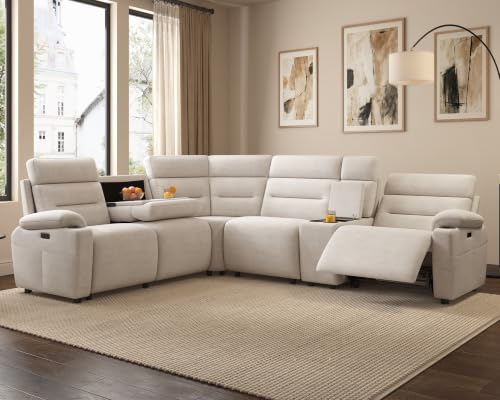
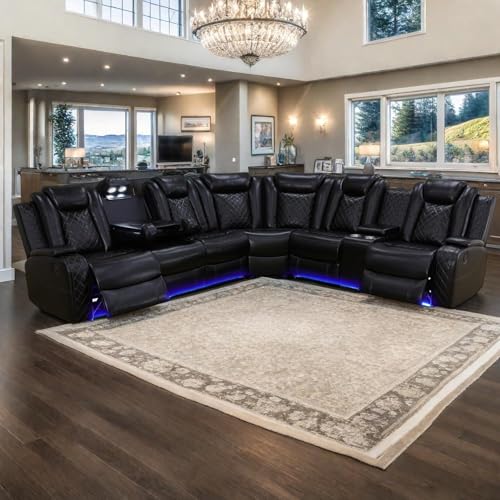
Why a Reclining Sectional with Cup Holders Deserves Your Attention
If you are researching a sectional couch with recliners and cup holders, you already know what you want: a seating centerpiece that does more than look good. You want a couch that supports movie nights, game-day gatherings, and long, unhurried evenings — without balancing a drink on your knee or scrambling for a side table. A reclining sectional with integrated cup holders delivers exactly that combination of comfort, utility, and communal seating.
This guide is written for buyers who are past the browsing phase and are now comparing real options. You will find clear explanations of how these couches are built, what separates one tier from another, which layouts suit which rooms, and what to check before you commit. By the end, you should feel confident evaluating any model you encounter — and ready to choose the one that fits your space and your lifestyle.
How These Couches Are Built: The Anatomy You Should Know
Understanding the internal structure helps you compare models fairly and ask better questions. Here are the components that matter most.
Reclining Mechanisms
There are three main mechanism families. Manual lever or handle recliners are the entry-level and mid-range standard: they are reliable, easy to repair, and require no power source. Push-back recliners rely on body weight and are common in streamlined designs. Power recliners use an electric motor, often with USB charging ports and memory presets, and are typically found in premium and luxury tiers. For a shared sectional, power mechanisms are convenient but add a power-dependency; manual mechanisms are simpler and often more durable in high-use households.
Cup Holder Consoles
Cup holders usually live in a center console between seats, in the armrest, or in a drop-down table section. Materials range from molded plastic (entry-level) to stainless steel or insulated inserts (premium). Some consoles also include storage compartments, wireless charging pads, or hidden USB ports. Check whether the cup holders are removable — removable inserts are far easier to clean and replace.
Frame and Suspension
A solid hardwood or engineered hardwood frame with reinforced joints is the baseline for durability, especially in reclining seats where stress concentrates around the mechanism. Sinuous wire springs or pocketed coils provide support; high-density foam or foam-and-fiber wrap cushions maintain shape over time. In reclining sectionals, the seat cushion and mechanism must be engineered together, so avoid models where the recliner feels like an afterthought.
Layout Options: Matching the Sectional to Your Room
The configuration you choose affects traffic flow, seating capacity, and how the cup holders are distributed. Consider these common layouts:
- L-shaped sectional with recliners on each end: The most popular family layout. Recliners sit at both ends with cup holder consoles, and the corner chaise or center seats fill the middle. Good for open-plan living rooms.
- Sectional with recliners on both ends plus a chaise: Adds a lounging zone without sacrificing reclining seats. Ideal when one person wants to stretch out while others recline.
- Theater-style row configuration: Straight or gently curved rows with a console between every seat. Best for dedicated media rooms and basements.
- Small-space reclining sectional: A compact loveseat-style sectional or a two-seat recliner with a center console. Wall-hugger mechanisms are essential here.
If your room is tight, review guidance on sectional couch dimensions and sectional with recliner for small spaces before committing. For broader layout planning, our living room layout section covers traffic flow and focal-point arrangements.
Feature Comparison by Tier
To compare models without relying on transient figures, use tier descriptors. The table below summarizes what typically separates each tier in the reclining sectional category.
| Tier | Mechanism | Cup Holder Console | Upholstery | Best For |
|---|---|---|---|---|
| Entry-level | Manual lever or push-back | Molded plastic, fixed inserts | Standard fabric or bonded leather | Occasional use, starter living rooms |
| Mid-range | Manual or basic power | Removable inserts, small storage | Performance fabric or top-grain leather | Everyday family use |
| Premium | Power with USB, memory presets | Stainless steel or insulated, console storage | Full-grain leather or premium performance weave | Frequent entertaining, media rooms |
| Luxury | Multi-motor power, articulating headrests | Insulated, wireless charging, hidden compartments | Premium leather with reinforced stitching | Dedicated theater rooms, flagship setups |
Note that tier labels describe relative market position, not absolute quality. A well-built mid-range model from a reputable maker can outperform a poorly executed premium one. Focus on mechanism smoothness, frame construction, and upholstery durability rather than the label alone.
Upholstery Choices for Reclining Sectionals
Because reclining seats experience more friction and folding than fixed seats, upholstery choice matters. Leather — especially top-grain and full-grain — is durable, easy to wipe clean, and ages well, but it can feel cold initially and requires conditioning. Performance fabric resists stains and moisture and is a strong choice for households with kids or pets. Velvet offers a plush look but demands more careful maintenance around mechanisms. If easy cleaning is a priority, explore our guides on sectional couch with washable cushion covers and scratch-resistant couch options.
Space Planning: Clearance, Walkways, and Wall Distance
Reclining sectionals need more room than they appear to. Two clearances matter most:
- Recline clearance: Manual and many power recliners need several inches behind the backrest to fully recline. Wall-hugger or zero-wall mechanisms reduce this to a minimum and are worth prioritizing in smaller rooms.
- Walkway clearance: Leave enough space between the sectional and coffee table or TV console for comfortable movement when the footrests are extended.
If you are working with an awkward footprint, our narrow room layout and open floor plan guides offer practical arrangements. Pair the sectional with an appropriately scaled rug using our rug size for couch with chaise reference.
Comfort and Ergonomics: What to Test Before Buying
Comfort in a reclining sectional is about more than cushion softness. When you evaluate a model, check the following:
- Recline range: Does the backrest recline far enough for your preferred lounging angle? Do the footrests support the calves fully?
- Seat depth and height: Deeper seats suit taller users; higher seats are easier for older adults to rise from.
- Armrest and console height: Cup holders should sit at a comfortable reach without forcing you to twist.
- Mechanism smoothness: Power mechanisms should move quietly and evenly; manual levers should engage without resistance.
- Cushion recovery: Sit for several minutes and check whether the foam springs back. Slow recovery suggests lower-density foam.
Cup Holder Practicalities: Small Details That Matter Daily
Cup holders are a small feature with outsized daily impact. Consider these practical points:
- Diameter and depth: Confirm the holders fit your typical tumblers, cans, and bottles. Some consoles accommodate only standard cans.
- Removability: Removable inserts make cleaning spills far easier.
- Drainage and materials: Insulated or stainless steel holders resist condensation buildup; plastic can stain over time.
- Console storage: A console with a small lidded compartment keeps remotes and chargers out of sight.
- Positioning: Cup holders in the armrest are convenient but can interfere with arm comfort; center consoles distribute them more evenly.
Related Configurations Worth Comparing
Buyers often cross-shop adjacent configurations before deciding. If your priority is hosting guests overnight, compare a sectional couch with pull-out bed and recliners or a sectional couch with recliner and pull-out bed. If storage is important, review sectional couch with storage and pull-out. For multi-recliner layouts, see sectional with 2 recliners and chaise and sectional recliner couch with chaise. Those seeking a more theatrical setup may prefer sectional couch with built-in speakers or sectional living room sets with recliners.
Care and Maintenance for Reclining Sectionals
Reclining sectionals need slightly different care than fixed sofas. Keep mechanisms free of crumbs and pet hair, vacuum under and behind seats regularly, and lubricate moving parts only with manufacturer-approved products. Leather models benefit from periodic conditioning; performance fabrics should be cleaned with mild soap and water. Our couch care and maintenance hub and leather cleaning guide provide step-by-step routines. For households with pets, the pet damage prevention article is a useful companion.
Common Buying Mistakes to Avoid
- Ignoring recline clearance: Measuring only the footprint leads to a sectional that cannot fully recline against the wall.
- Overlooking console height: A console that is too high or too low undermines the cup holder's usefulness.
- Choosing fabric before mechanism: Prioritize a smooth, durable mechanism; upholstery is easier to adapt around.
- Skipping the tier comparison: Understand what each tier offers so you can judge whether a model is well-specified for its class.
- Forgetting delivery logistics: Sectionals arrive in multiple boxes or pieces; confirm doorway and stair clearance. Our delivery preparation guide covers this.
Frequently Asked Questions
What is a sectional couch with recliners and cup holders?
It is a multi-seat sectional sofa that combines reclining seats with integrated cup holders, usually in a center console or armrest. These couches are designed for living rooms, media rooms, and family spaces where comfort and convenience matter.
Do I need extra space behind a reclining sectional?
Yes, unless you choose a wall-hugger or zero-wall mechanism. Traditional recliners need several inches of clearance to fully recline. Measure your room and confirm the mechanism type before buying.
Are cup holders removable?
Many mid-range and premium models feature removable or drop-in cup holders for easier cleaning. Entry-level models often have fixed plastic inserts. Always confirm this detail if easy cleaning is a priority.
Which upholstery is best for families?
Performance fabric and top-grain leather are the most family-friendly choices. Both resist stains and clean easily, and both hold up well around reclining mechanisms when properly maintained.
Can a reclining sectional work in a small room?
Yes, if you choose a compact configuration and a wall-hugger mechanism. Loveseat-style sectionals with a center console are particularly space-efficient. Review our small-space layout guidance before finalizing dimensions.
Final Checklist Before You Decide
Use this checklist to evaluate any sectional couch with recliners and cup holders you are considering:
- Confirm the mechanism type and recline clearance for your room.
- Measure doorway, stairwell, and delivery path clearance.
- Test seat depth, height, and cushion recovery.
- Verify cup holder diameter, depth, and removability.
- Check frame material, joint reinforcement, and warranty terms.
- Match upholstery to your household's cleaning and durability needs.
- Plan the surrounding layout: rug size, coffee table clearance, and lighting.
With those checks complete, you are ready to compare specific models with confidence. For related configurations and deeper dives, explore our sectional couches that can be rearranged and sectional couch with individual pieces guides, or browse the full sectional sofas category.