
Sectional Couch You Can Add To: The Flexible Seating Guide
A sectional couch you can add to grows with your home. Learn how modular configurations work, which upholstery tiers hold up best, and how to plan a layout that leaves room for future seating.
Who this guide is for: You already know you want a sectional with expansion potential, and you are comparing modular systems, connector types, and room layouts before choosing a retailer. This page walks through the practical details that decide whether an add-on sectional stays flexible for years or becomes a fixed piece you outgrow.
What Makes a Sectional Add-On Capable
An add-on capable sectional is assembled from individual modules rather than built as a single welded frame. Each module — a seat, a corner wedge, a chaise, an armless bench — connects to its neighbors through a shared hardware system. When the hardware is standardized and the manufacturer keeps producing matching pieces, the couch can be extended years after the original purchase.
This is different from a conventional sectional, which is typically one continuous frame with fixed seats. A fixed sectional can be rearranged only in the sense of swapping left-arm and right-arm orientations at the time of order. It cannot accept a new seat later. That distinction drives almost every decision on this page.
Connector systems to compare
- Bracket-and-bolt connectors — metal plates that bolt modules together. The most rigid option, best for large configurations and households with children or pets. Assembly requires tools, and adding a module later means partially disassembling the joint.
- Cam-lock or interlocking clips — a tool-light system that pulls modules tight with a lever or quarter-turn. Easier to expand on your own, though repeated reconfiguration can loosen the fit over many cycles.
- Alignment pins with shared base rails — modules rest on a common rail and lock with pins. Common in premium and commercial-grade modular lines; the rail constrains where new pieces can attach.
- Loose or gravity-fit modules — no mechanical connector, relying on weight and friction. The simplest to rearrange, but the least stable for large L- or U-shaped builds.
Before committing, ask the retailer for the specific connector type and whether individual module part numbers can be ordered separately. A modular design without separately orderable parts is not truly expandable.
Configuration Options for an Expandable Sectional
Most modular sectional lines are built from a small set of repeating pieces, which is what makes expansion practical. The typical menu includes a left-arm seat, a right-arm seat, an armless seat, a corner wedge, a chaise, and sometimes an ottoman or bench. From those pieces you can build the common shapes below, then extend them later.
| Configuration | Best For | Expansion Path |
|---|---|---|
| L-shaped sectional | Corner rooms and open-plan living areas | Add an armless seat to either end to lengthen the run |
| U-shaped sectional | Large rooms with a central focal point | Add corner wedges and seats to widen the open end |
| Sectional with chaise | Lounging and single-side comfort | Convert the chaise side to a full seat run and relocate the chaise |
| Straight modular run | Narrow rooms and apartment living | Add seats end-to-end, then introduce a corner wedge later |
| Sectional with ottoman | Flexible footrest and occasional extra seating | Replace the ottoman with a seat module when seating demand grows |
If you already lean toward a lounging setup, a sectional couch with ottoman and recliner pairs the expansion logic of modular pieces with built-in recline. For rooms that need hidden storage, a sectional couch with storage ottoman keeps the add-on concept while giving blankets and remotes a home. Households planning for overnight guests should review a sectional couch with storage and sleeper before locking in a shape.
Upholstery and Construction Tiers
Because an add-on sectional is meant to last through multiple expansions, the upholstery and frame matter more than they would on a disposable piece. Use tier language to compare lines on equal footing rather than chasing a single number.
| Tier | Typical Construction | Best For |
|---|---|---|
| Entry-level | Plywood frame, foam cushions, standard woven fabric | First apartments and light-use living rooms |
| Mid-range | Kiln-dried hardwood frame, pocket coils or high-density foam, performance fabric options | Family rooms and everyday use |
| Premium | Reinforced hardwood frame, sinuous spring or eight-way hand-tied support, top-grain leather or performance weave | High-traffic homes and long-term modular builds |
| Luxury / commercial-grade | Solid hardwood, hand-tied suspension, full-grain leather, standardized parts program | Large U-shaped builds and multi-year expansion plans |
Mid-range and premium lines are usually the sweet spot for add-on sectionals: the frames are durable enough to survive reconfiguration, and the fabric programs tend to stay in production longer. A performance weave in the premium tier resists staining and pilling, which matters if you plan to add modules over several years and want the new pieces to match the old ones visually.
Leather behaves differently. A top-grain leather couch develops a patina over time, so an add-on module purchased two years later may show a slight color shift. That is normal and usually blends within a few months, but confirm the retailer keeps the same dye lot or offers a matching program. If you want full seating flexibility with reclining ends, a sectional couch with recliners on each end is worth comparing against a pure modular run.
Layout Planning: Leave Room to Grow
The most common mistake with an add-on sectional is filling the room on day one. If the couch already touches both walls and blocks the walkway, there is nowhere to attach the next module. Plan the footprint with expansion space reserved.
- Walkway clearance: keep 18 to 24 inches between the couch and any traffic path. This is also the minimum clearance you will need to attach a new seat without moving the whole configuration.
- Expansion margin: reserve 12 to 18 inches on the open end of the sectional. That is the side where most add-on modules attach.
- Recliner clearance: if any module reclines, allow 6 to 10 inches behind it so the back can fully recline. This is a common issue when adding a reclining module to an existing run against a wall.
- Doorway and vent clearance: avoid blocking heating vents and confirm the largest module fits through doorways and stairwells if you plan to reconfigure between rooms.
For tight rooms, a small sectional with storage and pull-out demonstrates how compact footprints can still carry expansion potential. Rooms with a strong focal point benefit from a layout that keeps sightlines open on the expansion side.
Compatibility Checklist Before You Buy
- Confirm the connector system and whether you can add modules yourself without special tools.
- Ask for module part numbers and check that individual seats, corners, and chaises are orderable separately.
- Confirm seat height, seat depth, and arm height so new modules align with existing pieces.
- Verify the fabric or leather program will remain in production, and ask about dye-lot matching for future orders.
- Check the frame warranty and whether it covers the connectors and hardware, not just the frame.
- Measure doorway widths and stairwell clearances for the largest module in your planned configuration.
- Plan the expansion direction and confirm the open end of the sectional is not against a wall.
If you are furnishing a rental or a home you may move from, modular pieces are easier to adapt to a new room. A sectional with machine washable covers is also worth considering, because removable covers make it simpler to refresh older modules when you add new ones. Households that frequently host overnight guests may prefer to plan around a sectional with pull-out bed and storage from the start rather than retrofitting sleeping capacity later.
When to Add Modules (and When Not To)
Adding a module is straightforward when the line is still in production and the connector system is unchanged. The usual triggers are a growing household, a new entertainment setup, or a shift from a two-person living room to a space that hosts guests regularly. In those cases, an armless seat is the most versatile addition because it works in the middle of a run or at the end.
There are cases where adding a module is the wrong move. If the existing frame is past its structural life, new modules will not fix sagging suspension. If the room is already at capacity, a second smaller seating piece may serve better than extending the sectional. And if the manufacturer has discontinued the line, matching a new module to an older one becomes a dye-lot and hardware gamble — in that situation, a standalone accent chair is usually the cleaner solution.
Add-On Friendly Alternatives to Consider
Not every flexible seating plan needs a full modular sectional. If your room is small, a small L-shaped couch with storage gives corner seating with a built-in footprint that is easier to place. For rooms where recline matters more than expansion, a sectional couch with pull-out footrest offers adjustable comfort without the complexity of a modular parts program.
If you want the look of a large sectional without committing to a full modular system, compare a U-shaped sectional couch with chaise against a modular U-build. The fixed version is often more rigid and simpler to assemble, while the modular version is the one that can grow. A sectional with chaise on both ends is another fixed-shape option that suits symmetrical rooms.
For households that need sleeping capacity alongside expansion, review a sectional sleeper couch with storage and a sectional with pull-out queen bed before deciding whether the sleeping function should live in the main sectional or in a separate piece.
Frequently Asked Questions
What does it mean for a sectional couch to be add-on capable?
An add-on capable sectional is built from individual modules that connect with shared brackets or interlocking hardware, so you can attach additional seats, chaises, or corner pieces over time without replacing the entire couch.
Can every sectional be expanded later?
No. Only modular or piece-based designs with standardized connectors and continued parts availability can be expanded. Traditional one-piece sectionals are fixed and cannot accept new modules.
How do I plan a room for an expandable sectional?
Leave clearance of about 18 to 24 inches around the intended footprint for walkways, and reserve 12 to 18 inches of expansion space on the open end of the configuration so new modules can be added without blocking traffic.
What should I check before buying add-on modules?
Confirm the connector system, fabric or leather dye lot, seat height and depth, and whether the retailer commits to keeping the model in production. Ask for the module part numbers in writing.
Is a modular sectional as sturdy as a fixed one-piece sectional?
A well-built modular sectional with bracket-and-bolt connectors is comparable to a fixed sectional for everyday use. Loose gravity-fit modules are easier to rearrange but less rigid, so they suit smaller configurations and lighter traffic.
Recommended Add-On Sectional Couches
⚠️ AFFILIATE DISCLOSURE: This website contains affiliate links. As an affiliate Associate, we earn from qualifying purchases. If you make a purchase through these links, we may receive a small commission at no additional cost to you. Read our full affiliate policy.

121" Boneless Couch, U Shaped Sofa, Sectional Couches for Living Room | boneless Couches for Living Room, Cloud deep seat,modular sectional sofa, Converts to sleeper w/ Oversized ottoman
Check price on Amazon
121" Boneless Couch, U Shaped Sofa, Sectional Couches for Living Room | boneless Couches for Living Room, Cloud deep seat,modular sectional sofa, Converts to sleeper w/ Oversized ottoman
Check price on Amazon
97" Boneless Couch, L Shaped Sofa, Sectional Couches for Living Room | boneless Couches for Living Room, Cloud deep seat,modular sectional sofa, Converts to sleeper w/ Oversized ottoman
Check price on Amazon
HONBAY Convertible Sectional Sofa L Shaped Couch,Dark Grey | Reversible Sectional Couch for Living Room for Small Apartment,Easy to transport and install
Check price on Amazon
Couch Clamp Pro Heavy Duty Couch Connectors for Sliding Sofas (4 Pack) - Easy Install Strap & No Tools Required - Hook & Loop Cinch Straps- Universal Fit Ideal for 3 Piece Modular Sectional Sofa
Check price on Amazon
Couch Clamp Sectional Connectors (4 Pack) – Keep Cushions from Sliding, Easy Install Straps, Universal Fit for Modular Couches – Prevent Floor Scratches
Check price on Amazon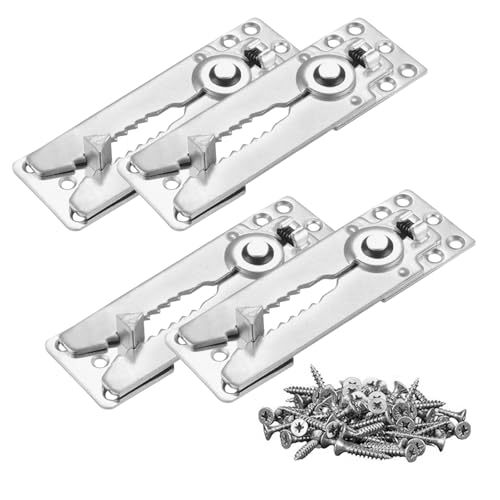
BTSMYRRH 4 Pack Sectional Couch Connectors, Heavy Duty Interlocking Couch Connectors to Make Sectional Stay, Metal Sofa Clamps for Sectionals Furniture Connector with 40Pcs Screws
Check price on Amazon
HONBAY Modular Sectional Couch L Shaped Sofa with Storage,Dark Blue | Velvet Pet-friendly Fabric, Convertible Sectional Couches for Living Room,Easy to assemble,Removable Cushion
Check price on AmazonBottom line: Choose a modular sectional with a documented connector system, confirm that individual modules can be ordered later, and leave expansion space on the open end of your layout. Those three decisions determine whether your sectional stays flexible for years or becomes a fixed piece the first time your seating needs change.