
Small Sectional with Chaise and Recliner
Compact comfort without compromise. Learn how a small sectional with chaise and recliner combines lounging space, reclining support, and a footprint that works in tighter living rooms.
START THE GUIDECouchFocus Philosophy: A compact sectional should earn its place. The right small sectional with chaise and recliner gives you a lounge seat, a reclining seat, and sensible traffic flow — all within a footprint your room can genuinely handle.
Why a Small Sectional with Chaise and Recliner Makes Sense
A small sectional with chaise and recliner is a hybrid seating solution. The chaise section extends one seat forward for leg support and lounging, while the recliner section adds a mechanical or power back-and-footrest adjustment. Together, they deliver two distinct comfort experiences inside a single compact L-shaped frame.
For shoppers researching this category, the appeal is practical rather than decorative. A standard reclining sofa gives you recline but no lounge extension. A plain chaise sectional gives you lounge space but no recline. Combining both means one piece of furniture covers movie nights, reading sessions, and everyday relaxation without requiring a large open floor plan.
This format tends to suit apartments, guest rooms, home offices, and smaller family rooms. It also works well in open-plan spaces where the sectional acts as a soft divider between living and dining zones. If your room is especially tight, you may want to compare this layout against a small sectional couch with chaise lounge that skips the recliner mechanism for a lower-profile build.
How the Chaise and Recliner Work Together
Understanding the mechanics helps you judge whether a specific model is right for your room.
The Chaise Section
The chaise is the extended seat, usually positioned at one end of the L. It is fixed in most compact models, though some designs offer a reversible chaise that can be moved to the left or right during assembly. The chaise adds depth rather than width, which is useful when your room is narrow but has a little extra floor space in one direction.
The Recliner Section
The recliner seat typically sits at the opposite end or beside the chaise. Manual recliners use a lever or handle, while power recliners use a button panel, often with USB charging. Recline mechanisms need clearance — either behind the backrest or in front for the footrest — so this is the detail that most often determines whether a compact reclining sectional fits.
Why the Combination Works in Small Rooms
Instead of two separate pieces, you get a single footprint. The chaise absorbs the lounging function, the recliner absorbs the recline function, and the remaining seats handle everyday sitting. In a small room, that consolidation reduces clutter and keeps walkways clearer than a sofa plus a separate recliner chair.
If you need extra sleeping capacity, a related option is a small sectional with chaise and sleeper, which swaps some seating flexibility for a pull-out bed. That trade-off is worth considering if guests stay over regularly.
Sizing: The Detail That Decides Everything
Compact sectional dimensions vary, but the categories below give you a realistic planning framework. Always confirm the exact measurements of a specific model before ordering.
| Size Category | Typical Long Side | Typical Return Depth | Best For |
|---|---|---|---|
| Ultra-compact | Around 70–78 inches | Around 50–55 inches | Studio apartments, bedrooms, home offices |
| Compact | Around 78–86 inches | Around 55–62 inches | Small living rooms, guest rooms, narrow lounges |
| Standard small | Around 86–92 inches | Around 62–68 inches | Family rooms, open-plan corners, multi-purpose spaces |
Beyond the couch dimensions, plan for the recline path. A manual recliner may need a footrest extension of roughly 20–30 inches in front of the seat, while some wall-hugger designs reduce rear clearance to a few inches. Measure the full recline zone, not just the closed footprint.
Also measure your delivery route. Doorways, hallway turns, stair landings, and elevator interiors all matter. Many compact models ship in modules or with removable backs, which helps — our guide to sectionals that fit through small doorways covers the measuring process in detail.
Key Buying Factors for a Compact Reclining Sectional
1. Recliner Type: Manual or Power
Manual recliners are simpler, with fewer electronic parts to fail. Power recliners offer smoother motion and often include USB ports, but they require a nearby outlet and add wiring considerations. Entry-level models usually use manual mechanisms; mid-range and premium tiers more often include power options with adjustable headrests.
2. Recline Clearance
Check whether the model is a wall-hugger or a standard recliner. Wall-huggers slide forward as they recline, reducing rear clearance. Standard recliners need more space behind the backrest. In a small room, this single specification can make or break the layout.
3. Chaise Orientation
Left-facing and right-facing chaise options matter in a compact room. The chaise should sit away from the main walkway, ideally tucked into a corner. If you are unsure which side works, look for a reversible chaise that can be assembled either way. Our comparison of small sectionals with reversible chaise explains how that flexibility works in practice.
4. Upholstery Material
Fabric, performance fabric, and leather each behave differently in a small space. Performance fabric resists stains and is a sensible choice for households with kids or pets. Leather is easy to wipe down and tends to look streamlined in compact rooms. If you are weighing leather, our guide on whether to get a leather couch covers durability, care, and feel.
5. Seat Depth and Cushion Support
Compact sectionals sometimes reduce seat depth to save space. Deeper seats feel more lounge-like but consume more floor area. Check the seat height as well — a seat that is too low can be hard to rise from, especially for older users or anyone with knee concerns.
6. Frame and Mechanism Build
Solid hardwood or engineered hardwood frames with reinforced joints last longer than particleboard builds. For recliners, the mechanism quality matters: mid-range models typically offer smoother, quieter motion than entry-level mechanisms, while top-tier models often include steel reclining hardware rated for heavier use.
7. Modularity and Assembly
Some compact sectionals arrive in two or three modules that connect on site. Modular builds are easier to move through tight spaces and can sometimes be reconfigured later. Check whether the chaise and recliner sections are separate pieces or a single welded frame.
Layout Ideas for Small Rooms
Placement matters as much as dimensions. These arrangements work well with a small sectional with chaise and recliner:
- Corner anchor: Push the sectional into a corner so the chaise fills the dead space and the recliner faces the room's focal point. This is the most space-efficient arrangement.
- Room divider: Float the sectional with its back to an open-plan dining area. The backrest defines the living zone without a wall.
- Window wall: Place the long side along a window wall and let the chaise return into the room. Keep the recliner away from curtains and radiators.
- Focal-point facing: Angle the sectional toward a TV or fireplace, leaving a clear walkway behind the recliner for the footrest path.
If your room is genuinely small, our collection of small living room couch ideas for small spaces covers additional layout patterns and traffic-flow rules. For rooms where the L-shape needs to be even tighter, a small L-shaped couch with recliner may be a better match than a full chaise model.
Quick Fit Check Before You Order
- Measure the room's long wall and return wall, then subtract at least 36 inches for the main walkway.
- Measure the recline path: closed depth plus footrest extension plus a few inches of buffer.
- Measure doorways, hallways, and stair turns; compare against the disassembled package dimensions.
- Confirm the chaise side (left or right) against your room's corner and walkway.
- Check the seat height and depth against the people who will use it daily.
Materials and Upholstery: What Works in Compact Spaces
Small rooms amplify visual clutter, so material choice affects how spacious the room feels. Lighter, tighter-weave fabrics tend to read as cleaner and more open. Dark leather can look sleek but may dominate a very small room unless balanced with light walls and flooring.
Practicality also matters. Performance fabrics resist spills and clean up with mild soap and water. Leather wipes clean easily but needs conditioning over time. If washability is a priority, compare models with removable covers — our guide to sectionals with washable covers explains what to look for in removable, machine-friendly upholstery.
For pet households, tightly woven fabrics and leather generally hold up better than loose weaves and velvet. Recliner mechanisms also collect debris, so choose a design where the mechanism housing is accessible for vacuuming.
Comfort Features Worth Prioritizing
Not every feature adds value in a small room. These are the ones that tend to matter most:
- Adjustable headrest: Helps shorter and taller users find a comfortable recline angle without changing the footprint.
- USB charging: Useful in compact rooms where side tables are limited.
- Padded chaise top: A firm, supportive chaise cushion is more comfortable for long lounging than a soft, sinking one.
- Wall-hugger recline: Reduces rear clearance, which is often the tightest dimension in a small room.
- Removable back cushions: Makes cleaning easier and can reduce the package depth during delivery.
Common Mistakes to Avoid
- Ignoring the recline path: The closed footprint is not the full footprint. Measure with the footrest extended.
- Choosing the wrong chaise side: A chaise on the walkway side blocks traffic. Confirm orientation before ordering.
- Overestimating seat depth: A deep chaise feels luxurious but can overwhelm a compact room.
- Skipping the delivery route: A sectional that fits the room but not the stairwell is a problem. Measure the full path.
- Overlooking mechanism quality: A stiff or noisy recliner undermines daily use. Test the mechanism if possible, or read owner feedback on smoothness and noise.
Ready to Compare Compact Reclining Sectionals?
Review our recommended models below, then confirm dimensions, recline clearance, and upholstery against your room before you decide.
VIEW RECOMMENDED MODELSFrequently Asked Questions
What is a small sectional with chaise and recliner?
It is a compact L-shaped couch that combines an extended chaise seat with at least one reclining seat, designed to fit tighter living rooms while offering both lounging and reclining comfort.
How much floor space does a small reclining sectional need?
Most compact models span roughly 70 to 90 inches along the long side and 50 to 65 inches on the return. Recliners also need clearance for the footrest, so measure the room with the recline path in mind, not just the closed footprint.
Can a small sectional with chaise and recliner fit through narrow doorways?
Many compact models ship in modules or with removable backs and legs. Check the disassembled depth and width against your doorway, hallway, and stair turns before ordering.
Where should the chaise and recliner sit in a small room?
Place the chaise away from the main walkway and the recliner where the footrest can extend without blocking traffic. Corner placements often work well because they use dead space efficiently.
Is a manual or power recliner better for a small room?
Manual recliners are simpler and have fewer electronic parts. Power recliners offer smoother motion and often include USB charging, but they need a nearby outlet. In a small room, the deciding factor is usually clearance and outlet placement rather than mechanism type.
Recommended Small Sectionals with Chaise and Recliner
⚠️ AFFILIATE DISCLOSURE: This website contains affiliate links. As an affiliate Associate, we earn from qualifying purchases. If you make a purchase through these links, we may receive a small commission at no additional cost to you. Read our full affiliate policy.

Manual Reclining Sectional Sofa with Chaise, Air Leather Living Room Furniture with Recliner, L-Shaped 4 Seater Corner Couch with Storage Console & Cup Holders for Home/Office/Apartment (Brown)
Check price on Amazon
Valencia Andria 99.5" Leather Sectional Couch, Power Recliner with Right Chaise for Living Room - Cloudy Grey
Check price on Amazon
Shintenchi U-Shaped Sectional Couches for Living Room, 4 Seat Sofa with Double Chaise Lounges,Solid Wood Frame Sectional Sofa for Apartment,Gray
Check price on Amazon
107.8'' Sleeper Sofa Bed Queen Size, Pull Out Couches for Living Room Khaki | Chenille Recliner L-Shaped Sofa with Storage Chaise, USB, Table and Cup Holder, 4-seater Sofa Fit for Movie Nights, Apartment
Check price on Amazon
Power Recliner Sectional Sofa, U Shaped Couch with 2 Recliners and Console | Comfy Corduroy 6 Seater Modular Sofa for Living Room, Office, Home Theater (Grey)
Check price on Amazon
Dresegmt Manual Recliner Sectional Sofa for Living Room, Corner Couch with Flip Middle Backrest, USB Ports & Cup Holders, Grey Linen & Chocolate Leather, 5 Seater Sectional Couch
Check price on Amazon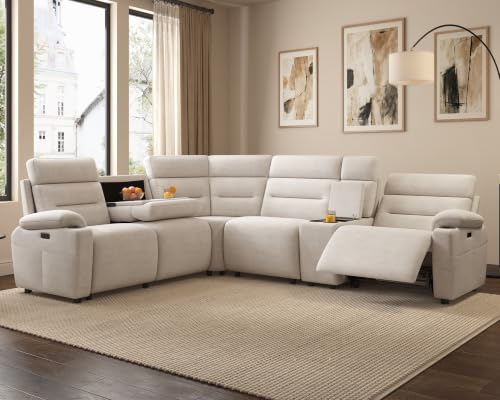
AMERLIFE L-Shaped Power Reclining Sectional Sofa for Living Room, Beige | Modular Power Sectional Recliner Couch,Fixed Console,Flip-Back,Cup Holders,USB,Hidden Storage,Linen Upholstery Sofa Moderno
Check price on Amazon