
Small Sectional with Reversible Chaise: The Complete Buying Guide
Everything you need to know about choosing a compact sectional sofa with a reversible chaise that adapts to your room, your lifestyle, and your long-term needs.
Why this guide matters: If you have narrowed your search to a small sectional with a reversible chaise, you already know the appeal — compact seating, a lounge extension, and the freedom to place the chaise on either side. What you likely still need is clarity on measurements, frame construction, upholstery, and layout compatibility before you commit.
This guide walks you through every decision point in plain language, so you can evaluate options with confidence and choose the sectional that genuinely fits your living room.
What a Reversible Chaise Actually Means
A reversible chaise sectional is a modular-style sofa where the extended lounge section can be installed on either the left or the right side of the main seating area. In practice, this means the chaise piece is separate from the main frame and attaches on whichever end suits your room.
This is different from a fixed-chaise sectional, which is manufactured with the chaise permanently on one side. The reversible design gives you flexibility that matters in three situations: when you move to a new home, when you rearrange furniture seasonally, and when you want to test which orientation feels better before committing.
It is worth noting that the term "reversible" can mean two different things in product listings. Some sofas have a reversible chaise, meaning the lounge section swaps sides. Others have reversible cushions, meaning the seat cushions can be flipped. The best small sectionals often offer both. If you are comparing options, confirm which type of reversibility is included. For a broader understanding of how sectionals are constructed, see what's a sectional couch.
Why Choose a Small Sectional with Reversible Chaise
A compact sectional with a reversible chaise solves a specific problem: it delivers the seating capacity and lounging comfort of a sectional without requiring the floor space of a full-size L-shaped sofa. This makes it a strong fit for apartments, condos, and smaller family rooms.
- Layout flexibility: The chaise can be placed on the left or right, so the same sofa works in rooms with different door, window, and TV placements.
- Compact footprint: Small sectionals typically range from about 70 to 95 inches in width, which fits most apartment living rooms without crowding walkways.
- More seating than a loveseat: A small sectional usually seats three comfortably and can accommodate four with the chaise, compared with a standard two-seat loveseat.
- Defined lounging zone: The chaise creates a natural spot for reading, watching television, or relaxing without adding a separate recliner.
- Better resale and reuse potential: Because the chaise is reversible, the sofa remains useful if you move to a home with a different layout.
If your room is especially tight, you may also want to explore comfy sectionals for small spaces or a leather sectional for small spaces depending on your material preference. Both categories overlap heavily with the reversible chaise format.
Measurements and Fit: The Numbers That Matter
Measurement is where most sectional purchases succeed or fail. Before you compare models, measure your room and your access path with a tape measure — not by eye.
Room measurements to record
- Wall length where the sofa will sit (the longest straight run available)
- Room depth from that wall to the opposite wall or furniture
- Width of main walkways — aim for at least 30 inches of clearance
- Distance from the sofa position to the television or focal point
- Doorway widths and hallway turns on the delivery path
Sofa measurements to verify
- Overall width: The full length of the sofa including the chaise base
- Chaise depth: How far the lounge section extends into the room
- Seat height and seat depth: Seat height around 18–20 inches suits most adults; seat depth of 20–24 inches is standard, while deeper seats suit taller users
- Back height: Low-back models open up sightlines in small rooms; high-back models offer more support
- Packaging dimensions: Confirm the boxed size fits through your entryway and stairwell
Practical tip: Use painter's tape to outline the sectional footprint on your floor in both chaise orientations. Walk around the outline for a day. This simple test reveals whether the chaise blocks a walkway or crowds a doorway before the sofa arrives.
If your living room is genuinely tight, pair your measurements with guidance from living room ideas for small spaces. If you prefer a deeper lounge feel, review deep couch sectionals to compare seat depth before finalizing.
Tier Comparison: Entry-Level to Premium
Small sectionals with reversible chaises span the full market spectrum. The table below compares what you can generally expect at each tier, using universal quality descriptors rather than numeric figures. Use it to align your expectations with the tier you are considering.
| Tier | Frame & Construction | Upholstery | Best For |
|---|---|---|---|
| Entry-Level | Engineered wood frame, basic sinuous spring support, assembly required | Standard polyester or microfiber; limited color range | First apartments, guest rooms, temporary furnishing |
| Mid-Range | Hardwood or mixed hardwood frame, pocket coil or sinuous spring seating, reinforced joints | Performance fabric, woven blends, or bonded leather; wider color selection | Everyday family living, long-term daily use |
| Premium | Kiln-dried hardwood frame, eight-way hand-tied or high-density pocket coil support, corner-blocked joinery | Top-grain leather, high-performance stain-resistant fabric, removable washable covers | High-traffic homes, pet owners, design-focused interiors |
| Luxury | Solid hardwood frame with lifetime structural warranty, premium cushion cores, hand-finished detailing | Full-grain leather, designer fabrics, custom upholstery options | Statement living rooms, long-term investment pieces |
A useful rule of thumb: mid-range models generally offer a meaningful step up in frame durability and cushion resilience compared with entry-level options. Premium and luxury tiers add refinement in materials and joinery, which matters most if the sofa will be the primary seating in a busy household. If longevity is your priority, read about long-term investment considerations for living room furniture.
Upholstery and Material Considerations
The upholstery you choose affects comfort, cleaning routine, and how the sofa ages. For a small sectional, the material also influences how visually light the piece feels in a compact room.
Fabric options
- Performance fabric: Stain-resistant and spill-friendly, ideal for households with children or pets. Often the most practical choice for daily use.
- Tightly woven fabric: Durable and less prone to snagging than loose weaves; a solid middle ground for living rooms.
- Velvet: Visually rich and soft, but requires more careful maintenance. Better suited to low-traffic or adult-only spaces.
- Removable washable covers: The most forgiving option for families. Confirm that covers are machine washable and that replacement covers are available.
Leather and faux leather
Leather and faux leather are easy to wipe clean and develop a distinct character over time. They also tend to look more streamlined, which helps a small sectional feel less bulky. Faux leather is generally easier to maintain and more consistent in color, while genuine leather ages with visible patina. For a detailed comparison, see leather vs faux leather couch.
If washability is a priority, explore sectionals with removable washable covers or the narrower category of sectional couch with removable washable covers.
Room Layout and Placement Strategies
A small sectional with reversible chaise is only as good as its placement. The chaise orientation should follow the natural flow of the room, not fight it.
Common layout patterns
- Chaise toward the window: Creates a reading or morning-coffee nook and keeps the main walkway open.
- Chaise toward the room center: Defines the conversation zone and pairs well with a coffee table.
- Chaise away from the doorway: The most reliable choice in narrow rooms, since it prevents the lounge section from blocking entry paths.
- Floating layout: If the room allows, pull the sofa slightly off the wall to create a walkway behind it — useful in open-plan spaces.
Pair the sofa with complementary pieces that reinforce the layout rather than crowd it. A round coffee table set of 2 works well in compact rooms because round shapes soften traffic flow. A floor lamp in a corner adds light without occupying floor space near the seating. For rooms with a television focal point, a TV stand and coffee table set can help unify the visual line.
Layout check: Stand at the main entry point of the room and look toward the sofa. The chaise should read as an intentional extension of the seating area — not as an obstacle. If it blocks sightlines or foot traffic in either orientation, consider a narrower model or a different placement.
Comfort, Cushions, and Frame Construction
Comfort in a small sectional comes down to three components: seat cushion density, back cushion support, and frame rigidity. Each plays a distinct role, and each is worth evaluating separately.
Seat cushions
High-density foam wrapped in fiber or down alternative offers a balanced feel — supportive enough for daily seating, soft enough for lounging. Pocket coil cores add resilience and reduce the "sinking" that plagues lower-density foam over time. Reversible seat cushions extend cushion life because you can rotate them to distribute wear.
Back cushions
Back cushions range from firm foam to loose fiber fill. Loose back cushions are comfortable and easy to fluff, while attached back cushions maintain a cleaner silhouette and require less daily maintenance. In small rooms, attached backs often look tidier.
Frame construction
A kiln-dried hardwood frame with corner-blocked joinery is the durability benchmark. Sinuous spring or pocket coil suspension determines how evenly weight is distributed. If the sofa will see daily use by multiple people, prioritize a reinforced frame over cosmetic features. For households that need extra resilience, heavy-duty couch options are worth reviewing.
Height also matters for comfort. If you prefer upright support for reading or working, a high-back couch style may suit you better than a low-profile sectional. Conversely, if you want an open, airy feel in a small room, a lower back keeps sightlines clear.
Care and Maintenance for Long-Term Use
A reversible chaise sectional rewards basic maintenance with years of reliable service. The routine is simple, but consistency matters.
- Rotate and flip cushions: Rotate seat cushions weekly or biweekly and flip reversible cushions monthly to distribute wear evenly.
- Vacuum regularly: Use an upholstery attachment weekly to remove dust and debris before it works into the fabric.
- Address spills promptly: Blot — do not rub — with a clean cloth. Check the manufacturer's cleaning code before applying any product.
- Keep out of direct sunlight: Prolonged UV exposure fades fabric and dries leather. Use curtains or blinds during peak sun hours.
- Tighten hardware periodically: Reversible chaise sectionals use connectors and brackets. Check and tighten them every few months to keep the chaise stable.
- Condition leather: Apply a leather conditioner every six to twelve months to prevent cracking and maintain suppleness.
If you want a sofa that resists everyday messes with less effort, consider the broader category of sectional couch with removable washable covers. For rooms where the sofa sits near a television or media setup, a TV tray that slides under couch can reduce the temptation to eat on the upholstery — a small habit that extends fabric life.
Ready to compare specific models? View Recommended Sectionals
Frequently Asked Questions
What is a small sectional with a reversible chaise?
A compact L-shaped sofa where the chaise section can be installed on either the left or right side. This lets the same sofa fit different room layouts without requiring a custom order or a fixed orientation.
How do I measure for a small sectional with reversible chaise?
Measure the wall length, room depth, walkway widths, and doorway clearances. Leave at least 30 inches for main traffic paths. Confirm the chaise extension length in both orientations, since the footprint changes depending on which side the chaise is installed.
Is a reversible chaise sectional good for small apartments?
Yes. These sectionals are well suited to apartments because they maximize seating in a compact footprint and can be reconfigured when you move or rearrange furniture. One sofa can work in multiple room layouts.
Can I switch the chaise side after assembly?
Most reversible chaise models are designed for side-swapping, but the process varies. Some require unscrewing connector brackets; others use a tool-free interlocking system. Confirm the mechanism before purchase if you plan to switch the chaise frequently.
What upholstery works best for a small sectional with reversible chaise?
Performance fabric and tightly woven fabric are practical for everyday use, especially with pets or children. Leather and faux leather wipe clean easily and suit modern interiors. Removable, washable covers are ideal for high-traffic living rooms.
How many people can a small sectional with chaise seat?
Most small sectionals seat three comfortably — two on the main seating area and one on the chaise. Some models accommodate four with a tighter fit. Seat count depends on overall width and cushion size, so check the listed seating capacity for each model.
Make a Confident Decision
A small sectional with a reversible chaise is one of the most adaptable seating choices for compact living rooms. Measure carefully, choose a tier that matches your daily use, pick an upholstery that fits your household, and plan the chaise orientation around your traffic flow.
Once those four decisions are made, comparing specific models becomes straightforward — and you can move forward knowing the sofa will fit both your room and your routine.
Explore Recommended ModelsTop Small Sectionals with Reversible Chaise
⚠️ AFFILIATE DISCLOSURE: This website contains affiliate links. As an affiliate Associate, we earn from qualifying purchases. If you make a purchase through these links, we may receive a small commission at no additional cost to you. Read our full affiliate policy.

Eafurn Tufted Sectional Sleeper Sofa Pull Out Couch Bed Modern Sofabed | Sectional Sleeper Sofa with Pull Out Bed, L Shaped Couch with Reversible Chaise Lounge, Pull Out Couch for Living Room
Check price on Amazon
KEIKI 71" Sectional L Shaped Pull Out Sofa Bed, Sleeper Sofa with Reversible Chaise, 3 Seater Modular Sectional Sofa with Storage for Living Room, Dark Green
Check price on Amazon
Chireca 80" Convertible Sectional Sofa, Small L Shaped 3 Seat Couch with Reversible Storage Chaise, Modern Polyester Fabric Sofa Couches for Living Room, Apartment and Small Space, Dark Grey
Check price on Amazon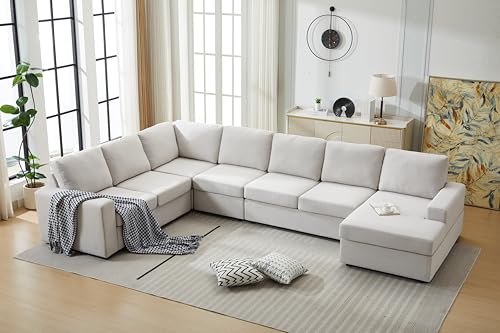
Ball & Cast 147" L-Shaped Sectional Couch for Living Room with Reversible Chaise & Removable Back Cushions,7 Seat Linen Upholstered Convertible Sectional Sofa Set,DIY Combination,for Home,Office,Beige
Check price on Amazon
Boneless Sectional for Living Room Black L-Shape Couch in Box Sofa Memory | Reversible Left Right Chaise Luxury Corduroy No Assembly Quick Rebound Compressed in Box High Density Foam Long Lasting
Check price on Amazon
MONVANE 106" L-Shaped Modular Sectional Sofa, Dark Green | Boneless Couches for Living Room, No Assembly Required, Removable Armrests, Reversible Chaise, Deep Seat
Check price on Amazon