
Tiny House Murphy Bed With Couch: The Complete Dual-Purpose Guide
One wall, two rooms. Learn how a Murphy bed with an integrated couch turns a compact tiny house into a full living space and a full bedroom without adding a single square foot.
If you live in a tiny house, a studio apartment, or any compact home, you already know the hardest trade-off is the one between seating and sleeping. A tiny house Murphy bed with couch solves that trade-off directly: the same wall zone holds your sofa by day and your bed by night. This guide explains how the combination works mechanically, what to measure before you commit, which configurations suit which floor plans, and how to choose a model that will still feel solid after years of daily folding.
What Is a Murphy Bed With a Couch?
A Murphy bed with a couch is a wall-mounted furniture system that integrates two functions into one footprint. The bed panel is hinged to a reinforced cabinet or wall frame and folds down into the room when needed. In the closed position, the outward-facing side of that same panel is finished as a sofa, so the unit reads as a normal seating piece rather than a bed waiting to happen.
There are two broad families of this furniture. The first is the front-mount sofa bed, where the couch sits directly in front of the wall cabinet and the bed folds out over or past the seating. The second is the side-mount or panel bed, where the sofa is built into the bed panel itself and rotates or pivots into place. Both approaches appear in tiny house builds, but they behave very differently in terms of daily routine, mattress compatibility, and how much clearance the room needs.
If you are still deciding between a wall bed and a more conventional convertible, our breakdown of sofa bed options for small spaces is a useful companion read. For a broader catalog of folding furniture concepts, browse the full space-saving furniture collection.
Why It Works So Well in a Tiny House
Tiny homes are defined by a single constraint: every square foot has to earn its place. A standard queen bed occupies a large fixed rectangle of floor that stays empty and unusable for roughly sixteen hours a day. A Murphy bed with couch converts that dead rectangle into a social zone during daylight hours and back into a sleeping zone at night.
The practical benefits are consistent across nearly every tiny house layout:
- Reclaimed living area. The floor where a bed would normally sit becomes walkable, usable seating space during the day.
- A real living room. Guests sit on a genuine sofa, not on the edge of a mattress. That matters for hosting, working from home, and everyday comfort.
- Cleaner sightlines. With the bed folded up, the room presents as a living space rather than a bedroom, which makes a small interior feel far larger.
- Better wall utilization. The mechanism uses vertical wall area that would otherwise hold artwork or shelving, so storage can be planned around the unit deliberately.
- Dual-purpose resale appeal. A well-built wall bed with seating is a genuine feature in compact homes and rental units.
The concept overlaps heavily with other compact seating strategies. If your room is narrow rather than small overall, the layout advice in our small space couch set guide complements what you will read here. And if you are furnishing a studio specifically, the studio apartment couch planning guide covers the seating side in more depth.
How the Mechanism Actually Works
Understanding the hardware before you buy is the single best way to avoid disappointment. There are three mechanism families you will encounter, and they differ meaningfully in daily effort and long-term durability.
Piston-Assisted Lift Mechanism
Gas pistons or spring-assist arms counterbalance the weight of the bed panel so it can be lowered and raised with modest effort. This is the most common design in modern Murphy bed couch combos because it allows a lighter frame and smoother operation. Entry-level units often use a single piston pair, while mid-range and premium units typically use dual or quad piston systems for more even travel and less wobble. The piston quality is the component most likely to determine how the unit feels after several years of use, so it deserves close attention.
Counterbalance and Spring Systems
Older or more mechanically traditional designs use counterweighted springs rather than gas pistons. These are dependable and simple, but they can require more physical effort and tend to have a firmer, less progressive motion. In a tiny house where the bed may be folded twice a day, a smoother piston-assisted system is generally the more pleasant choice.
Bi-Fold and Rotating Panel Systems
Some combo designs fold the bed panel in half or rotate it on a pivot, which reduces the projection of the bed into the room. These are useful where the couch must remain partly in place during use, but they add mechanical complexity and typically restrict mattress choice more tightly. Read the mattress specification carefully with any bi-fold system.
Practical note: Whatever the mechanism, the bed must be anchored to wall studs or a purpose-built structural frame. The load of a bed plus a sleeping adult is substantial, and the leverage of a folding panel amplifies it. If you are not confident in your wall construction, budget for professional installation.
Sizing: The Numbers That Decide the Layout
A Murphy bed with couch is only comfortable if both functions fit the room comfortably. The most common mistake is measuring the closed footprint and forgetting the open footprint. Use the reference ranges below as planning guidance, then confirm exact figures with the specific model you intend to buy.
| Bed Size | Typical Mattress Footprint | Closed Unit Footprint (approx.) | Best For |
|---|---|---|---|
| Full / Double | 54 in × 75 in | 60–64 in wide, 16–20 in deep | Single occupants and couples in very tight footprints |
| Queen | 60 in × 80 in | 66–70 in wide, 16–20 in deep | The most popular choice for tiny houses with a dedicated sleeping wall |
| King | 76 in × 80 in | 82–86 in wide, 18–22 in deep | Larger tiny homes or open-plan builds with a wide wall |
Beyond bed size, three clearances matter most. First, the projection depth: the distance the bed extends into the room when open, which is roughly the mattress length plus the mechanism. Second, the couch clearance: the seating depth plus legroom, so people can actually sit and stand comfortably. Third, the walkway width: aim for a clear path of at least 30 inches beside or in front of the unit where possible.
If your room is tight in more than one direction, our guide to space-saving couch strategies and the space-saving couch bed overview will help you compare alternatives before you settle on a wall bed.
Choosing the Couch Side of the Combo
The bed is only half the product. Because the couch faces the room all day, its comfort and style determine how the unit feels in everyday life. Three configurations dominate the market.
Integrated Sofa Panel
The sofa cushions are built directly into the bed panel. When the bed folds down, the cushions fold away with it or are removed and stored. This is the most space-efficient option and the cleanest visually, but it usually limits cushion thickness, so long sitting sessions are less plush than a dedicated sofa.
Freestanding Sofa in Front
A separate, full-comfort sofa sits in front of the wall cabinet, and the bed folds out over it or beside it depending on the mechanism. This gives you a genuinely comfortable seating piece, but it increases the closed depth of the installation and requires careful clearance planning so the bed does not collide with the sofa.
Loveseat-Style Combo
A narrower two-seat configuration suits very small walls and single occupants. It pairs well with a full-size bed and keeps the visual weight of the unit low. For more on compact seating formats, see our guide to tiny couch options and the related loveseat buying guide.
Strengths to Look For
- Reinforced steel frame and wall-mount bracket
- Smooth piston-assisted operation
- Removable, washable cushion covers
- Clear mattress depth specification
- Finished back panel on the visible side
- Safety strap or locking latch when closed
Common Pitfalls to Check
- Vague or missing mattress thickness limits
- Thin cabinet sides that flex under load
- Cushions too firm for daily sitting
- Mechanism that needs two people to fold
- No wall anchoring hardware included
- Projection depth not listed in the specification
Mattress Selection for a Wall Bed
Most Murphy bed mechanisms are designed around a specific mattress depth range, and staying inside that range is not optional. A mattress that is too thick will prevent the bed from folding flush or will put strain on the pistons. A mattress that is too thin can make the sleeping surface feel unsupported and may not align properly with the frame.
- Depth: confirm the manufacturer's specified range, commonly between 8 and 12 inches depending on the model.
- Support type: many wall bed frames use a slat or platform base, which pairs well with foam, hybrid, and latex mattresses.
- Weight: lighter mattresses reduce strain on the lifting mechanism, especially in piston-assisted designs.
- Edge support: a mattress with firm edges holds its shape better when the panel is vertical for long periods.
- No-box-spring design: wall beds rarely accommodate a traditional box spring, so choose a mattress that does not require one.
If your tiny house also needs to host guests regularly, compare the wall bed approach with a dedicated sofa bed overview and the sleeper couch guide before committing. Each format has a different comfort ceiling.
Installation and Wall Requirements
A Murphy bed with couch is a fixed installation, and the wall is part of the product. Work through these steps in order before you order anything.
- Confirm wall construction. Identify stud spacing and wall material. Wall beds should anchor into studs or a structural backing plate, never into drywall alone.
- Check the wall height. The cabinet needs vertical clearance for the bed to fold fully. Measure from floor to ceiling at the installation point, not just at the room center.
- Map the open footprint. Tape the open bed outline on the floor with painter's tape. Walk around it for a day to test whether the room still functions.
- Plan the swing path. Confirm the bed panel does not obstruct doors, windows, heating vents, or light switches when lowered.
- Clear the side clearance. Leave enough room on at least one side to access the bed comfortably and to change linens.
- Decide on professional installation. For a rented property or an unfamiliar wall structure, a professional fitter removes most of the risk. Our furniture delivery and installation notes explain what to coordinate.
Living With a Murphy Bed Couch Day to Day
The units that work best in tiny houses are the ones that fit a simple daily rhythm. The realistic routine is: fold the bed up in the morning, arrange the cushions, and return the space to a living room. In the evening, clear the surface, fold the bed down, and sleep.
A few habits make that rhythm much easier. Keep bedding light and easy to fold rather than bulky. Use a fitted sheet and a single duvet so the bed can be made quickly. Store any removable cushions in a designated bin or ottoman nearby. And treat the couch surface as a living surface, not a storage shelf, or the folding routine will start to feel like a chore.
If your tiny house also needs to handle work or dining, pair the unit with a suitable surface. Our guides to a small table for eating on the couch and the sliding side table for couches cover practical options that do not block the bed's swing path.
Matching the Unit to Your Interior Style
Because the unit occupies a full wall and is visible all day, its finish matters more than a typical piece of furniture. Choose a panel and upholstery finish that matches the dominant tone of the room rather than trying to make it a feature. Neutral upholstery gives you flexibility with throw pillows on the couch and seasonal accents, while a wood-tone cabinet can blend into trim and shelving.
If you are choosing a full seating package for the room, the style selection guide and the sofa styles catalog are useful references for consistency. For a small room, lighter upholstery generally reads as more spacious, which is why many compact builds lean toward pale tones.
When a Murphy Bed Couch Is Not the Right Answer
A wall bed with integrated seating is excellent for a dedicated living wall, but it is not the only compact solution. If your room is shallow rather than narrow, a pull-out or tri-fold design may suit you better. If you need guest flexibility more than daily living space, a dedicated sleeper may be the simpler choice.
- Compare a pull-out couch if you need occasional guest sleeping without a fixed installation.
- Look at a tri-fold couch bed if you need a portable, low-commitment option.
- Consider a sofa bed sectional if your room is wide but shallow and needs more seating than a loveseat provides.
- Review the couch bed overview for a full comparison of convertible formats.
- If the unit will serve a rented space, check the studio apartment couch guide for reversible alternatives.
Comparing Quality Tiers Without Guesswork
Quality in this category is best judged by construction and mechanism, not by appearance alone. The table below describes what you can generally expect at each tier using relative, non-numeric descriptors. Exact features vary by brand, so treat these as directional.
| Tier | Typical Construction | Mechanism Feel | Best For |
|---|---|---|---|
| Entry-Level | Particleboard or light steel frame with laminate finish | Functional but firmer operation; may need regular adjustment | Guest rooms and occasional-use installations |
| Mid-Range | Reinforced steel frame, denser panel core, quality hinges | Smoother piston-assisted travel and better load stability | Primary daily-use bed in a tiny house |
| Premium | Heavy-duty steel chassis, solid wood or high-density panels | Very controlled motion, minimal flex, long service life | Full-time living where the bed folds twice daily |
| Luxury | Bespoke cabinetry, commercial-grade hardware, premium upholstery | Effortless operation with tight tolerances | High-specification tiny homes and design-led builds |
Buying principle: if the bed will be folded every single day, choose the highest tier your project can justify. The mechanism is the part you cannot easily upgrade later, and a mid-range or premium unit is generally the more efficient choice over the life of a tiny house than an entry-level model that needs frequent adjustment.
Pre-Purchase Checklist
- Measured wall width, height, and stud locations
- Measured the open projection and taped it out on the floor
- Confirmed the mattress depth range and chosen a compatible mattress
- Checked that the couch seat depth suits your daily sitting
- Verified the mechanism type and expected effort to fold
- Confirmed wall anchoring hardware is included
- Planned cushion storage for the folded position
- Checked delivery and installation requirements
- Reviewed the warranty terms for the mechanism specifically
Ready to Compare Real Options?
Browse our curated selection of compact wall beds and convertible seating built for tiny houses and small living rooms.
Compare Available ModelsRecommended Murphy Bed With Couch
⚠️ AFFILIATE DISCLOSURE: This website contains affiliate links. As an affiliate Associate, we earn from qualifying purchases. If you make a purchase through these links, we may receive a small commission at no additional cost to you. Read our full affiliate policy.

Squireewo Queen Size Murphy Bed with Sofa, Space-Saving Wall Bed Frame with Couch, Bed Cabinet with LED Light and Gas Struts for Guestroom, Office, Bedroom, No Box Spring Needed, White and Grey
Check price on Amazon
Queen Horizontal Murphy Bed with Sofa and Storage Shelves,LED Light,Solid Wood Space Saving Hideaway Murphy Wall Bed with Couch and Storage for Adults (Beige,Queen)
Check price on Amazon
MERITLINE Queen Murphy Bed with Couch and LED Lighting,Solid Wood Folding Murphy Wall Bed Cabinet with Sofa
Check price on Amazon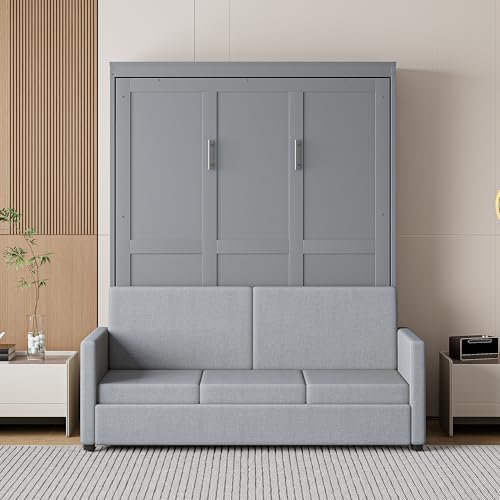
LZ LEISURE ZONE Full Size Murphy Bed, Wooden Full Murphy Bed with Cushion, Wall Bed with Sofa for Home Office or Small Room, Gray
Check price on Amazon
SOFTSEA Twin Size Murphy Bed with Couch, Foldable Wall Bed Cabinet with Storage Shelves and Charging Station, Space Saving Murphy Bed with Sofa for Small Spaces, Home Office, Gray
Check price on Amazon
AMERLIFE Queen Murphy Bed with Storage & Charging Station | Distressed White Wood Murphy Cabinet, Farmhouse Foldable Platform Bed, Large Drawer, Noisy Free, Guest Bedroom & Living Room
Check price on Amazon
Convertible Sofa Bed,Small Boneless Couch & Boneless Loveseat,Pull Out Couch Bed for Small Spaces,Premium Luxe Corduroy Folding Floor Futon Sleeper with Side Pocket & 2 Pillows, No Assembly Required
Check price on Amazon
MALOL Pull Out Couch, Futon Sofa Bed, Single Sleeper Sofa, Dark Grey | Small Sofa Bed Couch with USB Port, Foldable Table, Pillow, Adjustable Backrest for Bedroom/College/Living room
Check price on AmazonFrequently Asked Questions
What is a tiny house Murphy bed with couch?
It is a dual-purpose furniture system that combines a wall-mounted folding bed with integrated sofa seating. During the day the unit works as a couch; at night the bed folds down to provide a full sleeping surface in the same footprint.
How much floor space does a Murphy bed with couch save?
When the bed is folded away, the entire footprint of a traditional bed is freed for living space. In practice this means the room gains roughly the area a standard sofa occupies, because the bed and couch share a single vertical wall zone.
What mattress thickness works best for a Murphy bed couch combo?
Most mechanisms specify a mattress depth range, commonly between 8 and 12 inches. Staying within the manufacturer's range ensures the bed folds flush and the couch closes properly. Always verify the exact figure for the model you choose.
Do Murphy bed couches require wall anchoring?
Yes. The unit must be anchored to wall studs or a structural backing. The mechanism carries the weight of the bed plus the sleeper, and the leverage of a folding panel amplifies that load. Professional installation or careful stud-mounted assembly is strongly recommended.
Can a Murphy bed with couch be used in a rental?
It is possible, but get landlord approval first because of the wall anchoring requirement. Freestanding cabinet-style wall beds distribute load differently and may be a better fit for rented spaces, though they still benefit from being secured to the wall.
Is a wall bed with couch comfortable for daily sleeping?
Comfort depends primarily on the mattress and the firmness of the platform. A mid-range or premium unit with a properly specified mattress and a solid slat or platform base is generally comfortable for nightly use. Entry-level models with thin platforms may feel less supportive.
Still comparing formats? Start with our sofa couch overview, review the full Murphy bed with couch guide, and explore related compact options such as the small space pull-out couch and the space-saving couch bed. For questions about this guide, reach out through our contact page.