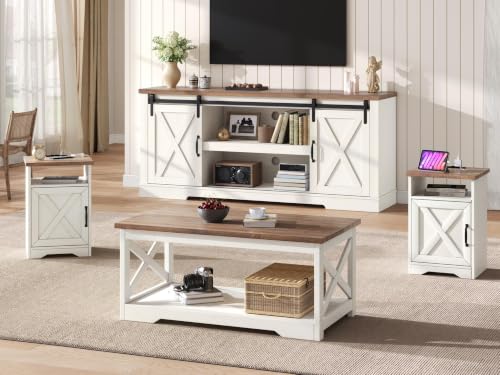
What Is a TV Stand and End Table Set?
A TV stand and end table set is a curated group of living room furniture built around your entertainment area. The set typically includes a media console — the centerpiece that holds your television, media players, and cables — plus matching end tables that sit beside your couch or accent chairs. Some sets also include a coffee table or a narrow behind-couch console for a fully coordinated look.
The value of buying as a set comes down to three things: visual consistency, proportional balance, and simpler planning. When the finish, leg style, and hardware match across pieces, the room reads as one cohesive design. When the heights and depths are designed together, the pieces relate to each other naturally. And when you plan the room around a single set, you avoid the guesswork of mixing scales.
If you are still building out the seating side of the room, our guides on comfortable couches and small space couch beds pair well with the sizing advice below.
Core Components of a Coordinated Set
Media Console / TV Stand
The anchor piece. Holds the television and media equipment, and sets the visual height of the entertainment wall. Look for cable management and ventilation if you house electronics inside.
Essential tier to premiumEnd Tables (Pair)
Flank the couch to hold lamps, drinks, and remotes. Height should sit close to the couch arm for comfortable reach. Drawers or shelves add practical storage.
Mid-tier standardOptional Add-Ons
Coffee tables, behind-couch consoles, or a corner shelf complete the arrangement. A narrow console behind the sofa adds surface area without crowding walkways.
Balanced to top-tierHow to Size a TV Stand and End Table Set
Size is the most common source of regret in living room furniture. A media console that is too small makes even a modest television look oversized and unbalanced; a console that is too large can swallow a narrow wall. Start with the television, then work outward.
TV Stand Width
A practical guideline is to choose a stand that is at least as wide as your television — and ideally a little wider. This gives the screen visual breathing room and makes the arrangement feel grounded. For a wall-mounted TV, the stand can be narrower and used primarily for storage, but a wider console still reads as more substantial.
Viewing Height
The top of the stand plus the height of the TV should place the center of the screen roughly at eye level when you are seated. If your couch is low and deep, a lower console keeps the viewing angle comfortable. If you have a high-back couch, you may need a slightly taller stand. Our guide to high-back couches explains how seating height affects viewing comfort.
End Table Height
End tables should sit within a few inches of your couch arm height. Too low and they feel disconnected; too high and they interrupt sightlines. Measure the arm of your couch before you commit. If you are still deciding on seating, our measurement tips help you map the whole room first.
Depth and Clearance
Confirm that the console depth leaves enough room for cables and ventilation, and that walkways remain clear. A general rule is to keep at least 30 inches of clearance in main traffic paths. In tight rooms, a narrow console is often the smarter choice than a deep entertainment center.
Materials and Build Quality
The material tier of your set determines how it ages and how it feels day to day. Solid wood and high-grade engineered wood sit at the premium and luxury end, offering durability and a substantial feel. Metal frames with wood or glass tops land in the mid-range to premium tier and are excellent for modern rooms and heavy-duty support. Lighter engineered wood and laminate finishes fall into the entry-level and essential tiers — perfectly serviceable for guest rooms or starter apartments.
Whichever tier you choose, check the joinery. Dovetail or reinforced corner joints outlast stapled construction. Look for adjustable shelves and pre-drilled cable ports if you plan to house electronics. For households with pets, a scratch-resistant finish and rounded edges are worth prioritizing — the same logic we recommend in our upholstery care guide applies to wood and laminate surfaces.
Material Tier Comparison
| Tier | Typical Construction | Best For |
|---|---|---|
| Entry-level | Laminate over engineered wood, basic hardware | Starter apartments, guest rooms, temporary setups |
| Mid-range | Engineered wood with veneer, metal accents, soft-close hardware | Everyday family living rooms, balanced durability |
| Premium | Solid wood frames, high-grade veneers, premium hardware | Long-term primary living rooms, design-forward spaces |
| Luxury | Hardwood solids, hand-finished surfaces, custom hardware | Statement rooms, collectors of fine furniture |
Layout Strategies for Your Set
Where you place the console and tables shapes how the whole room flows. Three common arrangements cover most living rooms:
- Symmetrical wall layout: The console centered on the TV wall, with end tables flanking the couch directly opposite. This is the most reliable arrangement for balanced rooms and works especially well with a 3-seater couch.
- Corner media setup: The console angled or placed in a corner to free up the center of the room. Pair it with a compact couch and a single end table at the open end. This suits small rooms and open floor plans.
- Open-plan zoning: Use the console as a low divider between the living zone and dining or kitchen space. Place a behind-couch table on the seating side to define the boundary without blocking sightlines.
If your seating is a sectional, the open arm end is the natural home for an end table, while the longer side benefits from a narrow console. Our guide to L-shaped sectionals covers how to plan around the corner footprint.
Coordinating the Set With Your Couch
The set should feel like it belongs with your seating, not compete with it. Echo one or two design cues — the wood tone, the metal finish, the leg shape — and let the rest stay quiet. A low-profile media console pairs naturally with a sleek modern couch; a taller, more substantial console suits traditional or transitional seating. If you are working with leather, our leather living room guide shows how to balance warm wood tones against leather upholstery.
Scale matters too. A large couch in a small room can be offset with a narrower console and slimmer end tables. A compact apartment sofa leaves room for a more generous console and pair of tables. Use an area rug to visually anchor the console, couch, and tables into one grouping.
Practical Features Worth Prioritizing
Cable Management
Pre-drilled ports and rear panels keep cords tidy. Essential if the console holds a router, console, or streaming device.
Essential tierVentilation
Open shelving or vented backs prevent electronics from overheating. Closed cabinets need airflow gaps.
Mid-tier and upAdjustable Shelving
Lets you reconfigure storage as your equipment changes. A small feature with long-term payoff.
Premium tierCommon Mistakes to Avoid
- Buying the console before measuring the wall. Confirm the width, height, and outlet placement first. Our measurement tips walk through the process.
- Ignoring the couch arm height. End tables that are several inches off from the arm feel awkward to use every day.
- Overcrowding the console top. Leave room around the television for visual calm; store media and remotes in drawers or baskets.
- Skipping cable planning. A beautiful set with visible cords undermines the whole arrangement.
- Mixing too many finishes. If the set is wood, keep other metal accents to one tone. Consistency reads as intentional.
Care and Longevity
Dust the console and tables weekly with a soft, dry cloth. Avoid harsh chemical cleaners on veneers and laminates — a lightly damp cloth is usually enough. Keep the set out of direct, prolonged sunlight to prevent fading, and use coasters to protect surfaces from heat and moisture. If you have pets, check the underside and edges periodically for scratches and touch up as needed. Our fabric and UV protector guide explains how to protect nearby upholstery from the same sun exposure.
Frequently Asked Questions
What is a TV stand and end table set?
A TV stand and end table set is a coordinated group of living room furniture that includes a media console for your television and matching side tables that flank your couch. These sets share consistent materials, finishes, and design language so the room looks intentional rather than pieced together.
How do I choose the right size TV stand for my room?
Match the stand width to your television and the available wall space. A common guideline is to choose a stand at least as wide as the TV, ideally slightly wider for visual balance. Also confirm that the stand depth allows proper ventilation and that the height keeps the screen at a comfortable viewing level from your couch.
What materials are best for a TV stand and end table set?
Solid wood and high-grade engineered wood offer durability and a premium feel. Metal frames with wood or glass tops provide a modern look and heavy-duty support. For households with pets or children, look for scratch-resistant finishes and rounded edges. Each material tier delivers different longevity, so match it to your daily use.
Can end tables be used with a sectional couch?
Yes. With sectionals, an end table typically works best at the open arm end, while a behind-couch table or console can serve the longer side. Coordinated sets often include a media console plus two side tables, and you can supplement with a narrow console behind the seating for extra surface area.
How do I coordinate a TV stand and end table set with my couch?
Echo the wood tone or metal finish of your set with other pieces in the room, and keep the scale consistent with your couch. A low-profile media console pairs well with a sleek modern couch, while taller, more substantial tables suit traditional or transitional seating. Use an area rug to visually anchor the whole arrangement.
Final Checklist Before You Buy
- Measure the TV wall width, available depth, and outlet placement.
- Measure your couch arm height to set end table expectations.
- Confirm the console width is at least as wide as the TV.
- Choose a material tier that matches daily use and household members.
- Check for cable management, ventilation, and adjustable shelves.
- Plan walkway clearance of at least 30 inches in main traffic paths.
- Decide whether the set needs a coffee table or behind-couch console.
Once the sizing and material decisions are settled, the set becomes the backbone of the room. From there, styling is the easy part — a pair of lamps, a rug, and a few well-chosen accents complete the space.