
Twin Daybed That Looks Like a Couch: The Complete Buyer's Guide
Learn how to choose a twin daybed that reads as a real sofa by day and a comfortable single sleeper by night — sizing, frame styles, mattress fit, styling, and a practical buying checklist.
Jump to Buying ChecklistWhy this guide matters: A twin daybed that looks like a couch is one of the most efficient pieces of furniture you can own for a guest room, studio apartment, home office, or small living room. It delivers two functions in one footprint — a sofa for lounging and reading, and a twin-size bed for overnight guests. But the category is broader than it looks: backrest-style frames, pop-up trundle designs, link-spring constructions, and upholstered platforms all behave very differently in daily use. This guide walks you through the details that actually matter so you can choose with confidence.
What Exactly Is a Twin Daybed That Looks Like a Couch?
A daybed is a bed frame designed for sitting as much as sleeping. A twin daybed that looks like a couch takes that concept one step further by borrowing the visual language of a sofa: a defined backrest, two arms, upholstered panels, and often a tailored cushion arrangement. The result is a piece that blends into a living room or den without announcing itself as a bed.
The key difference from a standard twin bed is orientation. A standard bed is designed to be approached from the side, with a headboard against a wall. A daybed is designed to be approached from the front, with the long side acting as the seating surface. That single change in orientation is what lets it function as a couch during the day and convert into a sleeper at night.
If you are still comparing the broader category of convertible furniture, our overview of twin bed couch options explains how daybeds differ from futons, sleeper sofas, and pull-out couches. The short version: daybeds are typically simpler mechanically, which makes them a smart choice for rooms that need dual function without complex hardware.
Why a Twin Daybed Is a Smart Choice for Small Spaces
Small rooms reward furniture that earns its footprint. A twin daybed does that in several ways:
One footprint, two functions
Instead of a sofa plus a guest bed, a single piece covers both needs. That frees up wall space for storage, a desk, or a reading corner.
Always available for visitors
No inflating air mattresses or rearranging furniture when guests arrive. The sleeping surface is ready in seconds.
Works across room types
Guest rooms, studios, home offices, kids' rooms, and basements all benefit from a piece that shifts between seating and sleeping.
Reads as a sofa, not a bed
Upholstered daybeds with proper back cushions look intentional in a living space rather than like a bedroom piece dropped into a den.
For rooms that lean toward a more convertible setup, our guide to a twin bed frame that looks like a couch covers the structural and styling differences between frame-first and sofa-first designs.
Main Styles of Twin Daybeds That Look Like Couches
Most twin daybeds fall into one of four broad style families. Each has trade-offs in comfort, mechanism complexity, and how convincingly it reads as a sofa.
1. Backrest-Style Upholstered Daybeds
These are the most sofa-like option. The frame includes a full back panel and two arms, usually upholstered in fabric, velvet, or a performance textile. The twin mattress sits inside the frame, and the backrest doubles as a support for throw pillows. Backrest daybeds generally require a mattress of moderate thickness — too thick and the backrest disappears; too thin and the seat feels hollow.
Best for: living rooms, home offices, and guest rooms where the piece will be seen every day and should look deliberately styled.
2. Link-Spring and Metal Daybeds
A classic construction where the mattress rests on a link-spring deck supported by a metal frame. Many metal daybeds include an adjustable backrest that raises and lowers, letting you set the piece in a sofa posture for daytime use and a flat posture for sleeping. Metal frames are typically more open in design, so they read as daybed first and sofa second.
Best for: traditional and transitional interiors, and rooms where ventilation and easy cleaning matter.
3. Pop-Up and Trundle Daybeds
These add a second sleeping surface beneath the main twin mattress. A pop-up trundle lifts to the same height as the daybed to form a larger sleeping area, while a standard trundle stays lower and slides out like a drawer. Trundle daybeds are a strong choice for guest rooms that regularly host two people.
Best for: guest rooms and multi-purpose spaces where you want to expand sleeping capacity without adding a second piece of furniture.
4. Platform and Panel Daybeds
Low-profile frames with a solid platform deck and a simpler panel back. These tend to have a more modern, architectural look and often work well with a thicker mattress. Platform daybeds are usually the simplest mechanically, which makes them a dependable long-term choice.
Best for: contemporary interiors, basements, and rooms where a clean, minimal silhouette is preferred.
What Makes a Daybed Read as a Couch?
Not every twin daybed looks like a sofa. A handful of design details do most of the visual work:
- A continuous backrest. A full-width back panel, even a low one, is the single strongest cue. It signals seating rather than sleeping.
- Two defined arms. Symmetrical arm panels frame the seating area and create the silhouette of a loveseat.
- Upholstered surfaces. Fabric, velvet, or leather upholstery softens the frame and hides the mattress edge.
- Layered back cushions. Two or three large back cushions transform a flat backrest into a comfortable leaning surface and add visual depth.
- Tailored mattress covering. A fitted cover, quilted topper, or upholstered mattress finish removes the "bed" read from the sleeping surface.
- A finished back. If the piece may float in a room, a finished back panel allows it to be placed away from the wall like a real sofa.
For a deeper look at how daybeds compare with other convertible twin options, our article on a twin bed that looks like a couch breaks down the styling decisions that make the difference.
Sizing and Mattress Fit: The Details That Trip People Up
A twin mattress measures approximately 38 inches wide by 75 inches long. The frame adds a few inches on each side, so most twin daybeds occupy roughly 40 to 44 inches in width and 78 to 82 inches in length. Always confirm the exact dimensions of the specific model, because arm thickness and backrest depth vary significantly between designs.
Mattress thickness is where most buyers run into trouble. As a general rule:
| Daybed Style | Ideal Mattress Thickness | Notes |
|---|---|---|
| Backrest-style upholstered | 6 to 10 inches | Keeps the backrest visible above the mattress and preserves the sofa look. |
| Link-spring metal | 6 to 9 inches | Thicker mattresses can interfere with adjustable backrest mechanisms. |
| Pop-up trundle | 6 to 8 inches | The upper and lower mattresses should match in thickness for a level sleeping surface. |
| Platform / panel | 8 to 12 inches | Platform decks often support a thicker, more sofa-like mattress. |
Clearance matters too. Allow at least 30 inches of open floor in front of the daybed for walkways, and more if the model has a pull-out or pop-up mechanism. If you are working within a tight footprint, our guide to a twin size couch bed includes layout suggestions for narrow rooms.
Frame Materials and Construction Quality
Construction quality determines how long the daybed holds its shape and how comfortable it remains as a seat. Three materials dominate the category:
Metal Frames
Steel and iron frames are durable, easy to clean, and often the most mechanically straightforward. Look for reinforced joints and a rust-proof finish on visible metal components. Entry-level metal daybeds can feel light and may develop squeaks over time, while mid-range and premium frames use thicker gauge steel and better joint welds.
Wood Frames
Solid wood and engineered wood frames soften the look and pair naturally with upholstered backs. Check that the frame uses corner blocks or reinforced joinery at stress points. Wood frames are generally quieter than metal but require more attention to humidity and moisture.
Upholstered Platforms
These combine an internal wood or metal frame with a padded exterior. The quality of the foam padding and the density of the upholstery fabric determine how well the piece holds its shape. Performance fabrics and tight weaves tend to wear better in high-traffic rooms.
For a broader comparison of upholstery choices across convertible furniture, see our guide to the type of couch fabric that works best for daily-use seating.
Comfort Strategy: Making a Daybed Sit Like a Sofa
The mattress you choose sets the baseline, but the cushion strategy determines whether the daybed actually feels like a couch. A practical layering approach looks like this:
- Start with a medium-firm twin mattress. Memory foam tends to feel softer and more sofa-like for sitting; innerspring models feel more like a traditional couch with a firmer seat.
- Add a quilted or fitted mattress cover. This hides the mattress pattern, protects the surface, and softens the edge where the mattress meets the frame.
- Layer two or three large back cushions. These should be tall enough to reach the top of the backrest and firm enough to support leaning. A mix of a firm lumbar cushion and a softer decorative cushion works well.
- Add a seat cushion for high-use rooms. A thin bench cushion across the seat creates a more upholstered feel and protects the mattress from daily wear.
- Finish with a throw or two. Textiles soften the silhouette and reinforce the sofa read.
If you plan to use the daybed primarily as seating, our article on twin couch configurations covers cushion ratios and backrest heights in more detail.
Styling a Twin Daybed So It Looks Like a Real Couch
Styling is where the sofa illusion is either completed or broken. A few principles consistently work:
Pillow Placement
Treat the daybed like a loveseat. Place two large back cushions across the full width, then layer smaller decorative pillows in front. Odd numbers tend to look more natural than even numbers, and mixing sizes adds depth.
Anchoring the Piece
Place the daybed on a rug rather than against bare floor. The rug defines the seating zone and visually separates the daybed from the rest of the room. A coffee table or a slim console in front completes the arrangement.
Lighting and Wall Decor
A floor lamp or a pair of wall sconces above the daybed reinforce the idea of a seating area. Wall art hung at sofa height — roughly 6 to 8 inches above the backrest — strengthens the illusion.
Keeping It Sofa-Ready
If guests arrive without warning, a daybed that is already styled as a sofa converts quickly. Keep a fitted sheet and a spare throw in a nearby storage ottoman or under the frame so the transition takes seconds rather than minutes.
For room-level layout ideas, our guide to a twin size pull out couch covers traffic flow and placement in compact living rooms.
Twin Daybed vs Other Convertible Options
Understanding how a daybed compares with other dual-purpose pieces helps you choose the right category before you start comparing models.
| Option | Best For | Trade-Off to Consider |
|---|---|---|
| Twin daybed that looks like a couch | Dual-purpose guest rooms and small living rooms | Less deep seating than a true sofa; mattress thickness must be matched to the frame. |
| Twin sleeper sofa | Rooms that primarily function as living space | Mechanism adds weight and complexity; sleeping surface depends on the mattress quality built in. |
| Twin futon couch | Flexible rooms and casual interiors | Folding mechanism can wear over time; seating and sleeping comfort are closely linked. |
| Twin bed frame that looks like a couch | Bedrooms that need a more grown-up look | Often designed as a bed first; seating comfort depends on how the frame is built. |
If you are weighing daybeds against folding options, our overview of a twin futon couch explains where futons win and where daybeds are the more durable long-term choice. For rooms that need a true bed-first setup, a twin sleeper sofa guide covers the sofa-first alternative.
Twin Daybed Buying Checklist
Use this checklist before you commit to a model. Each item corresponds to a decision that is difficult or impossible to change after purchase.
- Measure the room, not just the wall. Confirm the daybed fits with at least 30 inches of clearance in front, and that doorways and hallways allow delivery.
- Confirm the mattress size and thickness range. Verify the frame accepts a standard twin mattress and note the recommended maximum thickness.
- Decide on the mechanism. Static frame, adjustable backrest, pop-up trundle, or pull-out — each has different space and comfort implications.
- Check the backrest height. A taller backrest reads more like a sofa; a lower backrest feels more open and modern.
- Look at the frame construction. Reinforced joints, corner blocks, and a solid deck are signs of a durable build.
- Assess the upholstery. Performance fabrics and tight weaves hold up better in high-traffic rooms; velvet and textured fabrics add warmth but need more care.
- Plan the cushion strategy. Budget for two or three back cushions and a quilted cover if they are not included.
- Check assembly requirements. Some models ship fully assembled; others require significant setup. Confirm what tools and time are needed.
- Verify the finished back. If the daybed may float in the room, confirm the back panel is finished on all sides.
- Review the warranty. Frame and mechanism warranties vary widely; a longer frame warranty is a useful signal of build confidence.
Recommended Twin Daybeds That Look Like Couches
⚠️ AFFILIATE DISCLOSURE: This website contains affiliate links. As an affiliate Associate, we earn from qualifying purchases. If you make a purchase through these links, we may receive a small commission at no additional cost to you. Read our full affiliate policy.

LIKIMIO Daybed with Trundle, Twin Bed Frame,White | with Upholstered Headboard and Charging Station, Sofa Day Bed with Strong Supports for Living Room, Bedroom and Guest Room
Check price on Amazon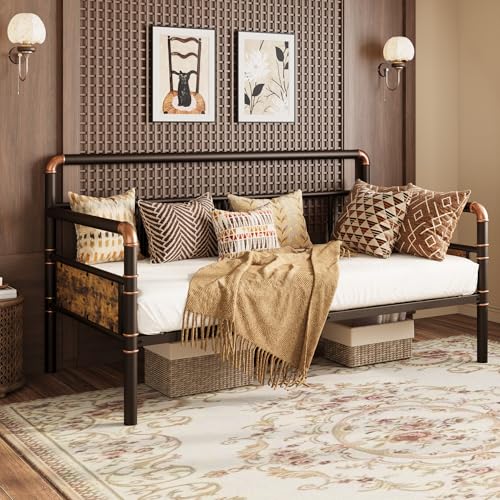
IDEALHOUSE Twin Daybed with Classic Headboard,Metal Twin Bed Frame,Brown | Sofa Bed Frame,Vintage Wooden Headboard,Safe Curve Armrests,Heavy Duty Steel Slats Support,For Living Room,Guest Room
Check price on Amazon
Upholstered Twin Size Daybed, Tufted Button Sofa Bed, Grey | Solid plywood construction, wood slat support, no extra foundation needed, 82.5''L*44.5''W*34''H, guest room seating
Check price on Amazon
UQGVML Twin Size Daybed with Storage Drawers, Upholstered Daybed, Grey | with 2 USB Ports, Sturdy Metal and Wood Frame, Corner Day Bed for Bedroom, No Box Spring Needed
Check price on Amazon
LIKIMIO Twin Daybed with Trundle, Day bed with Charging Station | Twin-to-king daybed, padded backrest with shelves, 800lb steel frame, storage/charging, easy assembly
Check price on Amazon
Lutown-Teen Twin Daybed Frame, Metal DayBeds, Heavy-Duty Steel Slats, Black | 700 lb Capacity, 12-Inch Underbed Storage, Bedroom Daybed or Living Room Sofa, Non-Slip Leg Pads, 20-30 Minute, Assembly
Check price on Amazon
Arhomefurni Upholstered Twin Size Daybed with Two Storage Drawers, Twin Leatherair Sofa Bed Daybed with Wood Slat Support,No Box Spring Needed (Dark Grey)
Check price on AmazonCommon Mistakes to Avoid
Most disappointing daybed purchases trace back to a handful of avoidable decisions:
- Buying the mattress after the frame. Choose the frame first, confirm the thickness range, then buy a mattress that fits that range. The reverse order often results in a mattress that hides the backrest or sits too low.
- Ignoring the seat depth. Daybeds tend to have shallower seat depths than sofas. If you plan to lounge for long periods, look for a frame with a deeper seat or add a bench cushion to extend the usable depth.
- Skipping the back cushions. A daybed without proper back cushions sits like a bed. The cushions are not decorative extras — they are what make the piece function as a sofa.
- Overlooking the finished back. A daybed placed against a wall can get away with an unfinished back; a floating arrangement cannot.
- Choosing a mechanism you do not need. A static frame is more durable and simpler to maintain. Only choose a pop-up or trundle mechanism if you actually need the extra sleeping surface.
For a broader comparison of how daybeds fit into the full range of convertible seating, see our guide to the types of couches that turn into beds.
Frequently Asked Questions
What is a twin daybed that looks like a couch?
It is a dual-purpose furniture piece built around a twin-size mattress, styled with a backrest and armrests so it reads as a sofa during the day and converts into a single sleeper at night. Unlike a standard twin bed, the frame is designed for upright lounging and is usually placed against a wall or used as a room divider.
Does a twin daybed use a standard twin mattress?
Most do, but the ideal thickness varies by frame. Backrest-style frames usually work best with mattresses around 6 to 10 inches thick, while trundle and pop-up frames often require a thinner profile. Always confirm the maximum mattress height recommended by the manufacturer.
Is a twin daybed comfortable for everyday sitting?
Yes, when paired with the right mattress and cushion strategy. A medium-firm twin mattress, a fitted cover or quilted topper, and two or three back cushions create a supportive seat. Memory foam mattresses tend to feel softer for sitting, while innerspring models feel more like a traditional sofa.
How much floor space does a twin daybed take up?
A twin mattress is roughly 38 by 75 inches, so the frame footprint typically runs about 40 to 44 inches wide and 78 to 82 inches long. Plan for at least 30 inches of clearance in front of the daybed for walkways and mechanism access.
Can a twin daybed look like a couch without a wall behind it?
Yes. Choose a daybed with a finished back and symmetrical arms, then float it in the room like a sofa. Place a slim console or sofa table behind it to define the seating zone, and anchor the arrangement with a rug and a coffee table.
How do I style a daybed to look less like a bed?
Layer two or three large back cushions against the backrest, add a quilted cover over the mattress, and place the daybed on a rug with a coffee table in front. Treating the piece as a loveseat rather than a bed is the most reliable styling approach.
Final Thoughts
A twin daybed that looks like a couch is one of the most practical pieces you can add to a small home. It earns its footprint by working as seating every day and as a sleeper when guests arrive. The key is to treat it as a sofa first: choose a frame with a real backrest and arms, match the mattress thickness to the frame, invest in proper back cushions, and style it like a loveseat. Do that, and the daybed stops looking like a compromise and starts looking like a deliberate design choice. If you are still exploring the wider category, our guide to a twin mattress couch covers additional configurations, and our overview of a twin daybed that looks like a couch is a useful starting point for comparing specific models.