
Upholstery Fabric for Outdoor Cushions: The Complete Buying Guide
Choosing the right fabric decides whether your outdoor cushions survive a single season or look great for years. This guide explains weather-resistant materials, durability tiers, breathability, and care so you can buy with confidence.
Compare Outdoor FabricsWhy this guide matters: Outdoor cushions face sun, rain, humidity, and mildew — conditions that destroy indoor upholstery quickly. The fabric you choose is the single biggest factor in how long your patio seating lasts and how often you need to replace it.
Below you will find a side-by-side comparison of the leading outdoor upholstery fabrics, the technical features that actually matter, and a clear framework for matching fabric to your climate and usage.
What Makes Outdoor Cushion Fabric Different?
Outdoor upholstery fabric is engineered to resist three forces that indoor fabric cannot handle: ultraviolet radiation, moisture, and biological growth. Sun exposure breaks down untreated fibers and fades dyes. Rain and humidity penetrate cushion foam and create mildew. The best outdoor fabrics address all three at the fiber level, not just with a surface coating.
A quality outdoor fabric typically combines four properties: solution-dyed color (pigment locked into the fiber before weaving), UV stabilization, water repellency, and mildew resistance. Breathable weaves also matter because they let trapped moisture escape instead of condensing inside the cushion. Fabrics that claim water resistance but trap moisture often develop odors and mildew from the inside out.
Quick rule: If a fabric is not labeled solution-dyed or UV-stabilized, treat it as indoor-only. Surface treatments wash away; fiber-level protection does not.
Outdoor Upholstery Fabric Materials Compared
The table below compares the most common outdoor cushion fabrics using universal quality tiers rather than any numeric market figures. Use the tier labels to understand relative positioning within the outdoor fabric category.
| Fabric | Tier | Best For | Key Strengths | Watch Outs |
|---|---|---|---|---|
| Solution-Dyed Acrylic | luxury | Year-round exposed patios, sunny climates | Excellent UV and fade resistance, mildew resistant, soft hand, cleans well | Higher tier positioning; verify breathability of the weave |
| Olefin (Polypropylene) | premium | Poolside, humid climates, budget-conscious upgrades | Highly water and stain resistant, lightweight, strong, quick drying | Can feel less soft; heat sensitivity in extreme sun |
| Polyester (Outdoor-Grade) | mid-range | Covered porches, occasional exposure | Good colorfastness when solution-dyed, durable, wide design range | Standard polyester fades faster than acrylic; check UV rating |
| PVC-Coated / Vinyl | mid-range | High-moisture areas, dining cushions, easy-clean needs | Fully waterproof surface, wipe-clean, mold resistant | Non-breathable; can feel warm and stiff; not for deep seating comfort |
| Vinyl Mesh | mid-range | Dining chairs, sling seating, wet climates | Fast draining, breathable, mildew resistant, easy to rinse | Limited cushion-style suitability; less plush |
| Textilene / Coated Mesh | premium | Long-term outdoor use, humid and rainy regions | Durable, UV resistant, breathable, quick drying | Firmer feel; style range narrower than woven acrylic |
| Cotton / Linen (Untreated) | entry-level | Covered sunrooms only, decorative accents | Natural texture, comfortable hand | Not weather-resistant; fades, mildews, absorbs water |
Key Factors When Choosing Outdoor Cushion Fabric
UV & Fade Resistance
Solution-dyed fibers hold color far longer than piece-dyed fabrics. If your cushions sit in direct sun for most of the day, prioritize UV-stabilized acrylic or premium coated mesh.
Water Repellency vs. Waterproofing
Repellent fabrics bead water and let it roll off while remaining breathable. Fully waterproof fabrics block water but trap moisture. Choose repellent for deep seating and waterproof for dining cushions.
Breathability & Drainage
Moisture trapped inside foam is the leading cause of mildew and odor. Breathable weaves and drainage-friendly constructions extend cushion life significantly.
Mildew & Mold Resistance
Look for explicit mildew-resistant labeling. Olefin, acrylic, and coated mesh perform best. Untreated natural fibers should be avoided in humid climates.
Abrasion & Pilling
Outdoor seating takes repeated friction from use and sun. Dense, tightly woven fabrics resist pilling and surface wear better than loose weaves.
Comfort & Hand Feel
Acrylic and outdoor-grade polyester feel closest to indoor upholstery. Coated and mesh fabrics feel firmer but offer superior water performance.
For a broader material overview that complements this page, see our guide to upholstery fabric for outdoor furniture. If your priority is strictly water performance, the comparison in waterproof fabric for outdoor cushions is a useful next step. You can also review weather-resistant fabric for outdoor cushions and UV protected fabric for outdoor furniture for climate-specific recommendations.
Match the Fabric to Your Climate
Sunny, Dry Climates
UV exposure is the dominant stress factor. Solution-dyed acrylic is the safest long-term choice because its color is locked into the fiber and will not fade as quickly as surface-dyed alternatives. Olefin is a strong premium-tier option when the cushions are not in constant direct sun.
Humid and Rainy Climates
Moisture and mildew risk outweigh fading. Prioritize breathable, quick-drying fabrics such as olefin, Textilene mesh, or vinyl mesh. Ensure cushion foam is open-cell or has drainage channels. Fully waterproof surfaces can work for dining but are less comfortable for lounging.
Coastal Areas
Salt air adds corrosion stress to frames and zippers, while humidity drives mildew. Choose solution-dyed acrylic or premium coated mesh, and verify that zippers and hardware are rust-resistant. For broader material guidance in harsh settings, see waterproof outdoor furniture material.
Covered Porches and Sunrooms
With reduced direct rain exposure, you can widen your options. Outdoor-grade polyester and solution-dyed acrylic both perform well. This is also where breathable woven fabrics feel most comfortable. If you also need cushion covers for indoor pieces, the principles in upholstery couch cushions apply to fit and foam selection.
Care and Maintenance for Outdoor Cushion Fabric
Even the best outdoor fabric benefits from routine care. These habits extend cushion life without complicated products:
- Brush off debris weekly. Dirt and pollen work into the weave and accelerate abrasion.
- Rinse with mild soap and water. Most outdoor fabrics tolerate gentle detergent; avoid harsh bleach unless the manufacturer explicitly allows it.
- Air-dry thoroughly. Remove covers when the design permits and stand cushions on edge so water drains and air circulates.
- Store or cover during off-season. Breathable covers protect without trapping condensation.
- Rotate cushions. Periodic rotation evens out sun exposure and wear patterns.
For waterproofing strategies that pair well with outdoor fabric care, see waterproof fabric for outdoor furniture covers. If you are refreshing existing pieces, water resistant outdoor furniture cushions covers ready-made options, while weatherproof cushions explains construction-level durability.
Recommended Upholstery Fabric for Outdoor Cushions
⚠️ AFFILIATE DISCLOSURE: This website contains affiliate links. As an affiliate Associate, we earn from qualifying purchases. If you make a purchase through these links, we may receive a small commission at no additional cost to you. Read our full affiliate policy.

POFL Outdoor Fabric & Furniture Cleaner – Mold & Mildew Stain Remover for Patio Cushions, Sling Seating, Mesh, Canvas Awnings, Vinyl Fencing & Outdoor Surfaces – 25.36 fl oz
Check price on Amazon
Sunbrella Clean Multi-Purpose Fabric Cleaner for Patio Cushions | 32 Fl Oz | All-in-One Cleaner for Water-Safe Upholstery and Vinyl; Removes Dirt, Spills and Everyday Stains; Non-PFAS
Check price on Amazon
Scotchgard Outdoor Water & Sun Shield Fabric Spray, 10.5 oz | Water Repellent Spray for Outdoor Gear and Patio Furniture, Protects Against the Elements
Check price on Amazon
STAR BRITE Outdoor Collection Mildew Stain Remover, Professional Strength | Mildew stain remover for outdoor fabric, vinyl, grout & more; safe on multiple surfaces, fast acting
Check price on Amazon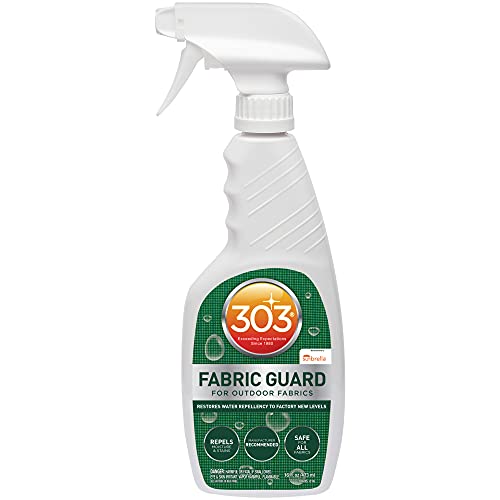
303 Fabric Guard Water Repellent for Outdoor Fabrics, 16 oz | Restores water and stain resistance on outdoor fabric, canvas, cushions, and upholstery.
Check price on AmazonCommon Mistakes to Avoid
- Using indoor fabric outdoors. Untreated cotton and standard linen fade, absorb water, and mildew within a season.
- Assuming "water-resistant" means fully protected. Resistance reduces absorption but does not replace proper drainage and breathability.
- Ignoring the foam. Fabric performance is undermined by closed-cell foam that traps water. Open-cell or drainage-channel foam matters just as much.
- Skipping UV verification. A fabric can be water-resistant yet fade rapidly if its dye method is not solution-dyed or UV-stabilized.
- Choosing style over climate fit. A beautiful weave that mildews in humidity is a short-term choice. Match material to environment first.
If you are also evaluating fabric for indoor upholstery projects, our overview of type of couch fabric helps you compare indoor-grade options. For repair rather than replacement, the guidance in upholstery repair covers patching and re-covering techniques.
A Simple Decision Framework
Use these three questions in order to narrow your choice quickly:
- 1. How much direct sun and rain will the cushions see? Full exposure points to solution-dyed acrylic or premium coated mesh. Covered areas allow outdoor polyester.
- 2. How humid is your climate? High humidity favors breathable, quick-drying fabrics and drainage-friendly foam.
- 3. What comfort level do you need? Deep lounging benefits from softer woven acrylic or olefin; dining and utility seating tolerate firmer coated surfaces.
If you are outfitting an outdoor sectional rather than individual chairs, the shape and scale considerations in U-shaped outdoor sectional with fire pit add useful context for cushion sizing and layout.
Ready to Compare Outdoor Cushion Fabrics?
Browse the recommended options above, verify the specifications against your climate, and choose the tier that fits your long-term plans.
View Fabric OptionsFrequently Asked Questions
What is the best upholstery fabric for outdoor cushions?
Solution-dyed acrylic is widely considered the best all-around choice. It holds color against UV exposure, resists mildew, and cleans easily. Olefin and outdoor-grade polyester blends are solid alternatives at the premium and mid-range levels, while PVC-coated and vinyl mesh fabrics suit high-moisture environments.
How do I know if a fabric is truly weather-resistant?
Look for labels that state solution-dyed, UV-stabilized, water-repellent, and mildew-resistant. Breathable weaves that allow water to drain are better than fabrics that trap moisture. Avoid cotton and untreated linen for uncovered outdoor use.
Can I use indoor upholstery fabric for outdoor cushions?
You can, but only on a covered porch or sunroom with limited exposure. Indoor fabrics lack UV stabilization and mildew resistance, so they fade and degrade quickly when exposed to sun, rain, and humidity.
How should outdoor cushion fabric be cleaned?
Most outdoor fabrics can be cleaned with mild soap and water, then rinsed thoroughly and air-dried. Avoid harsh bleach on solution-dyed acrylic unless the manufacturer allows it. Remove cushion covers before washing when the design permits.
Is waterproof fabric always better than water-resistant fabric?
Not always. Waterproof fabrics block liquid completely but are usually non-breathable, which can trap moisture inside the cushion and encourage mildew. Water-resistant, breathable fabrics are often better for deep seating comfort because they let moisture escape while repelling rain.