
Water Resistant Outdoor Furniture Cushions: The Complete Guide
Everything you need to know before choosing cushions that survive rain, sun, and daily use on your patio or deck.
START THE GUIDEWhy this guide matters: Outdoor cushions are exposed to rain, humidity, UV rays, and mildew growth every single day. Choosing a water resistant option is not a luxury — it is the difference between cushions that last several seasons and cushions that sag or smell within months. This guide walks you through fabric science, construction details, maintenance routines, and the exact criteria that separate a worthwhile investment from a disappointing purchase.
- What "Water Resistant" Really Means
- Fabric Types Compared
- Key Buying Factors
- Construction & Foam
- Care & Maintenance
- FAQ
What "Water Resistant" Really Means for Outdoor Cushions
Water resistant and waterproof are not the same thing, and understanding the distinction will save you from a costly mistake. Water resistant fabric slows water absorption — rain beads up or rolls off, and light spills can be wiped away. Waterproof fabric blocks water entirely, usually through a coated backing or a non-porous material. For most residential patios, water resistant cushions are the practical sweet spot: they breathe, feel comfortable against the skin, and handle typical weather without trapping moisture inside the foam.
There is an important nuance in how these fabrics are rated. Many cushions labeled water resistant use a durable water repellent (DWR) finish applied to the fabric surface. This finish causes water to bead rather than soak in. Over time and after repeated washing, DWR finishes degrade — which is why the quality of the base fabric matters just as much as the coating. A high-grade solution-dyed acrylic with a DWR finish will outlast a lower-tier polyester with the same label by several seasons.
If you are exploring how different outdoor fabric families compare, our guide to upholstery fabric for outdoor cushions breaks down the material hierarchy in more detail. The key takeaway: water resistance is a spectrum, not a binary, and the best choice depends on how much direct rain exposure your furniture receives.
Outdoor Cushion Fabric Types Compared
The fabric cover is the first line of defense. Below is a comparison of the most common water resistant fabric options, organized by market tier rather than by any numeric figure.
| Fabric Type | Market Tier | Water Resistance | Best For | Notable Considerations |
|---|---|---|---|---|
| Solution-Dyed Acrylic | Premium | High — DWR finish plus tight weave | Full sun patios, coastal areas, long-term exposure | Color stays rich for years; resists fading, mildew, and rot |
| Olefin | Mid-Range | High — inherently hydrophobic fiber | Humid climates, poolside seating | Lightweight, quick-drying, resistant to stains and mildew |
| Polyester with DWR | Mid-Range | Moderate — depends on coating quality | Covered porches, occasional rain exposure | Repellency fades faster; re-treating may be needed |
| Canvas (Cotton Blend) | Entry-Level | Low to moderate — requires wax or spray treatment | Sheltered areas, decorative accent cushions | Natural feel; needs re-application of repellent over time |
| PVC-Coated / Vinyl | Entry-Level | Very high — effectively waterproof | Pool decks, high-splash zones | Less breathable; can feel warm against skin in heat |
For a deeper dive into the chemistry and construction of these fabrics, see our reference on weather resistant fabric for outdoor cushions and the companion piece on waterproof fabric for outdoor cushions. If your priority is blocking water entirely rather than slowing absorption, the waterproof route is the one to study closely.
Key Factors When Choosing Water Resistant Outdoor Cushions
Shoppers researching this category are usually close to a purchase decision. The checklist below covers the details that genuinely affect long-term satisfaction — not marketing claims.
- Weave density: A tighter weave blocks water penetration better than a loose, open weave. Look for fabric descriptions that mention a tight or dense construction.
- DWR finish presence: Reputable brands explicitly state that the fabric carries a durable water repellent finish. If the listing is silent, assume it is absent.
- Solution-dyed vs. surface-dyed: Solution-dyed fibers hold color through the entire fiber, resisting UV fade and chlorine damage. Surface-dyed fibers fade from the outside in.
- Foam type: Open-cell foam with a moisture barrier drains and dries faster. Closed-cell foam blocks water but can trap heat. Quick-dry reticulated foam is the top-tier choice for wet climates.
- Cover construction: Zippered covers that can be removed and washed extend cushion life significantly. Look for sealed seams or seam tape on premium tiers.
- UV resistance rating: Fabrics rated for high UV exposure resist fading and fiber degradation. This matters most in sunny, uncovered spaces — see our notes on UV protected fabric for outdoor furniture.
- Mildew and mold resistance: Outdoor cushions inevitably get damp. Fabrics with built-in antimicrobial treatment reduce the risk of musty odors.
- Tie-down or grip features: Wind is an underrated destroyer of outdoor cushions. Ties, straps, or non-slip undersides keep cushions in place during storms.
Quick guidance by exposure level
Fully exposed patio (no cover): Choose premium solution-dyed acrylic or olefin with a verified DWR finish, plus quick-dry foam. Pair with a waterproof outdoor furniture material frame covering for full protection.
Covered porch or pergola: Mid-range polyester with DWR or olefin is sufficient. Occasional dampness dries quickly in ventilated spaces.
Poolside or high-splash zone: Prioritize hydrophobic fibers and consider waterproof backing. Our article on waterproof outdoor furniture material explains how cushion fabric interacts with frame materials.
Construction Details: Foam, Seams, and Zippers
Fabric gets the attention, but the foam core and seam construction determine how a cushion behaves after the first rainstorm. Here is what separates tiers in the market:
Entry-level cushions typically use standard polyurethane foam wrapped in a thin fabric cover. Water that penetrates the cover soaks into the foam and stays there, leading to mildew and compression loss. These are reasonable for sheltered, decorative use but rarely survive a full season of direct exposure.
Mid-range cushions often upgrade to open-cell foam or a foam-and-fiber blend with a moisture-resistant liner. Removable, washable covers become standard at this tier, which dramatically improves longevity because the cover — not the foam — takes the brunt of dirt and water.
Premium and top-tier cushions use quick-dry reticulated foam, which has an open network structure that lets water pass straight through and drain out. Seams are sealed or taped, zippers are rust-resistant, and covers are engineered to shed water rather than absorb it. This tier is a long-term investment that pays off in reduced replacement frequency and consistent comfort. If you want to understand the full ecosystem around outdoor seating, our guide to weaving material for outdoor furniture covers the frame side of the equation.
One more construction detail worth checking: piping and welting. Decorative piping looks polished but can create water channels that funnel moisture into the cushion. On premium outdoor cushions, piping is either sealed or replaced with flat-felled seams that sit flush and shed water cleanly.
Care and Maintenance for Long-Term Performance
Even the best water resistant cushions need routine care to stay that way. These habits extend cushion life considerably:
- Brush off debris weekly: Leaves and pollen trap moisture against the fabric and encourage mildew.
- Spot clean promptly: Blot spills with a clean cloth rather than rubbing, which pushes liquid deeper into the weave.
- Wash removable covers on a gentle cycle: Use a mild detergent and air dry — never machine dry, as heat degrades DWR finishes.
- Re-apply fabric protector seasonally: A spray-on repellent refreshes the DWR layer after washing or heavy use.
- Store or cover cushions during off-season: Even water resistant cushions benefit from being kept dry when not in use. A waterproof fabric for outdoor furniture covers adds a protective layer.
- Rotate cushions regularly: Even wear prevents uneven compression and sun fading on one side.
- Check for mildew early: A faint musty smell is the first sign. Address it with a diluted vinegar solution before it spreads.
For broader maintenance guidance that applies across all outdoor textiles, our overview of weatherproof cushions expands on seasonal routines and storage strategies.
Recommended Water Resistant Outdoor Furniture Cushions
⚠️ AFFILIATE DISCLOSURE: This website contains affiliate links. As an affiliate Associate, we earn from qualifying purchases. If you make a purchase through these links, we may receive a small commission at no additional cost to you. Read our full affiliate policy.

MuaMelop 14-Piece Patio Furniture Cushions Set, Replacement Outdoor Cushions for 6-Seat Patio Sectional, Waterproof & Fade Resistant Deep Seat Cushion for Outdoor Sofa, Navy Blue
Check price on Amazon
MuaMelop 7-Piece Patio Furniture Cushions Set, Replacement Outdoor Cushions for 4-Seat Patio Sectional, Waterproof & Fade Resistant Deep Seat Cushion for Outdoor Sofa, Navy Blue
Check price on Amazon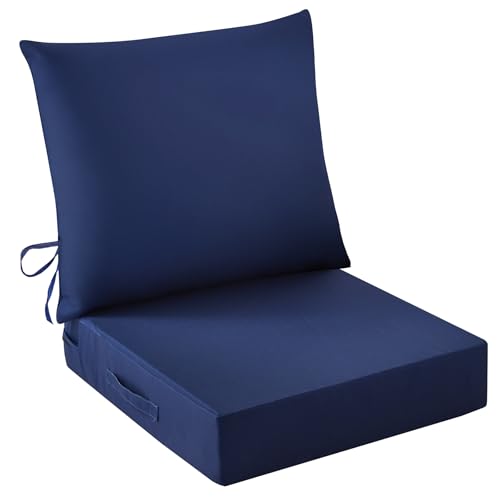
IASEAHK Outdoor Chair Cushions, 24 x 24 Inch Outdoor Cushion for Patio Furniture, Patio Chair Cushion, Waterproof & Fade Resistant Deep Patio Furniture Cushions Set with Handle and Ties, Navy Blue
Check price on Amazon
Aegisun Wicker Chair Cushions of 3 Pieces, Waterproof Cushions for Patio Furniture, Tufted Wicker Outdoor Furniture Cushions, 1 Patio Loveseat Cushion and 2 U-Shaped Cushions, 44"x19"x5", Navy Blue
Check price on Amazon
IPYNBAP Outdoor Chair Cushions Set of 4 -Waterproof Outdoor Seat Cushions for Patio Furniture, Patio Chair Cushion with Handle and Ties, Square Out Door Chair Pads,19" x 19" x 3", Navy Blue
Check price on Amazon
Zonamat Outdoor Loveseat Cushion Set, 46" x 26" Loveseat Cushions for Outdoor Furniture, Waterproof & Fade-Resistant Patio Furniture Cushions, Deep Seat Cushion for Bench, Swing and Couch, Navy Blue
Check price on Amazon
Summsun Outdoor Chair Cushions Set of 4: Water Resistant Seat Cushion for Patio Furniture - 18.5 x 16 x 2 Inch Chair Pads with Ties and Hidden Zipper - Patio Chair Cushion Replacement, Beige
Check price on Amazon
Summsun Outdoor Chair Cushions Set of 4, Faux Linen Patio Furniture Cushions, Water Resistant Backrest and Deep Seat Cushion Set with Ties, Removable Cover, Non-Slip Bottom, 24 x 24 Inch, Nature
Check price on AmazonFrequently Asked Questions
How long do water resistant outdoor cushions typically last?
Longevity depends heavily on fabric tier and exposure. Entry-level cushions in sheltered areas may last two to three seasons. Mid-range cushions with proper care often reach four to five seasons. Premium solution-dyed acrylic cushions with quick-dry foam can last significantly longer, especially when stored during harsh weather. UV exposure and humidity are the two biggest variables.
Can water resistant cushions be left outside in the rain?
Yes, they are designed for it — but "left outside" does not mean "ignored." Water resistant cushions shed rain and dry reasonably quickly, but standing water and prolonged dampness still degrade fabric and foam over time. Tilting cushions to drain after heavy rain and covering them during extended wet periods will noticeably extend their useful life.
What is the difference between water resistant and waterproof cushions?
Water resistant cushions slow water absorption — rain beads up and light moisture evaporates. Waterproof cushions block water entirely using a coated backing or non-porous material. Waterproof options are better for constant splash exposure, while water resistant cushions are more breathable and comfortable for general patio use. Many shoppers combine both: a water resistant cushion with a waterproof cover for storage.
How do I remove mildew from outdoor cushions?
Start with a solution of equal parts white vinegar and water. Apply to the affected area, let it sit for 15 to 20 minutes, then rinse thoroughly and air dry in direct sunlight. For stubborn stains, a mild oxygen-based cleaner works on most solution-dyed acrylics. Avoid bleach on colored fabrics unless the manufacturer explicitly permits it. If you want to prevent recurrence, see our notes on waterproof couch cushion covers for an added protective layer.
Are water resistant cushions breathable, or do they feel hot?
It depends on the fabric. Woven solution-dyed acrylic and olefin remain breathable and comfortable in heat. PVC-coated and vinyl cushions are effectively waterproof but trap heat and can feel sticky against skin. For hot climates, prioritize woven fabrics with DWR finishes over coated options.
Do I need to treat new outdoor cushions with a protector spray?
Most premium cushions arrive with a factory-applied DWR finish, so an immediate treatment is unnecessary. Mid-range and entry-level cushions benefit from an initial application of a fabric protector, and all cushions benefit from re-application once or twice per season after washing or heavy use. Always test on a hidden area first.
Final takeaway
Water resistant outdoor furniture cushions are an investment in comfort and durability, not a disposable accessory. Match the fabric tier to your actual exposure level, prioritize solution-dyed fibers and quick-dry foam where rain is frequent, and commit to a simple maintenance routine. If you are also evaluating the frame and surrounding furnishings, our broader guide on upholstery fabric for outdoor furniture and the water resistant outdoor furniture cushions overview provide the full picture before you commit.