
Wicker Indoor Couch: Complete Buying Guide
Everything you need to know about choosing a wicker indoor couch — from natural rattan to synthetic woven frames, cushion quality, comfort, styling, and long-term care. Make a confident, well-informed decision for your living room.
Explore Recommended Wicker CouchesCouchFocus Philosophy: A wicker indoor couch is more than furniture — it is a design statement that brings texture, warmth, and a relaxed, organic feel to any living room. This guide is written for buyers who already know they want a woven sofa and now need the details to choose the right one with confidence.
What Is a Wicker Indoor Couch?
A wicker indoor couch is a sofa built with a woven frame or woven panels, typically made from rattan, willow, reed, seagrass, or synthetic resin. The weaving technique — known as wickerwork — creates an open, textured surface that gives the couch its signature airy and natural appearance. Unlike traditional upholstered sofas with fully covered frames, a wicker couch often exposes its woven structure along the arms, back, and base, combining craftsmanship with function.
Indoor wicker couches are designed specifically for interior environments. They are usually finished with smooth, sealed coatings and paired with upholstered seat and back cushions for comfort. The result is a piece that bridges the gap between a sculptural accent and a functional everyday sofa — ideal for living rooms that want texture, warmth, and a relaxed, organic atmosphere.
If you are still comparing broader sofa categories, our guide to sectional couches explains how configuration choices affect seating capacity and room flow. For buyers exploring woven seating beyond the living room, the related wicker couch outdoor article covers weather-rated versions, while wicker couch cushions dives deeper into replacement and upgrade options.
Natural vs. Synthetic Wicker Materials
The material of the woven frame is the single most important factor in durability, maintenance, and appearance. Two broad categories dominate the market, and understanding their differences helps you match the couch to your household and climate.
Natural Wicker
Natural wicker is crafted from plant-based materials such as rattan core, willow, reed, seagrass, and water hyacinth. It offers authentic texture, a warm and slightly irregular surface, and a craftsmanship feel that many homeowners find appealing. Rattan, in particular, is valued for its flexibility and strength when bent into curved frames.
- Appearance: Organic, warm, and richly textured with subtle natural variations.
- Durability: Good when sealed and kept in stable indoor humidity; more sensitive to moisture and dryness.
- Maintenance: Requires periodic dusting and occasional conditioning; avoid soaking or prolonged dampness.
- Best for: Climate-controlled living rooms, design-focused spaces, and buyers who value natural materials.
Synthetic Wicker
Synthetic wicker is made from resin, polyethylene, or similar polymers woven to mimic natural rattan. Modern synthetic wicker has advanced significantly and can closely replicate the look and feel of natural materials while offering superior resistance to moisture, fading, and daily wear.
- Appearance: Consistent color and weave; available in a wide range of finishes and tones.
- Durability: Excellent — resists cracking, peeling, and humidity-related damage.
- Maintenance: Easy to wipe clean with a damp cloth; no conditioning required.
- Best for: Busy households, homes with children or pets, and humid or variable climates.
Comfort, Frame, and Cushion Construction
A wicker couch can be every bit as comfortable as a traditional sofa — but comfort depends heavily on the frame and cushion system beneath the woven surface. Pay attention to these components:
Frame Construction
- Solid hardwood or rattan core frames provide the strongest support and resist warping over time.
- Reinforced joints at stress points such as arm connections and leg mounts are a hallmark of durable construction.
- Sealed finishes protect the weave from moisture and daily handling, especially in natural wicker.
Cushion Quality
- High-density foam seat cushions retain shape and resist sagging better than low-density alternatives.
- Removable, washable covers are a practical advantage for households with pets or children.
- Supportive back cushions with a mix of foam and fiber deliver a softer, more enveloping feel.
- Non-slip bases or tie-downs keep cushions in place on open-weave seat decks.
If you plan to upgrade or refresh the seating surface later, the guide to wicker couch cushions explains how to choose replacement cushions that fit properly and extend the life of the couch.
Market Tiers and Quality Descriptors
Wicker indoor couches vary widely in construction quality. Instead of focusing on numeric figures, use these universal tier descriptors to evaluate where a model sits in the market. Each tier reflects relative positioning — not a specific figure.
Entry-Level Tier
Lightweight woven frames with basic foam cushions. Suitable for occasional use, guest rooms, or seasonal refresh. Expect simpler weave patterns and fewer reinforced joints.
Mid-Range Tier
Stronger frames, denser foam cushions, and improved weave consistency. A solid choice for daily living room use, offering a balanced combination of durability and design refinement.
Premium Tier
High-grade materials, reinforced hardwood or rattan cores, tight uniform weaving, and high-density cushion systems. Designed for long-term daily use with superior comfort retention.
Luxury Tier
Exceptional craftsmanship with hand-finished weaving, premium upholstery fabrics, and ergonomic cushion engineering. A statement piece built as a long-term investment for the home.
| Tier | Frame Material | Cushion System | Best For |
|---|---|---|---|
| Entry-Level | Lightweight synthetic weave | Basic foam | Occasional seating, guest spaces |
| Mid-Range | Reinforced synthetic or rattan | High-density foam with fiber wrap | Everyday family living rooms |
| Premium | Solid hardwood or premium rattan core | Dual-density foam, removable covers | Daily use, high-comfort households |
| Luxury | Hand-finished natural rattan or hybrid core | Ergonomic layered foam, premium textiles | Design-led living rooms, long-term investment |
Across all tiers, a tighter weave and a heavier frame generally indicate better build quality. A mid-range model with a reinforced frame and high-density cushions often delivers more long-term comfort than an entry-level model with decorative detailing but a lighter structure.
Recommended Wicker Indoor Couches
⚠️ AFFILIATE DISCLOSURE: This website contains affiliate links. As an affiliate Associate, we earn from qualifying purchases. If you make a purchase through these links, we may receive a small commission at no additional cost to you. Read our full affiliate policy.
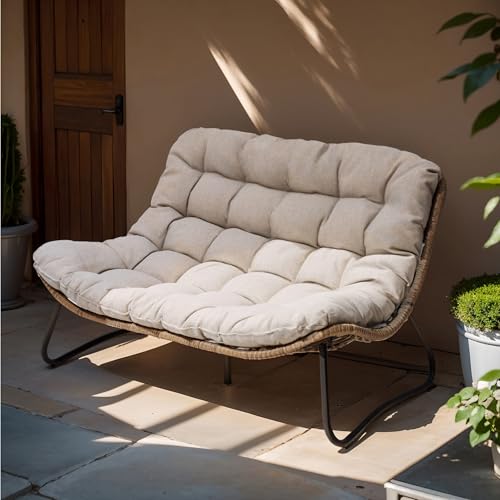
Outdoor Loveseat, Boho Rattan Patio Couch with Soft Cushion (Beige) | 2 Seater Sofa All-Weather Patio Furniture for Deck,Balcony, Poolside, Backyard, Porch,Apartment
Check price on Amazon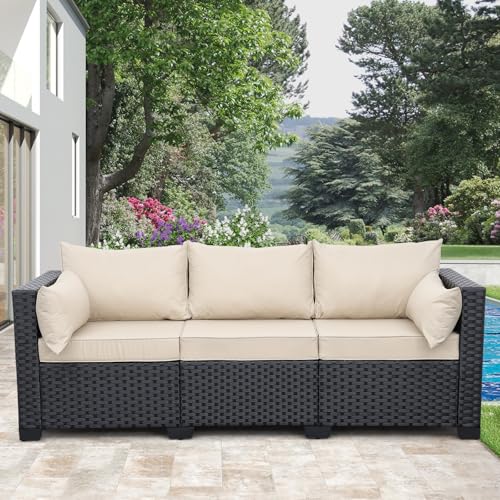
Rattaner Patio Furniture 3-seat Sofa Wicker Outdoor Furniture Outdoor Couch Deep Seat Hight Backrest Waterproof Cover Anti-Slip Cushions, Khaki
Check price on Amazon
Wickerix Malibu Lounge Loveseat Sofa Natural Rattan Wicker Handmade Design with Cream Cushions, Colonial Color
Check price on Amazon
WAROOM Patio Couch PE Rattan 3-Seat Outdoor Sofa Brown Wicker Furniture Set Deep Seating with Anti-Slip Beige Cushion
Check price on Amazon
Vongrasig Outdoor Wicker Egg Chair PE Rattan Chair with Cushion, Oversized Patio Lounge Chair for Outdoor, Indoor, Balcony, Backyard, Garden, Beige
Check price on Amazon
SWITTE Outdoor Patio Loveseat, Double Papasan Chair with Cushion, Khaki | All-Weather PE Wicker Outdoor Sofa, Boho 2 Seat Patio Couch with 700LBS Capacity for Balcony, Porch, Deck and Backyard
Check price on Amazon
Lviden Wicker Patio Couch Outdoor 3-seat Sofa with All-Weather Rattan Deep Seater Outdoor Couch with Anti-Slip Cushions and Furniture Cover, Light Grey
Check price on Amazon
2-Seater Rattan Outdoor Sofa,Wicker Patio Couch for Outdoor & Indoor | Breathable,Comfortable,Removable and washable cushion,Ergonomics
Check price on AmazonStyle Pairings and Room Applications
One of the strongest advantages of a wicker indoor couch is its versatility. The woven texture adds depth and warmth without dominating a room, which allows it to blend into a wide range of interior styles.
Coastal and Beach-Inspired Living Rooms
Wicker is a natural fit for coastal interiors. Pair a light-toned woven couch with white or sand-colored linen cushions, natural fiber rugs, and airy window treatments. The open weave keeps the room visually light, echoing the relaxed feel of seaside living.
Bohemian and Eclectic Spaces
In bohemian interiors, wicker couches serve as a textural anchor. Layer patterned throw pillows, woven baskets, and mixed-material side tables around the couch. The natural grain of the weave complements plant-filled corners and layered textiles.
Cottage and Farmhouse Interiors
Wicker brings a nostalgic, handcrafted quality to cottage-style rooms. Combine a woven couch with floral or gingham cushions, painted wood furniture, and soft ambient lighting. The result is warm, inviting, and unpretentious.
Modern Organic and Minimalist Rooms
For modern organic interiors, choose a wicker couch with clean lines and a neutral finish. Keep the palette restrained with off-white, stone, and charcoal tones, and let the weave provide the visual interest. This approach keeps the room calm while adding tactile richness.
To complete the look, our guides on throw pillows and area rugs offer practical styling direction that pairs naturally with woven furniture. If your living room doubles as a workspace, the work-from-home setup guide explains how to balance comfort and function without compromising design.
Sizing for Small and Large Living Rooms
Wicker couches come in a range of footprints, from compact loveseats to full three-seat sofas. Matching the size to your room is essential for comfort and circulation.
Small Living Rooms and Studios
- Choose a loveseat-sized wicker couch or a streamlined two-seater with slender arms.
- Open-weave backs and legs that raise the base off the floor make the room feel less crowded.
- Place the couch against a long wall or angled in a corner to preserve walkway space.
- Pair with a small round coffee table or a nesting table set to keep the floor area open.
For more compact-space strategies, the small couch for studio guide and the wrap-around couch for small room article provide layout ideas that translate well to woven furniture.
Large Living Rooms and Open Floor Plans
- A full-size wicker sofa or a pair of matching loveseats can anchor a generous seating zone.
- Use the couch to define the conversation area within an open floor plan.
- Balance the visual weight of a large woven piece with substantial rugs and grounded coffee tables.
- Consider a curved or modular wicker design if you want to soften a very rectangular room.
Measurement Checklist
- Measure the available wall length and leave at least 18–24 inches of clearance for walkways.
- Confirm doorway and hallway widths before ordering to ensure smooth delivery.
- Account for cushion depth when calculating the couch's total footprint.
- Check seat height against the coffee table height for comfortable reach.
Cleaning, Maintenance, and Longevity
With proper care, a quality wicker indoor couch can serve a living room for many years. Maintenance routines differ slightly between natural and synthetic materials, but the core principles are the same: keep the weave clean, control humidity, and protect the cushions.
Routine Care
- Dust weekly: Use a soft brush or a vacuum brush attachment to clear dust from the weave.
- Wipe spills promptly: Use a damp cloth with mild soap, then dry the area thoroughly.
- Rotate cushions: Flip and rotate seat cushions monthly to promote even wear and extend cushion life.
- Fluff back cushions: Regular fluffing maintains shape and comfort.
Protecting Natural Wicker
- Avoid placing the couch near radiators, fireplaces, or air vents that create extreme dryness.
- Keep the room at a stable humidity level to prevent the weave from drying and cracking.
- Use a protective sealant compatible with natural rattan if recommended by the manufacturer.
- Never soak the frame; spot-clean instead of washing the weave directly.
Protecting Synthetic Wicker
- Synthetic weave is easier to clean — mild soap and water are usually sufficient.
- Avoid abrasive cleaners that can dull the finish.
- Keep the couch out of prolonged direct sunlight to minimize fading over time.
- For stubborn marks, use a soft-bristle brush with a gentle cleaning solution.
If you plan to change the upholstery later, the couch cushion cover replacement guide explains how to select covers that fit woven frames properly and refresh the look without replacing the couch.
Pros and Cons at a Glance
Advantages
- Adds natural texture and warmth to a living room
- Visually light due to open-weave construction
- Works across coastal, bohemian, cottage, and modern organic styles
- Synthetic versions are durable and easy to maintain
- Often lighter in weight than fully upholstered sofas
- Wide range of configurations, from loveseats to full sofas
Considerations
- Natural wicker requires humidity awareness and gentle care
- Open-weave backs may need cushions for extended comfort
- Cushion quality varies significantly between tiers
- Some frames may creak if joints are not reinforced
- Design options for deep-seat lounging are more limited than upholstered sofas
Frequently Asked Questions
Is a wicker indoor couch comfortable for everyday use?
Yes, a well-made wicker indoor couch with quality cushions is comfortable for everyday use. The woven frame provides sturdy support while deep seat cushions and supportive back cushions deliver the softness expected from a traditional sofa. Choosing a model with high-density foam and a tight weave makes a significant difference in long-term comfort.
What is the difference between natural wicker and synthetic wicker for indoor couches?
Natural wicker is made from plant materials such as rattan, willow, or reed, offering authentic texture and a warm appearance, but it requires more careful humidity control. Synthetic wicker is made from resin or polyethylene, delivering greater durability, easier cleaning, and consistent color, which makes it a practical choice for busy households.
How do I clean and maintain a wicker indoor couch?
Dust the woven frame weekly with a soft brush or vacuum brush attachment. Wipe spills promptly with a damp cloth and mild soap, then dry thoroughly. Keep the couch away from direct heat and excessive humidity, and rotate cushions regularly to promote even wear. For natural wicker, avoid soaking the frame in water.
Can a wicker indoor couch fit in a small living room?
Yes. Many wicker indoor couches are designed with compact footprints, slender arms, and open-weave backs that visually lighten a room. A loveseat-sized wicker couch or a streamlined two-seater works especially well in small living rooms and studio apartments.
What styles pair best with a wicker indoor couch?
Wicker indoor couches pair beautifully with coastal, bohemian, cottage, tropical, and modern organic styles. Neutral linen cushions keep the look airy, while patterned textiles and natural materials such as wood and rattan accents add warmth and texture.
Ready to Choose Your Wicker Indoor Couch?
Review the recommended models above, compare the tier descriptions in this guide, and select the woven couch that best matches your room size, style, and household needs. You now have the knowledge to buy with confidence.
View Recommended Wicker CouchesFor a broader comparison of woven seating built for outdoor use, the wicker outdoor furniture without cushions article is a useful companion. And if you are furnishing a compact living space, the comfortable living room furniture for small spaces guide offers further layout and selection advice.