
Behind the Couch Table with Storage: The Complete Guide
Turn the forgotten space behind your sofa into a hardworking, clutter-free zone. Learn how to choose, size, and style a storage console that earns its place in your living room.
START THE GUIDEWhy this piece matters: The gap behind a sofa is one of the most underused areas in a living room. A well-chosen behind-the-couch table with storage closes that gap with purpose — it anchors your seating, adds a landing spot for lamps and drinks, and quietly swallows the remotes, chargers, and throws that otherwise pile up on cushions. For anyone in the research stage, understanding sizing, storage style, and material tiers is the difference between a piece that looks intentional and one that feels awkward.
What Is a Behind-the-Couch Table with Storage?
A behind-the-couch table with storage is a slim console or sofa table designed to sit flush against the back of your couch. Unlike a decorative console, this category prioritizes utility: its surface holds lamps, books, or a serving tray, while its body conceals drawers, cubbies, shelves, or lift-top compartments. The result is a piece that behaves like furniture and functions like an organizing system.
Because the space behind a couch is often narrow, these tables are built shallow — usually under 16 inches deep — so they don't crowd walkways. When the sofa floats in an open-plan room, the table doubles as a visual divider between the seating zone and the dining or entry area. Homeowners often pair this piece with a matching table and chairs behind couch arrangement to create a casual secondary dining or work nook.
If your sofa is a sectional or a curved model, the geometry changes. A straight full-length console can look stiff behind a curved back, so shorter segmented tables or a single centered piece usually read better. For L-shaped layouts, a storage console along the long back can also complement the footprint of a sectional with 2 recliners and chaise, giving the whole arrangement a finished edge.
Key Benefits for Your Living Room
Before comparing models, it helps to understand what this piece actually solves. Buyers who research thoroughly tend to prioritize different features than those who shop on impulse.
- Clutter control: Closed drawers and baskets hide remotes, charging cables, controllers, and pet toys. The top surface stays clear for things you want visible, like a lamp or a plant.
- Added surface area: Lamps, drinks, and books get a dedicated home, freeing the coffee table for actual use rather than storage duty.
- Spatial definition: In open-plan homes, a console behind the sofa creates a soft boundary without blocking sightlines. This is especially useful in combined living and dining areas.
- Improved circulation: A shallow console creates a clear walkway line behind the couch, which reduces the tendency to squeeze past the sofa in tight rooms.
- Display opportunity: Open shelves or a flat top give you a place for styled vignettes, framed photos, or seasonal decor without sacrificing function.
- Long-term organization: Built-in storage is more durable and tidier than loose baskets scattered on the floor, and it keeps items off cushions and carpets.
For small apartments and studios, the payoff is even more pronounced. A storage console can absorb the overflow that would otherwise require a separate shelving unit, which matters in layouts built around a small couch for studio living. The same logic applies to compact seating groups built around a couch and chairs for small living room setup.
Types of Storage Consoles Compared
Not all behind-couch storage tables are built the same. The table below groups the most common configurations by their storage approach, best use case, and relative market tier. Tiers here describe positioning in the market — entry-level, mid-range, and top-tier — not numeric figures.
| Configuration | Storage Style | Best For | Market Tier |
|---|---|---|---|
| Drawer console | Two or three closed drawers with a flat top | Hiding small items like remotes, cables, and stationery | Entry-level to mid-range |
| Open-shelf console | Fixed or adjustable shelves with no doors | Basket storage, display, and quick-access items | Entry-level |
| Cabinet console | Doors concealing shelves or a mix of drawers and shelves | Full concealment of clutter and larger items | Mid-range |
| Lift-top console | Hinged top revealing a hidden compartment | Storing throws, games, or items you want out of sight | Mid-range |
| Modular storage console | Stackable or expandable cubes and compartments | Flexible layouts that grow with your needs | Top-tier |
| Sofa table with baskets | Open frame with removable woven or fabric baskets | Rental-friendly, lightweight, and easy to reconfigure | Entry-level |
If your priority is hidden clutter, a drawer or cabinet console is the most effective choice. If you like to rotate decor and keep baskets accessible, open shelving works well. For rooms that double as guest space, a lift-top model can store bedding or a spare throw without adding another piece of furniture. Those planning a full-room refresh may find that a storage console pairs naturally with a white narrow console table with drawers, especially in bright, airy interiors.
How to Measure and Size It Right
Sizing is where most buyers go wrong. A console that is too deep crowds the walkway; one that is too tall blocks the sofa back; one that is too short looks disconnected. Use the following measurement approach:
The Four Measurements That Matter
- Height: Measure from the floor to the top of your sofa's back. The table top should sit level with or just below that line — usually within a few inches. This keeps items reachable and preserves sightlines.
- Depth: Leave at least 24 inches of clear walkway behind the table if it sits in a traffic path. Most storage consoles are 10–16 inches deep, which suits this constraint.
- Width: Match the sofa width or stay within roughly 80–100 percent of it. Full-length pieces look integrated; shorter pieces look intentional when centered.
- Clearance below: Check floor clearance for rugs and vents. If you have baseboard heating behind the sofa, choose a console with an open back or adjustable feet.
For curved sofas, measure the widest point of the back and choose a piece that spans no more than that width. A white curved couch typically looks best with a shorter, centered console rather than a full-length slab. If you are working with a wraparound layout, a wrap around couch for small room may leave no rear wall at all — in that case, a freestanding narrow console behind the longest straight section is the practical option.
Also measure doorways and stair turns before ordering. A console that fits the wall but not the hallway is a common and avoidable problem.
Choosing the Right Storage Configuration
Storage style should follow what you actually intend to put inside. Start by listing the five most common items that pile up around your sofa. Then match:
- Remotes, chargers, and small electronics: Closed drawers with felt or soft-close lining. Avoid open shelves where cables become visible.
- Throws and blankets: A lift-top compartment or a deep cabinet. Baskets on open shelves also work if you want quick access.
- Books and magazines: Open shelving or a mix of shelves and drawers. Deep shelves can hold oversized art books.
- Games, puzzles, and kids' items: Lower drawers or removable baskets so the whole container can be pulled out.
- Pet supplies: A dedicated drawer or basket near the floor, ideally with a wipe-clean interior.
Think about how often you will open each compartment. Drawers that face the walkway are convenient; drawers that face the sofa back are not, unless the console has a pass-through design. If the table will also serve as a work surface, consider a model with a cable cutout or a back panel that allows cords to route to the wall. For setups that combine storage with seating, the principles in a couch with pull out ottoman and storage guide overlap — hidden compartments only help if they are easy to reach.
Material and Build Quality Tiers
Behind-the-couch tables take more incidental contact than they appear to: lamps, drinks, keys, and daily traffic. Build quality matters more than surface styling in the long run. The tiers below describe relative construction quality, not numeric figures.
Entry-Level Tier
Engineered wood with a laminate or veneer finish, basic drawer glides, and screw-in legs. These pieces are solid choices for renters or short-term setups, and they can look polished in a well-styled room. Expect lighter weight and simpler joinery; they are best used for light storage rather than heavy loads.
Mid-Range Tier
Solid wood frames or thicker engineered panels, soft-close or metal drawer runners, and reinforced corner joints. This tier is where a behind-couch console starts to feel like long-term furniture. Doors and drawers align better, and the finish resists daily wear more gracefully. For most households, this is the balanced choice.
Top-Tier and Premium Tiers
Solid hardwood construction, dovetail or doweled joinery, high-grade hardware, and premium finishes. These pieces are built to be moved, refinished, and handed down. They make sense when the console is part of a permanent room design and will be used daily for years.
Placement, Flow, and Styling Tips
Placement determines whether the table feels like a design decision or an afterthought. Start by deciding the sofa's role in the room:
- Against a wall: The console fills the gap behind the sofa, creating a finished line. Keep a few inches between the sofa back and the table so the sofa doesn't push the console into the wall.
- Floating in an open-plan room: The console becomes a divider. Choose a model with a finished back, since both sides will be visible.
- In a narrow room: Prioritize depth over width. A shallow console preserves the walkway, which is often the real constraint.
- Behind a sleeper or convertible sofa: Confirm the table does not block the mechanism. A couch that turns into a bed needs clearance to fold out, so measure the open footprint before placing anything behind it.
For styling, keep the top surface intentional. A single lamp, a stack of books, and one decorative object usually reads better than a crowded arrangement. If the console is visible from the entry, style the back side too. When the sofa anchors a larger layout, the principles in a table and chairs behind couch setup can extend the console into a multi-zone arrangement, while a sofa table between couch and wall is a useful reference for tight clearances.
Lighting deserves a mention. A console behind the sofa is an ideal spot for a slim table lamp or a pair of small lamps, which creates layered light without floor space. If you prefer floor lighting, pair the console with a table lamp set for living room to keep the arrangement cohesive. For open-plan rooms where the console faces a dining area, the same approach used in a table and chairs behind couch layout helps the two zones feel related rather than separate.
Buyer's Checklist
Before You Order
- Measure the sofa back height and match the console top to it.
- Confirm at least 24 inches of walkway clearance behind the table.
- Decide whether the back of the console will be visible; if so, choose a finished back.
- List the items you plan to store and match them to drawer, shelf, or lift-top configurations.
- Check doorways and stair turns for delivery access.
- Verify the base is stable for the items you will place on top.
- Look for cable cutouts if you plan to charge devices on the console.
- Confirm the finish works with your existing rug and sofa tone.
If the console is part of a larger reorganization, it pairs naturally with small-space strategies such as those used in a small couch that turns into a bed layout or a couch and chair for small living room grouping. In rooms where the sofa is the only large piece, the console can also replace a coffee table as the primary surface, which is a common approach in comfortable living room furniture for small spaces planning.
Recommended Behind-the-Couch Tables with Storage
⚠️ AFFILIATE DISCLOSURE: This website contains affiliate links. As an affiliate Associate, we earn from qualifying purchases. If you make a purchase through these links, we may receive a small commission at no additional cost to you. Read our full affiliate policy.

BROTTAR 78.7" Flip Top Behind Couch Table with Outlets and Storage, Brown | Narrow Console Table, Long Sofa Table with Charging Station, Entryway Tables for Living Room, Hallway
Check price on Amazon
SUPERJARE 78.8 inch Narrow Behind Couch Table with 2 Charging Stations | 2 AC Outlets with USB-C Ports, Extra Storage Behind Sofa, Sofa Table Console Table for Entryway Living room, Rustic Brown
Check price on Amazon
BROTTAR 79" Long Behind Couch Table with LED Lights and Power Outlet, Brown | Industrial Behind Sofa Table with Bookcase & Human Body Sensor, Skinny Console Table with Storage for Living Room
Check price on Amazon
Huuger 78.7" Console Table with Outlets, 22.8"-33.3" Height Adjustable | Behind Couch Table with 2 Power Stations & USB-C Ports, Extra Long Sofa Table, Slim Entryway Table
Check price on Amazon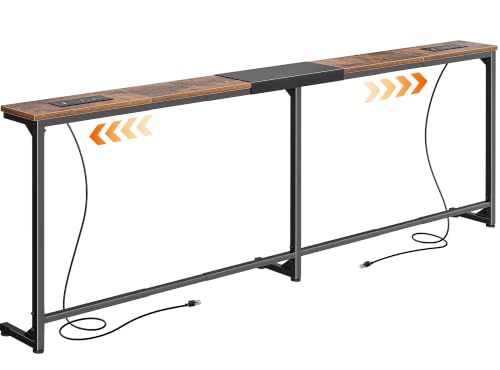
Huuger 63.4-78.3'' Extendable Behind Couch Table with Outlets, Rustic Brown | Stepless Length Adjustment, 2 Power Stations with USB-C Ports, Long Console Table, Slim Sofa Table 1ST082Z
Check price on Amazon
Tribesigns Console Sofa Table, 70.9 inch Extra Long Table Behind Couch with Storage Shelves, 3-Tier Industrial Narrow Entryway Hallway Accent Table for Living Room, Rustic Brown
Check price on Amazon
Huuger 102.4 Inch Sofa Table with Power Outlets, Skinny Behind Couch Table | Console Table with USB-C Ports, 23.9’’-34.4’’ Height Adjustable Range, Sofa Tables Narrow Long for Small Spaces, Rustic Brown
Check price on Amazon
GRLEAF 102 Inch Narrow Sofa Table with Power Outlets, Extra Long Console Table Behind Couch Table with Charging Station, Skinny Entryway Table Thin Table for Living Room, Narrow Spaces (Rustic Brown)
Check price on AmazonFrequently Asked Questions
What is a behind-the-couch table with storage?
A behind-the-couch table with storage is a narrow console-style piece placed against the back of a sofa. It combines a flat top for lamps or decor with drawers, shelves, or baskets that hide clutter, cables, and accessories. Unlike a purely decorative console, it is designed around organization.
How tall should a behind-the-couch table be?
The top of the table should sit level with or slightly below the back of your sofa, typically between the seat back height and a few inches below it. This keeps items reachable while preserving sightlines across an open room. Measure your sofa's back height before comparing models.
How wide should the table be relative to the sofa?
A common rule is to match or slightly exceed the sofa width so the piece reads as part of the seating group. For sectionals or curved couches, a slightly shorter table centered on the back works better than a full-length piece.
Can a behind-the-couch table work in a small room?
Yes. A slim console with closed storage actually helps small rooms by creating a defined walkway behind the sofa and containing clutter. Look for shallow depths and vertical shelving when floor space is tight.
What should I store in a behind-the-couch table?
Common items include remotes, chargers, gaming controllers, books, throws, pet supplies, and seasonal decor. Closed drawers are best for cables and small electronics, while open shelves suit baskets and display items.
For buyers still weighing seating options, it helps to review how a behind-couch console fits into broader layouts, such as a couch and loveseat sets for sale arrangement or a leather living room furniture for small spaces plan. The right storage console should support the way you already use the room, not add another surface to manage.