
Couch Cover Size Guide
Learn how to measure your sofa accurately and choose the right cover fit the first time. Avoid the frustration of slipcovers that slip, bunch, or leave gaps with our complete sizing methodology.
START MEASURINGWhy sizing matters: A couch cover that is too small will pull at the seams and expose the original upholstery. One that is too large will wrinkle, shift constantly, and look untidy. The difference between a cover that looks tailored and one that looks like a draped sheet is almost always accurate measurement. This guide walks you through every dimension you need, explains how cushion style changes the fit, and provides a reference table for standard size tiers across sofa categories.
What You Will Learn
- How to measure every part of your couch that affects cover fit
- The difference between slipcovers and fitted covers, and which suits your needs
- Standard size tiers for loveseats, sofas, and sectionals
- How cushion style (T-cushion vs. box cushion) changes your cover choice
- Special considerations for reclining and modular couches
- Common sizing mistakes and how to avoid them
Why Accurate Measurement Is the Foundation of a Good Fit
Every couch cover listing online uses a size range, but those ranges are only meaningful if you know which dimensions the manufacturer is referencing. Some brands base their sizing on overall width, others on seat width, and still others on a combination of width and depth. Without measuring your own couch, you are essentially guessing — and guessing is the leading cause of returns for slipcovers and protective covers.
Accurate measurement also helps you choose between cover types. A stretch slipcover, for example, tolerates a few inches of variance because the fabric is designed to flex. A tailored cover with sewn corners has almost no tolerance — it either fits or it does not. Knowing your exact dimensions tells you how much flexibility you have before you commit to a purchase.
If you are still in the research phase and have not yet selected a couch, our couch buying guide covers the foundational decisions around frame, cushion, and upholstery that influence how easy your couch will be to cover later.
How to Measure Your Couch for a Cover
Use a metal tape measure for accuracy — fabric tapes can stretch and give you a false reading. Measure in inches and write each number down as you go. If a measurement falls between two whole numbers, round up to the next quarter inch. For cover sizing, always round up to the next size tier rather than down.
- Overall Width (Arm to Arm) Measure from the outside edge of the left armrest to the outside edge of the right armrest at the widest point. This is the single most important dimension for any cover purchase. It determines which size tier — loveseat, standard sofa, or oversized sofa — you need.
- Overall Depth (Front to Back) Measure from the front edge of the seat cushion to the back of the rear frame at the deepest point. If your couch has a recliner, measure with the footrest closed. If it has a chaise, measure to the end of the chaise extension.
- Overall Height (Floor to Top of Backrest) Measure from the floor to the highest point of the backrest or the top of the frame, whichever is higher. This matters most for full-length slipcovers that drape to the floor and for covers with a skirt.
- Seat Width (Between Arms) Measure the usable seating area between the inside edges of the armrests. This is the dimension used by manufacturers who size covers by seat width rather than overall width. It is especially important for T-cushion sofas where the cushion extends around the arm.
- Seat Depth Measure from the front edge of the seat cushion to the backrest where the cushion meets the back. This tells you whether a cover has enough fabric to tuck into the back crevice without pulling.
- Arm Height and Arm Width Measure the height of the armrest from the seat surface and the width of the armrest from front to back. Covers with fitted arm pockets need these numbers to sit correctly.
- Backrest Height Measure from the top of the seat cushion to the top of the backrest. This determines whether a cover's back panel will cover the full back or fall short.
Pro Measuring Tip
Take every measurement twice — once on the left side and once on the right. Couches are rarely perfectly symmetrical, and the larger of the two readings is the one you should use for sizing. A difference of half an inch is normal; a difference of more than an inch may indicate frame damage or a manufacturing inconsistency worth noting.
Standard Couch Cover Size Tiers
The table below provides general sizing ranges based on overall width, which is the most commonly used reference for cover manufacturers. These are not universal standards — brands vary — but they give you a reliable starting point for understanding which category your couch falls into. Always cross-check against the specific brand's size chart before purchasing.
| Category | Typical Overall Width | Seats | Best For | Market Tier |
|---|---|---|---|---|
| Chair / Armchair Cover | Up to 40 in | 1 | Accent chairs, reading chairs, compact seating | Entry-level |
| Loveseat Cover | 41 – 58 in | 2 | Two-seat couches, small living rooms, apartments | Starter tier |
| Standard Sofa Cover | 59 – 76 in | 3 | Most three-seat couches, the most common size category | Mid-range |
| Oversized Sofa Cover | 77 – 92 in | 3 – 4 | Large three-seat sofas, deep-seat couches, family seating | Mid-tier |
| Extra-Large / Sectional Sofa Cover | 93 in and above | 4+ | Sectionals, U-shaped sofas, modular configurations | High-end tier |
If your couch falls exactly on a boundary between two tiers, choose the larger tier. A cover that is slightly generous can often be tucked or adjusted; a cover that is even half an inch too small cannot be stretched enough to fit without stressing the seams.
How Cushion Style Changes Your Cover Choice
The shape of your seat cushions is the second most important factor — after overall width — in choosing a cover that fits correctly. Two couches with identical widths can require completely different cover designs if their cushions are shaped differently.
T-Cushion Sofas
T-cushions extend around the front of the armrest, creating a T-shaped profile when viewed from above. Covers designed for T-cushion couches include extra fabric in the front corners and a cut-out that accommodates the arm extension. If you put a standard box-cushion cover on a T-cushion sofa, the front corners will pull tight and expose the original fabric. Conversely, a T-cushion cover on a box-cushion sofa will have excess fabric that bunches at the arms.
To identify your cushion type, look at the front of the arm where it meets the seat. If the cushion wraps around the front of the arm, it is a T-cushion. If the cushion stops at the inside edge of the arm, it is a box cushion.
Box Cushion Sofas
Box cushions are rectangular and fit cleanly between the arms. They are simpler to cover because the cushion shape is straightforward. Most slipcovers are designed with box cushions in mind, which is why box-cushion couches are generally easier to fit with aftermarket covers.
Pillow-Back Couches
Pillow-back couches have loose, removable back cushions that sit against the frame rather than being attached. Covers for pillow-back couches need enough back panel height to cover the frame behind the cushions, and they often work best when the back cushions are removed during installation and then replaced on top of the cover. If your couch has pillow-back construction, look for covers specifically designed for that configuration.
Quick Identification
Remove one seat cushion and look at the shape of the empty space. If the space forms a simple rectangle between the arms, you have box cushions. If the space extends forward around the arm in a T-shape, you have T-cushions.
Slipcover vs. Fitted Cover: Which Sizing Approach Works Best
The two main cover categories use different sizing philosophies, and understanding the difference will save you time and returns.
| Feature | Slipcover | Fitted Cover |
|---|---|---|
| Fit style | Draped and tucked; relaxed appearance | Tailored with sewn corners or elastic edges |
| Size tolerance | Forgiving; accommodates a few inches of variance | Strict; requires accurate measurements |
| Installation | Drape over the couch and tuck into crevices | Stretch or fasten into place with straps or elastic |
| Best for | Irregular shapes, odd-sized couches, renters | Standard-shaped couches, a clean tailored look |
| Maintenance | Easy to remove and wash; may need re-tucking | Usually machine washable; stays in place better |
| Sizing reference | Overall width is usually sufficient | Overall width plus seat width and depth required |
If your couch has an unusual shape — curved arms, a slipper base, or non-standard proportions — a slipcover is almost always the more practical choice because it does not require a precise dimensional match. Fitted covers work best on couches with standard rectangular geometry where the manufacturer's size chart maps directly to your measurements.
For couches with L-shaped cushions or curved sectionals, standard covers in either category will struggle. Explore covers designed specifically for L-shaped cushions and curved sectionals with recliners to find options that account for those geometries.
Special Configurations: Recliners, Sectionals, and Modular Couches
Reclining Couches
Reclining couches require covers with separate panels for each reclining section, or stretch covers designed to flex with the mechanism. A one-piece cover will either restrict the recliner's movement or tear at the hinge points. Measure each reclining seat individually and look for covers that specify compatibility with reclining mechanisms. Our guide to covers with recliners on each end covers the installation considerations in more detail.
Sectionals
Sectionals need covers that account for the corner piece and any chaise extension. The sizing approach is different: rather than a single width measurement, you measure each seating section and the corner separately. Some sectional covers are sold as multi-piece sets that cover each section independently, which provides a better fit than a single oversized drape. If your sectional is L-shaped, look for covers explicitly labeled for L-shaped sectionals rather than trying to adapt a standard sofa cover.
Modular Couches
Modular couches are built from individual units that can be rearranged. The best approach is to cover each module separately with a fitted cover sized to that module, rather than covering the assembled configuration as a single piece. This preserves the flexibility of the modular design and makes it possible to reconfigure the couch without buying new covers.
Common Sizing Mistakes and How to Avoid Them
- Measuring only the seat width: Seat width is useful, but overall width determines the size tier for most covers. Always measure both.
- Ignoring cushion style: A box-cushion cover will not fit a T-cushion couch properly, no matter how accurate the width measurement is.
- Rounding down: If your measurement falls between sizes, always round up. A slightly large cover can be tucked; a slightly small cover cannot be stretched without stress.
- Assuming all loveseats are the same size: Loveseat widths range from compact two-seaters to wide, deep-seat models. Measure your specific couch rather than relying on the category label.
- Forgetting the height: For full-length slipcovers, height determines whether the cover reaches the floor or stops above it. A cover that is too short will leave the base of the couch exposed.
- Not accounting for recliner clearance: Reclining couches need extra fabric at the hinge points. A cover sized to the closed dimensions may not have enough slack when the recliner is extended.
Choosing a Cover That Lasts
Fit is only half the equation. The fabric and construction of the cover determine how well it holds its shape after washing, how resistant it is to pilling, and how long it remains in service. A well-fitted cover made from a durable fabric will look better and last longer than a perfectly sized cover made from a flimsy material.
Look for covers with reinforced seams at the corners and stress points, elastic or strap systems that keep the cover anchored, and fabric blends that are machine washable without excessive shrinkage. Stretch covers made from spandex blends tend to hold their shape well across repeated wash cycles, while woven slipcovers may need ironing after drying.
If you have pets or children, prioritize covers that are machine washable and colorfast. Our guide to waterproof couch covers for pets covers the practical considerations for households where spills and accidents are a regular possibility. For everyday washability across all cover types, see our overview of washable couch covers.
And if you are concerned about how a cover will look once installed, our guide to couch covers that actually look good explains the visual factors — fabric weight, drape, and color matching — that separate a cover that looks intentional from one that looks like a makeshift fix.
Installation Tips for a Better Fit
- Remove the seat and back cushions before installing any cover. This gives you direct access to the frame and allows the cover to sit flat before the cushions compress it.
- Start from the back and work forward. Anchor the back panel first, then pull the cover over the seat and tuck it into the crevices between the seat and backrest.
- Use the tuck-in tool or a flat spatula to push excess fabric into the crevices rather than bunching it on the seat surface. Tucked fabric looks intentional; bunched fabric looks sloppy.
- Position the cushions on top of the cover rather than trying to cover the cushions themselves. This is the standard installation method for slipcovers and produces the cleanest result.
- Adjust the arm panels so the fabric wraps evenly around the front of the arms and the seams sit at the corners rather than on the top surface.
- Allow the cover to settle for a few hours before deciding it does not fit. Many stretch covers relax and conform to the couch after an hour or two of use.
Related Guides
Once you have your measurements and know which size tier your couch falls into, these guides will help you narrow down the right cover for your specific situation:
Frequently Asked Questions
Measure overall width from the outside of the left arm to the outside of the right arm, overall depth from the front of the seat cushion to the back frame, and overall height from the floor to the top of the backrest. Also measure seat width between the arms and seat depth from the cushion front to the backrest. Use a metal tape measure and round up to the next size tier if your numbers fall between two options.
A slipcover drapes over the entire couch and tucks into the crevices, offering a more forgiving fit and a relaxed look. A fitted cover is tailored to specific dimensions and uses elastic or straps for a snug fit. Slipcovers tolerate a few inches of variance; fitted covers require accurate measurements to look correct.
No. Standard couch covers are designed for straight sofas and will not properly accommodate the corner piece or chaise extension of a sectional. Using a standard cover on a sectional will leave exposed upholstery at the corner and cause the cover to shift constantly. Look for covers specifically labeled for sectionals or L-shaped couches.
Remove a seat cushion and look at the empty space. If the space is a simple rectangle between the arms, you have box cushions. If the space extends forward around the front of the arm in a T-shape, you have T-cushions. T-cushion covers require a specific cut; box-cushion covers are simpler rectangles.
Choose the larger size. A cover that is slightly generous can be tucked or adjusted into place. A cover that is even half an inch too small cannot be stretched enough to fit without pulling at the seams and potentially tearing. The extra fabric on a larger cover is always easier to manage than a shortage of fabric on a smaller one.
Recommended Couch Covers for a Precise Fit
⚠️ AFFILIATE DISCLOSURE: This website contains affiliate links. As an affiliate Associate, we earn from qualifying purchases. If you make a purchase through these links, we may receive a small commission at no additional cost to you. Read our full affiliate policy.

Alphatool 10 Pcs Sofa Slipcovers Tuck Grips, 5 Pcs 15.7" & 5 Pcs 7.9" | Clear Silicone Anti-Slip Grips, Keeping Couch Covers and Armchair in Place
Check price on Amazon
Easy-Going Stretch Couch Covers for Sofa Washable Large Dark Gray | 1-Piece Sofa Covers for 3 Cushion Couch Furniture Protector Couch Slipcover Soft with Elastic Bottom for Kids Pets
Check price on Amazon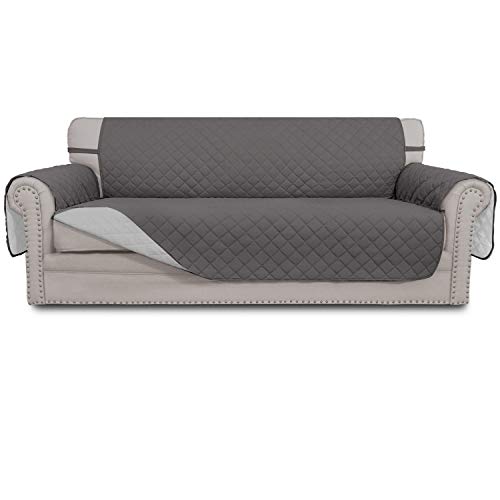
Easy-Going Reversible Couch Cover, 3 Cushion Sofa, Large, Gray/Light Gray | Machine Washable Slipcover For Dogs, Water Resistant Furniture Mat For Living Room, Non-Slip Sofa Cover, Pet Friendly
Check price on Amazon
LA MEACK Couch Cushion Covers Seat Cushion Cover Stretch Couch Cover Separate Sectional Sofa Slipcovers Furniture Protector(3 Pieces for Seat or Sofa Backrest, Dark Grey)
Check price on Amazon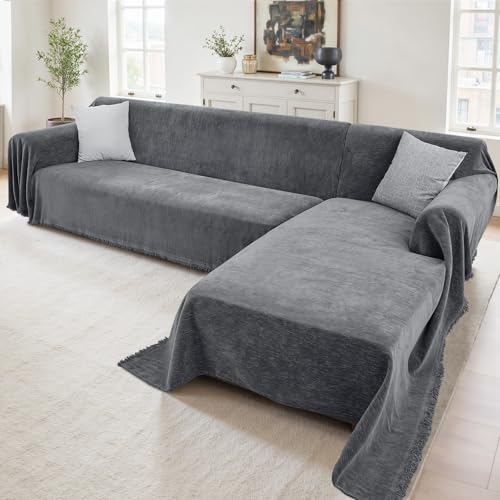
Houmiggle 2 Pieces Sectional Couch Covers L Shaped Cover XL Dark Gray | Washable L Shaped Sectional Sofa Cover, Anti-Hair, Stain & Wear Resistant, Easy Care & Installation 71" x 110" + 71" x 118"
Check price on Amazon
Easy-Going Stretch Oversized Sofa Couch Slipcover Washable Dark Gray | 1-Piece X-large Sofa Cover Furniture Protector Couch Soft with Elastic Bottom for Kids, Polyester Spandex Jacquard Fabric
Check price on Amazon
Easy-Going Stretch Loveseat Couch Covers Washable Dark Gray | 1-Piece Loveseat Covers for 2 Cushion Couch Furniture Protector RV Sofa Slipcover Soft with Bottom for Kids Pets
Check price on Amazon
hyha Couch Cover for Dogs, Non-Slip Fuzzy Pet Sofa Cover Washable | Soft Thick Sofa Covers for 3 Cushion Couch, Furniture Protector Against Pet Hair, Scratches & Stains (27.6"x70.9")
Check price on AmazonBefore you buy: Write down all seven measurements from the measurement section above and keep them on your phone when you shop. Cross-reference your numbers against the specific size chart for every cover you consider — manufacturers use different reference points, and a cover that fits one brand's "standard sofa" range may not fit another's. When in doubt, contact the seller with your measurements before ordering. A few minutes of verification is far easier than a return.