
Couch Covers That Actually Look Good
A cover should protect your sofa and elevate the room, not announce itself as an afterthought. Here is how to choose one that looks intentional from every angle.
The honest truth about couch covers: most covers fail not because the fabric is bad, but because the fit is wrong. A loosely draped throw-over reads as clutter, while a precisely fitted cover reads as upholstery. This guide focuses on the details that separate a cover that looks like a design choice from one that looks like a temporary fix.
Why a Well-Chosen Cover Deserves a Place in Your Living Room
A good couch cover solves real problems: it shields upholstery from daily wear, refreshes an older sofa without replacing it, and makes a room easier to live in for households with pets or children. The key word is good. The market is full of covers that bunch at the seat, ride up the arms, or wrinkle the moment someone sits down. Those are the covers people complain about.
The covers that earn their place share three traits: a snug fit, a fabric with enough weight to drape cleanly, and a color or texture that complements the room rather than fighting it. When those align, guests rarely realize a cover is there at all. If you are starting from scratch on the sofa itself, our couch buying guide covers the fundamentals of frame, fill, and upholstery before you ever need a cover.
Covers also extend the useful life of a sofa you already love. A sofa that fits a small room well is hard to replace, so protecting it makes sense. If space is tight, the same reasoning applies to compact seating covered in our comfy couch for a small living room guide.
Fit Comes First: The Three Cover Styles That Look Best
Almost every complaint about covers looking sloppy traces back to the fit category. There are three main approaches, and each suits a different situation.
Fitted Slipcovers
Tailored to the sofa's dimensions with elastic or tie anchors, these sit closest to the cushion and arm contours. They read as upholstery and are the safest choice when the cover will be visible daily.
Stretch Covers
Knitted or spandex-blend covers hug the frame and stay put through movement. They work well on standard rectangular sofas, though heavily tufted or oversized rolled arms can cause stretching that looks uneven.
Quilted & Structured Covers
Padded quilting gives a cover body and helps it hold shape on straight-sided sofas. They hide wear underneath effectively, but need accurate measurements so the skirt hangs evenly on both sides.
Whatever the style, measure before ordering. Measure the overall length, the seat depth, the arm height, and the back height. Many covers fail simply because the buyer guessed. If your sofa has an unusual silhouette, a modular or curved sectional for instance, read our notes on covers for odd-shaped couches and on L-shaped couch covers before committing.
Arm style matters too. Reclining sofas need covers with separate panels or extra stretch at the footrest hinge. Our guide to covers for recliners on each end explains the paneling differences that keep the mechanism working.
Fabric Choices That Photograph and Live Well
Fabric determines whether a cover looks crisp or tired after a week. Weight is the single biggest predictor of how a cover drapes. Lightweight jersey fabrics cling and show every cushion seam; medium to heavy fabrics fall in clean lines.
- Textured weaves (twill, herringbone, chunky knit) hide wrinkles and pet hair better than smooth synthetic blends.
- Matte finishes look more like upholstery than high-sheen fabrics, which tend to highlight creases under daylight.
- Washable covers should be chosen with shrinkage in mind. Pre-washed cotton blends hold size better than untreated knits. See our washable couch covers guide for care routines.
- Waterproof backing is worth considering in homes with pets or young children. Our waterproof covers for pets breakdown compares how different backings affect drape and breathability.
Leather sofas present their own challenge: covers slide, and smooth fabrics look out of place. Solutions range from non-slip undersheets to covers cut specifically for the leather sofa shape. Our leather couch covers for recliners guide covers both.
Matching Cover Quality to Your Needs
Using neutral tier descriptors helps set expectations without getting tangled in numbers. The tiers below describe relative construction and fabric quality across the category.
| Tier | Best For | What to Expect |
|---|---|---|
| Essential tier | Short-term protection, guest rooms, light use | Basic stretch fabrics, simpler anchoring, acceptable fit on standard rectangular sofas |
| Balanced tier | Daily family use, pet households, visible living rooms | Heavier weaves, reinforced seams, better shape retention through repeated washing |
| Premium tier | Design-forward rooms, fitted slipcovers, leather sofas | Tailored patterning, non-slip backing, fabrics that drape close to upholstery quality |
For most living rooms, the balanced tier is the sensible center. It offers the best trade-off between fit, durability, and the ability to look presentable after months of use. Step up to premium when the cover will be the dominant visual element in the room, for instance on a large sofa in an open-plan space. If your seating is a loveseat or compact two-seater, sizing changes the calculus, and our reclining loveseat cover guide covers the smaller dimensions.
Styling the Cover So It Looks Intentional
Even a fitted cover benefits from a little styling. The goal is to make the cover read as part of the room's design language, not as a protective layer.
- Tuck the excess. Push fabric into the crease where the seat meets the back and arms. A smoothing tool helps; fingertips work fine on stretch fabrics.
- Keep cushions visible. Covers that swallow the cushion seams look flat. Choose a design that follows the cushion line or add throw pillows to restore visual depth.
- Coordinate, don't match. A cover in a tone slightly different from the rug and curtains creates layering. Matching everything exactly tends to look showroom-flat.
- Use texture as contrast. A knit cover pairs well with smooth coffee tables and woven baskets. Our couch decor and styling section has more on balancing textures.
Pillow-back sofas need particular attention because the back cushions are removable and often shift under a cover. Our guide to covers for pillow-back couches explains how to anchor around loose cushions.
Special Cases: Sectionals, Curved Shapes, and Recliners
Sectionals are the most common source of cover frustration. A single piece of fabric rarely fits an L-shape well. The better approach uses two coordinated panels, one per section, anchored at the corner. For waterproof needs, our waterproof sectional covers guide explains the seam placement that prevents pooling at the corner. If your sectional has a curved or chaise end, the curved sectional covers with recliners overview is a useful starting point.
Reclining sofas deserve a dedicated mention: a cover that binds at the hinge will either tear or stop the mechanism from fully extending. Look for covers with split front panels or four-way stretch at the footrest. The same principle applies whether the recliners are at both ends or in the middle. If the sofa converts to a bed, our comfy sleeper couch guide covers how covers interact with fold-out mechanisms.
And if you are still deciding whether a cover is the right move versus replacing the seating, the answer often depends on the sofa's structure. A sofa with a sound frame and good cushions is a strong candidate for a quality cover. A sofa with sagging springs is not, and our couch care and maintenance section explains how to tell the difference.
Ready to compare options? The recommendations below reflect the fit, fabric, and styling principles covered in this guide.
Explore Recommended CoversRecommended Couch Covers That Look Good
⚠️ AFFILIATE DISCLOSURE: This website contains affiliate links. As an affiliate Associate, we earn from qualifying purchases. If you make a purchase through these links, we may receive a small commission at no additional cost to you. Read our full affiliate policy.

Cupuamon 2026 New Stretch Sofa Slipcovers Couch Cover for 3 Cushion Furniture Protector Sofa Covers with Elastic Bottom Jacquard Fabric Small Checks for Pets, Kids -Sofa, Black
Check price on Amazon
KEKUOU Stretch Couch Covers for Sofa, 3 Cushion Couch Slipcover,Black | 1-Piece Washable Sofa Cover Pet Friendly(78"-94") Furniture Protector Soft Jacquard, Elastic Bottom for Dogs & Kids
Check price on Amazon
H.VERSAILTEX 4 Pieces Thick Velvet Sofa Covers Couch Covers for 3 Cushion Couch Sofa High Stretch Slipcovers Furniture Protector Form Fit Luxury Couch Cover for Dogs Width Up to 90 Inch(Sofa,Grey)
Check price on Amazon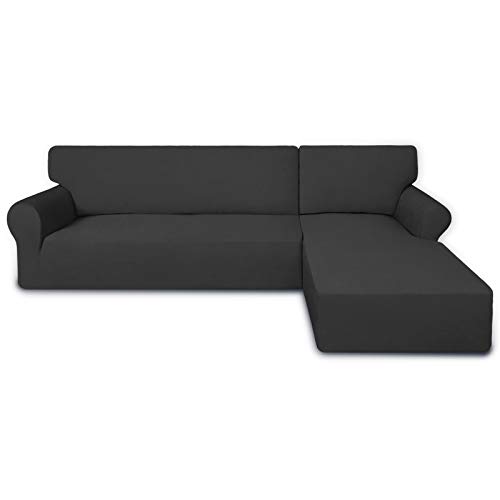
PureFit Super Stretch Sectional Couch Covers - 2 pcs Spandex Non Slip, with Elastic Bottom for L Shape Sectional Sofa Couches, Great for Kids & Pets (3 Seat Sofa + 3 Seat Chaise, Dark Gray)
Check price on Amazon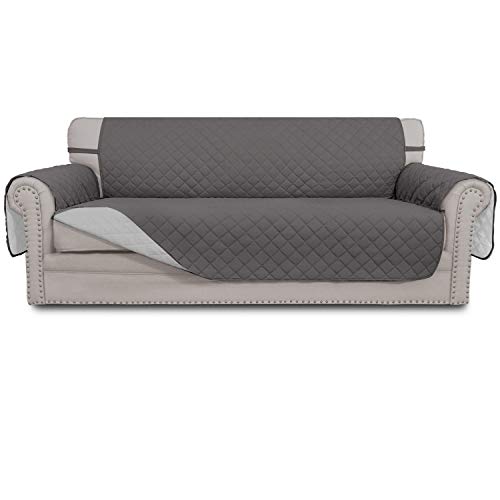
Easy-Going Reversible Couch Cover, 3 Cushion Sofa, Large, Gray/Light Gray | Machine Washable Slipcover For Dogs, Water Resistant Furniture Mat For Living Room, Non-Slip Sofa Cover, Pet Friendly
Check price on Amazon
PureFit Stretch Couch Covers for Sofa Large Sofa Slipcovers Chocolate | 1-Piece Spandex Couch cover Soft Couch protector, Sofa cover Washable with Non Skid Foam and Elastic Bottom for Kids, Dogs
Check price on Amazon
Turquoize 100% Waterproof Sofa Covers Couch Cover for Dogs, Sofa 70" | Gray, Non-Slip, 3 Cushion Couch Cover, Pet Friendly, Machine Washable, Quilted Furniture Protector for Pets,Kids,Dog
Check price on Amazon
ZNSAYOTX Super Stretch Couch Cover (72"-92") Universal Sofa Covers with Elastic Bottom, Dog Cat Pets Friendly Washable Furniture Protector Fitted Sofa Slipcovers Stay in Place (Dark Grey, Sofa)
Check price on AmazonFrequently Asked Questions
How do I keep a couch cover from bunching up?
Bunching usually means the cover is too large or the fabric lacks weight. Use the included anchors or tuck excess into the seat crease. Adding a non-slip underlay beneath stretch covers also helps. If bunching persists at the arms, the cover's arm cut does not match your sofa's arm shape.
Do couch covers work on leather sofas?
They can, but smooth leather lets fabric slide. Look for covers with a non-slip backing or add an underlay. Fitted slipcovers with tie anchors generally hold better than loose stretch covers on leather.
What is the best fabric for a couch cover that looks good?
Medium-weight textured weaves tend to look best because they drape cleanly and hide wrinkles. Matte finishes read more like upholstery than glossy synthetics. Pre-washed cotton blends hold their size better through repeated washing.
Can I use a couch cover on a sectional?
Yes, but choose a two-panel design made for L-shaped sectionals rather than a single oversized cover. Paneled covers fit the corner more cleanly and stay anchored when people move between sections.
How do I make a cover look less like a cover?
Tuck the excess fabric, keep cushion seams visible, and style with throw pillows that restore depth. Choosing a cover color that layers with the room rather than matching it exactly also helps it read as intentional design.
Continue Your Research
Covers are one part of a well-planned living room. If you are still choosing seating, the comfy couch overview and the comfortable sectional couch guide cover what makes a sofa worth keeping in the first place. For compact rooms, the comfortable couches for small spaces article pairs well with this cover guide. If your sofa doubles as a guest bed, the comfy couch with pull-out bed guide explains how covers interact with fold-out frames. And when a sofa is beyond saving, the companies that will buy your furniture page covers responsible disposal options.