
Couch Frame Guide: Construction, Materials & Durability
The frame is the skeleton of every sofa — and the single biggest predictor of how long it will last. Learn how hardwood, engineered wood, and metal frames are built, what joinery to look for, and how to verify frame quality before you commit.
Explore Frame MaterialsCouch Frame Materials Compared
When you sit on a couch, your body weight travels through the cushions and seat deck straight into the frame. If that frame flexes, creaks, or loosens over time, the entire sofa degrades — no cushion upgrade or reupholstery job can compensate. That is why frame construction deserves more attention than almost any other specification on the product page.
Most couches sold today use one of three frame families: kiln-dried hardwood, engineered wood (plywood, particleboard, or MDF), and metal. Each has a legitimate place in the market, but they behave very differently across a decade of daily use. The table below summarizes how each material performs on the factors that matter most to long-term owners.
| Frame Material | Typical Tier | Durability | Weight & Rigidity | Best For |
|---|---|---|---|---|
| Kiln-dried hardwood (oak, maple, beech, ash) | Premium to luxury | Excellent — 15–25+ years | Heavy, highly rigid | High-use family living rooms and long-term investment pieces |
| High-grade plywood (cross-laminated) | Mid-range to premium | Good — 7–15 years | Moderate weight, stable | Humid climates, modern modular designs |
| Particleboard / MDF | Entry-level | Fair — 3–7 years | Light, prone to screw loosening | Guest rooms, occasional seating, starter apartments |
| Metal (steel or aluminum) | Mid-range to commercial-grade | Very good — 10–20 years | Light-to-moderate, very rigid | Sleeper mechanisms, recliners, contract and commercial seating |
Kiln-Dried Hardwood Frames
Kiln-dried hardwood is the benchmark against which every other couch frame is measured. The process of kiln drying removes most of the natural moisture from the timber before it is cut and assembled. Green or air-dried wood continues to move as it releases moisture, which is why untreated frames warp, split at the joints, and develop the notorious creak that never goes away.
The hardwood species used most often in quality sofas are oak, maple, beech, and ash. All four are dense enough to hold screws and staples securely and stiff enough that the seat deck does not bow under repeated loading. A properly built hardwood frame is typically assembled with dowels, screws, corner blocks, and sometimes mortise-and-tenon joints — not just adhesive and staples.
What "kiln-dried" actually means
Kiln drying reduces the moisture content of lumber to roughly 6–8 percent, which is close to the equilibrium moisture content of a typical heated home. Wood that is dried to this level will not shrink or swell dramatically after the couch is delivered. In contrast, lumber dried only in open air can sit at 15–20 percent moisture and will continue to move for years inside a dry living room.
Strengths and trade-offs
- Strengths: exceptional rigidity, long service life, excellent screw-holding capacity, and the ability to be repaired and reupholstered multiple times.
- Trade-offs: heavier sofas are harder to move through tight doorways, and solid wood can expand and contract in very humid climates unless properly sealed.
If you are furnishing a main living room that will see daily use for a decade or more, a kiln-dried hardwood frame is the safest long-term investment. Pair it with durable upholstery — our guides to couch fabric types and couch materials explain which covers hold up best on a hardwood foundation.
Engineered Wood & Plywood Frames
"Engineered wood" is an umbrella term that covers everything from high-grade cross-laminated plywood to low-density particleboard. The performance gap inside this category is enormous, which is why blanket statements like "engineered wood is bad" are misleading.
High-grade plywood frames
Plywood is made by gluing multiple thin layers of wood veneer together with the grain direction alternating between layers. That cross-lamination produces a panel that is dimensionally stable, resistant to warping, and strong in every direction. Quality sofa makers use plywood of sufficient thickness with corner blocks and mechanical fasteners, and the result is a frame that can comfortably serve for a decade or more. Plywood also handles humid climates better than solid hardwood because it moves less with seasonal moisture changes.
Particleboard and MDF frames
Particleboard is made from wood chips and resin; MDF is made from fine wood fibers and resin. Both are dense and flat, but they have poor screw-holding strength compared with solid wood or plywood. Over years of use, the fasteners that hold the frame together can wallow out their holes, causing joints to loosen and the couch to wobble. Entry-level couches frequently use these materials in the arms, back, and seat deck, where they are less visible but still structural.
Cross-Laminated Plywood
Stable, strong, and resistant to humidity swings. A solid choice when paired with corner blocks and mechanical joinery. Well-specified for the category.
Particleboard / MDF
Fine for guest rooms and occasional seating, but fasteners loosen faster. Inspect the joints carefully and expect a shorter service life.
Hardwood + Plywood Hybrid
Hardwood rails and legs combined with plywood panels. This hybrid captures much of hardwood's rigidity with less weight and better moisture stability.
If you are shopping for a modular or flat-pack design, plywood is often the smarter frame choice because it tolerates disassembly and reassembly far better than particleboard. Our guide to couches that can be taken apart explains what to look for in frames designed for repeated assembly.
Metal Frames
Metal frames are most common in sleeper sofas, recliners, and commercial-grade seating, where the frame must support mechanical components as well as body weight. Steel is the usual choice for load-bearing members, while aluminum appears in lighter-weight designs where portability matters.
A well-made metal frame is welded or bolted at the joints, treated with a rust-resistant finish, and integrated with the sofa's wooden or composite rails rather than replacing them entirely. The best sleeper mechanisms combine a steel folding mechanism with a hardwood or plywood outer frame, so the couch looks and feels like furniture while the moving parts stay rigid.
Where metal frames excel
- Sleeper and pull-out mechanisms: steel folding hardware handles repeated conversion far better than wood alone. See our guide to couches that pull out into a bed for mechanism details.
- Reclining sofas: the reclining action relies on a metal linkage system that must stay aligned under load.
- Contract and commercial seating: metal frames tolerate heavy, near-continuous use in lobbies and waiting areas.
What to watch for
Thin-gauge tubular steel can dent and flex, and poorly finished welds are a common failure point. Look for a manufacturer that specifies the steel gauge and offers a mechanism warranty. Rust-proof finishes matter in humid rooms; a powder-coated or galvanized finish will outlast bare steel by a wide margin.
Joinery Methods & Corner Blocks
The material of a frame gets the headlines, but the joinery decides whether the frame stays tight. Two couches can use identical hardwood and still perform very differently depending on how the rails, legs, and arms are connected.
| Joinery Method | Strength | Typical Tier | What It Means for You |
|---|---|---|---|
| Mortise-and-tenon with glue | Excellent | Premium to luxury | Interlocking joint that resists racking; rarely loosens under normal use. |
| Dowel + screw + glue | Very good | Mid-range to premium | Common in quality frames; strong when combined with corner blocks. |
| Screws with corner blocks | Good | Mid-range | Corner blocks add rigidity; check that blocks are glued and screwed, not stapled. |
| Staples and adhesive only | Fair | Entry-level | Fastest to assemble and first to loosen; expect creaking over time. |
Corner blocks deserve special mention. These triangular or L-shaped reinforcements are fitted into the inside corners where the seat rails meet the legs and arms. When they are glued and screwed in place, they dramatically reduce the side-to-side racking that eventually loosens a frame. When they are absent or stapled, the frame relies almost entirely on the fasteners at the corner — which is exactly where failures begin.
How to Check Frame Quality Before Buying
You do not need to disassemble a couch to judge its frame. A handful of simple checks will separate a solid build from a fragile one, whether you are in a showroom or reading an online listing.
The corner-lift test
In a showroom, lift one front corner of the couch a few inches off the floor. On a well-built frame, the opposite corner will rise at the same time and the couch will stay rigid, with no twisting, creaking, or flexing in the middle. If the frame sags or the opposite end stays planted, the joints are loose or the material is too thin for the span.
Read the frame specification
Online listings and product pages should state the frame material and, ideally, the joinery. Vague language such as "wood frame" without a species or construction method is a warning sign. Look for terms like "kiln-dried hardwood," "cross-laminated plywood," or "steel mechanism with hardwood rails." Our guide to couch materials explains how frame specifications fit into the broader material picture.
Check the warranty
Frame warranties are a useful proxy for manufacturer confidence. A lifetime or 10-year frame warranty usually signals hardwood or high-grade engineered wood, while a 1-year frame warranty is common on entry-level particleboard builds. Note that frame warranties typically exclude the cushions and upholstery, so read the terms carefully.
Inspect the details
- Seat deck: a tight, evenly tensioned deck with no ripples suggests a rigid frame beneath.
- Legs: legs should be attached with bolts and reinforcing plates, not just screws into particleboard.
- Underside: dust covers are fine, but a removable cover or open weave lets you see the actual structure.
- Symmetry: gaps between the arms and seat rails, or misaligned seams, can indicate a frame that is not square.
For a complete pre-purchase walkthrough, see our measurement guide and the buying guides section, which cover dimensions, delivery access, and room planning alongside frame considerations.
Frame vs. Upholstery & Cushions
The frame, the suspension, the cushions, and the upholstery form a chain, and the couch is only as durable as its weakest link. A premium hardwood frame paired with low-density foam cushions will feel worn out long before the frame does. Conversely, top-tier cushions cannot rescue a frame that flexes every time someone sits down.
Suspension systems
Suspension is the layer between the frame and the seat cushions. Sinuous wire springs, eight-way hand-tied springs, and webbing each distribute load differently. Eight-way hand-tied springs are the traditional premium option and pair naturally with hardwood frames. Sinuous wire is common in mid-range builds and performs well when the frame is rigid. Webbing is the lightest option and is often found in entry-level and modular designs.
Cushion quality
High-resilience foam, wrapped foam, and down-blend cushions all rely on a stable seat deck to keep their shape. If you plan to replace cushions later, a strong frame makes that worthwhile. Our guides to couch cushions, couch cushion types, and couch cushion replacement explain how to match new cushions to your frame's suspension. If you are restoring an older piece, cushion cover replacement is a practical way to refresh the look without touching the structure.
Upholstery on a good frame
Durable upholstery extends the frame's useful life by protecting it from moisture and abrasion. Performance fabrics, tight weaves, and leather all wear well on hardwood and plywood frames. For pet households, our guide to a couch good for pets covers frame and fabric combinations that survive claws and accidents. If you are considering leather, our leather couch guide explains how leather interacts with different frame constructions.
Frame Tier Guide
This guide uses universal quality tiers rather than numeric figures, so the classification stays meaningful over time and across markets. Use it to calibrate expectations as you compare couches.
Particleboard or MDF Frame
Light construction, stapled or minimally screwed joints, and a short frame warranty. Fine for occasional seating and guest rooms, but fasteners tend to loosen with daily use.
Plywood or Mixed Engineered Wood
Cross-laminated plywood with corner blocks and mechanical fasteners. A balanced tier that handles daily living well and offers good value for its class.
Kiln-Dried Hardwood
Oak, maple, beech, or ash with doweled and screwed joinery. Heavy, rigid, and repairable — a long-term investment for a primary living room.
Hardwood + Mortise-and-Tenon
The top tier of residential construction: selected hardwood, interlocking joinery, corner blocks, and premium suspension. Built to be reupholstered rather than replaced.
Steel and Reinforced Hardwood
Welded steel mechanisms combined with hardwood rails. Found in sleeper sofas, recliners, and contract seating where mechanisms take the load.
Hybrid Frame
Hardwood rails with plywood panels — much of the rigidity of solid wood, with better moisture stability and less weight. A solid choice for humid climates.
Frequently Asked Questions
What is the most durable couch frame material?
Is a hardwood frame always better than engineered wood?
How can I check a couch frame before buying?
How long should a quality couch frame last?
Do metal frames belong in a living room couch?
Ready to Compare Couches with Confidence?
Now that you know how frames are built, put that knowledge to work. Explore our recommended couches and filter by the construction details that matter to your household.
View Recommended CouchesRecommended Couches with Quality Frames
⚠️ AFFILIATE DISCLOSURE: This website contains affiliate links. As an affiliate Associate, we earn from qualifying purchases. If you make a purchase through these links, we may receive a small commission at no additional cost to you. Read our full affiliate policy.

4Pcs Metal Sofa Support Frame for Boneless Couch, 15.7 x 15.7 x 23.5in | L Shaped Support Frame for Frameless Floor Sofas, for Added Support or Replacement of an Existing Frame, Easy to Assemble
Check price on Amazon
Lutown-Teen Twin Daybed Frame, Metal DayBeds, Heavy-Duty Steel Slats, Black | 700 lb Capacity, 12-Inch Underbed Storage, Bedroom Daybed or Living Room Sofa, Non-Slip Leg Pads, 20-30 Minute, Assembly
Check price on Amazon
2 Set Floor Sofa Support Frame for Boneless Couch Freestanding Back Support | Floor Cushions Frameless Couch, Risers for Boneless Couch, L Shaped Frame, No Wall Needed, Easy Assembly, Sofa Not Included
Check price on Amazon
JURMERRY Metal Daybed Frame Twin Size, Black | Sofa Bed Frame,Vintage Headboard,Safe Curve Armrests,Heavy Duty Metal Slats Support,For Living Room & Guest Room
Check price on Amazon
COMHOMA 72″ Convertible Futon Sofa Bed, Adjustable Backrest, Black | Breathable Fabric Futon Couch with Pillows,Multi-angle Ergonomic Reclining,Space-saving Sleeper Sofa for Living Room
Check price on Amazon
Yookwutar Bed Risers 2 inch, 3 inch, 4 inch, 6 inch, 8 inch Heavy Duty, Oversized Furniture Riser for Couch Sofa Table Chair Leg Frame Dorm, Support up to 6000 Lbs (Black 4 Pack, 4 inch)
Check price on Amazon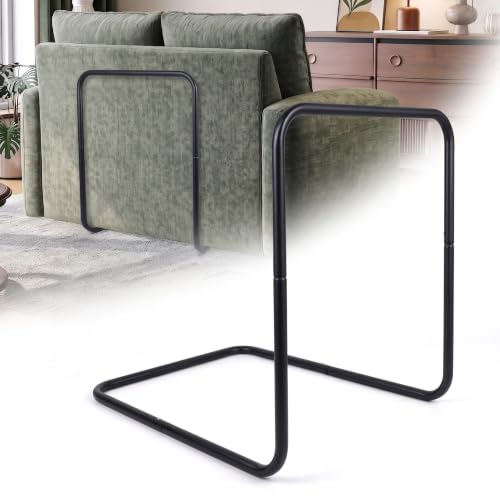
L-Shaped Metal Floor Sofa Frame, Freestanding, Sofa Not Included | Steel L-shaped frame for floor sofas and modular cushions. Freestanding, compact, easy setup. Sofa and cushions not included.
Check price on Amazon