
Leather Couch Buying Guide
Everything you need to know before choosing a leather sofa — from grain types and upholstery grades to frame construction, comfort, and long-term care.
Why a leather couch deserves careful research: A leather sofa is a long-term investment that shapes the look, feel, and daily function of your living room. Unlike fabric, leather develops character over time, resists everyday spills more gracefully, and can last for many years when chosen and maintained properly. This guide walks you through the decisions that matter most so you can buy with confidence.
Why Choose a Leather Couch?
Leather remains one of the most sought-after upholstery choices for living rooms because it balances durability with a refined appearance. A well-made leather couch adapts to both contemporary and traditional interiors, and it tends to age gracefully rather than wear out visibly. For households that entertain often, leather offers an easy-to-wipe surface that handles accidental spills far better than most woven fabrics. If you are still weighing upholstery categories, our overview of couch materials can help you compare leather against fabric, velvet, and performance weaves side by side.
Leather is also a practical choice for allergy-sensitive homes because it does not trap dust mites or pet dander the way deep-pile fabric can. Many buyers also appreciate that leather stays cooler in warm months and warms quickly to body temperature in cooler months. If pets or children are part of your household, a leather couch can be a resilient companion — and pairing it with the right couch protection strategy keeps it looking sharp for years.
Leather Types: Full Grain, Top Grain, and Beyond
The single most important factor in leather quality is the grain — the layer of the hide that is used. Understanding these categories helps you interpret marketing language and compare sofas on equal footing. The table below summarizes the main grades you will encounter.
| Leather Type | Tier | Best For | Key Characteristics |
|---|---|---|---|
| Full Grain | Luxury / flagship tier | Long-term investment, character-rich interiors | Entire grain intact, develops patina, exceptionally durable |
| Top Grain | Premium tier | Balanced durability and refined finish | Lightly sanded surface, smooth feel, very durable |
| Corrected Grain | Mid-range tier | Uniform look, busy households | Buffered and embossed, consistent texture, resistant finish |
| Split Leather | Essential tier | Entry-level leather look | Lower hide layer, often coated, less breathable |
| Bonded Leather | Starter tier | Short-term or accent seating | Reconstituted leather fibers, least durable, budget category |
| Faux / Vegan Leather | Entry-level tier | Allergy-conscious, plant-based preferences | Polyurethane or similar, easy wipe-clean, shorter lifespan |
Full grain sits at the flagship end: it retains the natural surface of the hide, including subtle markings, and it is the type that develops a rich patina over time. Top grain is the most common premium option — it is sanded lightly for uniformity while keeping strong durability. Corrected grain is more uniform and forgiving for households with pets and kids, while split and bonded leather are essential-tier options that look like leather but age faster. When you compare sofas, remember that a "leather" label alone says little — the grain category is what tells you how the piece will hold up.
Construction Matters: Frame, Springs, and Cushions
Leather is only as good as the structure beneath it. A premium hide stretched over a weak frame will still disappoint, so evaluate construction alongside the upholstery. The strongest sofa frames use kiln-dried hardwood joined with corner blocks, dowels, or screws rather than staples alone. Our guide to couch frames explains the joinery details worth checking, and it is a useful checklist when you shop in person or read product specs online.
Suspension is the second pillar. Sinuous wire springs are common and reliable for mid-range and premium sofas, while eight-way hand-tied springs represent the top-tier benchmark for even support and longevity. Cushions matter too — high-resilience foam wrapped in down or fiber offers a plush yet supportive feel. If you plan to replace cushion cores over time, browse couch cushion replacement options so you know replacements are feasible for your chosen model.
Particleboard or Plywood Frame
Common in starter-tier sofas. Adequate for light use, but less resistant to heavy daily seating and long-term wear.
Engineered Hardwood Frame
A solid middle ground. Reinforced corner blocks and glued joinery give dependable durability for most households.
Kiln-Dried Hardwood Frame
Professional-grade construction with eight-way hand-tied springs. The benchmark for long-term support and longevity.
Leather Couches: Strengths and Trade-offs
Every upholstery choice involves trade-offs. Knowing the strengths and limitations of leather upfront helps you set realistic expectations and choose a model that fits your lifestyle.
Advantages
- Highly durable surface that resists everyday abrasion
- Wipe-clean convenience for spills and crumbs
- Develops a distinctive patina with age
- Does not trap dust mites or pet dander easily
- Works well in both modern and traditional interiors
- Easy to refresh with leather conditioner
Considerations
- Cooler initial feel in cold rooms
- Can be slippery on smooth-grain finishes
- Requires periodic conditioning to prevent drying
- Sun exposure can fade or dry the hide over time
- Pet claws may leave surface marks on softer hides
- Higher tiers demand a larger upfront investment
For pet-owning households, our guide to a couch good for pets covers which leather finishes handle claws and accidents with the least fuss. If your living room receives strong direct sunlight, review sun damage prevention so you can position the sofa to slow fading and drying.
Choosing the Right Leather Sofa Configuration
Leather sofas come in many shapes, and the right one depends on room size, seating needs, and how you use the space. A standard three-seat sofa is the classic anchor for a living room, while a couch L shape or a couch sectional with ottoman suits open-plan rooms and family lounging. For compact apartments, a couch love seat delivers the same leather appeal in a smaller footprint. If you have a dedicated set in mind, our guide to a couch set leather arrangement explains how to coordinate a sofa, loveseat, and chair for a cohesive room.
Measure your room and the path to your doorway before you buy. Leather sofas tend to be heavy, and tight hallways can complicate delivery — our notes on a couch that fits through small doors help you avoid a delivery-day surprise. For small living rooms, a couch for living room guide outlines proportions that keep the space balanced rather than cramped. Also plan your couch in a room placement so walkways stay clear and the sofa faces a natural focal point.
Ready to Compare Leather Sofas?
Use the curated list below to explore leather couch options and check availability on Amazon.
Recommended Leather Couches
⚠️ AFFILIATE DISCLOSURE: This website contains affiliate links. As an affiliate Associate, we earn from qualifying purchases. If you make a purchase through these links, we may receive a small commission at no additional cost to you. Read our full affiliate policy.

88'' Black Faux Leather Couch w/ Charging, 3 Seater Living Room Office Sofa | Faux Leather Sofa, Black Couch, Small Sofa, Mid-Century Modern, Tufted Design, Wider Arms, Side Pockets, Apartment, Bedroom
Check price on Amazon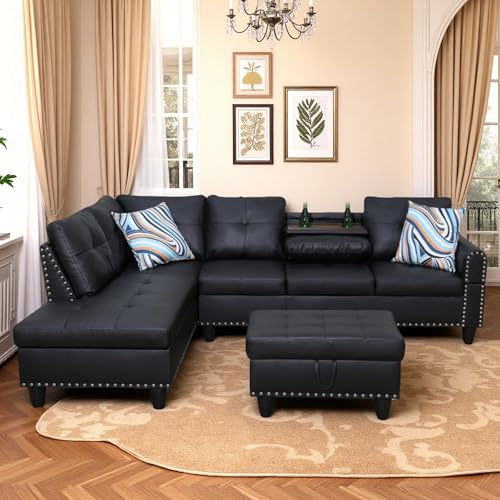
Trygoal Leather 3-Piece L-Shaped Couches for Living Room, Sectional Sofa with Storage Ottoman & Movable Chaise, Modular Convertible Couch for Bedroom & Apartment, Midnight Black
Check price on Amazon
Flamaker Futon Sofa Bed, Black Faux Leather Convertible Loveseat Couch | Modern Adjustable Folding Futon Set with 2 Cup Holders & Removable Armrests, Recliner Lounge for Living Room & Apartment
Check price on Amazon
83" Black Faux Leather 3 Seater Couch, Mid Century Tufted Sofa Living Room | STHOUYN Office Couch, Tufted Design, High Resilience Foam, 700 lb Capacity, Easy Assembly, Waiting Room Area, Small Couches
Check price on Amazon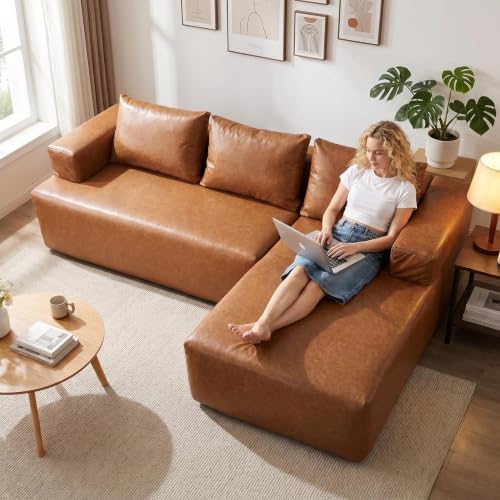
96" Boneless Faux Leather Sectional Couches for Living Room | Module Combination Spring Cushions Sofa, L Shaped Chaise Lounge, No Assembly, Deep Seat,Stain Resistant Abrasion, Apartment
Check price on Amazon
78" L Shaped Faux Leather Sectional Sofa, Couch with Storage Ottoman, Camel | Small sofa for small spaces, living rooms, apartments, offices, reversible ottoman, 2 cup holders, 4 side pockets
Check price on Amazon
Eafurn Tufted Sectional Sleeper Sofa Pull Out Couch Bed Modern Sofabed | Sectional Sleeper Sofa with Pull Out Bed, L Shaped Couch with Reversible Chaise Lounge, Pull Out Couch for Living Room
Check price on Amazon
HULALA HOME 84" Faux Leather Sofa, Mid Century Modern 3 Seater Couch, Camel | Button-Tufted Sofa with Metal Legs, Square Armrests, Supportive Cushions, Easy Assembly, for Living Room Bedroom Apartment
Check price on AmazonComfort, Fit, and Seat Depth
Comfort is personal, but a few measurements guide most buyers well. Standard seat depth ranges from about 20 to 24 inches; deeper seats suit lounging and taller users, while shallower seats feel more upright and formal. Arm height, back height, and cushion firmness all influence how the sofa feels after an hour of sitting. Test the sofa in person when possible, and if you buy online, read the seat height and depth specs carefully. Our couch size resource explains how to translate room dimensions into the right sofa footprint.
Pay attention to cushion construction too. A couch seat cushion built from high-density foam wrapped in fiber balances support and softness. If you prefer a sink-in feel, look for models with down-wrapped cores — but be prepared to fluff them regularly. And if the sofa will serve as an occasional guest bed, consider a couch for sleeping variant or a separate sleeper model in leather rather than forcing a standard sofa into that role.
Caring for a Leather Couch
Leather is low-maintenance but not maintenance-free. Dust the surface with a dry microfiber cloth weekly, and wipe spills promptly with a slightly damp cloth and mild soap. Condition the leather two to four times per year with a product formulated for your leather type — this prevents drying and cracking, especially in heated homes. For deeper cleaning, our leather cleaning guide walks through safe methods step by step, and leather conditioning explains how to choose the right conditioner.
Address small scratches and scuffs before they become visible wear. The leather repair guide covers DIY touch-ups for surface marks, and if a cushion core softens over time, couch cushion cover replacement can refresh the look without replacing the whole sofa. During holidays and heavy hosting seasons, a light application of conditioner before and after gatherings helps the sofa recover from extra use.
Your Leather Couch Buying Checklist
Work through these steps in order to narrow your shortlist efficiently and avoid buyer's regret.
Confirm the Grain Type
Ask for the leather grade by name — full grain, top grain, or corrected grain. Verify whether the sides and back are leather or a matching synthetic. Our couch upholstery fabric overview helps you compare materials if you are undecided.
Inspect the Frame and Springs
Look for kiln-dried hardwood and reinforced corner joints. Ask about suspension type — sinuous wire versus eight-way hand-tied — and confirm the frame is covered by a warranty. Review couch frame details before committing.
Test Seat Depth and Cushion Firmness
Sit for at least ten minutes in the store or study the specs online. Check couch size against your room measurements, and confirm the cushion construction suits how you plan to use the sofa.
Plan for Delivery and Assembly
Measure doorways and stairwells. Leather sofas are heavy — review couch delivery logistics and any assembly steps before purchase. Ask whether the retailer offers white-glove service.
Set Up a Care Routine
Read the manufacturer's care instructions and stock up on a suitable conditioner. If the sofa will sit in direct sun, plan the placement to reduce fade, and keep our leather cleaning guide handy for seasonal maintenance.
Frequently Asked Questions
Full grain sits at the flagship tier because it retains the entire grain surface, which is the most durable and character-rich part of the hide. Top grain is sanded lightly for uniformity and is still a premium-tier option for most households. Full grain is not automatically the right choice for everyone — corrected grain and top grain can be more forgiving in homes with pets or young children. Choose based on your lifestyle and maintenance preferences.
Two to four times per year is typical for most climates. In dry, heated homes or regions with intense sun exposure, condition more often. Always use a product suited to your leather type — aniline, semi-aniline, and pigmented leathers absorb differently. Our leather conditioning guide explains the product categories and application steps.
Yes, with the right finish. Smooth, corrected-grain leathers resist claws better than soft aniline hides, and they wipe clean easily after accidents. Trimmed nails and a regular wipe-down routine make a big difference. For more detail, see our guide to a couch good for pets and the notes on pet damage prevention.
Ask the retailer directly about the grain type and whether the sides and back use the same material. Many sofas use leather on the seating surfaces and a matching synthetic on the sides and back — this is common in mid-range tiers, but the details should be disclosed. Look for terms like "leather match" and ask what percentage of the surface is genuine leather. For a broader comparison of upholstery categories, read couch materials.
Yes — leather sleeper sofas exist and combine the easy-clean surface of leather with a pull-out bed mechanism. They are heavier than fabric sleepers, so measure your space carefully. If sleeping is a core use case, browse our couch for sleeping guide and consider a model designed for that purpose rather than relying on a standard sofa.
Make an Informed Choice
A leather couch is a long-term investment. Use this guide to compare grain types, construction, and configuration — then explore the recommended models above with confidence.