
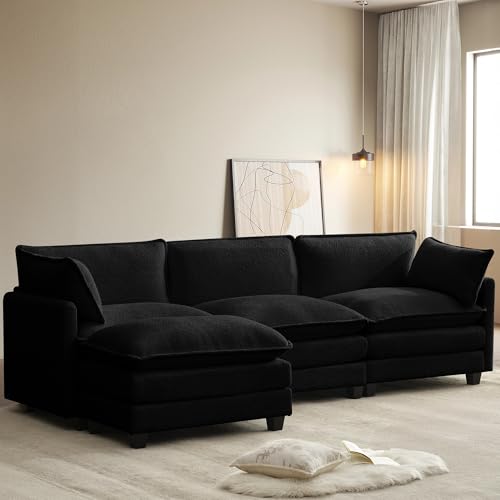
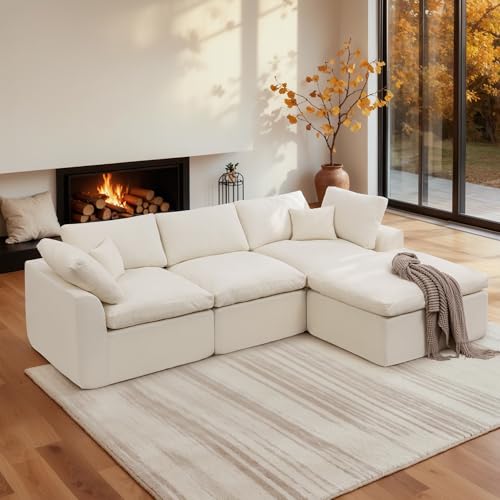


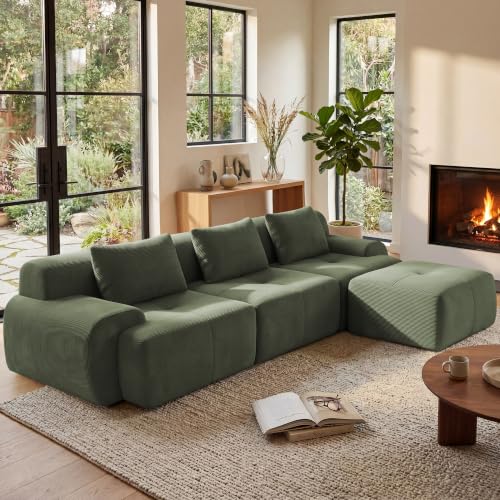


What Is a Couch Sectional with Ottoman?
A couch sectional with ottoman is a seating arrangement that pairs a multi-seat sectional sofa — usually L-shaped or U-shaped — with a separate or modular ottoman. The sectional handles the main seating, while the ottoman adds a flexible piece that can serve as a footrest, an extra seat, a surface for a tray, or a soft spot for kids and pets. Together, they form a lounge-friendly setup that adapts to movie nights, casual gatherings, and quiet afternoons.
The ottoman is the piece that makes the setup special. It can sit at the open end of an L-shaped sectional to extend the chaise, tuck into the corner for a compact footprint, or float in the middle of the room as a freestanding accent. Many modular collections let you order an ottoman in the same upholstery so it reads as one continuous piece, while standalone ottomans give you freedom to mix textures and colors.
Why Choose a Sectional with Ottoman?
Buyers in the research stage usually have a shortlist of products in mind. What they need is clarity on whether a sectional with ottoman actually suits their room and routine. Here are the practical advantages that make this configuration a strong contender:
- Flexible seating: The ottoman can be pulled out during gatherings and tucked away afterwards, so the seat count adapts to the occasion.
- Lounge comfort: A padded ottoman turns the sectional into a true relaxation zone, especially when paired with a chaise or a deep seat.
- Coffee table substitute: With a stable tray, the ottoman can hold drinks, books, and remotes without the hard edges of a traditional table — a practical choice in homes with young children.
- Space efficiency: In smaller rooms, a sectional with ottoman can replace a sofa plus a separate chaise, keeping the footprint tighter and the sightlines cleaner.
- Design cohesion: Matching upholstery ties the pieces together, giving the living room a deliberate, designer-led feel.
Common Sectional and Ottoman Configurations
Configuration is the first decision most buyers face. The right layout depends on room dimensions, the position of doors and windows, and how you want to use the space. These are the most common setups:
L-Shaped Sectional with Ottoman
The most popular choice. The sectional runs along two walls and the ottoman extends the chaise or sits at the open end. This works well in rectangular living rooms and open-plan spaces where you want a clear separation between the lounge zone and the dining or kitchen area. If you are weighing a couch L-shape against a standard sofa, the ottoman is often the deciding factor — it adds lounge functionality without another footprint.
U-Shaped Sectional with Ottoman
A U-shaped sectional wraps around three sides, with the ottoman placed in the center or at one end. This layout is excellent for conversation-heavy rooms and large families, but it needs a generous floor area. Measure walkways carefully so the ottoman does not block the natural path through the room.
Modular Sectional with Ottoman
Modular pieces can be rearranged, extended, or split into separate seating. The ottoman is typically one module that can attach to the main unit or float freely. This is the most adaptable option for renters and for rooms that may change use over time. A modular setup also makes it easier to replace a single worn component later, which extends the practical lifespan of the whole arrangement.
Reversible Sectional with Ottoman
Reversible sectionals allow the chaise to switch sides, so you can adapt the layout when you move or rearrange the room. Pairing a reversible sectional with an ottoman gives you two layers of flexibility — the chaise can move, and the ottoman can follow it.
How to Choose the Right Size
Size is where most buying mistakes happen. A sectional with ottoman that looks balanced in a showroom can feel cramped at home if the proportions are off. Start with the room, not the product.
- Measure the room first: Note the length and width of the living area, plus the position of doors, windows, and heating vents. Leave at least 30 to 36 inches for main walkways and 18 inches between the sectional and a coffee table or ottoman if you want comfortable legroom.
- Check the longest wall: The sectional's main run should fit along the longest wall without blocking traffic flow. If the wall is shorter than the sectional, consider a modular or reversible configuration.
- Plan the ottoman's home: Decide in advance where the ottoman will live — tucked into the corner, at the open end of the L, or floating in the center. This determines how much floor space you need to keep clear.
- Account for door clearance: Sectionals arrive in boxes or as large pieces. Check that the packaging can pass through hallways and doorways. If space is tight, look for a couch that can be taken apart or a modular design that ships in smaller sections.
For rooms on the smaller side, a compact sectional paired with a lightweight ottoman is often the better choice than a full-size sectional that dominates the space. Our guide to a couch for small living room layouts covers measurement strategies in more detail.
Materials and Upholstery Options
Upholstery determines how the sectional feels, how it wears, and how much maintenance it needs. The right choice depends on household composition, sun exposure, and how the room is used day to day.
Fabric Upholstery
Fabric is the most common choice for sectionals with ottomans because it offers warmth, texture, and a wide range of colors. Performance fabrics — including solution-dyed and stain-resistant weaves — are a practical pick for families and pet owners. Browse our overview of couch fabric types to compare weaves, durability, and cleaning requirements.
Leather and Faux Leather
Leather is durable, easy to wipe clean, and develops character over time. It suits modern and transitional interiors especially well. If you prefer the look but want a more forgiving surface for pets, a quality faux leather can be a sensible middle ground. Our couch leather guide explains grades, finishes, and care.
Velvet and Textured Fabrics
Velvet brings a luxurious feel and deep color saturation, but it requires more careful maintenance. Textured weaves such as bouclé and chenille add visual interest and hide minor wear. Consider the cleaning code before committing — some fabrics are dry-clean only.
| Upholstery | Tier | Best For | Maintenance Level |
|---|---|---|---|
| Performance fabric | Mid-range to premium | Families, pets, high-traffic rooms | Low |
| Standard woven fabric | Entry-level to mid-range | Adults-only households, lighter use | Moderate |
| Top-grain leather | Premium | Long-term investment, modern interiors | Low |
| Velvet | Mid-range to premium | Formal living rooms, accent statements | High |
| Faux leather | Entry-level to mid-range | Rentals, casual rooms, easy cleaning | Low |
Cushion and Comfort Considerations
Comfort is subjective, but a few structural details reliably separate a supportive sectional from one that sags within a year. Seat cushions should feel firm at the edges and resilient in the center. High-density foam wrapped in fiber or down provides a good balance of support and softness. Back cushions should hold their shape without requiring constant fluffing.
The ottoman's cushion matters too. If the ottoman will be used as a seat, choose a firmer fill; if it is mainly a footrest, a softer top is more comfortable. Removable covers are a practical bonus for cleaning and replacement. For a deeper look at fill types and construction, see our guide to couch cushion types and couch seat cushions.
Sectional Frame and Build Quality
The frame is the part of the sectional you cannot see, but it determines how long the piece lasts. Look for kiln-dried hardwood or high-grade engineered wood, reinforced corner blocks, and metal connectors at the joints. A solid build should not creak, wobble, or shift when you sit on the edges. For a detailed breakdown, read our couch frame guide.
On a sectional, the connectors between modules deserve extra attention. The best modular systems use sturdy brackets that hold the sections tightly together while still allowing disassembly for moving or reconfiguration. If you plan to rearrange the room, check that the connectors are tool-free or at least easy to operate.
Ottoman Types and Their Uses
Ottomans come in several forms, and the right one depends on how you want the sectional to function. These are the main options:
- Standard padded ottoman: A simple upholstered block that serves as a footrest or extra seat. The most versatile and common choice.
- Storage ottoman: A lift-top or hinged design that holds blankets, remotes, or toys. Useful in rooms without much closed storage. See our guide to a couch for small space with storage for related ideas.
- Chaise-style ottoman: An elongated ottoman that extends the sectional's chaise, creating a longer lounge surface.
- Convertible ottoman: Some ottomans open into a bed or a table, adding dual functionality to the sectional setup. If overnight guests are a priority, explore couch that turns into a bed options alongside the ottoman.
- Nesting ottomans: A set of smaller ottomans that tuck under each other when not in use — useful for flexible seating in open-plan rooms.
Styling a Sectional with Ottoman
Once the sectional and ottoman are in place, styling turns the arrangement into a cohesive room. A few principles keep the look intentional rather than cluttered.
- Layer with textiles: Throw pillows and a draped blanket soften the sectional's lines and add color. Mix sizes and textures for depth. Our couch decor section has arrangement ideas.
- Use a tray: A sturdy tray on the ottoman turns it into a surface for drinks, books, and a small plant. It also protects the upholstery.
- Anchor with a rug: A rug under the sectional and ottoman defines the lounge zone and ties the colors together.
- Add lighting: A floor lamp near the sectional's end brightens the corner and makes the seating area feel complete.
- Keep walkways clear: Resist the urge to fill every inch. Negative space makes the room feel larger and more comfortable.
Care and Maintenance
A sectional with ottoman gets daily use, so routine care is what preserves its appearance. Vacuum upholstery weekly with a soft brush attachment, and rotate or flip cushions monthly to distribute wear. Blot spills immediately rather than rubbing, and always check the manufacturer's cleaning code before using any solution. For leather, condition the surface periodically to prevent drying and cracking.
If the fabric is heavily soiled or the sectional has been in use for years, a professional deep clean can restore the look. Our guide to couch deep cleaning service explains what to expect. For everyday protection, a washable cover or a pet-friendly throw can extend the time between cleanings.
Budget and Tier Planning
Sectionals with ottomans span the full range of the market, from entry-level starter pieces to top-tier flagship collections. Rather than fixating on a specific number, think in tiers:
- Entry-level: Typically lighter frames, standard foam, and fewer configuration options. Suitable for first apartments, rentals, or rooms with lighter use.
- Mid-range: Better frame construction, improved cushion density, and more fabric choices. The most common choice for family living rooms.
- Premium: Hardwood frames, high-resilience foam, performance upholstery, and modular flexibility. Built for long-term daily use.
- Luxury: Flagship collections with premium materials, refined tailoring, and extensive customization. A long-term investment for a primary living space.
Within each tier, compare the specifications rather than the label. A well-specified mid-range sectional often delivers better long-term comfort than an entry-level piece with a fashionable name. Look for reinforced joints, removable covers, and a warranty that covers the frame.
Common Mistakes to Avoid
- Buying before measuring: Always measure the room, the doorways, and the longest wall before ordering.
- Ignoring the ottoman's footprint: The ottoman needs its own clear space. Plan where it will sit when the room is at rest.
- Choosing fabric by look alone: A beautiful fabric that cannot handle daily life will age poorly. Match the upholstery to the household.
- Skipping the cleaning code: Some fabrics require professional care. Know this before you commit.
- Overlooking the connectors: On modular pieces, the joining hardware is a key durability point. Check it in person if possible.
Frequently Asked Questions
What is a couch sectional with ottoman?
A couch sectional with ottoman is a multi-piece seating arrangement that combines an L-shaped or U-shaped sectional sofa with a separate or attached ottoman. The ottoman adds flexible seating, a footrest, or a coffee table substitute, making the setup highly versatile for lounging and entertaining.
Is a sectional with ottoman good for a small living room?
Yes, when chosen carefully. A compact L-shaped sectional paired with a small, mobile ottoman can maximize seating without overwhelming a small space. Choose lighter fabrics, low-profile arms, and an ottoman that tucks into the corner when not in use.
Should the ottoman match the sectional exactly?
Matching is a safe choice for a cohesive look, but contrasting the ottoman in a complementary fabric or color can add visual interest. Many modular collections allow you to order an ottoman in the same upholstery, while standalone ottomans give you freedom to experiment with texture and tone.
How do I care for a fabric sectional with ottoman?
Vacuum the upholstery weekly with a soft brush attachment, rotate and flip cushions monthly, and blot spills immediately with a clean cloth. Check the manufacturer's cleaning code before using any solution, and consider a professional deep cleaning service once a year for high-traffic fabrics.
Can a sectional with ottoman replace a coffee table?
In many living rooms, yes. A firm ottoman with a large tray can hold drinks, books, and remotes while keeping the seating area open and flexible. This is especially practical in homes with young children, where soft edges are safer than a hard table. If you still want a traditional surface, a small side table or a couch end table can complement the ottoman without crowding the room.