
Couch Deep Cleaning Service: What to Expect & How to Choose
Your sofa absorbs spills, dander, dust mites, and daily oils far deeper than a vacuum can reach. Here is a complete, practical guide to professional couch deep cleaning — the methods, the process, the fabric considerations, and how to select the right service for your home.
Why this matters: A couch is one of the most-used pieces of furniture in any home, and the one that collects the most unseen soil. Understanding what a deep cleaning service actually does — and what it does not do — helps you judge quality, avoid fabric damage, and get a result that lasts.
What a Couch Deep Cleaning Service Actually Involves
A professional deep clean is not an amplified version of home vacuuming. It is a structured multi-stage process designed to lift embedded soil from both the surface fibers and the cushion cores, then extract it completely so nothing is left behind to attract new dirt.
A typical service visit includes dry soil removal with high-powered vacuums and agitation tools, pre-treatment of stains and traffic zones, the main cleaning pass using the method matched to your fabric, a rinse or neutralization step, and controlled drying. Reputable technicians also perform a fabric identification and colorfastness test on a hidden area before any cleaning agent touches a visible surface.
The Main Deep Cleaning Methods Compared
Different fabrics and different soil levels call for different approaches. The best services do not force one method onto every couch — they match the technique to the material. For a broader look at fiber behavior, see our guide to couch fabric types.
Hot Water Extraction
Also called steam cleaning. Heated solution is injected deep into the fibers and immediately extracted with strong suction. Delivers the most thorough soil removal on most synthetic and solution-dyed fabrics, but requires longer drying time.
Low-Moisture Encapsulation
A specialized solution encapsulates soil into crystals that are vacuumed away as they dry. Excellent for delicate blends and for households that need fast turnaround. Slightly less aggressive on deep-set stains than full extraction.
Dry Compound Cleaning
An absorbent powder or compound is worked into the fabric and then vacuumed out. Minimal moisture, near-instant use, and very safe for fabrics sensitive to water. Best suited to light-to-moderate soil rather than heavy contamination.
Foam & Hand Detailing
Low-moisture foam applied by hand with soft brushes, followed by careful extraction. Often used on premium upholstery, intricate weaves, and leather-adjacent trims where machinery control matters more than speed.
Matching the Service to Your Upholstery
The single biggest quality difference between services is whether the technician adapts the method to your fabric. A steam-focused company and a dry-cleaning-focused company will each tell you their approach is universal — it is not. Use the fabric cleaning codes on your couch tags as a starting point, and confirm that the provider asks about them.
| Fabric Category | Usually Best Method | What to Confirm With the Provider |
|---|---|---|
| Synthetic blends & solution-dyed fabrics | Hot water extraction | Suction strength and drying plan. These fabrics handle moisture well — see couch materials for background. |
| Cotton & linen | Low-moisture encapsulation | Shrinkage risk and colorfastness test on a hidden seam. |
| Velvet & velour | Dry compound or foam | Pile direction handling and whether they use a velvet-specific brush. Our couch upholstery fabric guide covers pile care. |
| Delicate natural fibers | Dry cleaning solvents | Whether they subcontract solvent work or perform it in-house. |
| Leather & faux leather | Dedicated leather conditioning | That they do not apply water-based extraction. Leather needs a different protocol entirely — see couch leather care notes. |
Step-by-Step: What Happens During the Visit
- Pre-inspection and fabric testing. The technician identifies the fabric, checks for existing damage, and runs a colorfastness test on a concealed area. A provider who skips this is a red flag.
- Dry soil removal. High-powered vacuuming and agitation lift loose dust, crumbs, and pet hair before any liquid is applied. Skipping this step pushes dirt deeper.
- Spot and stain pre-treatment. Traffic lanes, armrests, and visible stains receive targeted pre-spray and dwell time.
- Main cleaning pass. The matched method — extraction, encapsulation, dry compound, or foam — is applied across the entire piece, not just the visible surface.
- Cushion core attention. Removable covers are treated separately; cores are deodorized or lightly extracted. If your cushions are worn, our guide to couch cushion replacement explains when cleaning is no longer enough.
- Rinse or neutralization. Residue left in the fibers attracts new soil quickly, so a proper rinse step matters as much as the cleaning itself.
- Controlled drying. Air movers, ventilation, and towel blotting bring drying time down. Ask for the expected window before you commit to plans.
- Post-clean walkthrough. A good provider points out any remaining discoloration, explains what will fade as it dries, and documents the result.
Related Reading for a Healthier Couch
How to Choose the Right Deep Cleaning Provider
The market ranges from single-technician operations to commercial-grade franchises, and the differences show up in preparation, insurance, and how willing they are to work with your specific fabric rather than a script.
- Ask for a fabric-specific plan, not a flat rate. A provider who quotes without seeing the material is guessing.
- Confirm insurance and technician training. IICRC-certified technicians or equivalent training is a strong signal of professional-grade practice.
- Request the exact cleaning method in writing. This protects you if a fabric is damaged and clarifies what a re-clean would involve.
- Ask about drying expectations. Vague answers usually mean long dry times and potential mildew risk.
- Check whether cushion cores are included. Some entry-level services clean only the surface and leave the cores untouched.
- Look for a written guarantee. Reputable services offer a satisfaction re-clean window rather than verbal promises.
- Prepare the space in advance. Clear personal items and vacuum loose debris so the technician can focus on the upholstery itself.
Ready to Give Your Couch a Deeper Clean?
Browse our curated upholstery care and cleaning tools to support between professional visits — or to handle light refreshes on your own.
Explore Cleaning OptionsKeeping Your Couch Clean Between Professional Visits
Deep cleaning every few months is impractical for most households, so the goal between appointments is to slow soil accumulation. Vacuum upholstery weekly with a soft brush attachment, rotate and flip cushions where the design allows, blot spills immediately rather than scrubbing, and keep throws or couch protection covers on high-traffic seats.
For homes with pets, a lint roller and a rubber glove pass once a week removes a surprising amount of embedded hair before it works into the weave. If you are still evaluating the right couch for a pet-heavy household, our guide to a couch good for pets covers fabric and construction considerations that reduce long-term cleaning burden.
When Deep Cleaning Is Not Enough
Deep cleaning restores soiled but structurally sound upholstery. It cannot fix collapsed cushion foam, broken frames, or torn seams. If your couch sags, squeaks, or has visible frame damage, cleaning will not resolve the underlying issue — our notes on couch frame construction and couch cushions explain what to inspect before booking a service.
Similarly, heavily worn fabric or persistent odor from long-term contamination may point to cushion replacement or a broader refresh rather than another cleaning cycle. A good provider will tell you honestly when cleaning is the wrong tool for the problem.
Frequently Asked Questions
How often should a couch be professionally deep cleaned?
Most households benefit from a professional deep clean every 12 to 18 months. Homes with pets, young children, allergy sufferers, or frequent entertaining may need it every 6 to 12 months. High-use upholstery in commercial-grade settings may require quarterly service.
Is steam cleaning safe for all couch fabrics?
No. Steam and hot-water extraction are excellent for most synthetic and solution-dyed fabrics, but they can damage delicate natural fibers like silk, some wool blends, and certain viscose fabrics. A reputable technician will always test a hidden area first and match the method to the fabric code.
How long does a couch take to dry after deep cleaning?
Low-moisture and dry methods typically allow use within a few hours. Hot-water extraction usually needs 6 to 12 hours of drying, depending on humidity, airflow, and fabric thickness. Running fans and keeping windows open speeds things up considerably.
Can deep cleaning remove pet odors permanently?
Professional deep cleaning can dramatically reduce pet odors by flushing out dander, urine residue, and oils deep in the cushion cores. However, severe or long-standing urine contamination may require enzyme treatment, sub-surface extraction, or in some cases cushion replacement for a full resolution.
Should I clean the cushions myself before the service arrives?
Light vacuuming is helpful, but avoid applying home remedies or wet treatments beforehand — they can set stains or interact unpredictably with professional solutions. Leave visible stains visible so the technician can identify and pre-treat them correctly.
Recommended Upholstery Deep Cleaning Products
⚠️ AFFILIATE DISCLOSURE: This website contains affiliate links. As an affiliate Associate, we earn from qualifying purchases. If you make a purchase through these links, we may receive a small commission at no additional cost to you. Read our full affiliate policy.

Portable Carpet & Upholstery Spot Cleaner Machine - 15Kpa Deep Cleaning for Area Rugs, Pets, Couch & Car, with 2 Size BrushHead & Self-Cleaning System, Carpet Cleaner Machine for Stairs/Furniture
Check price on Amazon
ForceField® Fabric Cleaner Professional Strength, Deeply Penetrates Water Safe Fabric & Fibers of Upholstery, Clothing, Rugs & Carpeting - 22oz
Check price on Amazon
Livatro Portable Carpet Upholstery Cleaner Machine with 2.3L+1.3L Dual Tank | 600W 16kPa Powerful Suction Deep Cleaning Spot Cleaner Shampooer, for Pet Stain Rug Stair Couch Sofa Handheld Cleaner
Check price on Amazon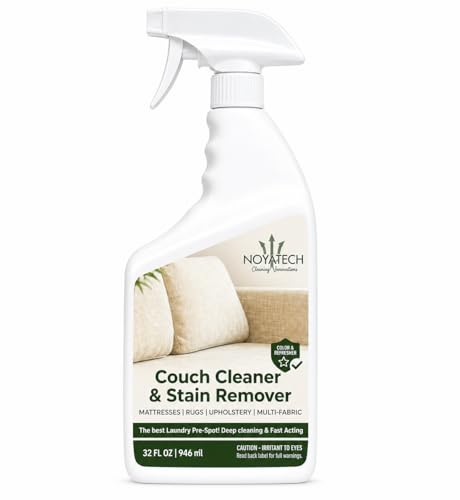
NOYATECH Couch Cleaner and Stain Remover Spray, Pet Safe Upholstery, 32 oz | Pet and Kid Safe -- Non Toxic, USDA BioPreferred - microfiber, sofas, mattresses, car seats - No Bleach or Phosphates
Check price on Amazon
Portable Carpet Cleaner Machine, 21Kpa Handheld Upholstery Cleaner Machine with Self Cleaning und Large Tank, Deep Cleaning Shampooer for Furniture, Couch, Rug, Car, Pet Stains, White
Check price on Amazon
Yoomie 23KPa Portable Carpet Cleaner & Upholstery Shampooer Machine | 600W Motor, Large Dual Tanks, Self-Cleaning, 2-in-1 Brush & Tool. Deep Cleaner for Pet Stains, Cars, Couch, Rug & Stairs
Check price on Amazon
Yoomie Portable Carpet Cleaner & Upholstery Cleaner Machine, 21Kpa Handheld Spot Cleaner Machine Deep Cleaning for Pet Stains, Couch, Car, Rug, Furniture Shampooer with Self-Cleaning Tools, Blue
Check price on Amazon