
Couch for Small Living Room: Smart Buying & Layout Guide
Discover how to choose a couch that fits your compact space without sacrificing comfort, style, or functionality. From measurement essentials to layout strategies, this guide helps you buy with confidence.
Explore Recommended CouchesWhy this guide matters: A small living room is not a limitation — it is an opportunity to buy smarter. The right couch can make a compact room feel open, inviting, and highly functional. This guide walks you through the exact steps design professionals use to select seating for tight spaces, so you can avoid costly mistakes and enjoy your living room for years.
Start With Measurements, Not With Style
Before you fall in love with a design, measure your room. The single biggest mistake small-space buyers make is choosing a couch that looks right online but overwhelms the room in person. Grab a tape measure and record the following:
- Room dimensions: Length and width of the living room, wall to wall.
- Doorway and hallway width: The couch must physically enter the room. Check the narrowest point along the delivery path. If clearance is tight, a couch that fits through small doors or a couch that can be taken apart solves the problem elegantly.
- Walkway clearance: Leave at least 30–36 inches (about 76–91 cm) of walking space between the couch and other furniture or walls.
- TV or focal-point distance: The couch should sit at a comfortable viewing distance from your TV or fireplace.
Once you have these numbers, sketch a simple floor plan. Mark where doors swing, where windows sit, and where traffic flows. This sketch becomes your buying filter — any couch that does not fit the plan is automatically ruled out.
Choose the Right Couch Type for a Small Room
Not every couch type works in a compact footprint. The best options balance seating capacity with visual lightness. Here is how the main categories compare:
Loveseats
Two-seat designs are the classic small-room solution. They leave breathing room and pair well with an accent chair for flexible seating. Explore our loveseat guide for sizing details.
Apartment Sofas
Slightly larger than a loveseat but shorter in depth than a standard sofa. These are purpose-built for compact living and offer a balanced seat-to-footprint ratio.
Small Sectionals
An L-shaped sectional can define a seating zone without extra chairs. Look for chaise-style or reversible configurations that hug a corner. See our L-shape couch guide for layout ideas.
Sleeper & Convertible Couches
If the room doubles as a guest space, a couch that turns into a bed adds function without extra furniture. Choose a model with a smooth fold mechanism for daily use.
Storage Couches
Built-in storage under the seat captures valuable floor space. A couch for small space with storage is ideal for blankets, remotes, and kids' toys.
Modular Couches
Reconfigurable pieces let you adapt seating over time. Start with two modules and expand later — a smart long-term approach for renters and growing households.
Depth and Scale: The Numbers That Matter
Width gets all the attention, but depth is what makes a couch feel bulky in a small room. A standard sofa is often 36–40 inches deep, while compact models drop to 30–34 inches. That difference of a few inches is the gap between a room that feels cramped and one that feels comfortable.
Also consider the visual weight of the couch. A couch with exposed legs and a low back profile lets light and sightlines pass underneath, making the room feel larger. A fully upholstered couch that sits flush to the floor looks heavier, even if its dimensions are similar. For a deeper dive into sizing, see our couch size guide.
Layout Strategies That Make a Small Room Work
The right couch in the wrong position still fails. These proven layouts help you get the most from a compact living room:
- Float the couch away from the wall: If the room allows, pulling the couch 6–10 inches off the wall creates depth and gives you space for a narrow console table behind it.
- Anchor the seating zone with a rug: A rug visually groups the couch and chairs, defining the living area even in an open floor plan.
- Use a corner: An L-shaped couch tucked into a corner frees up the center of the room and eliminates the need for a second seating piece.
- Keep traffic paths clear: Never place a couch where it blocks the natural path between doorways. A blocked walkway makes any room feel smaller.
- Pair with the right tables: Choose a slim couch table or a nesting set instead of a large coffee table. Round tables are easier to walk around in tight spaces.
For a full walkthrough of furniture placement in tight footprints, read our couch setup for small living room guide, and browse couch designs for small living rooms for visual inspiration.
Materials and Colors That Open Up a Room
Color and texture affect perceived space as much as dimensions do. Light neutrals — beige, soft gray, off-white, pale sage — reflect light and make walls feel farther apart. Dark colors absorb light and can close in a small room, though a single dark accent piece can work if the rest of the palette stays light.
Material choice matters for maintenance as well as looks. Performance fabrics resist stains and are practical for households with kids or pets. Smooth leather is easy to wipe down but can feel visually heavy in a very small room — a lighter leather tone helps. To compare options, visit our guide to couch fabric types and our overview of couch materials.
Comfort vs. Compact: How to Balance Both
A small couch does not have to be uncomfortable. The key is the seat construction and cushion quality, not the overall size. When evaluating options, look for:
- High-resilience foam or pocket-spring cushions: These keep their shape far longer than low-density foam. Learn about cushion types before you buy.
- A supportive frame: Kiln-dried hardwood frames outlast particle board by years. Read our couch frame guide for what to check.
- Removable, washable covers: Practical for everyday life. Replacement couch cushion covers are widely available and extend the life of the couch.
- Seat depth suited to your posture: Shallower seats (20–22 inches) suit upright sitting; deeper seats (24+ inches) suit lounging but take more floor space.
Features That Add Function Without Adding Bulk
Small rooms reward multi-functional furniture. Consider these value-adding features:
- Pull-out bed: A couch that pulls out into bed turns the living room into a guest room instantly.
- Reclining mechanism: A compact couch set with recliner delivers lounge comfort in a smaller footprint than full recliner sofas.
- Built-in cup holders or trays: Useful for movie nights without a coffee table. Browse couch cup holders.
- Modular or flippable design: A couch that you can move around adapts to different layouts as your needs change.
Compare Couch Categories by Tier
The table below compares common couch categories for small living rooms using quality tiers rather than specific figures. Use it to match a category to your priorities.
| Category | Typical Tier | Best For | Key Consideration |
|---|---|---|---|
| Two-seat loveseat | Entry-level to Mid-range | Couples, reading corners, very tight rooms | Pair with an accent chair to add seating |
| Apartment sofa | Mid-range | Studio apartments and compact living rooms | Verify seat depth; some run shallow |
| Small L-shaped sectional | Mid-range to Premium | Corner placement in open-plan rooms | Measure both wall lengths before ordering |
| Sleeper or convertible couch | Mid-range to Premium | Guest room substitutes and multi-use rooms | Test the fold mechanism if possible |
| Storage couch | Mid-range | Families and clutter-prone living areas | Confirm storage access does not block walkways |
| Modular couch | Premium to Luxury | Renters and households planning to expand | Check that modules lock together securely |
Styling a Small Couch Without Cluttering the Room
Once the couch is in place, styling should enhance openness rather than fill it. A few guidelines:
- Limit throw pillows: Two or three well-chosen pillows are enough. Oversized pillow clusters eat up visual space. Check couch size pillows for proportion guidance.
- Choose light, textured throws: A single draped throw adds warmth without bulk.
- Use vertical storage: Tall, narrow shelving draws the eye upward, making the room feel taller.
- Keep the floor visible: A couch with exposed legs and a small footprint shows more floor, which reads as more space.
Explore more styling ideas in our couch decor section and our small living room couch guide.
Common Mistakes to Avoid
- Buying before measuring. Always measure the room, the doorway, and the delivery path first.
- Choosing the deepest seat available. Deep seats feel luxurious but consume floor space. Match depth to how you actually sit.
- Ignoring the visual weight. A low-profile couch with legs feels lighter than a boxy, floor-hugging design.
- Skipping the rug. A rug anchors the seating area and makes a small layout intentional rather than accidental.
- Overfilling the room. Leave open floor space — it is the most valuable design element in a small living room.
Recommended Couches for Small Living Rooms
⚠️ AFFILIATE DISCLOSURE: This website contains affiliate links. As an affiliate Associate, we earn from qualifying purchases. If you make a purchase through these links, we may receive a small commission at no additional cost to you. Read our full affiliate policy.

POYISOU Convertible Sectional Couches for Living Room, 3 Seats L Shaped Sofa with Storage Ottoman and 2 Cup Holders, Modern Corduroy Couch Small Sofas for Small Space Apartment Office, Black
Check price on Amazon
Furmax Sectional Couches for Living Room, Chenille, Grey | U-Shaped Sofa Couch with Linen Fabric, 4 Seat Sofa Set with Double Chaise for Apartment
Check price on Amazon
GRUSIGN Cloud Sectional Boneless Couches for Living Room, Modular L Shaped Couch with Deep Seat Oversized Right Facing Chaise, Memory Foam Compressed Spineless 3 Seater Sofa for Apartment, Black
Check price on Amazon
55" Small Boneless Couch, 3-in-1 Boneless Loveseat Sleeper Sofa Bed Convertible Sofa Bed with 4 Pillows, Black Corduroy Boneless Couch for Living Room, Guest Room, Small Space, No Assembly Required
Check price on Amazon
JAMFLY 77" L-Shaped Corduroy Sectional Sofa with Storage Ottoman, Black | 660 Lbs Capacity, Easy Assembly, Removable Washable Covers, Side Pockets, Pet-Friendly Couch for Small Spaces
Check price on Amazon
Korser 108" L-Shaped Modular Sectional Sofa with Chaise, Boneless Comfy Corduroy Fluffy Couch with Deep Seat and Side Pockets, Flexible Module Combination for Living Room, No Assembly, Side Pockets
Check price on Amazon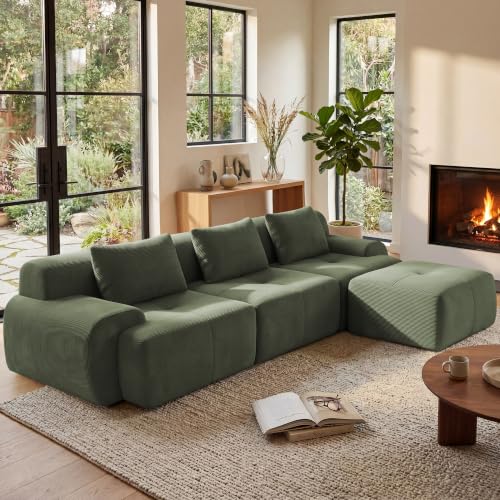
GRUSIGN 108'' Modular Boneless Sofa,Sectional Couch for Living Room | Tufted Oversized L Shape Deep Seat Sectional Sofa with Ottoman & 3 Throw Pillows,Corduroy Cloud Couch,Green
Check price on Amazon
Boneless Couch, Cloud Couch Sofa, Sectional Couches for Living Room | Comfy L-Shaped Modern Sectional Sofa, Upholstered Corduroy Couch with Storage Pocket for Apartment, No Assembly Required
Check price on AmazonFrequently Asked Questions
What is the best couch size for a small living room?
For rooms under 150 square feet, a loveseat or apartment sofa (60–75 inches wide) is usually ideal. For rooms between 150 and 250 square feet, a couch up to 85 inches can work well if it sits against a long wall and leaves 30–36 inches of walkway clearance. Always measure your specific room and delivery path before deciding.
Is a sectional or a standard couch better for a small space?
It depends on the room's shape. An L-shaped sectional works best in a corner or open-plan room because it consolidates seating into one footprint. A standard couch or loveseat is better in narrow or rectangular rooms where a sectional would block a walkway. Sketch both options on your floor plan to see which flows better.
How do I make a small couch look and feel more comfortable?
Focus on cushion quality rather than size. High-resilience foam or pocket-spring cushions provide support in a compact package. Add two or three well-proportioned throw pillows and a light throw blanket, and choose a couch with a slightly deeper seat if lounging is your priority.
Can a sleeper couch work in a small living room?
Yes, if you choose the right mechanism. A couch that folds down or pulls out into a bed adds guest functionality without requiring a second room. Verify the extended footprint when the bed is open, and ensure there is enough clearance in front of the couch for the bed to deploy.
What color couch makes a small room look bigger?
Light, warm neutrals — beige, soft gray, pale sage, or off-white — reflect light and create a sense of openness. If you prefer a darker couch, choose a low-profile design with exposed legs and pair it with light walls and a light rug to balance the visual weight.
How much walkway space should I leave around the couch?
Leave at least 30–36 inches (about 76–91 cm) of clear space between the couch and walls, doorways, or other furniture. This allows comfortable movement and prevents the room from feeling cramped. In high-traffic paths, aim for the higher end of that range.