


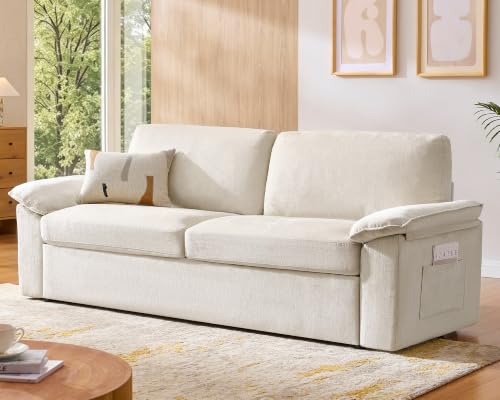


Setting up a couch in a small living room is a balancing act. You need comfortable seating, clear walkways, and enough visual breathing room so the space does not feel cramped. The good news is that a compact living room can feel just as inviting as a large one when the couch is sized, placed, and styled with intention. This guide walks you through the full process, from measuring your room and choosing the right couch type to arranging traffic flow and layering decor. Whether you live in a studio apartment, a narrow townhouse, or a cozy rental, these strategies help you get the most from every square foot.
1. Sizing Rules for Small Room Couches
Before you shop, measure the room and map out the floor plan. The couch should not dominate the space, but it also should not feel undersized against a long wall. A common rule of thumb is to keep the couch length to roughly two-thirds of the wall it sits against, which leaves room for side tables, lamps, or a plant. Leave at least 18 inches of clearance around the seating area for walkways, and keep 30 to 36 inches of clearance in front of doorways and main traffic paths.
Depth matters just as much as length in a small room. A deep seat feels luxurious but can swallow floor space and make a narrow room hard to navigate. Look for couches with a depth of roughly 32 to 38 inches for compact rooms, and consider whether the back cushions are removable so you can adjust the feel. If you are comparing compact options, a comfortable couch for small apartments often pairs a shallower seat with supportive cushioning, which is ideal for tight layouts.
2. Layout Options That Work
Small rooms benefit from layouts that create clear zones without visual clutter. Here are three reliable approaches:
- Wall-anchored layout: Place the couch against the longest wall and float a slim coffee table in front. This keeps the center of the room open and works well in narrow or rectangular rooms.
- Floating layout: Pull the couch slightly off the wall to create a walkway behind it, especially useful in open-plan spaces. A console table or behind-couch blocker can define the zone and add storage.
- L-shaped layout: Use a compact sectional or a couch plus a chair to form an L. This works best when the room has a natural corner and you can keep the chaise from blocking traffic.
If your room is very narrow, a small sectional with reversible chaise gives you flexibility because the chaise can switch sides to match the room. For very tight spaces, a mini couch or a small couch for in front of bed can serve as both seating and a subtle room divider in a studio layout.
| Room Shape | Best Layout | Couch Type to Consider |
|---|---|---|
| Narrow rectangle | Wall-anchored with slim coffee table | Apartment sofa or loveseat |
| Square room | Floating couch with rug anchor | Compact 3-seater or small sectional |
| Open-plan zone | L-shaped with defined walkway | Reversible chaise sectional |
| Studio corner | Corner arrangement with small table | Mini couch or loveseat |
3. Where to Place the Couch
Placement decisions shape how the room feels. Start with the focal point, such as a window, fireplace, or TV, and angle the couch so most seats have a comfortable view. Avoid pushing the couch into a corner unless the room is unusually tight, because corner placement can make the seating area feel isolated and block natural flow.
Keep at least one clear path through the room. If the couch floats, leave 24 to 36 inches behind it for circulation. In a studio, use the back of the couch to separate the living zone from the sleeping area, and consider a couch with chaise and pull-out bed if you need guest sleeping capacity without adding a second piece of furniture. For rooms with limited wall space, a small couch placed in front of the bed can define a sitting area without requiring a full separate living room.
4. Best Couch Types for Compact Rooms
Not all couches are equal in a small room. Prioritize pieces that combine comfort with a compact footprint:
- Loveseats: Ideal for one or two people and often fit where a full sofa cannot. They pair well with an accent chair when you need extra seating.
- Apartment sofas: Slightly smaller than standard sofas with a shallower seat. They suit narrow rooms and studio layouts.
- Small sectionals: A compact sectional with a reversible chaise can seat three or four without the bulk of a full-size sectional.
- Sleeper and futon options: A couchbed or a pull-out couch with memory foam mattress adds guest functionality without a second piece of furniture.
- Modular pieces: A modular sectional with storage ottoman adapts to the room and adds hidden storage.
If your room is especially tight, a small couch or a 2-seater couch with pull-out bed can cover both everyday seating and occasional hosting. For a more design-forward look in a compact space, a black modern couch or a black velvet couch with gold legs can anchor the room with a strong visual statement while staying relatively compact.
5. Styling to Make the Room Feel Larger
Styling can visually expand a small room. Start with a light, neutral foundation and layer texture rather than heavy patterns. A large area rug that extends under the front legs of the couch anchors the seating area and makes the room feel wider. Mirrors reflect light and add depth, while wall-mounted lights free up floor space compared with large floor lamps.
Keep the coffee table slim or choose a glass or acrylic design so the floor remains visible. Use a modern coffee table and end tables set with a low profile to keep sightlines open. Pillows are an easy way to add personality, but limit the number so the seat stays usable. A large pillow for couch or a curated pillow set for couch adds comfort without crowding. For a cohesive look, browse pillow sets for couch that match your palette.
Vertical storage and wall art draw the eye upward, making ceilings feel higher. Keep surfaces uncluttered, and use a single statement plant or a small grouping rather than many small objects. If the couch is near a window, sheer curtains soften light without blocking it. In a compact living room, small styling decisions add up to a room that feels calm and spacious.
6. Common Setup Mistakes to Avoid
- Choosing a couch that is too deep: A deep seat eats floor space and can make walkways feel tight. Measure seat depth against your room width.
- Blocking traffic paths: Avoid placing the couch so it interrupts the main route between doors, kitchen, and hallway.
- Ignoring the delivery path: A couch that fits the room may not fit through the door or stairwell. Check dimensions and plan ahead.
- Overfilling the room: Too many furniture pieces make a small room feel smaller. Choose fewer, multi-functional pieces.
- Ignoring scale and proportion: A tiny couch on a long wall can look lost. Balance the couch length with the wall and the coffee table scale.
If you are replacing an existing couch, consider whether reupholstering a couch or using couch cushion cover replacement could refresh the look while keeping the existing footprint. For minor wear, cushion repair can extend the life of a comfortable couch without adding new furniture to the room.
7. Frequently Asked Questions
What is the best couch size for a small living room?
The right size depends on the room, but loveseats, apartment sofas, and compact sectionals generally suit small living rooms. Aim to keep the couch length to about two-thirds of the wall it sits against and leave at least 18 inches of walkway clearance around the seating.
How do I arrange a couch in a small living room?
Place the couch against the longest wall or float it slightly to create a walkway behind it. Face the seating toward a focal point, keep traffic paths clear, and anchor the arrangement with a rug. In narrow rooms, a wall-anchored layout usually works best.
Can I use a sectional in a small living room?
Yes, if the sectional is compact and the chaise does not block traffic. Reversible-chaise models offer flexibility, and modular sectionals let you adapt the shape as needs change. Measure carefully before choosing a sectional.
What decor works best for a small couch setup?
Light colors, slim or glass coffee tables, mirrors, wall-mounted lighting, and vertical storage help small spaces feel larger. Keep pillow arrangements simple, choose a limited color palette, and avoid overcrowding surfaces.
How do I make a small living room feel bigger around the couch?
Use a large rug to define the seating area, keep the couch slightly off the wall if space allows, and choose furniture with visible legs to show more floor. Mirrors and sheer curtains help reflect light and add visual depth.
What if my couch is too big for the room?
Try a floating layout with a slim coffee table and remove non-essential furniture. If the couch still overwhelms the space, consider a smaller alternative such as a loveseat, mini couch, or 2-seater with a pull-out bed. Proper measurement before buying prevents this issue.