
Couch Designs for Small Living Rooms
Smart silhouettes, slim profiles, and multipurpose layouts that make compact living rooms feel open, comfortable, and beautifully styled.
Explore Couch DesignsWhy small living rooms need a different couch strategy: A standard sofa often overpowers a compact room. The right design keeps walkways clear, preserves sightlines, and adds seating without making the space feel cramped. This guide breaks down the couch styles, dimensions, and layout choices that work best in small living rooms.
If you are still comparing overall seating categories, our guide to couches for small living rooms pairs well with this design-focused breakdown. For narrower footprints, the couch for small spaces collection covers even tighter arrangements.
What Makes a Couch Design Work in a Small Room
Small living rooms are defined by limited floor area and constrained traffic paths. A couch that works in this setting shares a few predictable design traits. Before comparing specific styles, understand the four principles that separate a space-friendly couch from an oversized one.
- Raised legs and visible floor. Couches with exposed legs let light and sightlines continue underneath, which visually expands the floor plane. Skirted or low-profile bases close off that space and make a room feel heavier.
- Shallow seat depth. A seat depth around 20 to 22 inches suits compact rooms and keeps the couch from projecting too far into the walkway. Deep-seat designs are comfortable but demand more floor area.
- Slim arms and a low back. Track arms, tapered arms, and low-back silhouettes reduce the couch footprint without cutting seat width. Puffy rolled arms add several inches on each side.
- Wall-hugging or modular geometry. Recliners and sectionals that require clearance behind the backrest waste space. Look for wall-hugger mechanisms or modular pieces that can be rearranged as the room changes.
Couch Design Styles That Suit Compact Living Rooms
Each design below solves a different small-room problem. Use the tier descriptor as a general indicator of build quality and material positioning, then match the style to your room shape and daily use.
The Slim-Arm Loveseat
A two-seater with track or tapered arms and a shallow seat. It fits narrow walls, preserves walkways, and pairs well with a single accent chair. Ideal when the room serves one or two people most of the time.
Essential tierThe Wall-Hugging Recliner Sofa
Reclining seats that glide forward instead of back, so the couch can sit flush against the wall. This design adds lounge comfort without sacrificing the floor plan. Best for rooms where relaxation seating is the priority.
Mid-tierThe Compact L-Shape Sectional
A small chaise or corner piece that defines the seating zone without cutting the room in half. Choose a reversible chaise so the layout can adapt if you move or rearrange the room.
Balanced tierThe Modular Sofa
Individual modules that can be split, stacked, or rearranged. Modular designs suit awkward room shapes and future moves. Look for low backs and shallow modules to keep the footprint controlled.
High-end tierThe Sleeper or Convertible Couch
A dual-purpose design that provides seating by day and a guest bed when needed. In small rooms, the couch often does double duty. Prioritize easy conversion mechanisms and supportive mattress construction.
Mid-rangeThe Storage Ottoman Couch
A couch or sofa set with integrated under-seat storage. This design reduces the need for separate storage furniture, which frees up floor area in a compact room. Practical for families and renters alike.
Premium tierDesign Comparison by Room Shape
Use this comparison to narrow your options before measuring. The "Best For" column focuses on room geometry and usage, not on numerical specifications.
| Design Category | Tier | Best For | Space Consideration |
|---|---|---|---|
| Slim-Arm Loveseat | Essential tier | Narrow walls, single-accent seating | Preserves walkways; limited seating capacity |
| Wall-Hugging Recliner | Mid-tier | Lounge-focused rooms, TV viewing | Needs no rear clearance; heavier visual mass |
| Compact L-Shape Sectional | Balanced tier | Corner placement, open-plan corners | Defines zones; confirm chaise side and door swing |
| Modular Sofa | High-end tier | Awkward shapes, future relocation | Flexible but requires careful module planning |
| Convertible Sleeper | Mid-range | Guest hosting, studio apartments | Conversion space needed in front of the couch |
| Storage Ottoman Couch | Premium tier | Families, rental furnishing | Reduces extra storage furniture needs |
Materials, Color, and Visual Weight
Upholstery choice affects how large a couch appears in a small room. Light neutrals, warm grays, and soft sage tones reflect light and recede visually. Dark leathers and heavy textures add visual weight, so use them selectively in compact spaces. Performance fabrics are a practical choice for high-traffic small rooms because they resist stains and wear without requiring frequent professional cleaning.
For a deeper comparison of upholstery options, review our guide to couch fabric types. If you prefer a leather look, the leather couch overview covers care and durability trade-offs. Keep in mind that in small rooms, a single large pattern can dominate the room; small-scale textures and solid tones tend to work better.
- Light neutrals and warm grays: Reflect light and make the room feel larger. Best for north-facing or low-light rooms.
- Mid-tone sage, teal, and muted green: Add character without closing the room in. Pair with lighter walls and floors.
- Performance fabric: Durable and easier to maintain in a compact, high-use room. Well-specified for family living.
- Velvet and heavy weaves: Rich in texture but visually heavier. Use as an accent piece or in a light color to balance the effect.
Layout and Flow: Where the Couch Should Go
Placement matters as much as the couch itself. In small living rooms, the couch should anchor the seating area without blocking the path between doorways, windows, and adjacent rooms. Floating the couch slightly off the wall can define a conversation zone, but it works only when there is enough floor area. In very narrow rooms, a wall-anchored couch with a slim console or wall-mounted shelf above it preserves maximum floor space.
If the room has a focal point such as a fireplace or television, orient the couch toward it while keeping at least one clear walkway. For tight corners, a compact sectional can wrap the seating area around the corner. For long, narrow rooms, a loveseat paired with two accent chairs creates a balanced conversation layout without overcrowding.
- Leave at least 30 inches for primary walkways and 24 inches for secondary paths.
- Keep 14 to 18 inches between the couch and a coffee table for comfortable legroom.
- Confirm that doors, drawers, and cabinet fronts can open fully.
- Do not block heating vents or radiators with the couch back.
- Measure the diagonal path from the door to the couch location before delivery.
- For sectionals, confirm which side the chaise sits on and whether it can be reversed.
Seating Combinations That Maximize a Small Room
A single couch rarely solves a whole small room. Pairing the right couch with complementary seating and tables creates a complete, functional layout. The combinations below are designed for compact footprints and everyday use.
- Loveseat plus two accent chairs: A balanced conversation layout for narrow rooms. Keeps the center of the room open and works well with a round coffee table.
- Compact sectional plus a storage ottoman: Adds seating and hidden storage without a separate cabinet. The ottoman can double as a coffee table with a tray.
- Wall-hugging recliner plus a slim end table: A lounge-focused setup for media rooms. Choose a narrow end table to preserve the walkway.
- Convertible couch plus a nesting table set: A guest-ready arrangement that keeps the floor plan flexible. Nesting tables tuck away when not in use.
For more layout ideas, explore our guides to couch setup for small living rooms and couch sets for small living rooms. If storage is a priority, the couch for small space with storage guide covers integrated storage options in detail.
A Practical Checklist Before You Choose
Small-room couch decisions are easier when you approach them in a fixed order. Use this checklist to avoid the most common mistakes.
- Measure the wall length, door width, and stairwell clearance before browsing.
- Tape the couch footprint on the floor and walk the path to confirm flow.
- Decide whether the room needs seating only or seating plus sleeping.
- Choose a raised-leg design if the room feels heavy or low on light.
- Confirm the seat depth suits the people who use the room most often.
- Check whether the backrest requires wall clearance, especially for recliners.
- Review upholstery care requirements for the room's traffic level.
- Plan delivery access before ordering a sectional or deep-seat model.
If you are still comparing seating types, the couch for living room guide offers a broader overview of standard, sectional, and accent seating. For rooms that double as guest spaces, the couch for sleeping resource explains convertible and sleeper options in more depth.
Recommended Couch Designs for Small Living Rooms
⚠️ AFFILIATE DISCLOSURE: This website contains affiliate links. As an affiliate Associate, we earn from qualifying purchases. If you make a purchase through these links, we may receive a small commission at no additional cost to you. Read our full affiliate policy.

Boneless Couch, Cloud Couch Sofa, Sectional Couches for Living Room | Comfy L-Shaped Modern Sectional Sofa, Upholstered Corduroy Couch with Storage Pocket for Apartment, No Assembly Required
Check price on Amazon
POYISOU Convertible Sectional Couches for Living Room, 3 Seats L Shaped Sofa with Storage Ottoman and 2 Cup Holders, Modern Corduroy Couch Small Sofas for Small Space Apartment Office, Black
Check price on Amazon
GRUSIGN 110'' Oversized Boneless Cloud Couch for Living Room, Modern Big Sectional Compressed L Shape Couch with Ottoman, Comfy Chenille Deep Seat Memory Foam Spineless 4 Seater Sofa, Beige
Check price on Amazon
Vamcheer U Shaped Cloud Couch, Modular Sectional Boneless Sofa Black | Ultra Comfy Memory Foam Deep Seat, Modular Cloud Design with 2 Movable Ottoman, No Assembly, Perfect for Living Room Office
Check price on Amazon
Dowinx 107'' Modular Sectional Sofa Couch with Chaise, No Assembly Required, Modern Woven-Textured Upholstery, Convertible L-Shaped Design for Living Room – Green
Check price on Amazon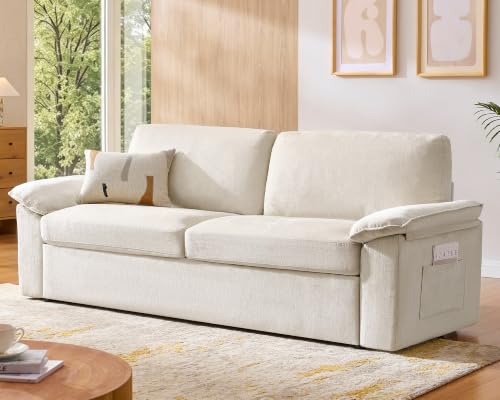
FORTEVA 78in Loveseat Sofa, Cloud Couch for Living Room, Beige | Oversized Couch with Angled Armrests Design & Quick 10-Min Setup – Ideal for Living Room, Bedroom, Apartment, and Office
Check price on Amazon
AMERLIFE 104" Sofa Bed, Sectional Sleeper Sofa with Pull Out Bed-Beige | U Shaped 7 Seat Sectional Couches for Living Room, Sleeper Sofa with Storage, Side Pockets & Plush Armrest Pillow
Check price on Amazon
Flyida 127" U Shaped Cloud Couch Modular Sectional Sofa, Comfy Fluffy Corduroy Black Boneless Sectional Couches for Living Room, Modern Cloud Sofas with Cup Holders & USB Port, Black
Check price on AmazonFrequently Asked Questions
What couch design works best in a small living room?
Slim-arm sofas, loveseats, and compact sectionals with exposed legs work best. Choose light colors, shallow seat depths, and raised frames to make the room feel larger. Wall-hugging recliners are a good option when lounge comfort is the priority.
Should I choose a sectional or a standard sofa for a small living room?
A small L-shaped or modular sectional can define a seating zone without blocking flow, especially in a corner. A standard two-seater or loveseat is better when the room is very narrow or when you need clear walkways on both sides.
How do I measure my small living room before buying a couch?
Measure the wall length, door clearances, and walkway widths. Leave at least 30 inches for main pathways and 14 to 18 inches between the couch and a coffee table. Tape the couch footprint on the floor before ordering, and confirm delivery access through doors and stairwells.
Can a couch make a small living room look bigger?
Yes. A raised couch with visible legs, light upholstery, a low back, and a wall-hugging profile reflects light and preserves floor visibility, which makes the room feel more open. Avoid bulky rolled arms and skirted bases in compact rooms.
Which couch designs are best for rooms that double as guest spaces?
Convertible sleeper sofas and modular designs with a pull-out section work well. Prioritize an easy conversion mechanism, a supportive mattress, and enough clearance in front of the couch for the bed to extend. A storage ottoman nearby can hold bedding between visits.
Final Thoughts
The best couch design for a small living room is the one that respects your floor plan, your daily routine, and your visual preferences. Start with measurements, then choose a silhouette that preserves walkways and light. A slim-arm loveseat, a wall-hugging recliner, or a compact sectional can each work well depending on the room's shape and how you use it.
Once the couch is in place, complete the room with complementary pieces. Our guides to couch end tables and couch decor cover the finishing details that make a compact living room feel intentional and comfortable.