
Couch That Unfolds to a Bed: The Complete Buyer's Guide
Everything you need to know about fold-out couches, pull-out sleepers, and convertible sofas — how the mechanisms work, how much floor space they need, which mattress types hold up over time, and how to choose a model that actually fits your room and your guests.
Explore Recommended ModelsWhat an Unfolding Couch Actually Is
A couch that unfolds to a bed is a dual-purpose seating and sleeping piece. In its closed position it functions as ordinary living room seating; in its open position the seat, backrest, or a concealed mattress frame extends into a flat sleeping surface. Buyers searching for a couch that can be a bed are usually looking for one of two broad families: mechanisms that fold the upholstered body flat, and mechanisms that slide a separate mattress out of a storage cavity.
The distinction matters more than most shoppers expect. Fold-out designs keep the sleeping surface integrated with the couch body, so the feel of the seat and the feel of the bed are closely linked. Pull-out designs separate the two: you sit on the couch cushions and sleep on an independent mattress. Neither approach is universally better — the right answer depends on how often the bed will be used, who will sleep on it, and how much open floor space the room can spare.
Quick orientation: if the couch is primarily seating with occasional overnight guests, a fold-out convertible is usually the simpler choice. If the bed needs to feel like a real bed for regular sleepers, a pull-out sleeper with a dedicated mattress is the more capable option.
Fold-Out vs. Pull-Out vs. Convertible: The Main Types
Terminology in this category is loose, and retailers often use "sofa bed," "sleeper sofa," and "convertible couch" interchangeably. For practical buying purposes, these are the distinct designs worth understanding:
Fold-Out Couch (Click-Clack and Bi-Fold)
The backrest hinges backward until it lies flat alongside the seat. Many models use a click-clack ratchet mechanism with several reclining positions. The sleeping surface is the upholstered seat and back cushions themselves, so the bed is thin and firm compared to a dedicated mattress. These are the lightest and most space-efficient designs, and they are the natural choice for a couch that folds down into a bed in a compact living room.
Pull-Out Sofa (Trundle and Frame Slide)
A metal frame slides out from beneath the seat, unfolding a mattress that was stored inside the couch body. This is the classic sleeper sofa. Mattress thickness and frame support vary enormously by tier. This design is the standard recommendation for a couch that pulls out into a bed used by guests on a recurring basis.
Futon
A futon uses a folding frame — typically wood or metal — with a single thick cushion that hinges from seating to sleeping position. Futons are mechanically simple and easy to move, but the sleeping surface is a compromise: comfortable for short stays and casual use, less so for nightly sleepers who prefer a conventional mattress profile.
Modular and Sectional Convertibles
Some modular sectionals include a pull-out or fold-out unit within one of the modules, letting the rest of the sectional remain in seating configuration. These suit open-plan rooms where the sleeper doubles as the main family couch. Explore the broader category in our couch to bed furniture overview if you are weighing several convertible formats at once.
| Type | Mechanism | Sleep Comfort | Floor Space When Open | Best For |
|---|---|---|---|---|
| Click-clack fold-out | Hinged backrest lays flat | Firm, thin | Low to moderate | Compact rooms, occasional naps |
| Pull-out sleeper | Metal frame slides out with mattress | Moderate to high | Moderate to high | Recurring overnight guests |
| Futon | Folding frame with thick cushion | Moderate | Moderate | Flexible rooms, easy relocation |
| Modular sectional sleeper | Convertible module within sectional | Moderate to high | High | Open-plan family living rooms |
How the Mechanisms Work (and What to Inspect)
The mechanism is the part of a sleeper sofa that fails first, so it deserves more attention than the fabric. When you evaluate a couch that unfolds to a bed, look at three things: the frame material, the hinge or ratchet quality, and how the mattress is supported in the open position.
Frame and Hinge Construction
Entry-level fold-outs often use thinner tubular steel and simpler ratchet hinges. Mid-range and premium models move to heavier-gauge steel, reinforced corner joints, and smoother locking positions. If the couch will be opened and closed frequently, the heavier mechanism is the more efficient long-term investment — the difference in smoothness and durability between entry-level and mid-range hardware is immediately noticeable in person.
Mattress Support in the Open Position
Some pull-out frames support the mattress with a wire grid or bar suspension; others use a solid platform or closely spaced slats. Bar-style support is more common at the entry tier and is the main reason thin sleeper mattresses develop sagging over time. Platform and slat support distribute weight more evenly and pair better with thicker mattresses.
Opening Clearance
Every unfolding design needs a clear path in front of the couch. Measure the depth of the couch when closed, then confirm the open depth from the manufacturer's specification — do not estimate from photos. If you are also considering reversible formats, our guide to a couch that converts to queen bed covers how the larger mattress sizes change that clearance requirement.
In-store test: open and close the mechanism at least five times. Listen for grinding or uneven travel, check that the frame locks firmly in both positions, and lie on the open surface for a full minute rather than a quick press with your hand.
Mattress Types and What They Mean for Comfort
The sleeping surface is the single biggest differentiator between a sleeper sofa that guests tolerate and one they genuinely appreciate. Three mattress constructions dominate the category:
Foam and High-Density Foam
Foam mattresses are the most common in fold-out and mid-range pull-out designs. High-density foam holds its shape better than low-density foam, which compresses into permanent dips after a few seasons of use. If the couch doubles as a daily seating surface, foam density is the specification to verify — a firmer, denser foam resists both seating compression and sleeping sag.
Innerspring Sleeper Mattresses
Innerspring sleeper mattresses use a coil unit in a shallow profile, usually paired with a thin foam or fiber layer. They feel more like a conventional mattress than foam and are common in premium pull-out sleepers. The trade-off is weight and the need for a solid support platform underneath.
Air and Hybrid Systems
Some high-end tier sleepers use an inflatable or hybrid air-and-foam system stored in the couch body. These can deliver the most bed-like feel in a compact footprint, but they introduce additional components — pumps, valves, and chambers — that add complexity to maintenance.
Whatever the construction, the mattress should be replaceable. Many pull-out sofas accept a standard-size aftermarket sleeper mattress, which lets you extend the life of the frame considerably. Our article on couch mattresses goes deeper into thickness, firmness, and replacement sizing.
| Mattress Type | Feel | Durability Pattern | Typical Tier Placement |
|---|---|---|---|
| Low-density foam | Soft, thin | Compresses quickly with regular use | Entry-level |
| High-density foam | Firm, supportive | Holds shape well with moderate use | Mid-range |
| Innerspring | Traditional mattress feel | Resilient; benefits from solid platform | Premium |
| Air / hybrid | Adjustable, bed-like | Depends on pump and chamber care | Luxury |
Sizing and Open-Footprint Math
Mattress size determines both sleeping capacity and the floor area the couch consumes when open. Sleeper sofas are commonly built around twin, full, and queen mattresses; king-size sleepers exist but are rare and require substantial clearance.
Closed Size vs. Open Size
Two measurements matter. The closed dimensions tell you whether the couch fits your wall and doorway. The open dimensions tell you whether the room can accommodate the bed once unfolded. A common mistake is checking only the closed size, then discovering that the open couch blocks the bedroom door or the walkway to the kitchen.
The Clearance Rule
Allow the full open length plus roughly 12 to 18 inches of walking clearance at the foot of the bed. That buffer covers getting in and out of bed, reaching a nightstand or side table, and the swing of a nearby door. If you are placing the sleeper in a multipurpose room, map the open footprint onto the floor with painter's tape before ordering.
For rooms where every inch counts, our guides to a couch for small spaces and a couch for small living room cover the dimension trade-offs in more detail, including wall-hugging placements and compact sleeper formats.
Doorway and Delivery Considerations
Pull-out sleepers are heavier than standard sofas and cannot be maneuvered as freely. Measure stairwells, hallway corners, and elevator interiors before purchase. If access is tight, a couch that fits through small doors or a modular design that assembles on site may be the practical route.
Fitting One Into Your Room Without Regret
An unfolding couch changes how a room works on two levels: the closed footprint during everyday use, and the open footprint during overnight stays. Planning for both prevents the most common post-purchase frustration.
Orientation and Unfolding Direction
Place the couch so the unfolding direction faces open floor — not a wall, a coffee table, or a walkway. In narrow rooms, orient the sleeper along the long wall and keep the foot-of-bed clearance on the side of the room with the least traffic. In a couch in a room layout that also serves as an office or play area, the sleeper should open into the zone that can be temporarily cleared.
Pairing With Other Furniture
Low-profile side tables and nesting tables are easier to move aside than bulky consoles. If the sleeper sits in front of a window, check that the open frame does not collide with a radiator or curtain hardware. For small-format rooms, a couch set for small living room that includes a matching loveseat and chair can keep the seating layout coherent without overwhelming the open footprint.
When the Bed Becomes the Primary Function
If the couch will be slept on more nights than not — a studio apartment, a guest room that doubles as a den, or a home office with occasional overnight use — prioritize the mattress and frame over the upholstery. In that scenario, a couch for sleeping with a dedicated pull-out mattress and a reinforced platform is the more sensible starting point than a decorative fold-out.
Quality Tiers Explained
Sleeper sofas are not priced on a single axis, but they do cluster into recognizable tiers based on frame construction, mechanism quality, and mattress specification. Understanding the tier tells you more about likely longevity than any single feature.
Entry-Level Tier
Lighter frames, simpler ratchet or bi-fold hinges, thin foam mattresses. Best suited to occasional guest use and rooms where the couch is primarily seating. Expect to replace the mattress before the frame.
Mid-Range Tier
Heavier-gauge steel, smoother locking positions, thicker high-density foam or basic innerspring mattresses. The practical sweet spot for households that host guests several times a year.
Premium Tier
Reinforced frames, platform-style mattress support, thicker innerspring or hybrid mattresses. Appropriate where the sleeper is used regularly and comfort expectations are closer to a real bed.
Luxury Tier
Air or hybrid mattress systems, precision hardware, premium upholstery, and the most bed-like sleeping experience. The most complex mechanism to maintain and the largest open footprint to plan for.
A useful rule of thumb: the smoother the mechanism feels in the showroom, the more likely the internal hardware is built to last. A mid-range model typically opens and locks more cleanly than an entry-level model, and that mechanical difference compounds over years of use.
Occasional vs. Regular Sleeping: Matching the Couch to the Job
The single most useful question before buying is how often the bed will actually be used. The answer should drive every other decision.
Occasional Guests (A Few Nights a Year)
Prioritize seating comfort, upholstery durability, and a mechanism that is easy to operate without instruction. A fold-out or mid-range pull-out with a high-density foam mattress covers this well. There is little reason to pay for a hybrid air system that will be used twice annually.
Recurring Guests (Monthly or More)
Move up to a pull-out sleeper with a thicker innerspring or high-density foam mattress and a platform-supported frame. Add a mattress topper for comfort, and confirm the mattress is replaceable so the frame outlives the first mattress.
Nightly Sleeping
Treat the purchase as a bed that happens to be a couch. A couch that turns into a bed used nightly needs a premium or luxury tier mattress, robust frame support, and a room layout that keeps the open footprint clear every day. In a studio or one-bedroom apartment, a couch that lays flat into a bed with a firm platform surface may be a better match than a thin click-clack.
Buying Checklist for an Unfolding Couch
Use this sequence when comparing models, whether online or in a showroom.
- Measure the room, not just the wall. Record the closed width, the open length, and the clear floor distance in the unfolding direction. Account for doors, radiators, and fixed furniture.
- Confirm the mattress size and thickness. Twin, full, or queen, and whether the mattress is replaceable with a standard aftermarket size.
- Test the mechanism repeatedly. Open and close it several times, check the locking positions, and listen for irregular travel.
- Inspect the support structure. Platform or slat support distributes weight better than a wire grid; reinforced corners matter more than decorative stitching.
- Match the tier to usage frequency. Entry-level for occasional guests, mid-range and premium for recurring guests, premium and luxury for nightly sleep.
- Plan the delivery path. Measure doorways, stairwells, and corners. Heavy sleepers are not easily tilted through tight turns.
- Read the care guidance for the upholstery. Performance fabrics and leather have different cleaning routines. Our couch fabric types guide is useful if you are unsure which material suits a household with pets or children.
If the sleeper will serve pets as well as people, check a couch good for pets for fabric and frame considerations before committing to a light-colored woven upholstery.
Care and Longevity for Sleeper Mechanisms
A sleeper sofa asks more of its frame than a fixed couch. Two maintenance habits make the biggest difference.
Keep the Mechanism Clean and Lubricated
Dust and grit accelerate wear on sliding frames and hinges. Vacuum the cavity under the seat when the mattress is out, and follow the manufacturer's guidance for lubricating the track or hinge points — a small amount of the recommended lubricant applied on schedule prevents the grinding that signals premature wear.
Rotate the Mattress and Protect the Upholstery
If the mattress allows rotation, flip or rotate it periodically to even out compression. A removable, washable cover protects the mattress from spills and dust. On the seating side, a couch protection routine that includes regular cushion rotation and prompt stain treatment extends the life of the upholstery considerably. For deeper soiling, a couch deep cleaning service is worth scheduling before a heavy hosting season.
Recommended Couch That Unfolds to a Bed
A selection of convertible and sleeper couches spanning entry-level, mid-range, and premium tiers. Check each listing for current availability and specification details.
⚠️ AFFILIATE DISCLOSURE: This website contains affiliate links. As an affiliate Associate, we earn from qualifying purchases. If you make a purchase through these links, we may receive a small commission at no additional cost to you. Read our full affiliate policy.

MALOL Pull Out Couch, Futon Sofa Bed, Single Sleeper Sofa, Dark Grey | Small Sofa Bed Couch with USB Port, Foldable Table, Pillow, Adjustable Backrest for Bedroom/College/Living room
Check price on Amazon
76" Convertible Sofa Bed, Corduroy Boneless Couch with Cup Holders & Pocket | 2-in-1 Sleeper Sofa, Pull-out Couch Bed with 5 Pillows, Living Room, Small Spaces, Bedroom, No Assembly
Check price on Amazon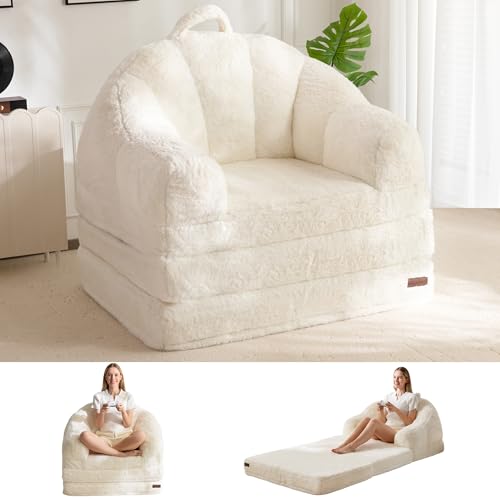
MAXYOYO Folding Sofa Bed, 2 in 1 Convertible Sofa to Lounger | Comfy Single Bean Bag Chair for Adults, Floor Couch with Handle, Faux Fur Couch Bed for Living Room Bedroom, Beige
Check price on Amazon
COTOSOF Folding Sofa Bed, Convertible Sleeper Chair with Pillow for Bedroom | 3-in-1 Boneless Futon Couch Bed, Corduroy Foldable Floor Lounger Sofa with Backrest Frame for Living Room, Dark Gray
Check price on Amazon
Ressainic Folding Sofa Bed, Convertible Sleeper Chair Bed with Pillow | Foldable Couch Bed, Fold out Chair Bed, Foam Floor Futon Sofa Bed for Living Room Bedroom Guest Room, Dark Grey, Single
Check price on Amazon
LOOMORA 78.7IN Convertible Folding Sofa Bed, 3 Seater Sleeper Sofa Couch | No Assembly Required, Corduroy, Freestanding, Couches Bed with Zippered Pillows for Living Room, Bedroom, Apartment, Gray
Check price on Amazon
Erament Convertible Sofa Bed, Loveseat Folding Floor Futon Sleeper Sofa Couch Bed- Boneless Foldable Couch, Corduroy Pull Out Sofa Bed with 2 Pillows for Living Room & Bedroom
Check price on Amazon
Manyday 2 in 1 Folding Sofa Bed, Beige | Convertible Sleeper Sofa to Lounger Comfy Bean Bag Chair for Adults, Corduroy Floor Couch Bed with Handle for Living Room
Check price on AmazonFrequently Asked Questions
What is a couch that unfolds to a bed called?
A couch that unfolds to a bed is generally called a sleeper sofa, sofa bed, or convertible couch. Within that category, a fold-out couch uses a hinged mechanism that lays the seat and backrest flat, while a pull-out sofa uses a metal frame that slides a mattress out from under the seat.
How much floor space does an unfolded couch need?
As a rule of thumb, allow the full mattress length plus roughly 12 to 18 inches of clearance at the foot of the bed for walking and access. A queen-size sleeper typically needs about 7 feet of length in the open position, while full and twin sleepers need noticeably less.
Is a fold-out couch comfortable for nightly sleeping?
It depends on the mechanism and mattress. Mid-range and premium fold-out models with a thick, high-density foam or innerspring mattress and a sturdy reinforced frame are comfortable enough for regular use. Entry-level models with thin mattresses and bar-style support are better suited to occasional guest use.
Can I replace the mattress in a couch that unfolds to a bed?
Yes in most cases. Many pull-out sofas use a standard-size mattress that can be replaced with an aftermarket sleeper mattress in the same dimensions and thickness. Always measure the internal frame and check the manufacturer's guidance before ordering a replacement.
Do unfolding couches work in small living rooms?
Yes, but planning matters. Twin-size and full-size sleepers, futons, and click-clack convertibles demand less open floor space than queen-size models. Place the couch so that the unfolding direction faces an open area, and choose a mechanism that matches how often you actually expect guests.