
Couch with Recliners: The Complete Buying Guide
Everything you need to know about reclining couches — from manual and power mechanisms to upholstery choices, sizing, and living room integration. Make a confident, informed decision for your home.
EXPLORE RECLINING OPTIONSA couch with recliners combines the everyday comfort of a traditional sofa with the personalized support of a reclining seat. For anyone who spends evenings reading, watching television, or simply unwinding, a reclining couch can transform the living room into a genuine relaxation zone. Unlike a standalone recliner chair, a reclining sofa offers shared comfort — multiple people can recline at the same time, making it a practical centerpiece for family rooms and entertainment spaces.
This guide walks you through the essential considerations before you buy: the different reclining mechanisms, frame and upholstery quality, how to measure your space, and how to integrate a reclining couch into your existing living room layout. Whether you are upgrading from a standard sofa or furnishing a new home, the information below will help you compare options with confidence.
Quick insight: Reclining couches are available across entry-level, mid-range, and premium tiers. The biggest differences between tiers typically lie in the reclining mechanism (manual vs. power), frame construction, cushion density, and upholstery grade — not in the basic concept itself.
Types of Couches with Recliners
Reclining couches come in several configurations. Understanding the differences helps you match the couch to your room size, seating needs, and daily habits.
Two-Seat Reclining Loveseat
A compact option with two reclining seats. Ideal for smaller living rooms, apartments, or as a secondary seating piece. Both seats typically recline independently.
Three-Seat Reclining Sofa
The most common configuration. Usually two or three seats recline, with a stationary center seat in some models. A balanced choice for families and everyday lounging.
Reclining Sectional
Combines sectional versatility with reclining comfort. Often includes a chaise or corner wedge, with reclining seats positioned at the ends. Best for larger, open-plan rooms.
Wall-Hugger Recliner Couch
Designed to recline with minimal clearance behind the backrest. A smart solution for rooms where the couch sits close to a wall or in a tight footprint.
Power Reclining Couch
Uses an electric motor to adjust the footrest and backrest. Offers smooth, precise positioning and often includes USB charging ports. Requires a nearby power outlet.
Manual Reclining Couch
Operated by a lever or push-back mechanism. No electricity required, fewer components to maintain, and generally simpler to repair over time.
If you are considering a sectional configuration with reclining seats, you may also want to explore the differences between a standard reclining sofa and a sectional couch with electric recliner, which often provides more seating flexibility in open-concept spaces.
Manual vs. Power Reclining Mechanisms
The reclining mechanism is the heart of any recliner couch. Choosing between manual and power operation affects daily usability, maintenance, and long-term reliability.
Manual Reclining
- Operated by a side lever or a push-back motion.
- No electrical connection needed — placement is flexible.
- Fewer electronic components, which can mean simpler long-term upkeep.
- Entry-level and mid-range models frequently use manual mechanisms.
- Reclining motion may require slightly more physical effort.
Power Reclining
- Controlled by buttons or a switch, usually located on the side or armrest.
- Provides smooth, incremental adjustment for backrest and footrest.
- Many mid-range and premium models include USB ports for charging devices.
- Requires access to a power outlet near the couch.
- Motor and wiring add complexity; warranty coverage for electrical parts is worth checking.
| Feature | Manual Recliner | Power Recliner |
|---|---|---|
| Operation | Lever or push-back | Button or switch |
| Power source | None required | Electrical outlet |
| Adjustment precision | Stepped positions | Smooth, incremental |
| Typical tier placement | Entry-level to mid-range | Mid-range to premium |
| Maintenance complexity | Lower | Moderate (electronics) |
| Placement flexibility | High | Requires outlet access |
For rooms where multiple power features are desired, a power reclining sectional with USB ports can consolidate charging and reclining convenience into a single piece of furniture.
Frame Construction and Upholstery Materials
The longevity of a reclining couch depends heavily on what is underneath the fabric or leather. A solid frame and quality cushioning matter just as much as the visible surface.
Frame Materials
- Hardwood frames (kiln-dried oak, maple, or ash) are common in mid-range and premium models and offer durable construction.
- Engineered wood and plywood are frequently used in entry-level recliners; quality varies by manufacturer.
- Metal frames appear in some heavy-duty and commercial-grade designs, often paired with reinforced joints.
Upholstery Options
- Leather: A premium look that develops character over time. Full-grain and top-grain leathers sit in the upper tiers, while bonded leather is more common at entry level. Leather recliners are easy to wipe clean but benefit from periodic conditioning.
- Fabric: Broad range of textures and colors. Performance fabrics resist stains and fading, making them a practical choice for households with children or pets.
- Velvet and microfiber: Soft hand-feel with a distinctive appearance; require more careful maintenance than tightly woven fabrics.
If you have pets, look for tightly woven, scratch-resistant fabrics. Our guide on pet-friendly sofas covers material choices that hold up well to daily use. For leather specifically, a navy blue leather reclining sectional illustrates how a bold color can work with reclining functionality.
How to Measure Your Space for a Reclining Couch
A reclining couch needs more floor space than a standard sofa because the footrest extends forward when engaged. Accurate measurements prevent delivery-day surprises and ensure comfortable walking clearance.
Measuring Checklist
- Measure the full wall length where the couch will sit.
- Record the depth of the couch when fully reclined, not just closed.
- Leave at least 18–24 inches of walkway clearance in front of the reclined footrest.
- Check wall clearance behind the backrest (especially for non-wall-hugger models).
- Confirm doorway and hallway widths for delivery access.
- Verify outlet locations if choosing a power recliner.
- Account for end tables and lamps on either side.
For rooms with limited square footage, a wall-hugger or a two-seater couch configuration may be the most practical fit. If your living room is narrow, consider how a reclining loveseat preserves traffic flow compared with a full three-seat model.
Integrating a Reclining Couch into Your Living Room Layout
Reclining couches work best when the layout leaves open floor space in front of the seating. A few placement principles apply regardless of room size.
- Face the focal point: Position the reclining couch toward the television, fireplace, or view window. Reclining seats are most comfortable when the sightline is direct.
- Avoid blocking walkways: The footrest travel path should not intersect with main circulation routes.
- Pair with a low-profile coffee table or ottoman: A storage ottoman can double as a footrest and keep the center of the room flexible.
- Use side tables for essentials: A couch side table keeps drinks and remotes within reach without requiring a large coffee table.
- Consider lighting: Reclining seats benefit from a floor lamp or wall sconce positioned behind the shoulder line for reading light.
For open-plan rooms, a reclining sectional can define the seating zone while preserving sightlines to the kitchen or dining area. If you are planning a full living room refresh, our living room layout guides cover focal-point arrangements and traffic flow in more detail.
Comfort and Ergonomics: What to Look For
Reclining couches are ultimately about comfort, but comfort is not only about softness. Support, seat depth, and back angle all contribute to how the couch feels over hours of use.
Seat Depth and Height
Standard seat depth ranges from 20 to 24 inches. Deeper seats suit taller users and lounging, while shallower seats provide more back support for sitting upright. Seat height should allow your feet to rest flat on the floor when the couch is not reclined.
Cushion Density
High-resilience foam retains its shape longer than low-density foam. Mid-range and premium reclining couches often use pocketed coil or wrapped foam constructions for a balance of softness and support. If the cushions are removable, replacement options may extend the couch's usable life — see our notes on memory foam replacement couch cushions.
Backrest Angle
Reclining backrests typically adjust from an upright seated position to a nearly flat angle. Check that the intermediate positions are comfortable for reading or watching television, not just the fully reclined position.
Try before you commit: If possible, sit in the exact model you plan to buy. Reclining mechanisms vary noticeably in smoothness, and seat firmness is highly personal.
Care and Maintenance for Reclining Couches
A reclining couch has mechanical components in addition to upholstery, so maintenance covers both the surface and the mechanism.
- Vacuum regularly to prevent dust and debris from accumulating in the mechanism tracks.
- Clean spills promptly with a suitable upholstery cleaner; avoid soaking the fabric near the mechanism.
- Lubricate moving parts according to the manufacturer's schedule, usually annually for manual mechanisms.
- Keep the mechanism clear of coins, toys, and pet hair that can jam the reclining action.
- Condition leather every 6–12 months to prevent cracking and drying.
- Check warranty terms for both the frame and the reclining mechanism; coverage periods often differ.
If a mechanism ever becomes stiff or noisy, our guide on couch repair covers common fixes, including spring replacement for sagging or broken support.
Final Buying Checklist
Before finalizing your choice, run through this checklist to confirm the couch meets your room, household, and usage requirements.
Before You Buy
- Confirm the reclined depth fits your room with walking clearance.
- Decide between manual and power based on outlet access and preferred adjustment.
- Verify the frame material and warranty coverage for the mechanism.
- Match upholstery to your household: pets, children, and sunlight exposure.
- Check that the seat height and depth suit the primary users.
- Measure doorways and hallways for delivery access.
- Review the return policy and delivery terms before ordering.
If you are still comparing reclining configurations against other sofa types, our couch types overview and standard sofas guide provide useful context. For a compact alternative, a loveseat with reclining seats may suit smaller rooms.
Recommended Couch with Recliners
⚠️ AFFILIATE DISCLOSURE: This website contains affiliate links. As an affiliate Associate, we earn from qualifying purchases. If you make a purchase through these links, we may receive a small commission at no additional cost to you. Read our full affiliate policy.

Sofetura Oversized Loveseat Recliner Sofa with Cup Holders & Side Pockets, Big Large Reclining Sofa, Traditional 2-Seater Manual Recliner Couch for Living Room, RV, Home Theater (Fabric,Grey)
Check price on Amazon
BOSMILLER Recliner 3-Seat Sofa with Cup Holders for Living Room, Manual Sofa Recliner with Side Pocket
Check price on Amazon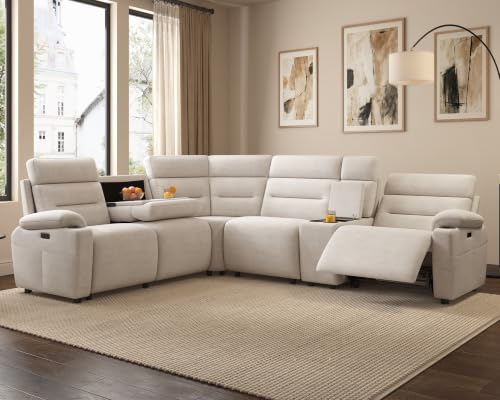
AMERLIFE L-Shaped Power Reclining Sectional Sofa for Living Room, Beige | Modular Power Sectional Recliner Couch,Fixed Console,Flip-Back,Cup Holders,USB,Hidden Storage,Linen Upholstery Sofa Moderno
Check price on Amazon
Sofetura Oversized 3-Seater Recliner Sofa, Big Large Reclining Sofa with Cup Holders & Side Pockets, Traditional Manual Recliner Couch for Living Room, RV, Home Theater, Family Couch (Fabric, Grey)
Check price on Amazon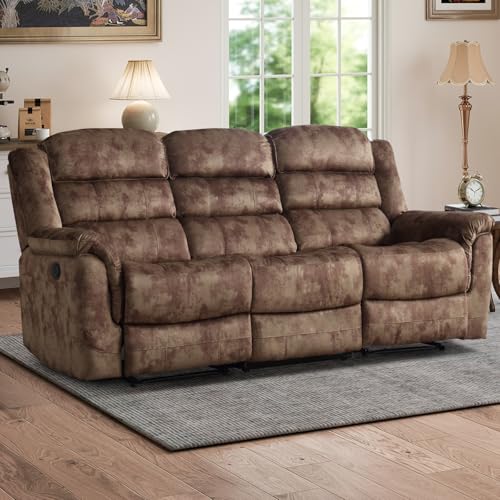
EBELLO Reclining Sofa for Living Room, Extra Wide Modern Overstuffed 3 Seat Recliner Manual Sofa Chair, Breathable Soft Fabric and Padded Seat, Brown
Check price on Amazon
EBELLO Manual Reclining Sectional Sofa Set for Living Room, Soft Fabric Recliner Corner Sectional Couch with Center Console, Cup Holder and Storage, Brown
Check price on Amazon
Korser Loveseat Recliner Sofa, Flip Middle Backrest Design 3 Seat Reclining Sofa with Storage Drawer, Performance Fabric Reclining Couch with Storage, USB Port, Manual Couch for Living Room, RVs
Check price on Amazon
Dresegmt Loveseat Recliner Sofa, Flip Middle Backrest Design 3 Seat Reclining Sofa with Storage Drawer, USB Ports & Cup Holders, Manual Couch for Living Room/RV (Gray)
Check price on AmazonReady to Choose Your Reclining Couch?
Compare the recommended models above, review the specifications, and select the option that fits your room and daily routine.
VIEW RECOMMENDED MODELSFrequently Asked Questions
How much space do I need behind a reclining couch?
Traditional recliners require roughly 12–18 inches of clearance behind the backrest to allow the back to tilt. Wall-hugger models reduce this to a few inches by using a different mechanism that slides the seat forward instead of tilting the back. Always check the manufacturer's recommended wall clearance for the specific model.
Is a power recliner worth it over a manual one?
Power recliners offer smoother adjustment and are easier for people with limited mobility or strength. They also frequently include USB charging. Manual recliners require no electricity and have fewer electronic parts that can fail. The right choice depends on your priorities: convenience and precision (power) versus simplicity and placement flexibility (manual).
Can a reclining couch be placed on carpet?
Yes. Reclining couches work on carpet, but the footrest mechanism may need slightly more effort on thick pile. Placing the couch on a rug or furniture glides can help the mechanism move smoothly and protect the carpet from repeated friction.
What upholstery is best for a reclining couch with pets?
Tightly woven performance fabrics and top-grain leather are the most durable choices for households with pets. Avoid loose-weave fabrics and delicate velvets that snag easily. Our dog-friendly couch guide covers material testing in more detail.
How long does a reclining couch mechanism typically last?
With normal use, a quality reclining mechanism can last many years. Entry-level mechanisms may show wear sooner under heavy daily use, while mid-range and premium mechanisms with metal components and reinforced joints are built for longer service. Regular cleaning and lubrication extend the mechanism's life.
Can I use a reclining couch as a sleeper?
Reclining couches are not designed for overnight sleeping, though the fully reclined position can be comfortable for naps. If guest sleeping is a priority, look for a couch that becomes a bed or a dedicated sleeper sofa with a fold-out mattress.