
Couches with Cushions: The Complete Comfort & Buying Guide
Understand cushion types, filling materials, attachment styles, and care routines so you can choose a couch that stays comfortable and beautiful for years.
EXPLORE CUSHION TYPESWhy cushions matter more than you think: The cushions on a couch determine how it feels every single day — from the first sit to the tenth year. A beautifully framed sofa with poorly specified cushions can feel stiff and unsupportive, while a well-cushioned couch transforms an ordinary living room into the most-used seat in the house. This guide breaks down cushion construction, filling options, attachment styles, and practical care so you can buy with confidence.
What Defines a Couch with Cushions?
A couch with cushions is any sofa that uses padded, upholstered components — seat cushions, back cushions, and sometimes arm or accent cushions — to deliver comfort and shape. Almost every modern sofa falls into this category, but the type of cushion system varies dramatically. Understanding these differences is the single most useful piece of knowledge for a furniture shopper, because cushion construction influences comfort, maintenance, durability, and even how the couch ages visually.
Cushions generally serve three roles on a couch: they distribute body weight across the seat, they support the back and posture, and they add the visual softness that makes a living room feel inviting. Whether you are browsing a couch with attached back cushions or a modular design with removable seats, the cushion system is the heart of the seating experience.
Cushion Attachment Styles: Attached vs. Loose vs. Reversible
One of the first decisions you will encounter is whether the cushions are attached to the frame, loose, or reversible. Each style carries trade-offs in maintenance, appearance, and longevity.
Attached Back Cushions
Back cushions are sewn or fastened to the frame. They keep their shape and alignment with zero fuss, making the couch look tidy even after daily use. The trade-off is that you cannot rotate or flip them, so foam compression is harder to correct over time. Ideal for households that prioritize a consistently neat appearance.
Loose Back & Seat Cushions
These cushions rest freely on the frame or sit inside a channel. They are easy to rotate, fluff, and spot-clean, and they let you adjust the firmness by swapping inserts. Loose cushions need regular fluffing to avoid looking slumped, but they are the most flexible option for long-term maintenance.
Reversible Seat Cushions
A reversible cushion can be flipped front-to-back and top-to-bottom, doubling its usable lifespan. This is a hallmark of well-engineered mid-range and premium sofas. Reversible cushions are especially practical in family rooms where wear is concentrated on one side.
If you prefer a streamlined silhouette with minimal daily maintenance, attached cushions are a strong choice. If you want the longest possible lifespan and the ability to refresh the look, reversible loose cushions are hard to beat. Many shoppers land somewhere in between — an attached back with removable seat cushions, which balances neatness and practicality.
Cushion Fill Materials Explained
The filling inside a cushion dictates how it feels on day one and how it performs years later. There is no universally "best" fill — only the best match for how you use the room. Below is a practical comparison of the most common fills on the market.
| Fill Type | Feel | Durability | Best For |
|---|---|---|---|
| High-Density Foam | Firm, supportive, structured | Excellent — resists sagging | Daily seating, family rooms, entry-level to mid-range couches |
| Foam + Fiber Wrap | Supportive core with a soft surface | Very good | Balanced comfort, mid-range to premium couches |
| Down & Feather | Plush, sink-in, luxurious | Moderate — needs regular fluffing | Formal living rooms, luxury tier, low-traffic spaces |
| Down Alternative / Polyester Fiber | Soft, lightweight, hypoallergenic | Moderate | Allergy-sensitive households, casual seating |
| Pocketed Coil / Spring Core | Responsive, bouncy, supportive | Excellent | Heavy use, high-end tier couches, large sectionals |
| Memory Foam | Contouring, pressure-relieving | Good | People with back or joint concerns, lounging couches |
A useful rule of thumb: the firmer and denser the core, the longer the cushion keeps its shape. Premium couches often combine a dense foam or pocketed coil core with a softer fiber or down wrap — a construction that delivers support without sacrificing that inviting sink-in feel. If you are exploring support-focused designs, our guide to couches with lumbar support explains how cushion geometry affects posture.
Shopping tip: Ask whether the seat cushions have a removable, replaceable core. Even the best cushions compress over time, and the ability to replace just the insert — rather than the whole couch — is a significant long-term advantage. If you already own a couch that needs a refresh, it is worth knowing that you can often buy new cushions for a couch rather than replacing the entire piece.
Cushion Covers, Upholstery, and Removable Options
The fabric wrapped around a cushion is just as important as the fill. Cushion covers determine stain resistance, texture, breathability, and how easy the couch is to clean. The most versatile couches use removable cushion covers with zippers, allowing you to wash, swap, or replace them without professional help.
- Performance fabrics: Tightly woven synthetics that resist spills, fading, and everyday abrasion. A strong choice for households with pets or children.
- Textured weaves (linen blends, chenille): Visually rich and soft, but they trap crumbs and pet hair more readily and need more frequent vacuuming.
- Leather and faux leather: Wipe-clean and highly durable, though cushions can feel firmer and warmer. Cushion construction matters even more with leather, since there is no fabric softness to mask a hard core.
- Removable covers: The most practical option for long-term ownership. Look for zippered covers that are machine-washable or dry-clean friendly.
If you already own a couch and want to refresh its cushions without reupholstering the whole piece, cushion covers are a practical, low-effort upgrade. For a deeper transformation, professional reupholstery is an option — our article on whether you can reupholster a couch walks through what is realistic.
Seat Cushion Shapes and Comfort Profiles
Beyond filling, cushion shape changes how a couch feels and how a room looks. The three most common seat profiles are:
1. Standard Flat Cushions
The most common profile, found on classic sofas and most entry-level and mid-range couches. Flat cushions provide even support and a clean, tailored look. They suit upright sitting and formal living rooms, and they are the easiest to clean and rotate.
2. Bench Cushions
A single long cushion spanning the entire seat rather than separate seat pads. Bench cushions eliminate the gaps between cushions, which means no lost remotes or crumbs in the crevices. They are common on modern and minimalist couches. If this profile appeals to you, our page on a couch with bench cushion covers the pros and cons in more depth.
3. Deep, Plush Cushions
Thicker, deeper cushions designed for lounging and reclining. They feel luxurious and are ideal for movie nights, reading, and napping. The trade-off is that very deep cushions can be harder to get up from and may look overly casual in a formal room. Our guide to cozy couch options explores how cushion depth affects the overall lounging experience.
Matching Cushion Style to Couch Type
Cushion construction should complement the couch's overall design. A few common pairings:
- Sectionals: Usually use a mix of loose seat cushions and attached or semi-attached backs. Look for reversible seat cushions if the sectional gets heavy daily use. Explore our sectional sofas category for layout-specific guidance.
- Loveseats: Smaller cushions are easier to flip and rotate, making loveseats with loose cushions a smart choice for compact rooms. See our loveseats hub for sizing advice.
- Reclining couches: Cushions here need a firmer core so they do not interfere with the reclining mechanism. Our overview of reclining sofas explains what to check.
- Sleeper sofas: The seat cushions double as the mattress surface, so a dense, supportive fill is essential. Our sleeper sofas guide covers cushion considerations for overnight guests.
- Leather couches: Cushion fill is fully visible in how the leather drapes, so a well-shaped core matters. Browse leather sofas for material-specific tips.
Buying Checklist for Couches with Cushions
Before you commit, run through these practical checks. They are written for a research-stage shopper who already knows the general type of couch they want and needs to validate the cushion details.
Sit for At Least 10 Minutes
Comfort reveals itself over time. Sit in your normal posture, lean back, and shift your weight. A cushion that feels great for 30 seconds can feel unsupportive after 10 minutes.
Check Cushion Density
Press down firmly on the seat. A quality cushion should bounce back quickly and should not bottom out against the frame. Slow recovery may indicate a lower-density foam.
Confirm Removability
Are seat cushions reversible? Do back cushions unzip? Can you replace the core insert? The more removable components, the longer the couch can be maintained.
Inspect the Seams and Zippers
Quality cushions have reinforced seams, hidden zippers, and no loose threads. These details predict how well the cushions will hold up after repeated washing and fluffing.
Match Cushions to the Frame
A soft cushion on a rigid frame can feel unstable; a firm cushion on a plush frame can feel mismatched. The best couches are engineered so the cushion system and frame work together.
Plan for Maintenance
Decide up front how much fluffing, rotating, and cleaning you are willing to do. Down and fiber fills demand regular attention; high-density foam and pocketed coil cores ask for very little.
For a broader pre-purchase framework, our buying guides section covers measurement, material selection, and delivery preparation in detail.
Caring for Couch Cushions
With a little routine care, cushions can stay supportive and attractive for many years. The essentials:
- Fluff and rotate weekly: Redistribute filling and shift wear evenly across the seat. This is especially important for down and fiber fills.
- Vacuum monthly: Use an upholstery attachment to lift dust and debris from seams and crevices before it works into the fibers.
- Treat stains immediately: Blot, do not rub. Check the fabric's cleaning code before applying any product. Our stain removal guide covers the most common spills.
- Wash removable covers as directed: Follow the care label precisely; hot water and aggressive drying can shrink or distort covers.
- Keep out of direct sun: Prolonged UV exposure fades fabric and can degrade foam. Our sun damage prevention article has placement tips.
- Address compression early: If a cushion starts to sag, rotate it immediately or consider a replacement insert. Our cushion repair guide covers simple fixes.
Long-term thinking: Couches with well-specified cushions are a long-term investment. Choosing a couch with replaceable inserts and removable covers means you can refresh comfort and appearance without replacing the frame — the most sustainable and efficient approach for the long run.
Accent Cushions: Styling with Throw Pillows
Beyond the built-in seat and back cushions, decorative throw pillows are the fastest way to change a couch's personality. A thoughtful arrangement adds color, texture, and visual balance without requiring new furniture.
- Odd numbers work best: Three or five pillows typically look more intentional than two or four.
- Mix sizes: Combine a larger square pillow with a smaller accent and a lumbar shape for depth.
- Contrast texture: Pair smooth upholstery with a nubby bouclé, velvet, or woven pillow for visual interest.
- Tie colors to the room: Pull one or two accent colors from artwork, a rug, or window treatments rather than introducing unrelated hues.
Our dedicated throw pillows guide covers arrangement formulas for every couch style, and the couch decor and styling hub has seasonal inspiration.
Recommended Couches with Cushions
⚠️ AFFILIATE DISCLOSURE: This website contains affiliate links. As an affiliate Associate, we earn from qualifying purchases. If you make a purchase through these links, we may receive a small commission at no additional cost to you. Read our full affiliate policy.

GORILLA GRIP Couch Cushion Support Board for Sagging Sofas, 21.5x70 Grey | Heavy Duty Slip Resistant Thick Boards Add Strong Seat Supports for Couch, Replacement Stuffing Firmer Couches Accessories
Check price on Amazon
Spongiduits Couch Cushion Support for Sagging Seat, 20"x20"x2" 40D High Density Curved Foam Sofa Cushion Support, Under-Cushion Sag Repair,Grey Set of 3
Check price on Amazon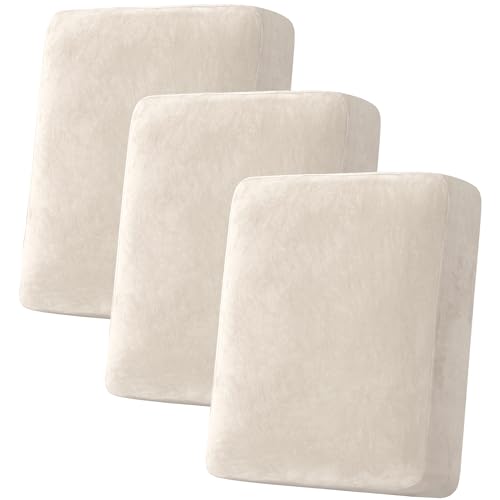
H.VERSAILTEX Velvet Stretch Couch Cushion Cover Plush Cushion Slipcover for Chair Loveseat Sofa Cushion Furniture Protector Seat Cushion Sofa Cover (3 Piece Sofa Cushion Covers, Ivory)
Check price on Amazon
HOMBYS Memory Foam Couch Cushion Replacement, High Density Upholstery Foam Wrapped with Memory Foam & Polyester Batting, Sofa Cushions Inserts with Dacron Fiber Layer,with Removable Cover,6"x24"x27"
Check price on Amazon
LAVEVE Heavy Duty Couch Cushion Support Board for Sagging Sofa, 21.5''x70'' | Extra Thick Solid Wood Under Couch Insert with Anti-Slip Dots, Repair Sagging Spring Sofa and Replace Worn Cushions
Check price on Amazon
H.VERSAILTEX Super Stretch Individual Seat Cushion Covers Sofa Covers Couch Cushion Cover Slipcover Sets Thick Jacquard Textured Twill Fabric (3 Piece Sofa Cushion Covers, Grey)
Check price on Amazon
MIULEE Soft Corduroy Christmas Throw Pillow Covers Forest Green 18x18 | Set of 4, Mordern Nordic Home Decor, Gradient Color Matching, Boho Farmhouse Cushion Covers for Couch Bed Sofa Living Room
Check price on AmazonReady to Choose Your Couch with Cushions?
You now understand cushion types, fills, and maintenance. Next, compare specific models and narrow down the design that fits your room and lifestyle.
COMPARE FEATURED COUCHESFrequently Asked Questions
Are attached or loose cushions better for a couch?
It depends on your priorities. Attached cushions keep the couch looking neat with minimal effort, which suits busy households. Loose and reversible cushions are easier to rotate, clean, and refresh, which extends the couch's lifespan. Many shoppers prefer an attached back with removable seat cushions as a practical middle ground.
Which cushion fill lasts the longest?
High-density foam and pocketed coil cores are the most durable fills, retaining shape well under daily use. Down and fiber fills feel plusher but compress faster and require regular fluffing. Premium couches often combine a dense core with a softer wrap to balance longevity and comfort.
Can I replace the cushions on an existing couch?
Often yes. If the frame and upholstery are in good condition, you can replace the foam inserts or add new covers. Our guide on whether you can buy cushions for a couch explains how to source compatible replacements.
How often should I fluff my couch cushions?
For down and fiber fills, fluff daily or every few days. For foam and coil cores, weekly is usually sufficient. Rotating seat cushions monthly helps distribute wear evenly, especially on couches that are used daily.
Do cushions affect how a couch fits through doorways?
Yes — removable cushions can significantly reduce a couch's delivery profile. If you live in an apartment or have narrow hallways, check whether the cushions detach. Our article on couches that fit through narrow doors has practical measurement advice.
What cushion profile is best for a formal living room?
Standard flat cushions with a firmer core give a tailored, structured look that suits formal spaces. Deep, plush cushions lean more casual and are better suited to family rooms, media rooms, and lounging areas.