
Decorative Tray Guide: Styling Tips for Coffee Tables & Ottomans
Learn how to choose, style, and arrange decorative trays that bring order, texture, and personality to your living room surfaces — without clutter or guesswork.
Explore Buying GuideWhy a decorative tray matters: A well-chosen tray transforms an empty tabletop or ottoman into a curated focal point. It corrals remote controls, candles, books, and small plants into a single intentional composition, making the room feel finished and deliberate. This guide walks through materials, sizing, arrangement theory, and maintenance so you can style with confidence.
What Makes a Decorative Tray Worth Using?
A decorative tray is more than a surface accessory — it is a design tool. By grouping objects within a defined border, a tray creates visual order and gives small items a sense of purpose. Without one, remote controls, coasters, and decorative objects tend to scatter across a coffee table or ottoman, creating visual noise. With one, those same objects become a deliberate vignette.
Trays also protect surfaces. On a wooden coffee table, a tray catches condensation from glasses and prevents scratches from keys and coasters. On an upholstered ottoman, a rigid tray with raised edges provides a stable landing zone for drinks and decor — provided it is sized and positioned correctly. If you are choosing a couch with an ottoman or a large ottoman model, planning tray placement early helps you pick the right size and edge style.
Finally, trays are one of the easiest ways to refresh a room seasonally. Swap the contents — autumn leaves and amber candles, spring florals and pastel ceramics — while keeping the tray itself as a constant anchor. That makes a decorative tray a long-term investment in flexibility rather than a one-off purchase.
Choosing the Right Material for Your Space
The material of a decorative tray determines its durability, weight, and visual warmth. Consider where the tray will live: a coffee table in a busy family room has different demands than a console in a formal sitting area. Below is a comparison of common materials using neutral quality tiers rather than specific figures.
| Material | Best For | Durability Tier | Care Notes |
|---|---|---|---|
| Solid Wood | Warm, casual living rooms; family spaces | Mid-range to high-end tier | Wipe with a damp cloth; re-oil occasionally |
| Rattan & Woven Fibers | Coastal, bohemian, and sunroom settings | Entry-level to mid-range | Keep dry; dust with a soft brush |
| Powder-Coated Metal | Modern and industrial interiors | Mid-range to premium | Wipe clean; avoid abrasive cleaners |
| Tempered Glass with Metal Frame | Formal and contemporary styling | Mid-range | Use a glass cleaner; check frame fasteners |
| Marble or Stone | High-end tier living rooms; focal styling | Premium to luxury | Seal periodically; avoid acidic spills |
| Leather-Wrapped | Masculine, library-style, and leather-heavy rooms | Premium | Condition with leather balm; keep from direct sun |
For homes with young children or pets, prioritize trays with raised edges of at least one inch and a non-slip base. Metal and wood combinations tend to be the most forgiving in high-traffic rooms. If your living room features a leather sofa or dark brown leather sectional, a wood or leather-wrapped tray echoes the upholstery and creates a cohesive palette.
Sizing and Proportion: Getting the Footprint Right
Occupy One-Third to One-Half
A tray should cover roughly one-third to one-half of the table or ottoman surface. Smaller looks lost; larger crowds the edges and leaves no usable space.
Leave Four to Six Inches
Keep at least four to six inches of open surface on all sides so the table still functions for drinks, books, and everyday use.
Keep Under Six Inches
Tall trays obscure sightlines and block conversation. Keep the tray plus contents under six inches for coffee tables; slightly taller works on consoles.
Measure before shopping, and remember that the tray footprint includes the handles. If you are styling a coffee table in a compact apartment, a rectangular or oval tray in a mid-range size typically fits better than a large round tray. For a small-space layout, a narrow tray with handles doubles as a serving piece and moves easily out of the way.
How to Style a Decorative Tray in Five Steps
Styling is not about buying more objects — it is about arranging what you have with intention. Follow this sequence to build a vignette that feels balanced and lived-in.
- Anchor the tray. Place it slightly off-center rather than dead-center. Off-center placement feels more natural and leaves room for a second small object elsewhere on the table.
- Create a base layer. Start with a stack of two or three books or a low bowl. This establishes visual weight and gives smaller objects something to lean against.
- Add height variation. Include one tall element such as a candlestick or slim vase, one medium element such as a plant, and one low element such as a small dish or coaster set.
- Use odd numbers. Three or five objects read as more natural than pairs. If you have four items, group two of them together to create the impression of three.
- Leave negative space. Resist filling every corner. Empty space on the tray is what makes the arrangement feel curated rather than cluttered.
- Functional first Include one practical item — a candle, a bowl for keys, or a remote caddy — so the tray earns its place.
- Texture contrast Mix smooth and rough surfaces: ceramic with rattan, glass with wood, metal with linen.
- Seasonal rotation Swap two or three items each season instead of redecorating from scratch.
- Color discipline Limit the tray contents to two or three colors drawn from the room's palette.
- Tray within a tray A small dish or bowl inside the main tray adds layering without clutter.
- Weight balance Place the heaviest object slightly off-center and balance it with a lighter, taller object on the opposite side.
Styling a Tray on an Ottoman
Ottomans are softer and less stable than coffee tables, so tray selection requires extra care. Choose a tray with a rigid, flat base — glass-only trays can crack under point pressure on upholstery, and thin metal trays may flex. Raised edges of one to two inches prevent items from sliding off when the ottoman is used as a footrest.
Keep the contents lightweight: a small candle, a paperback book, a succulent in a ceramic pot, and a fabric coaster set. Avoid heavy stone or marble trays on upholstered ottomans, as they can leave compression marks over time. If your ottoman doubles as seating, a tray with cutout handles is the most practical choice because it can be lifted off in one motion. Pair this setup with a cozy couch or a cuddler couch for a relaxed, layered living room.
For storage-focused ottomans, look for trays that fit inside the lid compartment when not in use. If you are furnishing a dorm room or a gaming room, a compact tray with a lip keeps controllers and snacks organized without occupying much surface area.
Buying Considerations Beyond Appearance
Edge Height and Lip Design
A raised lip of at least half an inch is the single most important functional feature. It keeps items from sliding off when the tray is bumped or moved. For coffee tables used by children, aim for a one-inch lip and rounded corners.
Handles and Portability
Cutout or attached handles make a tray far more versatile. You can carry it to the kitchen for refills or move it aside when the table is needed for a board game. Handle openings should be smooth and large enough for a finger grip without sharp edges.
Base Protection
Felt pads or a cork base protect wooden tabletops from scratches. On glass tables, look for rubberized feet to prevent sliding. On ottomans, a slightly textured base grips upholstery better than a polished one.
Cleanability
Consider how easily the surface wipes clean. Powder-coated metal and sealed wood are the most forgiving; raw wood and marble require more attentive maintenance. If the tray will hold drinks, a water-resistant finish is worth prioritizing.
Style Alignment
The tray should bridge the room's existing materials. In a room anchored by a cream sectional couch, a light wood or woven rattan tray reinforces the airy palette. In a room with a green couch, a brass or dark wood tray adds contrast. For fans of bold pattern, a leopard couch pairs well with a simple matte black tray that does not compete for attention.
Recommended Decorative Trays
⚠️ AFFILIATE DISCLOSURE: This website contains affiliate links. As an affiliate Associate, we earn from qualifying purchases. If you make a purchase through these links, we may receive a small commission at no additional cost to you. Read our full affiliate policy.

Hanobe Round Wooden Candle Holder Trays for Coffee Table, Distressed Finish | 11" Rustic Decorative Candlestick Plates for Kitchen Centerpiece, Farmhouse Living Room Christmas Decor
Check price on Amazon
11.5 Inches Candle Holder Tray Home Decor, Round Wood Tray for Coffee Table, Small Wooden Serving Decorative Trays for Home
Check price on Amazon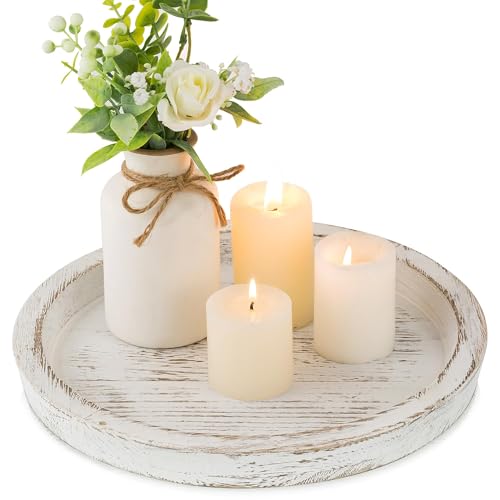
Hanobe Round Wood Candle Holder Trays for Coffee Table, Rustic White Finish | 11.2" Decorative Candlestick Plates for Kitchen Centerpiece, Farmhouse Living Room Decor
Check price on Amazon
OAKOA Round Decorative Tray Coffee Table Tray - Resin Circle Tray Decor | Coffee Table Decor for Living Room - Coffee Table Centerpiece Tray - Bandejas Decorativas - Decor Tray for Home Decor
Check price on Amazon
HouseJoy Decorative Tray for Coffee Table, 16×11.8in Wood Beaded Decor Tray | Rustic Farmhouse Decor Tray for Living Room/Bathroom/Table Centerpiece, Serving Tray for Kitchen Dining
Check price on Amazon
Koville Italian Travertine Tray, 12"x6" Vanity Decorative Marble Tray for Countertop, Catchall Tray for Perfume, Candles, Jewelry Dish Tray
Check price on Amazon
16"x12" Serving Trays with Handles, Black Decorative Serving Tray, Ottoman Trays for, Living Room, Bathroom, and Outdoors Decorative Trays (Black)
Check price on Amazon
Modern Decorative Tray Set of 2 Ivory Shagreen Leather and Wood Serving Tray with Gold Polished Metal Handles for Ottoman, Coffee Table, Bathroom and More
Check price on AmazonKeeping Your Tray Looking Its Best
Maintenance is straightforward if you match the cleaning method to the material. Wood benefits from a damp cloth and occasional food-safe oil. Rattan should be dusted dry and kept away from prolonged moisture. Metal trays wipe clean with a mild soap solution, while glass tops need a streak-free cleaner and a check of frame screws every few months. Marble should be resealed annually and wiped promptly after spills.
Beyond cleaning, rotate the tray's position on the table every few weeks to prevent uneven fading from sunlight. If the tray sits near a window, consider a UV-resistant finish, especially for leather-wrapped and wood surfaces. For deeper care routines on upholstered furniture around the tray, see the couch care and maintenance section.
Frequently Asked Questions
What is the best material for a decorative tray?
The best material depends on placement and lifestyle. Wood and rattan offer warmth and are forgiving for casual living rooms. Metal and glass provide a polished look for modern interiors. Stone and marble work well for high-end styling but require more careful handling. For homes with children or pets, consider trays with raised edges and durable finishes.
How do I style a decorative tray on a coffee table?
Start with a tray that fits the table proportionally, leaving breathing room around the edges. Group items in odd numbers such as three or five objects, vary heights, and include one functional piece like a candle or small plant. Anchor the arrangement with a book stack or a textured object to create visual weight.
Can a decorative tray be used on an ottoman?
Yes, but choose a tray with a flat, rigid base and raised edges to prevent tipping. Avoid glass-only trays on soft surfaces. Lightweight items work best, and a tray with handles makes it easy to move when the ottoman is used for seating or footrest purposes.
How do I choose the right size tray for my table?
A decorative tray should occupy roughly one-third to one-half of the table surface. Leave at least four to six inches of open space around the tray so the table still feels usable. Measure your table before shopping and consider the tray's footprint with items placed on it, not just the tray itself.
What items should I place on a decorative tray?
Combine functional and decorative items: a small candle, a low plant or succulent, a stack of books or magazines, a small bowl for keys or remote controls, and one sculptural object. Keep it uncluttered by rotating seasonal items and avoiding more than five to seven pieces at once.
Ready to Style Your Living Room Surface?
Browse our recommended decorative trays above, then explore related guides on couch decor and styling to complete the look.
View Recommended Trays