


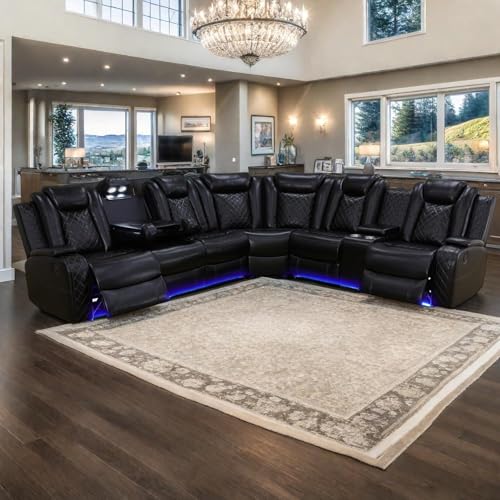


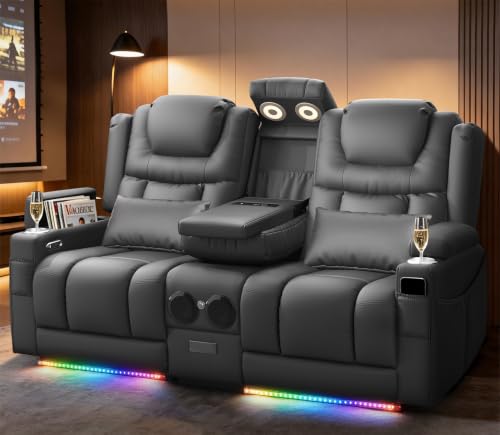

What Is an Electric Couch?
An electric couch — also called a power recliner sofa, motorized sofa, or power seating — uses built-in electric motors to adjust reclining positions, headrests, footrests, and sometimes lumbar support. Instead of a manual lever or push-back mechanism, you control movement with a button panel, a wired handset, or a wireless remote. The result is smoother motion, finer position control, and access to comfort settings that manual recliners cannot replicate.
Modern electric couches have moved well beyond the bulky recliner of the past. Today's models include sleek power sofas, modular power sectionals, and even electric love seat recliners with consoles that fit compact living rooms. Many now integrate USB charging, adjustable headrests, and memory presets, making them a legitimate centerpiece for a modern living space rather than a specialty item tucked into a den.
How Electric Couch Mechanisms Work
Understanding the mechanism helps you evaluate quality and predict long-term reliability. Most electric couches rely on a small number of core components working together.
Electric Motors
One or more motors drive the reclining mechanism. Single-motor designs typically control the footrest and backrest together, while dual-motor systems allow independent adjustment of each section.
Steel Reclining Frame
The mechanism itself is usually a steel linkage system. Heavier-gauge steel and reinforced joints are the strongest indicators of long-term durability.
Control Handset or Remote
Wired handsets are common on entry-level and mid-range models. Wireless remotes and app-based control appear more often on premium and luxury tiers.
Power Supply & Cabling
Most electric couches plug into a standard wall outlet. Cable routing and a low-profile transformer box affect how neatly the sofa sits against a wall.
Battery Backup (Optional)
Some models offer battery packs so the couch can operate during a power outage or in rooms without convenient outlet access.
Wall-Hugger Linkage
Wall-hugger mechanisms slide the seat forward as it reclines, allowing the couch to sit closer to the wall — an important feature for smaller rooms.
If your room is tight, a wall-hugger design is worth prioritizing. You can explore electric wall-hugger recliners for small spaces to see how much clearance these mechanisms actually recover.
Types of Electric Couches
Electric couches come in several configurations, each suited to a different room layout and seating need.
Power Reclining Sofas
A standard three-seat sofa where one, two, or all three seats recline electrically. This is the most common configuration and works well as a primary living room couch. If you want full-seat flexibility, look for models where every seat has its own motor rather than a shared mechanism.
Electric Sectionals
Power sectionals combine an L-shaped or U-shaped footprint with motorized reclining seats, often including a chaise. They suit open-plan living rooms and family spaces where multiple people watch TV together. Configurations range from fabric power reclining sectionals with power headrests to larger layouts with recliners on multiple seats.
Electric Loveseats
A two-seat power couch is a strong choice for apartments, condos, and secondary living areas. Many include a center console with cup holders and storage. The electric love seat recliner with console format is especially practical for smaller rooms that still want full power seating.
Modular and Customizable Power Seating
Modular electric couches let you rearrange seats, add reclining modules, or expand the configuration later. They are a good fit for renters and homeowners who expect their room layout to change. Buyers who want a precise fit often combine modular power seating with custom couch upholstery to match a specific palette or fabric preference.
Reclining Configurations
Beyond seat count, electric couches differ in how many positions they support. Basic models offer a few preset recline angles. Mid-range and premium models typically allow near-infinite positioning, independent headrest adjustment, and memory presets that return the seat to a saved position.
Key Features to Evaluate Before Buying
Because an electric couch is a long-term purchase, the feature checklist matters more than any single specification. Focus on these areas.
Motor Quality and Redundancy
Motor quality is the single biggest predictor of how long a power couch will remain reliable. Look for models that describe the motor brand or motor class, and prefer dual-motor designs if you want independent backrest and footrest control. A well-specified mid-range model often uses smoother, quieter motors than an entry-level unit, and premium tiers generally add better thermal protection and longer duty cycles.
Upholstery and Durability
Power couches endure more mechanical stress at the seat and backrest seams, so upholstery quality matters. Leather and faux leather resist wear and are easy to wipe down, while performance fabrics handle family use and pet traffic well. If you are comparing materials, our guide to durable couch fabric covers abrasion ratings and cleaning considerations in detail.
Comfort: Seat Depth and Cushion Support
Reclining comfort depends on seat depth, cushion density, and back support. Deeper seats suit taller users and lounging, while firmer cushions hold their shape longer under repeated recline cycles. Shoppers who prioritize deep lounging often pair power mechanisms with a deep couch profile, while those who prefer upright support should test seat depth carefully before committing.
Control Options and Smart Features
Control interfaces range from a simple two-button handset to wireless remotes, memory presets, and USB-A or USB-C charging ports. Smart features are convenient but add electronic complexity, so weigh them against the warranty and service network. If you want a couch that doubles as a charging station for phones and tablets, prioritize models with clearly rated USB output.
Power Source and Cable Management
Confirm that the couch's plug and transformer fit your outlet placement. Cable routing matters in rooms where the sofa sits against a wall or floats in an open-plan layout. Battery-backup options are useful in rooms with limited outlet access, but they add a component that will eventually need replacement.
Warranty and Serviceability
Check what the warranty covers separately: the motor, the reclining mechanism, the frame, and the upholstery are often covered for different durations. A strong frame warranty paired with a shorter motor warranty is common and not necessarily a red flag, but the motor and mechanism terms deserve the closest reading.
Comparing Electric Couch Tiers
The table below uses universal quality tiers rather than numeric figures, so it stays useful regardless of market conditions. Use it to understand what each tier typically delivers.
| Tier | Typical Motor Setup | Upholstery Focus | Control Options | Best For |
|---|---|---|---|---|
| Entry-Level | Single motor, shared backrest and footrest motion | Standard fabric or basic faux leather | Wired handset, limited positions | Occasional use, secondary rooms, first power couch |
| Mid-Range | Dual motor on select seats, quieter operation | Performance fabric or mid-grade leather | Wired handset with USB charging | Daily use in primary living rooms |
| Premium | Dual motor per seat, power headrests | High-grade leather or premium performance weave | Wireless remote, memory presets | Frequent use, dedicated home theater or lounge |
| Luxury | Multi-motor system with lumbar and headrest control | Full-grain leather or custom upholstery | App control, programmable scenes | Whole-room design integration, long-term investment |
Buyers who want a fully coordinated seating arrangement sometimes step up to customizable sectionals with recliners, which pair flexible layouts with the same power mechanism tiers described above.
Pros and Cons of Electric Couches
Advantages
- Smooth, precise recline positioning that manual mechanisms cannot match
- Independent headrest and footrest adjustment on dual-motor models
- Memory presets return the seat to a preferred position instantly
- Integrated USB charging adds everyday utility
- Wall-hugger designs reduce required clearance behind the couch
- Accessible for users with limited mobility or back strain
Considerations
- Requires a nearby power outlet and tidy cable routing
- Motor or control failure can interrupt use until serviced
- More electronic components than a manual recliner
- Usually heavier, which complicates moving and rearranging
- Repair often requires manufacturer parts rather than generic hardware
- Higher tiers carry more features and more potential failure points
Room Planning and Placement
An electric couch changes the geometry of a room because each reclining seat needs clearance in front of it. Plan for the fully reclined footprint, not just the closed position.
- Wall clearance: Standard mechanisms need space behind the backrest to recline. Wall-hugger designs reduce this substantially.
- Front clearance: Leave enough open floor space for the footrest to extend fully without hitting a coffee table.
- Outlet access: Position the couch so its plug reaches an outlet without straining the cable or creating a trip hazard.
- Traffic lanes: Avoid placing a reclining couch directly across a walkway, since extended footrests block movement.
- Viewing distance: Reclined seating changes eye level, so test sightlines to a TV or focal point from the reclined position.
For tighter layouts, our small space layout guide covers how to arrange power seating without sacrificing circulation. If you are planning a larger open-plan room, the open floor plan layout guide explains how to zone seating around a power sectional.
Upholstery Options for Power Seating
Because power couches are used daily and recline frequently, upholstery choice affects both appearance and longevity. The main options are:
- Leather and full-grain leather: Durable, easy to clean, and resistant to wear at high-stress seams. Leather develops a patina over time but needs conditioning to prevent cracking.
- Faux leather and microfiber: A practical middle option that resists staining and wipes clean easily, though lower-grade versions can peel over time in high-friction areas.
- Performance fabric: Engineered for stain resistance and abrasion, and often the most family-friendly choice for a frequently used power couch.
- Velvet and woven fabrics: Visually rich but require more maintenance, especially at the seams where reclining creates friction.
If you plan to reupholster or order a custom fabric later, review the custom couch options available and confirm the fabric is rated for motion furniture. Not all upholstery is suitable for reclining seams.
Maintenance and Longevity Tips
An electric couch is a long-term investment, and a few habits extend its useful life considerably.
- Vacuum upholstery and seams regularly to prevent grit from accelerating wear at friction points.
- Keep liquids and small debris away from the control handset and motor housing.
- Avoid exceeding the rated weight capacity per seat, since overloading strains the mechanism.
- Cycle the reclining mechanism through its full range periodically to keep the motors and linkage moving freely.
- Check cables and the transformer periodically for wear, kinks, or loose connections.
- Follow the manufacturer's cleaning guidance for your specific upholstery type.
For deeper cleaning routines, our dry cleaning upholstery guide explains when professional cleaning is appropriate for motion furniture.
Common Mistakes to Avoid
- Ignoring the reclined footprint: Measuring only the closed couch leads to cramped rooms and blocked walkways.
- Overlooking outlet placement: A power couch without a reachable outlet becomes a manual couch.
- Skipping the motor warranty details: The motor and mechanism terms matter more than the overall warranty headline.
- Choosing upholstery for looks alone: High-friction reclining seams demand durable materials.
- Buying without testing the recline motion: Motor noise, speed, and smoothness vary noticeably between tiers.
- Forgetting about cable routing: A tidy installation prevents trip hazards and protects the cable from pinching.
Frequently Asked Questions
Final Buying Checklist
Before you commit to an electric couch, confirm each of the following:
- The fully reclined footprint fits your room with walkway clearance intact.
- An outlet is reachable without cable strain or trip hazards.
- The motor setup matches your expected usage frequency (single vs. dual motor).
- The upholstery suits your household, including pets and children.
- The warranty separates motor, mechanism, frame, and upholstery coverage.
- The control interface is comfortable for everyone who will use the couch.
- You have tested the recline motion for smoothness, noise, and speed.
- Delivery and assembly requirements are clear for your doorway and room.
Ready to Compare Electric Couches?
Use the curated selections above to compare power seating options, then check availability and read the full feature details before deciding. For buyers who want a custom fit, explore the first-time buyer guide to structure your decision step by step.
Explore Recommended Models