
Electric Wall Hugger Recliners for Small Spaces
Discover how a wall-hugging power recliner can transform a compact living room into a comfortable, full-function lounge without sacrificing floor space.
Explore the GuideWhy This Guide Matters: If you live in an apartment, condo, or a home with a compact living room, a standard recliner can quickly overwhelm the layout. Electric wall hugger recliners solve this problem by combining power comfort with a near-flat back profile, letting you recline fully while positioned close to the wall. This guide walks you through how they work, what to look for, and how to choose the right one for your room.
What Is an Electric Wall Hugger Recliner?
An electric wall hugger recliner is a power-operated reclining chair engineered so that the backrest stays nearly vertical as the seat slides forward. Instead of the entire chair tilting backward into the wall, the mechanism moves the seat base outward and the footrest upward, creating a reclined posture with only a few inches of clearance behind the chair. This design is specifically helpful in rooms where every square foot counts, such as studio apartments, small dens, and narrow living rooms.
Unlike conventional recliners that may need well over a foot of wall clearance, wall hugger models typically require only a small gap, often in the range of a few inches. That difference can be the deciding factor between a chair that fits comfortably and one that blocks a walkway. If you are also considering the wider category of powered seating, our electric couch guide explains the broader landscape of power furniture, while this page focuses specifically on the wall-hugging recliner format.
For buyers comparing compact seating options, it helps to understand how wall hugger recliners differ from standard recliners, gliders, and rockers. The sections below break down the mechanics, the room-planning implications, and the feature tiers so you can make a well-informed decision before you shop.
How Wall Hugger Reclining Mechanisms Work
The central idea behind a wall hugger recliner is that the backrest does not travel backward. When you press the power button, an electric motor drives a linkage that pushes the seat forward and raises the footrest. The backrest angle changes, but the top of the backrest stays roughly above the base rather than sweeping toward the wall behind it. This is what allows the chair to sit close to a wall without colliding with it during recline.
Seat Slide Forward
The seat base moves forward on a track, creating legroom and allowing the backrest to recline without moving into the wall zone.
Vertical Back Profile
The backrest pivots within a narrow envelope, keeping the rear of the chair close to the wall even in full recline.
Power Actuation
An electric motor and hand control replace the manual lever, giving smooth, stepless adjustment with minimal effort.
Compact Footprint
Because the chair does not need to lean back, the overall depth requirement is reduced, which frees up floor space in tight rooms.
Why Wall Hugger Recliners Excel in Small Spaces
Small living rooms present a specific challenge: seating must be comfortable enough for daily use, but it cannot dominate the room or block circulation. Electric wall hugger recliners address this tension in several practical ways. First, the reduced wall clearance means the chair can sit flush with the wall or very close to it, eliminating the awkward gap that conventional recliners demand. Second, the compact footprint makes it easier to arrange a conversation area, a TV wall, or a reading corner without sacrificing a walkway.
Third, the power recline function is especially valuable in a small room where you may not have space to step back and manually operate a lever. A hand control lets you adjust your position from a seated posture, which is convenient in tight arrangements. If you are planning a narrow layout, our guide to small-space living room layouts pairs well with this article, and if you are exploring deeper seating for lounging, the deep couch overview helps you compare seat depth preferences.
It is also worth noting that wall hugger recliners are not only for tiny apartments. They are useful in any room where the sofa or chair will sit against a wall, including bedrooms, home offices, and multipurpose dens. The space savings are a bonus regardless of room size, but they are most pronounced in compact interiors.
Buying Checklist for Electric Wall Hugger Recliners
Before you shop, use this checklist to compare models on the factors that matter most in a small space. Each point is framed to help you evaluate trade-offs without relying on arbitrary numbers.
- Wall clearance: Confirm the minimum distance required behind the chair. Wall hugger models should require only a small gap.
- Reclined depth: Measure how far the chair extends into the room when fully reclined, not just when upright.
- Seat height and width: Match the seat height to the users and the seat width to the room’s traffic flow.
- Power control placement: Check whether the hand control is within easy reach when seated.
- Battery backup: A backup option lets you return the chair to upright if power is interrupted.
- Upholstery durability: In a primary seating chair, durable fabric or leather is a long-term investment.
- Frame construction: Look for reinforced frames and solid build quality in the tier you are considering.
- Assembly and delivery: Confirm whether the chair arrives fully assembled or requires setup.
If you are comparing upholstery options, the durable couch fabric guide and the durable leather couch guide offer useful context for long-term wear. For delivery logistics, see the delivery and assembly overview.
Feature Tiers: Entry-Level, Mid-Range, and Premium
Electric wall hugger recliners are available across a range of feature tiers. Rather than focusing on arbitrary figures, it helps to understand what each tier typically delivers so you can match the chair to your priorities. The table below summarizes the general differences; individual models vary, so always verify the specific feature set.
| Tier | Typical Strengths | Best For |
|---|---|---|
| Entry-Level | Basic power recline, simple hand control, functional upholstery, compact footprint | Buyers who want the core wall-hugger benefit with straightforward operation |
| Mid-Range | Smoother motor mechanism, improved cushioning, more upholstery choices, USB charging in some models | Daily-use chairs where comfort and durability are balanced with features |
| Premium | High-grade motor and linkage, power headrest or lumbar support, premium materials, refined stitching | Buyers who want top-tier comfort and a long-term investment in a primary chair |
For a broader look at how powered seating is categorized, the fabric power reclining sectional with power headrest page shows how advanced features are applied in larger configurations, while the electric love seat recliner with console page illustrates a two-seat format for couples.
Room Planning: Getting the Placement Right
Even a space-efficient recliner needs a thoughtful placement plan. Start by identifying the primary viewing or conversation direction, then map the chair’s upright and reclined positions. The reclined position is the critical measurement: a wall hugger chair may sit close to the wall when upright, but it still extends forward when fully reclined, so you need to account for that projection in your walkway planning.
Leave enough room for the footrest to deploy without hitting a coffee table, ottoman, or TV stand. In a tight room, a small side table or a wall-mounted shelf can replace a full coffee table, preserving circulation. If you are working with a narrow footprint, our narrow room layout guide and the walkway planning guide provide practical frameworks. For a broader overview of seating arrangement, the focal point arrangement guide is also useful.
Finally, consider the chair’s visual weight. A compact recliner in a light upholstery can make a small room feel larger, while a darker, heavier-looking chair can anchor a corner. The living room sectional design guide offers related principles for balancing seating with the rest of the room.
Comfort, Ergonomics, and Daily Use
Comfort in a recliner is about more than padding. Seat depth, back angle, lumbar support, and armrest height all influence how the chair feels over an extended session. In a small space, the chair is likely to be used daily, so it is worth prioritizing a model with a supportive seat cushion and a backrest that aligns with your posture. A power headrest, available in higher tiers, lets you fine-tune the neck and shoulder angle independently of the recline.
Consider how you will use the chair: reading, watching television, napping, or working on a laptop. Each activity favors a slightly different recline angle and armrest position. If you also need flexible sleeping arrangements for guests, the daybed that looks like a couch guide explores convertible options that complement a compact living room.
For households with pets or children, durable upholstery and easy-clean surfaces matter. The family couch guide and the durable couch overview discuss materials that stand up to daily wear, which is relevant when the recliner will be the most-used seat in the home.
Common Mistakes to Avoid
- Measuring only the upright depth: Always measure the reclined projection, since the chair extends forward during use.
- Ignoring the wall clearance spec: Confirm the manufacturer’s stated clearance; wall hugger models vary slightly.
- Overlooking the power source: Plan where the chair will plug in and whether an extension cord or outlet relocation is needed.
- Choosing based on upholstery alone: Frame construction and motor quality matter for long-term satisfaction.
- Forgetting the footrest zone: Ensure the footrest can deploy without hitting furniture or blocking a doorway.
- Skipping the trial: If possible, sit in the chair before buying, or choose a retailer with a clear return policy.
Recommended Electric Wall Hugger Recliners for Small Spaces
⚠️ AFFILIATE DISCLOSURE: This website contains affiliate links. As an affiliate Associate, we earn from qualifying purchases. If you make a purchase through these links, we may receive a small commission at no additional cost to you. Read our full affiliate policy.

KISLOT Wall Hugger Recliner Chair, Faux Leather Power Reclining, Brown, 1PC | USB Charging Ports, Electric RV Recliner, Home Theater Seating, Living Room, Bedroom
Check price on Amazon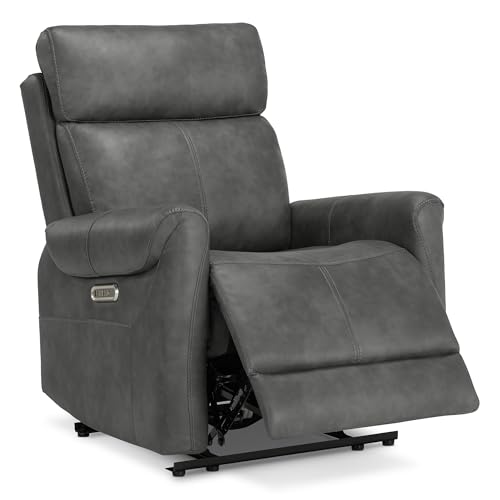
KISLOT Wall Hugger Recliner Chair, Faux Leather Power Reclining, Grey, 1PC | USB Charging Ports, Electric RV Recliner, Home Theater Seating, Living Room, Bedroom
Check price on Amazon
cinkehome Wall Hugger Power Recliners for Small Spaces, Electric RV Recliners with USB, Modern Recliner Chair for Living Room, Apartment
Check price on Amazon
KISLOT Wall Hugger Power Recliner Chair with USB & Type-C Ports Faux Leather Recliner 135° Reclining Small Space Electric Sofa for RV Living Room Bedroom
Check price on Amazon
Power Recliner Chair with Massage & Heat, Zero Wall Hugger for Small Spaces | Electric reclining Recliners chair with LED Lights/Lumbar Pillow/Cup Holders/Side Pocket/USB Port, Home Theater Seating
Check price on Amazon
cinkehome Wall Hugger Power Recliners for Small Spaces, Electric Recliners with USB, Modern RV Recliner Chair for Living Room, Apartment
Check price on Amazon
KISLOT Zero Wall Hugger Recliner Chair, Power Reclining Armchair, Espresso | Modern Faux Leather Single Sofa with Solid Wood Legs Electric Accent Chair for Small Spaces Living Room Bedroom RV Apartment
Check price on AmazonFrequently Asked Questions
How much clearance does an electric wall hugger recliner need?
Most wall hugger recliners need only a few inches of clearance behind them, typically in the range of 4 to 6 inches, compared with conventional recliners that may require well over a foot. This is possible because the seat slides forward as the backrest tilts, so the backrest never travels toward the wall.
Is an electric wall hugger recliner suitable for a small apartment?
Yes. Electric wall hugger recliners are among the most space-efficient reclining seats available. Their minimal wall clearance and compact footprints make them ideal for apartments, condos, and small living rooms where conventional recliners would crowd the layout.
What happens during a power outage with an electric recliner?
Most electric recliners stay in their current position during a power outage. Some models include battery backup, allowing the seat to be returned to an upright position. It is wise to check whether a model offers this feature before committing.
Can a wall hugger recliner be placed against a window?
It can, but consider sun exposure and the chair’s height relative to the window. A wall hugger recliner is a good choice for a window-adjacent position because it does not need to lean back into the window area, but you may want to manage glare and fabric fading with curtains or blinds.
Do electric recliners require professional assembly?
Many models arrive in two or three sections that connect with simple brackets, so assembly can often be handled without professional help. Larger or premium models may benefit from white-glove delivery. Check the retailer’s delivery terms before ordering.
Ready to Reclaim Your Floor Space?
Compare electric wall hugger recliners that fit small living rooms, and choose the tier that matches your comfort priorities and room dimensions.
View Recommended Options