
L Shaped Sectionals with Pull Out Bed: The Complete Guide
One piece of furniture, two essential jobs. Learn how to choose an L shaped sectional with a pull out bed that seats your household comfortably every day and still converts into a dependable guest bed when visitors arrive.
Explore Recommended ModelsWhy this guide exists: An L shaped sectional with a pull out bed is one of the most practical purchases for a living room that doubles as a guest space. But the combination of a corner configuration and a folding sleep mechanism introduces variables that a standard sofa does not have — extension clearance, mattress thickness, mechanism durability, and chaise orientation. This guide walks through each decision in order so you can shortlist confidently before you buy.
What Exactly Is an L Shaped Sectional with a Pull Out Bed?
An L shaped sectional with a pull out bed is a corner-configured sofa in which one section conceals a folding sleep mechanism. When closed, the piece functions as a conventional sectional with a chaise or a corner return, offering wraparound seating. When opened, the seat cushions fold forward and the mattress unfolds into a flat sleeping surface, typically a full or queen size depending on the model.
This dual-purpose design differs from a standard sectional couch with pull out queen bed in one key way: the L configuration adds a second seating arm, which affects both the room layout and the mechanical design. The sleeper mechanism is usually housed in the longer straight section rather than the chaise, because the chaise itself is often a fixed platform. Understanding where the mechanism sits is the first step in planning your room.
If you are still deciding between a corner layout and a straight sofa, it helps to review what a sectional couch is and how the added arm changes traffic flow. For a broader comparison of corner sofas without the sleep function, see the sectional L couch overview.
Why Choose an L Shaped Sleeper Sectional?
The case for this configuration is straightforward: it solves two problems with one footprint. A guest bedroom is not always available, and a standalone sleeper sofa often leaves the living room feeling under-furnished during the day. An L shaped sleeper sectional gives you generous daytime seating plus a sleeping surface that appears only when needed.
- Space efficiency: One piece replaces a sofa plus a guest bed, which matters in apartments and open-plan homes.
- Defined seating zone: The L arm visually anchors the living area and can separate it from a dining or work zone.
- Guest readiness: No inflatable mattress to store, inflate, or deflate when friends stay over.
- Seating depth options: Many models offer deeper seats for lounging; compare the deep couch sectionals guide if comfort is your priority.
- Layout flexibility: Reversible chaise designs let you switch the long arm from left to right, which is valuable in rooms with fixed windows or doorways.
The Five Components That Determine Quality
Because a sleeper sectional combines upholstery and a folding mechanism, quality is not a single attribute. Evaluate these five components separately, then judge the piece as a whole.
1. Frame Construction
The frame carries both seated weight and the mechanical stress of the sleeper. Hardwood or high-grade plywood frames are the standard for mid-range and premium models. Particleboard frames appear in entry-level pieces and are more vulnerable to joint fatigue over time. A reinforced corner-blocked frame is the most reliable indicator of long-term durability in this category.
2. Sleeper Mechanism
The pull out mechanism is the part most likely to fail first. Look for a metal folding mechanism with a locking bar rather than a simple hinge system. Mid-tier models typically use a smoother, spring-assisted mechanism, while entry-level pieces often rely on a basic fold-out frame. If the bed will be used weekly or more, a heavy-duty mechanism is the single most important upgrade.
3. Mattress Type and Thickness
Sleeper mattresses are thinner than standard mattresses because they must fold. Entry-level sectionals usually ship with a thin innerspring mattress of around four inches, mid-range models often include memory foam or a hybrid around five to six inches, and premium models use high-density foam or pocket-coil hybrids. For occasional guest use, a mid-range foam mattress is adequate; for frequent use, a hybrid with a pocket-coil core is the better long-term choice.
4. Upholstery Material
Fabric performance matters more in a sleeper than in a standard sofa because the bed surface receives direct body contact. Performance fabrics resist staining and are easier to spot-clean. If you prefer leather, compare the trade-offs in the leather vs faux leather couch comparison, and consider a leather L shape couch with pull out bed if you want a wipe-clean surface. Removable, washable covers are a practical bonus; see the sectionals with removable washable covers roundup for models that offer this feature.
5. Cushion Support
Seat cushions on a sleeper sectional sit above the folded mechanism, so they are usually firmer than those on a standard sofa. High-resilience foam wrapped in fiber is the most common mid-range specification. Pocket-coil cushion cores are a premium upgrade that improves both seating comfort and the long-term shape retention of the seat.
Sizing and Fit: Measure Before You Fall in Love
Sizing is where most sleeper sectional purchases go wrong. There are three separate measurements to confirm: the closed footprint, the extended bed depth, and the delivery path.
| Measurement | What to Check | Why It Matters |
|---|---|---|
| Closed footprint | Overall length of each arm plus the corner depth | Determines whether the sectional fits the room without blocking walkways |
| Extended bed depth | How far the mattress projects into the room when open | Needs clear floor space in front of the sofa; often overlooked |
| Seat height and depth | Seat height from floor; seat depth front to back | Affects comfort for taller and shorter household members |
| Bed size when open | Full, queen, or custom sleeper size | Sleeping comfort for one or two guests |
| Delivery path | Doorway width, hallway turns, stairwell clearance | Prevents the frustrating situation of a sofa that cannot enter the home |
If your living room is on the smaller side, do not automatically rule out the L configuration. A small sectional with reversible chaise lets you flip the long arm to suit the room, and a small couch with chaise and pull out bed offers the same dual function in a more compact frame. Those shopping by category can also browse L shaped sectionals for sale to compare current configurations.
Room Layout and Traffic Flow
An L shaped sectional with a pull out bed is a spatial commitment. Before placing an order, map the room on paper or with painter's tape on the floor. Mark the closed footprint, then mark the extended bed rectangle. If the extended rectangle overlaps a doorway, a heating vent, or a fixed coffee table, you have two options: choose a model with a smaller sleeper size, or plan to relocate the table when guests stay.
Placement Principles
- Place the long arm along the dominant wall and let the chaise or return define the seating zone.
- Leave at least 30 inches of walkway between the sectional and any opposing furniture where the bed extends.
- Orient the sleeper opening toward open floor, not toward a wall or a heavy console.
- Keep the sleeper side away from heating vents and radiators, which can damage the mattress over time.
- If the room has a focal point such as a fireplace or TV, position the L so the corner does not block sightlines.
For a deeper treatment of room planning, the living room ideas for small spaces guide covers furniture placement in compact rooms, and the comfy sectionals for small spaces roundup focuses on seating comfort in tighter footprints. If you plan to combine the sectional with additional seating, the living room couch set overview explains how to balance a corner sofa with accent chairs.
Comfort and Sleeping Quality: What to Expect
A sleeper sectional is a compromise by design. The mattress folds, so it is thinner than a standard bed mattress, and the frame is shared with a seating surface. That said, the comfort gap between entry-level and premium sleeper sectionals is significant. Mid-range models typically offer a noticeably better sleep experience than entry-level ones, and premium models with pocket-coil hybrid mattresses approach the comfort of a dedicated guest bed.
Seating Comfort vs. Sleeping Comfort
Seat cushions on sleeper sectionals are often firmer to accommodate the mechanism below. If soft, sink-in seating is your priority, look for models with high-resilience foam wrapped in fiber and consider a sleeper sectional with a reversible chaise so the chaise itself provides a softer lounging surface. For households that host guests frequently, a hybrid mattress and a heavy-duty mechanism are the two upgrades worth prioritizing.
Pre-Purchase Checklist
Use this checklist to evaluate any candidate before you commit. It is organized in the order that most purchases go wrong.
- Measure the room: closed footprint, extended depth, and walkway clearance.
- Measure the delivery path: doorways, hallways, stairwells, and elevator dimensions.
- Confirm the bed size: full or queen, and whether the mattress is included.
- Inspect the mechanism: metal construction, locking bar, and weight capacity.
- Check the mattress thickness: four inches for occasional use, five to six inches for frequent use.
- Evaluate the upholstery: performance fabric for stain resistance, or leather for wipe-clean maintenance.
- Confirm chaise orientation: fixed or reversible, and which side suits the room.
- Review the warranty: frame, mechanism, and mattress are often covered separately.
Recommended L Shaped Sectionals with Pull Out Bed
⚠️ AFFILIATE DISCLOSURE: This website contains affiliate links. As an affiliate Associate, we earn from qualifying purchases. If you make a purchase through these links, we may receive a small commission at no additional cost to you. Read our full affiliate policy.

Sofa Bed Pull Out 2 in 1 Sectional Sleeper Sofa L Shaped Couch with Storage | Convertible Sofa Couches for Living Room, USB Charging Ports, Cup Holder (Dark Gray)
Check price on Amazon
Ihanherry 86" Modular Sectional Sofa with Pull Out Bed, 4-Seater L Shaped Sectional Sleeper Couch with Storage Ottoman, Chenille Convertible Couches for Living Room, Apartment (Green)
Check price on Amazon
Yaheetech L Shaped Pull Out Sectional Sofa Bed with Storage, Black | Pull Out Sofa Bed Convertible Couch with Trundle Sleeper and Hiden Compartment for Small Spaces and Living Rooms
Check price on Amazon
Eafurn Tufted Sectional Sleeper Sofa Pull Out Couch Bed Modern Sofabed | Sectional Sleeper Sofa with Pull Out Bed, L Shaped Couch with Reversible Chaise Lounge, Pull Out Couch for Living Room
Check price on Amazon
Ihanherry 86" Modular Sectional Sofa with Pull Out Bed, 5-Seater L Shaped Sectional Sleeper Couch with Storage, Chenille Convertible Couches for Living Room, Apartment (Green)
Check price on Amazon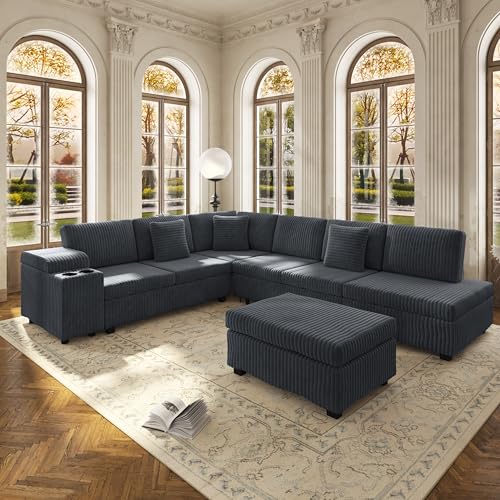
KEIKI 110" L-Shaped Oversized Plush Corduroy Modular Sectional Sofa with Pull-Out Bed, Convertible 6-Seater Sleeper Couch Bed with 1 Ottomans & USB & Cup Holders, Easy Assembly, for Living Room, Gray
Check price on Amazon
85'' Modular Sectional Sofa with Pull Out Bed, Sleeper Sofa, Black | L Shaped 5 Seat Sectional Couches for Living Room, Cloud Modular Couch with Storage, Pull Out Couch, Removable Sofa Cover
Check price on AmazonAlternatives Worth Considering
Not every household needs the L configuration. If your room is narrow or you already have accent seating, a straight sleeper sofa may be the better fit. The couch with pull out bed guide covers conventional sleeper sofas, and the pullout couch overview explains the basic mechanism. If storage is also a priority, a pull out couch with storage adds a compartment for bedding and pillows, and a sectional couch with chaise storage and pull out bed combines all three functions in one piece.
For smaller homes or guest rooms, the loveseats with pull out bed category offers a more compact dual-purpose option, and a two seater pull out couch may be sufficient if the living room is secondary seating. Households that want modular flexibility can compare the modular sectional with pull out bed, which allows individual sections to be rearranged over time.
Care and Maintenance for Long-Term Reliability
A sleeper sectional has more moving parts than a standard sofa, so maintenance is not optional. The mechanism is the component most likely to need attention, followed by the mattress.
- Vacuum the mechanism area monthly: dust and debris accelerate wear on the folding joints.
- Tighten bolts periodically: vibration from use can loosen frame and mechanism fasteners.
- Respect the weight capacity: exceeding the stated limit strains both the frame and the mechanism.
- Rotate the mattress: if the sleeper mattress is reversible, rotate it seasonally to even out compression.
- Lubricate metal joints lightly: once or twice a year is typically sufficient for household use.
- Spot-clean upholstery promptly: performance fabrics respond best to quick attention; see the removable washable covers guide for machine-washable models.
If you are comparing leather vs fabric for ease of care, the faux leather reclining sectional couch overview discusses surface durability and cleaning routines. For households with pets, a performance fabric with tight weave is generally the more forgiving choice.
Frequently Asked Questions
What is the main advantage of an L shaped sectional with a pull out bed?
The main advantage is dual function. The L shape provides generous everyday seating and defines a living area, while the pull out bed converts the same footprint into a sleeping surface for guests without requiring a separate guest room.
How much floor clearance does a pull out bed need?
Most pull out mechanisms extend roughly 70 to 80 inches in front of the sofa, so you need clear floor space at least as deep as the open mattress. Always confirm the extended depth in the product specifications before placing the sectional in a tight room.
Which mattress type should I choose in a sectional sleeper?
Entry-level models often use a thin innerspring mattress, mid-range options typically add memory foam or a hybrid, and premium models use high-density foam or pocket-coil hybrids. If the bed will be used frequently, prioritize a thicker hybrid mattress and a sturdy metal mechanism.
Can an L shaped sectional with a pull out bed fit in a small living room?
Yes, but space planning matters. Choose a compact L shape with a reversible chaise so the long arm can switch sides, verify that the pull out bed has clear extension space, and measure doorways and stairwells before ordering.
How do I maintain the pull out mechanism?
Keep the mechanism free of debris, vacuum the fold area regularly, tighten bolts periodically, and avoid exceeding the stated weight capacity. A light lubrication of metal joints once or twice a year helps the mechanism stay smooth.
Ready to Compare Your Shortlist?
Browse recommended L shaped sectionals with pull out bed, review specifications side by side, and confirm availability before you decide.
View Recommended Models