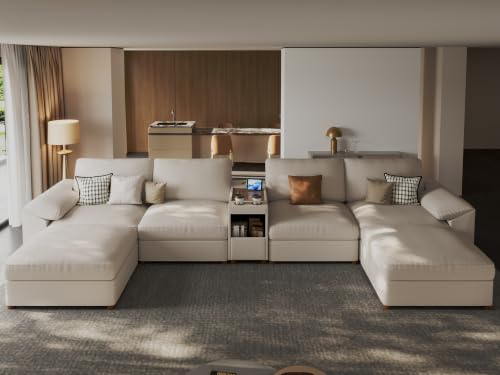
Leather Sectional Couch with Chaise and Recliner
Your complete research guide to choosing a leather sectional that combines a chaise for leg support with a built-in recliner for adjustable comfort. Learn configurations, leather types, mechanisms, layout planning, and maintenance before you commit.
Start the GuideWhat Is a Leather Sectional Couch with Chaise and Recliner?
A leather sectional couch with chaise and recliner combines three distinct seating innovations into a single coordinated piece of furniture. The sectional configuration provides multi-directional seating that anchors a living room and defines the conversation area. The chaise extension offers full-leg support for lounging, reading, or watching television. The recliner mechanism adds an adjustable backrest and footrest for personalized comfort.
Together, these features create a piece that serves as both the visual centerpiece of a living room and the most functional seat in the house. For households that entertain frequently or spend evenings relaxing together, this combination removes the trade-off between style and comfort.
If you are still deciding between a sectional with a chaise and a dedicated leather sectional with reclining seats, understanding how each feature functions in daily use will clarify which layout suits your routine. The guide below walks through every decision point in sequence.
Why This Combination Works
Each element of a leather sectional with chaise and recliner solves a different problem, and together they cover nearly every seating scenario in a living room.
The Chaise: Full-Leg Support
A chaise extends the seat depth so your legs rest fully supported rather than hanging or tucking under a standard seat. This makes the chaise the preferred spot for long reading sessions, afternoon naps, and movie nights. In a sectional layout, the chaise also visually opens the room by extending into the open floor area.
The Recliner: Adjustable Comfort
The recliner seat lets you shift from upright conversation posture to a relaxed recline with the footrest raised. For guests and family members who prefer a more upright seat, the recliner can remain closed and function as a standard seat. This flexibility is why many buyers pair the chaise with a recliner rather than choosing one or the other.
The Leather Upholstery: Durability and Presence
Leather resists spills, holds its shape over years of use, and develops a patina that many homeowners prefer to the uniform look of new fabric. In a high-traffic living room, leather also cleans more easily than most textiles. If you are comparing upholstery options, the leather couch overview covers the trade-offs between leather and fabric in detail.
Key insight: The chaise handles lounging, the recliner handles adjustable posture, and the sectional handles room-scale seating. Buying all three in one piece means one delivery, one visual style, and one warranty relationship instead of three separate purchases.
Configuration Options
Leather sectionals with chaise and recliner come in several layouts. The right one depends on room dimensions, seating count, and where your focal point sits.
L-Shaped with a Single Chaise
The most common configuration. One arm extends into a chaise, and one or more seats include a recliner. L-shaped layouts fit most living rooms and leave open floor space on the opposite side. This is the most versatile starting point for a first sectional purchase.
U-Shaped with Dual Chaise Ends
A U-shaped layout with chaise extensions on both ends creates a fully enclosed conversation area. This configuration suits larger rooms and households that host movie nights or game days. Note that U-shaped layouts require more floor area and careful planning around doorways and walkways. Explore the full range of leather sectionals with chaise lounge options to compare end configurations.
Reclining Seats on One or Both Sides
Some models place the recliner mechanism on the chaise end, others on the opposite end, and some include recliners on both sides. If two people regularly recline at the same time, confirm that both seats have independent mechanisms. Models that combine sleeper and recliner functions add guest capacity but increase the footprint and weight of the piece.
Left-Arm vs Right-Arm Facing
Chaise sections are described as left-arm-facing or right-arm-facing, determined by which side the chaise sits when you face the sofa. Choose the orientation that points the chaise toward the open part of the room rather than toward a wall or traffic path. Getting this detail wrong is one of the most common sectional buying mistakes.
Leather Types and Grades
Not all leather performs the same way. The grade and finish of the leather directly affect durability, maintenance, and how the piece ages.
Full-Grain Leather
The highest grade, retaining the natural surface of the hide. Full-grain leather is the most durable and develops a rich patina over time. It is typically found in premium and luxury tier sectionals and requires periodic conditioning to prevent drying.
Top-Grain Leather
The most common leather in mid-range and high-end sectionals. The surface is lightly sanded and finished to remove imperfections, resulting in a uniform appearance with strong durability. Top-grain leather balances performance and maintenance better than any other grade for most households.
Corrected-Grain and Bonded Leather
Corrected-grain leather is sanded and embossed with an artificial grain. Bonded leather is made from leather fibers bonded with polyurethane. Both appear in entry-level and starter tier products. They offer a leather look at a lower cost of entry, but the surface layer is thinner and may peel over time under heavy use.
| Leather Type | Durability | Maintenance | Typical Tier Placement | Best For |
|---|---|---|---|---|
| Full-Grain | Excellent | Moderate (conditioning) | Luxury | Long-term investment seating |
| Top-Grain | Very Good | Low to Moderate | Premium | Busy family living rooms |
| Corrected-Grain | Good | Low | Mid-Range | Everyday seating with easy cleanup |
| Bonded Leather | Fair | Low | Entry-Level | Occasional-use secondary seating |
If you plan to keep the sectional for a decade or more, the step up to top-grain or full-grain leather is usually the most consequential decision in the purchase. For pet-owning households, review the leather sectional couch with recliner guide for scratch-resistance considerations specific to leather finishes.
Recliner Mechanisms: Manual vs Power
The recliner mechanism is the most mechanically complex part of the sectional and the component most likely to need service over the life of the piece. Understanding the difference before purchase prevents surprises.
Manual Recliners
A lever or handle on the side releases the footrest and backrest. Manual mechanisms have fewer electronic components, tend to be simpler to repair, and require no power outlet. They usually need several inches of clearance from the wall to fully recline.
Power Recliners
Electric motors controlled by a button panel move the seat to any position within its range. Power models offer smoother, infinitely adjustable motion and frequently include USB charging ports. They need access to a power outlet and place the mechanism under motor and wiring service over time. The leather sectional couch with power recliner guide covers outlet placement and cord routing in more depth.
Wall-Hugger and Zero-Wall Mechanisms
Wall-hugger recliners slide forward as they recline instead of tilting backward, allowing placement closer to a wall. These mechanisms suit rooms with limited depth and pair well with the tighter footprints recommended in the leather reclining sectional for small spaces guide.
Mechanism Checklist
- Confirm the reclining clearance required and measure your wall distance before ordering.
- Test the mechanism in person if possible, or read verified buyer reviews about motor noise and smoothness.
- Check the warranty coverage specifically for the recliner mechanism, not just the frame.
- Confirm the number of independent recliner seats matches how many people recline at once.
- For power models, map the nearest outlet and plan cord concealment.
Room Layout and Measurement Planning
Measurements are where most sectional purchases go wrong. A leather sectional with chaise and recliner has a larger footprint than a standard sofa in every dimension, and the recliner adds clearance requirements on top of the base size.
Measure These Dimensions First
- Room width and depth: Record the usable space between walls, excluding baseboards and radiators.
- Doorway and hallway width: The sectional must physically fit through the delivery path. Measure the narrowest point.
- Reclining clearance: Add the required clearance in front of each recliner seat to the base depth.
- Walkway width: Leave at least 30 to 36 inches between the sectional and walls or other furniture for comfortable traffic flow.
- Focal point distance: Measure the distance from the proposed seating position to the television or fireplace.
Layout Patterns That Work
Place the sectional so the chaise extends toward the open side of the room. Keep the recliner seats facing the primary focal point. If the room is long and narrow, consider a smaller footprint model similar to the options in the leather sectional couches for small spaces collection. For open-plan rooms, use the chaise to define the living zone without building a wall. The living room layout guide covers traffic flow and focal point planning in more detail.
Pro tip: Mark the sectional's footprint on the floor with painter's tape before ordering. This gives you a true sense of the space the piece will occupy and how much walkway remains.
Comfort and Build Quality Checklist
Two sectionals with identical dimensions can feel completely different after five years of use. These are the build details that separate durable construction from short-lived construction.
Frame Construction
Look for kiln-dried hardwood frames, corner-blocked and glued joints, and reinforced stress points at the chaise junction. Plywood frames are acceptable in entry-level tiers when properly braced, but avoid particleboard in any load-bearing section.
Cushion Foam
High-density foam retains its shape longer than low-density foam. Many premium sectionals use high-resilience foam wrapped in fiber or a feather blend for a softer initial feel without sacrificing support. Seat cushions that are reversible extend the life of the foam by distributing wear.
Suspension System
Serpentine springs or pocketed coils provide even support across the seat. Webbing systems are common in lighter pieces and are best suited to occasional use. Sinuous wire systems are a reliable middle ground in mid-range sectionals.
Stitching and Seams
Even, tight stitching with reinforced seams at high-stress points indicates careful construction. Leather stitching quality is often visible in the seam lines on the arms and seat fronts. If you prefer covers that can be replaced or cleaned, review leather couch removable cushions features before finalizing.
Quality Tiers and What They Mean
To compare sectionals without reference to numbers that go out of date, this guide classifies products by market tier. Tier reflects construction, materials, and mechanism quality relative to the category.
| Tier | Typical Characteristics | Leather Grade | Recliner Mechanism | Best For |
|---|---|---|---|---|
| Entry-Level | Simpler frame joinery, lower-density foam, lighter suspension | Bonded or corrected-grain | Manual, basic lever | Occasional-use rooms and starter setups |
| Mid-Range | Hardwood-plywood hybrid frame, high-density foam, sinuous springs | Corrected-grain or lower top-grain | Manual or entry power | Daily family seating |
| Premium | Kiln-dried hardwood, corner-blocked, high-resilience foam, coil suspension | Top-grain | Power with smooth adjustability | Primary living room seating for years |
| Luxury | Fully reinforced hardwood, feather-blend cushions, hand-finished details | Full-grain | Premium power with quiet motors | Long-term investment and showcase rooms |
Each tier up delivers measurable improvements in mechanism smoothness and cushion longevity. The leather sectional with chaise and recliner comparison guide maps these tier differences to specific use cases.
Care and Maintenance
Leather and mechanical components each have distinct care requirements. A simple routine keeps both in working order.
Routine Leather Care
- Dust and vacuum weekly with a soft brush attachment to remove grit that abrades the surface.
- Wipe spills immediately with a damp microfiber cloth. Blot rather than scrub.
- Apply a leather conditioner every three to six months to prevent drying and cracking.
- Keep the sectional out of direct sunlight and away from heating vents.
- Avoid harsh household cleaners and solvents on leather surfaces.
Recliner Mechanism Care
- Lubricate moving parts annually per the manufacturer's instructions.
- Keep crumbs and small objects out of the mechanism tracks.
- Avoid exceeding the manufacturer's weight rating on recliner seats.
- For power models, check cords for wear and keep the control panel dry.
For deeper cleaning methods and repair guidance, see the leather repair resource and the leather restorer for couch guide. If you need to adjust the leather surface in the future, the leather dye for couch article explains when dyeing is appropriate versus when conditioning is the better path.
Final Buying Checklist
Before You Purchase
- Measure the room, doorway, and reclining clearance, and mark the footprint on the floor.
- Choose the chaise orientation that faces the open side of the room.
- Confirm the number of independent recliner seats matches your household.
- Select a leather grade appropriate to the room's traffic and sunlight exposure.
- Verify the frame construction, cushion foam density, and suspension type.
- Read the warranty coverage for the frame, leather, and recliner mechanism separately.
- Plan the power outlet and cord routing if choosing a power recliner.
- Confirm the delivery path and whether assembly is required on arrival.
Ready to Compare Your Options?
Browse curated leather sectionals with chaise and recliner at Amazon and compare features side by side.
View DetailsFrequently Asked Questions
What is a leather sectional couch with chaise and recliner?
It combines a sectional configuration for multi-directional seating, a chaise extension for full-leg support, and a built-in recliner mechanism for adjustable back and footrest positioning. This delivers lounge-level comfort with a cohesive living room aesthetic.
Is a leather sectional with chaise and recliner suitable for small spaces?
Yes, when selected carefully. Compact configurations with a single chaise and one recliner seat can fit rooms where a full U-shaped sectional would not. Measure your room, account for reclining clearance, and consider power recliners with wall-hugger mechanisms that require less wall space than traditional manual designs.
How do I maintain a leather sectional with chaise and recliner?
Dust and vacuum leather surfaces weekly with a soft brush attachment. Wipe spills immediately with a damp microfiber cloth. Apply a leather conditioner every three to six months. Keep the piece away from direct sunlight and heat sources. Lubricate recliner mechanisms annually per the manufacturer's instructions.
What is the difference between manual and power recliners?
Manual recliners use a lever or handle to release the footrest and recline the backrest. Power recliners use electric motors controlled by buttons or switches, offering smoother infinite-position adjustment and often USB charging ports. Manual models have fewer electronic components and simpler long-term maintenance.
Should the chaise be on the left or right side?
The chaise should extend toward the open area of your room, not toward a wall or doorway. If your room entry is on the left, a right-arm-facing chaise typically works better. Also consider your TV or focal point position. Sit in the proposed location and visualize sightlines before finalizing the configuration.
Recommended Leather Sectional Couch with Chaise and Recliner
⚠️ AFFILIATE DISCLOSURE: This website contains affiliate links. As an affiliate Associate, we earn from qualifying purchases. If you make a purchase through these links, we may receive a small commission at no additional cost to you. Read our full affiliate policy.

Valencia Andria 99.5" Leather Sectional Couch, Power Recliner with Right Chaise for Living Room - Cloudy Grey
Check price on Amazon
Valencia Pista 113" Cloudy Grey Full Leather Reclining Sectional Sofa with Left Hand Chaise | Power Recliner Chair, Nappa 11000 Leather | L Shaped Couch for Living Room Furniture
Check price on Amazon
Maximus 4-Piece Left-Facing Genuine Leather Power Reclining Sectional Sofa | L-Shaped Couch with 3 Electric Recliners, Chaise, Adjustable Headrests, USB Ports, Lumbar Support, Black
Check price on Amazon
Power Reclining Sectional, Sectional Recliner, Leather Reclining Sectional | Electric Reclining Couch with Storage & USB, Console, Adjustable Headrest & Cup Holders for Living Room, 5-Seater Brown
Check price on Amazon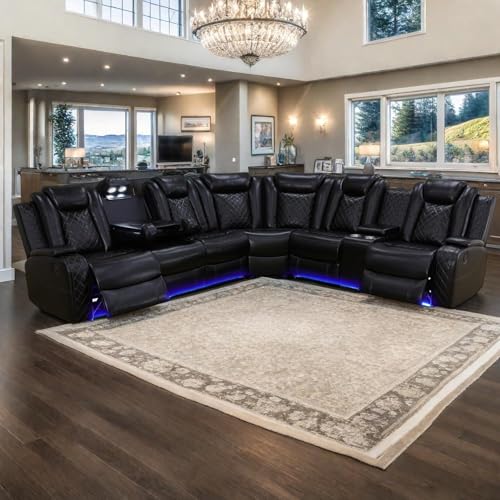
Power Recliner Sofa Sectional Sofa with LED Light for Living Room, Air Leather Reclining Corner Sectional Sofa Set, Cup Holder, Storage Console for Home Theater Seating (Black, Sectional)
Check price on Amazon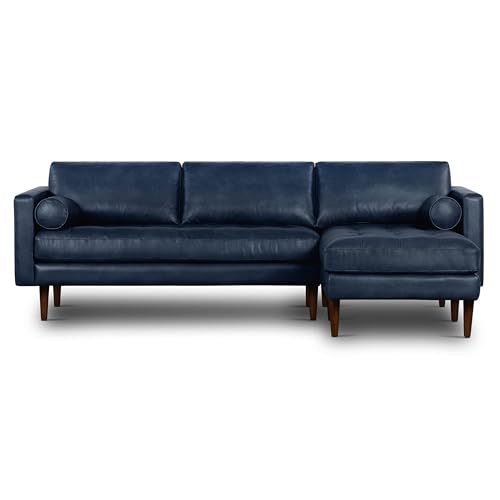
Poly & BARK Napa Right-Facing Sectional Sofa – 104.5” Italian Leather Sectional with Chaise – Midnight Blue – Full-Grain Pure-Aniline & Semi-Aniline Upholstery
Check price on Amazon
RARZOE Faux Leather Modular Sectional Sofa, L Shaped, 4 Seater, Brown | PU Leather Couch with Power Recliner, Oversized Reclining Couch with Headrest for Living Room
Check price on Amazon