


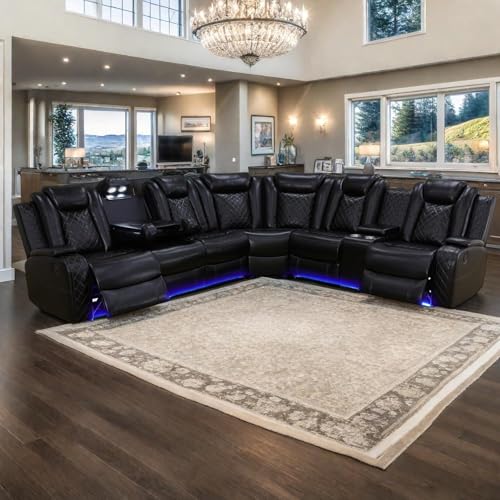


What Makes a Leather Sectional with Recliner Different
A leather sectional couch with recliner combines three distinct furniture categories into one piece: the leather sectional couch for spacious, configurable seating, the recliner mechanism for individualized comfort, and leather upholstery for long-term durability and easy maintenance. Understanding how these three elements interact is the foundation of a smart purchase.
Unlike a standard fabric sectional, a leather reclining model typically uses a reinforced hardwood or engineered-wood frame rated to handle the movement of reclining seats. The reclining hardware — whether manual lever or power motor — adds weight and mechanical complexity, so frame construction quality matters more than it does in a static sofa. Meanwhile, the leather surface determines how the piece ages, how often it needs care, and how it fits your household's lifestyle.
Manual vs. Power Reclining Mechanisms
Manual recliners use a lever or handle to release the footrest, often with a push-back or "wall-hugger" design that saves floor space. Power recliners use a motor and control button (or wireless remote) to adjust the footrest and, in many models, the headrest as well. Power models tend to deliver smoother, more precise positioning and are easier for people with limited mobility to operate. Manual models have fewer electronic components and no need for nearby power outlets. If you are comparing these options in more depth, the power recliner version guide is a useful next read.
Leather Grades and What They Mean for Reclining Furniture
Leather used in reclining sectionals falls into several broadly recognized categories. Full-grain leather is the top-tier option: it retains the natural surface of the hide, develops a rich patina over time, and is the most durable. Top-grain leather is slightly sanded for a more uniform look and is a balanced mid-tier choice. Corrected-grain and bonded leather sit at the entry-level end — they look consistent out of the box but are less resilient over many years of recliner use. For high-contact zones like recliner seats, full-grain and top-grain generally justify the step up in tier.
| Leather Type | Market Tier | Best For |
|---|---|---|
| Full-grain | Luxury / top-tier | Long-term daily use, households that value natural aging and patina |
| Top-grain | Premium / mid-range | Balanced durability and uniform appearance, busy family rooms |
| Corrected-grain | Essential / entry-level | Occasional seating, secondary living spaces |
| Bonded / faux leather | Starter tier | Light use, rental furnishings, short-term setups |
Common Configurations for Leather Reclining Sectionals
Configuration determines how the sectional fits your room and how many people can recline at once. The most common layouts include:
- L-shaped with reclining end seats — recliners on the two outer ends, a stationary chaise or corner in the middle. This is the most popular layout for family living rooms.
- Reclining seats on one arm only — often paired with a chaise on the opposite end, giving you one dedicated lounge spot. The chaise-and-recliner combination is a good example of this format.
- All-seat reclining sectional — every seat reclines, delivering maximum comfort across the whole footprint. These are heavier and require more clearance behind the piece.
- U-shaped or oversized L-shape — larger formats suited to open-plan rooms and entertainment areas. If you have a generous footprint, an oversized reclining sectional with chaise offers more seating and a stronger visual anchor.
- Sectional with ottoman — a free-standing ottoman adds flexible seating and can double as a footrest. See the leather sectional with ottoman breakdown for layout ideas.
Smaller living rooms are not locked out of this category. Compact leather reclining sectionals exist, and a reclining sectional built for small spaces can deliver the same comfort with a reduced footprint. If your living room is genuinely tight, compare the best small-space leather sectionals before committing.
Comfort Factors: What to Check Before You Commit
Comfort in a reclining sectional is not only about padding. It is the product of seat depth, cushion foam density, back support angle, and the smoothness of the reclining mechanism. When you evaluate a model — in person or through detailed specs — check these points:
- Seat depth — deeper seats (around 22–24 inches of usable depth) suit lounging and reclining; shallower seats favor upright conversation seating.
- Foam density — high-density foam holds its shape longer, which matters because reclining seats take repeated concentrated pressure.
- Headrest support — a reclining seat puts your head at an angle, so headrest adjustability makes a real difference. Models with an adjustable headrest let you fine-tune the angle for reading, watching, or napping.
- Mechanism smoothness — mid-tier and premium mechanisms generally glide more smoothly and last longer than entry-level hardware. This is one of the clearest points where stepping up a tier pays off.
- Wall clearance — standard recliners need several inches behind them to fully recline; wall-hugger designs reduce that requirement, which is valuable in smaller rooms.
If you want to compare the reclining experience across configurations, the reclining seats guide covers the practical differences between partial and full reclining layouts.
Leather Sectional with Recliner and Room Layout
Reclining furniture changes how a room must be arranged. Because the footrests extend forward and the backrest tilts, you need clear floor space in front of and behind each reclining seat. A leather sectional with recliner usually works best when placed with its back to a wall or in an open-plan divider position rather than floating in the middle of a tight room.
Start by mapping your living room layout with the sectional's footprint plus reclining clearance. Leave at least 6–12 inches behind the piece for standard mechanisms, and allow roughly 2–3 feet of forward clearance in front of each recliner so the footrest can fully extend without hitting a coffee table. If a coffee table is part of your plan, consider a smaller table or a set of nesting tables that can be moved aside when the recliners are in use. Our coffee and end table guide has more on sizing tables around large seating.
For a broader view of arranging the whole room around a large leather piece, see the leather couch living room guide and the collection of living room sectionals with recliners. If your space is an open floor plan, pay special attention to the walkway between the sectional and adjacent dining or kitchen zones.
Leather Care in a Reclining Sectional
Leather is easier to wipe clean than most fabrics, but reclining seats generate more friction at the fold lines, which means those areas need regular attention. Dust the surface weekly with a dry microfiber cloth, and clean with a leather-safe cleaner every few months. Avoid alcohol-based or abrasive cleaners that can dry out the finish. Condition full-grain and top-grain leather once or twice a year to keep it supple and prevent cracking at the fold points.
If the surface ever dries or cracks, it can usually be restored — see the guides on leather repair and leather restorers for couches. Keep the sectional out of direct, intense sunlight to slow fading, and check the mechanism periodically for loose bolts or squeaks. A quick tightening routine extends the life of the reclining hardware considerably.
Reclining Sectional vs. Other Seating Formats
Before settling on a leather sectional with recliner, it helps to know how it compares with related formats. A standalone reclining couch and loveseat set offers similar comfort with more flexibility for rearranging, while a leather couch with built-in recliners is a simpler straight-line option if a sectional's corner footprint does not fit your room. For multi-generational households, a full reclining living room furniture set that matches the sectional across chairs and loveseats creates a cohesive look.
If you occasionally host overnight guests, a reclining sectional can pair with a sleeper version of the same family — the sectional with sleeper and recliner guide explains that hybrid. And if you like the idea of reconfiguring over time, a modular leather sectional with ottoman gives you the most flexibility.
Editorial note: Our tier classifications above are relative market positions, not absolute judgments. A well-built essential-tier leather sectional can serve a low-traffic room perfectly well, while a luxury-tier piece earns its position through hide quality, frame construction, and mechanism refinement.
Frequently Asked Questions
How much floor space does a leather reclining sectional need?
Measure the sectional's footprint, then add 6–12 inches behind for standard reclining mechanisms and 2–3 feet in front for the footrests to extend. Wall-hugger models reduce the rear clearance requirement significantly, which helps in smaller rooms.
Is full-grain leather worth it for a reclining sectional?
For daily use, full-grain leather is the most durable option and develops a natural patina over time. Top-grain leather is a balanced mid-tier alternative that offers more uniform appearance and good resilience. Entry-level corrected-grain and bonded leathers suit lighter use.
Power or manual recliner — which should I choose?
Power recliners offer smoother positioning and easier operation, especially for people with limited mobility, but require a nearby outlet. Manual recliners have fewer electronic parts and no power dependency. Both are reliable when the underlying mechanism is well built.
Can a leather sectional with recliner work in a small living room?
Yes, if you choose a compact configuration and confirm wall-hugger reclining or adequate clearance. Review the small-space leather reclining sectional options before deciding on dimensions.
How do I keep leather recliner seats from cracking?
Clean regularly with a leather-safe product, condition full-grain and top-grain leather once or twice a year, and keep the sectional out of direct intense sunlight. Address dryness early with a leather restorer before cracks form.