
Leather Sectional with Pull Out Bed: The Complete Buyer's Guide
One piece of furniture, two essential functions. Learn how to evaluate leather grades, sleeper mechanisms, mattress types, and room fit so you can choose a leather sectional with a pull out bed that serves your living room by day and your guests by night.
Start the Buying GuideWhy this guide matters: A leather sectional with a pull out bed is one of the most researched living room purchases because it solves two problems at once — generous everyday seating and an on-demand guest bed. But the combination also introduces trade-offs in mechanism quality, mattress comfort, leather durability, and floor space. This guide walks through each decision point in plain language so you can buy with confidence and avoid the common mistakes that lead to returns.
What to Evaluate Before You Buy
A leather sectional with a pull out bed sits at the intersection of three product categories: leather upholstery, sectional seating, and sleeper mechanisms. Each category has its own quality signals, and the weakest component usually determines how long the piece lasts. Buyers in the research phase should look at the following factors together rather than in isolation.
- Leather grade and finish — full-grain, top-grain, and split-grain leathers behave very differently under daily use and folding stress near the sleeper mechanism.
- Sleeper mechanism type — the pull out system can be a simple tube frame, a click-clack hinge, or a heavy-duty metal pull-out deck. Mechanism quality is the single largest predictor of long-term satisfaction.
- Mattress construction — memory foam, innerspring, and air-over-coil each deliver a distinct sleep feel and have different storage and weight implications.
- Sectional configuration — left-facing or right-facing chaise, L-shape or U-shape, and whether the sleeper section is in the main body or the chaise.
- Room footprint and clearance — the extended bed requires significantly more floor space than the sofa itself.
If you are still deciding between a sectional and a simpler sofa bed, the broader leather sofa bed couch overview covers the base categories, while this page focuses specifically on the sectional-plus-sleeper combination.
How to Read Leather Grades Like a Pro
Leather is described using a grading system that reflects where the hide comes from and how it is processed. The grading language is not regulated, so retailers interpret it loosely. These are the working definitions that matter for a sleeper sectional:
Full-grain leather retains the entire outer surface of the hide, including natural markings. It is the most durable and breathable grade and develops a patina over time. On a sleeper sectional, full-grain hides handle the repeated flexing around the fold line better than thinner grades.
Top-grain leather has the outermost layer sanded slightly to remove imperfections, then finished. It is nearly as durable as full-grain, more uniform in appearance, and typically softer to the touch. Top-grain is the sweet spot for most living rooms with regular sleeper use.
Split-grain and bonded leather are lower tiers. Split-grain uses the inner layers of the hide, and bonded leather is a composite of leather fibers and polyurethane. Both are more prone to cracking and peeling, especially along mechanism fold lines, so they are best treated as entry-level options for light-use rooms.
For rooms where spills, pets, or children are a daily reality, a protected or pigmented top-grain finish adds a surface barrier that resists staining without hiding the leather's character. If you are planning a broader leather living room refresh, the leather couch living room guide pairs well with this page on styling and layout.
| Tier | Leather Type | Best For | Durability Signal |
|---|---|---|---|
| Entry-level | Bonded / split-grain | Light-use guest rooms and occasional seating | Shorter service life under folding stress |
| Mid-range | Top-grain with protective finish | Family living rooms with regular sleeper use | Balanced durability and softness |
| Premium | Full-grain or aniline top-grain | High-use primary living spaces | Long-term investment, develops patina |
| Luxury | Hand-finished full-grain hides | Design-led rooms and statement pieces | Flagship-tier hide selection |
Sleeper Mechanism Types Explained
The pull out bed mechanism is the hardest-working part of a sleeper sectional. It folds, unfolds, and bears body weight repeatedly, so it deserves more scrutiny than the fabric or stitching. There are three common systems:
Tube-frame pull out. The classic system. A metal tube frame unfolds from the sofa body and supports a mattress, usually with a fabric deck. It is straightforward to operate and repair, and it works well with thicker mattresses. Look for reinforced joints and a smooth-glide track.
Click-clack hinge. The backrest folds down flat to create the sleeping surface. There is no separate mattress deck, so the seat cushions themselves become the bed. This system saves space and is easy for one person to operate, but it typically delivers a firmer sleep surface that suits occasional use rather than nightly sleeping.
Heavy-duty pull-out deck with memory foam mattress. The most comfortable option for regular guests. A rigid metal deck slides out and locks into position, supporting a thicker foam mattress. The trade-off is storage depth and weight — these units are heavier and need more room behind the sofa.
Whichever mechanism you choose, test the operation in person if possible. A well-built mechanism glides smoothly, locks firmly, and shows no wobble at full extension. If you are comparing against reclining alternatives, the leather sectional with sleeper and recliner page explains the added complexity of combining both functions.
Quick Tip: Test the Fold Line
On any leather sleeper sectional, the leather around the mechanism fold line experiences the most stress. Ask the retailer whether that area uses a reinforced backing or a slightly thicker hide. A visible quality check at the fold line tells you more about long-term durability than the marketing label on the showroom tag.
Mattress Types for Pull Out Beds
The mattress inside a pull out bed is usually thinner than a standard mattress, and its comfort depends heavily on construction. The three main types are:
- Memory foam. Contours to the body, isolates motion, and operates quietly. It works well with rigid pull-out decks and is the most common choice in mid-range and premium sleeper sectionals. A thickness of around 4.5 to 6 inches is typical; thicker foam sleeps better but requires more storage depth.
- Innerspring. Uses a coil core for a traditional bouncy feel and good airflow. It is durable and supportive but can transfer motion and may be noisier when the mechanism moves.
- Air-over-coil. A coil base topped with an adjustable air layer. It offers customizable firmness and is often found on higher-tier models. It requires a pump and more careful maintenance.
If the sleeper will be used frequently by the same guest, prioritize mattress thickness and deck rigidity over the sofa's styling details. If it is a once-a-month arrangement, a click-clack or standard tube-frame with a mid-range foam mattress is usually sufficient. For comparison shopping across configurations, the leather couch with sleeper overview covers non-sectional sleeper options.
Measuring Your Room for a Sleeper Sectional
The most common buying mistake is measuring only the sofa footprint and forgetting the extended bed. A pull out bed can add 30 to 40 inches of depth in front of the sectional, which quickly eats into walkways and coffee table zones.
Follow this measuring sequence:
- Measure the full sectional footprint, including any chaise or ottoman extension.
- Add the extended bed depth plus at least 24 to 36 inches of clear walking space in front of the bed.
- Check doorway widths and hallway turns for delivery clearance.
- Account for radiator clearance, floor vents, and the swing of any nearby doors.
- Confirm the clearance needed for reclining seats, if your model includes them.
Use masking tape on the floor to outline both the sofa and the extended bed. It sounds old-fashioned, but it prevents the most expensive mistake in sleeper furniture. For rooms on the smaller side, the leather sectional couches for small spaces guide offers narrower configurations that still include a sleeper option.
Configuration and Layout Choices
Sectionals are defined by their configuration, and the sleeper function should influence which shape you choose. The main options are:
L-shaped sectional with chaise. The most popular configuration. The chaise adds a lounge seat and often houses the sleeper mechanism in the main body. It works well against a wall or floating in an open-plan room with a rug defining the zone.
U-shaped sectional. Maximizes seating and creates a conversation pit. The sleeper section is usually in one of the long runs. U-shapes need more floor space and careful traffic planning.
Reversible chaise. Some models let you move the chaise to the left or right side during assembly. This is useful for renters or rooms where the layout may change.
Placement matters as much as shape. Leave a clear path from the entry to the seating area, and avoid blocking the sleeper extension with a coffee table. If your room includes a corner fireplace or TV wall, orient the sectional so the extended bed does not obstruct the focal point. The living room layout guide covers traffic flow and focal-point planning in more depth.
For larger rooms that combine a sectional with a chaise and a separate lounge piece, the leather sectional couch with chaise and recliner page explains how to balance multiple functions without crowding the floor plan.
Care and Maintenance for Leather Sleeper Sectionals
Leather is low-maintenance, but the sleeper mechanism adds moving parts that need attention. A simple routine keeps both the hide and the hardware in good condition:
- Dust and vacuum the leather weekly with a soft brush attachment to remove grit before it abrades the surface.
- Wipe spills immediately with a damp, soft cloth. Blot rather than rub.
- Condition the leather every three to six months with a pH-neutral leather conditioner.
- Keep the sofa out of direct sunlight and away from heat sources that dry the hide.
- Clean the mechanism tracks and lubricate metal joints annually.
- Open and close the sleeper periodically, even when not in use, to keep the mechanism moving freely.
If the leather develops scratches or scuffs, the leather repair guide covers touch-up techniques, and the leather couch cushions page helps you evaluate when a cushion replacement is a better option than a full repair. For pet owners, keeping claws trimmed and using a throw over the seat during high-traffic evenings dramatically extends the leather's service life.
Choosing the Right Tier for Your Needs
The leather sleeper sectional market spans a wide range of build quality. Rather than shopping by label, shop by tier and match the tier to how the piece will actually be used:
| Tier | Typical Configuration | Best For |
|---|---|---|
| Essential tier | Click-clack or tube-frame, split-grain leather | Occasional guest use, secondary living spaces |
| Balanced tier | Tube-frame with foam mattress, top-grain leather | Family living rooms, regular monthly guests |
| High-end tier | Heavy-duty deck with memory foam, full-grain leather | Primary living room with frequent overnight guests |
| Flagship tier | Custom leather, reinforced mechanism, premium mattress | Design-led rooms, long-term investment pieces |
A balanced-tier model usually offers the most sensible mix of leather durability, mechanism smoothness, and mattress comfort for a typical household. Entry-level models work well when the sleeper is used a few times a year, while high-end and flagship tiers make sense when the sofa is the primary seating and the bed is used often.
Recommended Leather Sectionals with Pull Out Bed
⚠️ AFFILIATE DISCLOSURE: This website contains affiliate links. As an affiliate Associate, we earn from qualifying purchases. If you make a purchase through these links, we may receive a small commission at no additional cost to you. Read our full affiliate policy.
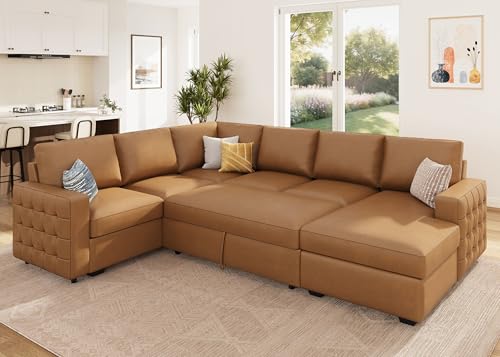
HONBAY Sleeper Sectional Couch with Pull-Out Bed Sectional Sleeper Sofa Pull Out Bed with Storage Chaise, 6 Seaters Couch for Living Room, Faux Leather Brown
Check price on Amazon
102'' Black Leather L Shaped Sectional Sleeper Sofa with Pull Out Bed | Reversible Storage Chaise, Couch with Adjustable Headrest, Pullout Bed, Pet Friendly Microfiber, Easy Assembly
Check price on Amazon
Eafurn Tufted Sectional Sleeper Sofa Pull Out Couch Bed Modern Sofabed | Sectional Sleeper Sofa with Pull Out Bed, L Shaped Couch with Reversible Chaise Lounge, Pull Out Couch for Living Room
Check price on Amazon
103'' Brown Breather Leather L Shaped Sectional Sleeper with Pull Out Bed | Convertible Couch with Adjustable Headrest, Two Stools, Storage Ottoman, Pullout Bed, Pet Friendly, Easy Assembly
Check price on Amazon
Naomi Home Laura 3-In-1 Sleeper Sectional Sofa, Black Air Leather | Pull-Out Bed, Hidden Storage Space, Reversible Chaise, Space-Saving Comfort, Guest-Ready Comfort, Perfect For Apartments
Check price on Amazon
107'' LED Sectional Couch for Living Room, Pull Out Sleeper Sofa Bed, Brown | Faux Leather Comfy U Shaped Couch, Charging Ports, Storage Chaise, 5-Level Adustable Backrest, 2 Pillows, Mid-Century Modern
Check price on Amazon
Lesofair 110" Suede Leather U Shape Sleeper Sofa w/Pull Out Bed, Brown | Sectional Sofa Bed w/Adjustable Backrest and Storage Chaises, 4-Seats Upholstered Sofa Bed w/USB Port for Living Room
Check price on Amazon
82.5" Sectional Sofa with Pull-Out Bed, L-Shaped Couch with Storage Chaise | Pull-Out Sleeper Design, Leather-Look Fabric, Hidden Storage Chaise, Cup Holders, L-Shaped Sectional, Space-Saving Sofa
Check price on AmazonCommon Mistakes to Avoid
Even well-informed buyers run into the same handful of pitfalls. Watch for these before you commit:
- Ignoring the extended bed clearance. The sofa fits, but the bed does not. Always tape out both footprints.
- Choosing bonded leather for a high-use sleeper. The fold line is unforgiving, and bonded leather tends to peel under repeated flexing.
- Skipping the mechanism test. If you cannot operate the sleeper in the showroom, ask for a demonstration video or a return window that covers mechanism defects.
- Underestimating mattress thickness. A thin mattress saves storage depth but compromises guest comfort. Match thickness to expected use frequency.
- Overlooking delivery access. Sectionals arrive in large boxes or as pre-assembled pieces. Confirm doorway and stairwell clearance before ordering.
For a broader checklist that applies across all couch types, the first-time buyer guide covers measurement, material, and comfort testing in detail.
Pre-Purchase Checklist
- Confirm leather grade and finish match your household's use pattern
- Test or review the pull out mechanism operation and locking
- Verify mattress type, thickness, and replacement availability
- Measure the sofa footprint and the extended bed clearance
- Check doorway and stairwell delivery access
- Confirm which side the chaise sits on and whether it is reversible
- Review the warranty coverage for both leather and mechanism
- Plan a cleaning and conditioning routine before delivery
Frequently Asked Questions
What is a leather sectional with a pull out bed?
A leather sectional with a pull out bed is a multi-seat sofa configuration that combines an L-shaped or U-shaped seating layout with a hidden mattress mechanism. The pull out mechanism lets the sofa convert into a sleeping surface for guests, making it a practical choice for living rooms that double as guest bedrooms.
How do I measure my room for a leather sectional with a pull out bed?
Measure the full footprint of the sectional, then add the depth of the extended bed plus at least 24 to 36 inches of clear walking space around it. Account for doorways, radiator clearance, and the arc of any reclining seats. A floor plan sketch with masking tape on the floor helps confirm the fit before you commit.
Which leather type is best for a sleeper sectional?
Full-grain and top-grain leathers are the most durable and develop a rich patina over time. For households with pets or children, a protected or pigmented leather with a performance finish resists scratches and spills more effectively. Bonded leather is best avoided on high-use sleeper sectionals because it tends to peel under repeated folding stress.
What mattress types are used in leather sleeper sectionals?
Most pull out beds use one of three mattress types: memory foam, innerspring, or air-over-coil. Memory foam offers contouring support and quiet operation, innerspring provides a traditional bouncy feel, and air-over-coil combines a coil base with an adjustable air top. Thicker mattresses generally deliver better comfort but require more storage depth.
How do I maintain leather on a sectional with a pull out bed?
Dust and vacuum the leather weekly with a soft brush attachment, wipe spills immediately with a damp cloth, and condition the leather every three to six months with a pH-neutral leather conditioner. Keep the sleeper mechanism free of debris and lubricate metal joints annually. Avoid direct sunlight and heat sources that can dry and crack the hide.
Final Thoughts
A leather sectional with a pull out bed is a smart investment when it is matched to the room, the household, and the expected frequency of guest use. Prioritize the mechanism and the leather grade over cosmetic details, measure both the sofa and the extended bed, and choose a tier that reflects how often the sleeper will actually be used. With those decisions made deliberately, the piece will serve as both the centerpiece of your living room and a dependable guest bed for years.
If you are still narrowing down the wider category, the leather sectional with pull out bed page is your anchor, and the leather sectional couch and leather couch overviews provide the broader context for comparing shapes and materials.