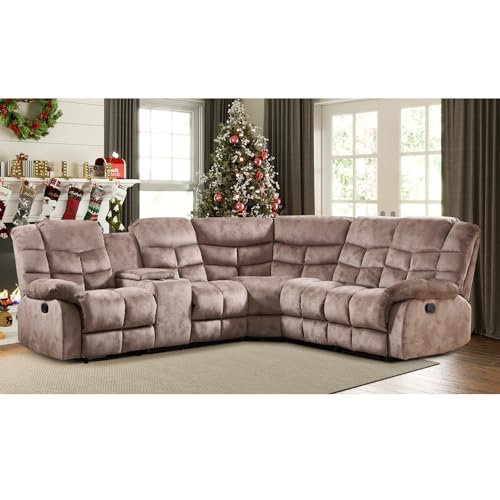
What Is a Living Room Couch and Recliner Set?
A living room couch and recliner set is a coordinated furniture grouping that pairs a sofa with one or more reclining seats. Instead of buying a couch and a recliner separately, a set gives you matching upholstery, shared design language, and a unified footprint. Most sets include a main couch with built-in reclining mechanisms, plus a matching recliner chair or loveseat.
This type of set solves a common living room problem: how to combine everyday lounging with a seating arrangement that still looks intentional. Recliners are built for comfort, but a standalone recliner can look out of place next to a standard sofa. A coordinated set removes that friction. You get the ergonomics of a recliner and the visual cohesion of a matched room.
Buyers researching this topic usually already know they want reclining comfort. What they need is clarity on mechanism types, clearance requirements, upholstery durability, and how to place the set without blocking traffic. This guide covers each of those decision points in sequence.
If you are still comparing broader furniture groupings, you can review our guide to living room couch and chair sets to see how recliner-based sets differ from standard stationary groupings. For layouts that include a chaise, the living room sets with chaise lounge overview is a useful cross-reference.
Key Buying Factors Before You Choose
Five factors determine whether a couch and recliner set will work in your home. Address them in this order, because each one constrains the next.
1. Room Dimensions and Clearance
Measure the longest uninterrupted wall and the distance to your focal point — usually a TV, fireplace, or window. Recliners need clearance behind them to fully extend. Traditional recliners require roughly 6 to 12 inches of rear clearance; wall-hugger mechanisms need very little. Walkways should stay at least 30 to 36 inches wide. Confirm the total footprint of the set, not just the couch. Our living room layout guide covers traffic flow in more detail.
2. Seating Count
A three-seat reclining sofa plus one recliner chair seats four comfortably. A reclining sofa plus a reclining loveseat seats five. Decide how many people typically use the room at once, and leave one seat for flexibility. Overfilling a small room with a large set is the most common planning mistake.
3. Recliner Mechanism Type
Manual, power, and wall-hugger mechanisms behave differently in a room. The next section explains each. Mechanism choice affects clearance, wiring, and long-term maintenance.
4. Upholstery Material
Leather and performance fabric are the practical front-runners for a set that gets daily use. Velvet and linen add visual elegance but demand more care. Consider pets, children, and sun exposure before you commit.
5. Style and Proportion
Reclining furniture has improved dramatically in silhouette. Modern sets use clean lines and tapered legs to avoid the bulky look of older recliners. Match the set's visual weight to the room: lighter fabrics and exposed legs for compact spaces, deeper upholstery and heavier frames for large rooms.
Recliner Mechanisms Explained
The mechanism is the part of the set you will interact with every day. It also determines how far the furniture must sit from the wall.
Manual Recliners
A lever or handle releases the footrest and adjusts the back. Manual mechanisms are simple, have fewer electronic parts to fail, and sit in the entry-level tier of mechanism design. They need a little more effort to operate and offer fewer intermediate positions.
Power Recliners
Power mechanisms use a motor and a button control. They adjust smoothly and hold precise positions. Many power sets include USB charging ports and home-automation compatibility. Power recliners sit in the mid-range to premium tier and require access to an outlet near the set. Cord management matters — plan for it before delivery.
Wall-Hugger and Zero-Wall Recliners
Wall-hugger mechanisms slide the seat forward as the back reclines, so the furniture can sit close to the wall. Zero-wall designs need almost no rear clearance. These are the right choice for narrow rooms and open floor plans where the back of the sofa is visible. If your room is tight, pair a wall-hugger set with the strategies in our living room couch ideas for small spaces article.
Reclining Sectionals and Chaise Configurations
Some sets extend the concept into sectional territory, adding a chaise or a corner wedge with reclining seats. These configurations suit larger rooms and open plans. For a deeper comparison, see living room reclining furniture sets and living room sectional sets with recliners.
Upholstery and Materials
Upholstery decides how the set looks on day one and how it holds up in year five. Here is how the main options compare for a recliner set.
Leather
Leather is durable, wipes clean, and develops a patina over time. It resists odors and is a strong choice for households with pets and children. Top-grain and full-grain leathers sit in the premium and luxury tiers; bonded leather sits lower and wears faster. Leather can feel cold at first and needs conditioning to prevent cracking. Explore our leather couch living room guide for styling and leather repair guidance for long-term upkeep.
Performance Fabric
Performance fabrics are engineered to resist stains and moisture. They are softer than leather and available in a wide range of colors. They sit in the mid-range to premium tier and are the most family-friendly option. Cleaning is straightforward with mild soap and water.
Velvet
Velvet adds depth and a luxe feel. It is less forgiving of spills and shows pressure marks. Choose velvet if the set lives in a low-traffic room or an adult household.
Linen and Blends
Linen looks relaxed and breathes well in warm climates. It wrinkles and stains more easily than performance fabric. A linen blend improves durability while keeping the texture.
Frame and Cushion Construction
Look for kiln-dried hardwood frames, sinuous or pocket-coil spring systems, and high-density foam wrapped in fiber. Reinforced corner blocks and heavy-duty joints signal a solid build. These details matter more than the surface fabric for long-term comfort.
Room Layout and Placement
A recliner set needs more planning than a stationary sofa because the seats move. Follow this sequence.
Step 1: Anchor the Couch
Place the couch on the longest wall or facing the focal point. Leave at least 30 inches of walkway on the open side. If the room is open-plan, use the back of the couch to define the seating zone without blocking sightlines.
Step 2: Angle the Recliner
Angle the recliner chair toward the couch at roughly 30 to 45 degrees. This creates a conversation zone and keeps the recliner from facing a blank wall. Leave rear clearance for recline based on the mechanism type.
Step 3: Add the Supporting Pieces
Place a coffee table or ottoman in the center of the grouping, leaving 14 to 18 inches between the table and the seating for legroom. Add an area rug sized to sit under the front legs of all seating. For table pairings, see living room coffee and end tables.
Step 4: Check Traffic Flow
Walk the path from every doorway to the main seats. If you have to sidestep, the set is too large or misplaced. Keep doorways and heating vents clear.
Step 5: Layer Lighting and Decor
Add a floor lamp or table lamp near the recliner for reading light. Layer throw pillows and a throw blanket to soften the look. Our living room decor and living room essentials guides cover the finishing details.
Tier Comparison: Matching the Set to Your Needs
Use this table to compare sets by position in the market and intended use. Tiers describe relative placement, not absolute figures.
| Tier | Typical Mechanism | Best For | Upholstery Focus |
|---|---|---|---|
| Entry-level | Manual lever | Occasional use, guest rooms, starter homes | Bonded leather, basic microfiber |
| Mid-range | Manual or basic power | Daily family use, main living rooms | Top-grain leather, performance fabric |
| Premium | Power with memory positions | Heavy daily use, home theater rooms | Full-grain leather, high-performance fabric |
| Luxury | Power with integrated controls | Dedicated entertainment rooms, long-term investment | Premium full-grain leather, custom fabrics |
Within each tier, compare frame construction, cushion density, and mechanism warranty rather than surface features alone. A mid-range set with a reinforced hardwood frame often outlasts a premium set with a weaker frame.
Care and Longevity
A recliner set has moving parts, so maintenance covers both upholstery and mechanism.
- Vacuum weekly with a soft brush attachment to lift dust from seams and crevices.
- Clean spills promptly with a mild soap solution and a clean cloth. Blot, do not rub.
- Condition leather every six to twelve months to prevent cracking. See our leather repair guide for damage assessment.
- Lubricate the mechanism per the manufacturer's schedule. Keep the tracks free of crumbs and pet hair.
- Rotate cushions if the set allows, to distribute wear evenly.
- Keep the set out of direct sun to prevent fading, or use window treatments during peak hours.
Store the owner's manual with the mechanism warranty. Power recliners have electronic components that may need service; knowing the model number and warranty terms saves time later.
Ready to Compare Living Room Couch and Recliner Sets?
Browse our curated selection of coordinated couch and recliner sets, filtered by mechanism type, seating count, and upholstery.
EXPLORE SETSFrequently Asked Questions
What is a living room couch and recliner set?
A living room couch and recliner set is a coordinated furniture grouping that pairs a sofa with one or more reclining seats. The set typically includes a main couch with built-in reclining mechanisms, plus a matching recliner chair or loveseat, all sharing the same upholstery, style, and finish for a unified look.
How much space do I need for a couch and recliner set?
Recliners need clearance behind them to fully recline, usually between 6 and 12 inches depending on the mechanism. Wall-hugger or zero-wall recliners require very little clearance. Measure your room, account for walkways of at least 30 to 36 inches, and confirm the total footprint of the set before purchasing.
What is the difference between manual and power recliners?
Manual recliners use a lever or handle to release the footrest and adjust the back. Power recliners use a button or motorized control for smooth, precise positioning and often include USB ports. Power models sit in the mid-range to premium tier and offer more adjustability, while manual models are simpler and entry-level in mechanism design.
Which upholstery is best for a couch and recliner set?
Leather and performance fabric are the most practical choices. Leather is durable, easy to wipe clean, and ages well. Performance fabric resists stains and is family-friendly. Velvet and linen look elegant but need more care. Consider your household, pets, and daily use before deciding.
How do I arrange a couch and recliner set in a living room?
Anchor the couch on the longest wall or facing the focal point, then angle the recliner toward the couch to form a conversation zone. Keep at least 30 inches of walkway clearance, leave room behind recliners for recline, and add a rug and coffee table to tie the grouping together.
For more comparisons, see our overviews of living room couch and love seat sets and leather couch loveseat and recliner sets. If you are planning an open-plan space, the living room sectional couches guide covers larger configurations.