
The Lounge Couch: Your Ultimate Guide to Relaxed Living Room Comfort
A lounge couch transforms an ordinary living room into a destination for rest, reading, and slow weekends. Understand the design principles, materials, and layout choices that make a lounge sofa genuinely comfortable — before you commit to your next living room centerpiece.
Explore Buying InsightsWhy this guide matters: If you are researching lounge couches, you already know the general category you want — deep, soft, relaxed seating. This guide fills the gap between that intent and a confident decision. You will learn how lounge design differs from standard sofas, which construction details matter for long-term comfort, and how to fit a lounge couch into real-world living spaces.
What Exactly Is a Lounge Couch?
A lounge couch is a sofa engineered around reclined, low-effort comfort rather than upright formality. While a standard sofa is built to keep you alert — firm back support, higher seat height, shallower depth — a lounge couch invites you to sink in. The seat is deeper (often 24 to 28 inches), the backrest sits lower with a gentle recline, and the cushions use softer, layered foam or down-blend fills.
This design philosophy appears across many product types. A lounge couches collection may include modular pieces, chaise-equipped sectionals, and apartment-friendly loveseats. The common thread is the seat geometry: you should be able to curl up, stretch out, or lean back without fighting the sofa. If you want to compare lounge-style options with broader sofa categories, the main lounge couch overview and the loveseats guide provide useful context before you narrow down your shortlist.
- Deep seating: seat depth usually exceeds 23 inches, allowing legs to rest fully on the cushion.
- Low, reclined backrest: back angle is set further back than a standard sofa, reducing the need for extra throw pillows.
- Soft, layered cushioning: high-resilience foam wrapped in fiber or down-blend for a plush, slow-recovery feel.
- Lower seat height: typically 16 to 18 inches, which suits a relaxed posture and pairs well with low coffee tables.
- Wider arms or armrest cushions: many lounge designs double as headrests for side-lying positions.
Lounge Couch Types and How They Differ
Not every lounge couch is built for the same room or lifestyle. The right type depends on your space, your seating habits, and whether the couch will serve double duty. Here is a practical breakdown of the most common lounge configurations.
1. Deep-Seat Standard Lounge Couch
A single-frame sofa with oversize seat cushions and a low back. This is the purest expression of the lounge concept — best for dedicated relaxation zones, reading corners, or living rooms where the couch is the main event. Look for models with removable back cushions, which let you adjust the recline angle.
2. Lounge Sectional with Chaise
Sectionals add an L-shaped chaise that functions as a built-in lounger. This layout suits open-plan living rooms and families who want multiple comfortable positions. A luxury living room couch in a sectional format often includes a chaise with a slight backrest recline for full-body support.
3. Modular Lounge Couch
Modular pieces let you rearrange seats, add corner wedges, or convert a two-seater into a sprawling lounge platform. They are ideal for renters and households that reconfigure rooms seasonally. Modular lounge couches also tend to have standardized cushion sizes, which simplifies replacement and maintenance.
4. Apartment and Loveseat Lounge Couch
Compact lounge couches keep the deep-seat feel in a footprint under 70 inches wide. Look for slim arms, low profiles, and reversible chaise sections. A mini couch for room layouts can work as a lounge seat without overwhelming a small living area.
5. Sleeper and Convertible Lounge Couch
These combine lounge comfort with guest-ready function. A memory foam pull out couch or luxury pull out couch keeps the relaxed seat feel while adding a sleeping surface. Verify the mattress thickness and mechanism smoothness before choosing this type for daily use.
Construction Details That Determine Real Comfort
Lounge comfort is not just about softness. A couch that feels wonderful in a showroom can sag within a year if the frame and cushion cores are weak. Focus on these structural elements.
Frame and Suspension
A kiln-dried hardwood frame with corner-blocked joints is the baseline for durability. For suspension, sinuous wire springs offer a responsive feel, while pocket coils distribute weight more evenly and resist sagging. Webbing is acceptable in lightweight apartment couches but is less supportive for daily lounging.
Cushion Cores
High-resilience foam (often 2.0 to 2.5 lb density) provides a good balance of softness and recovery. Down-wrapped foam adds plushness but needs regular fluffing. In entry-level lounge couches, expect standard foam with a fiber wrap; in premium and luxury tiers, look for pocket-coil cores or multi-layer foam with a down-blend topper.
Upholstery Choices
Lounge couches see heavy contact, so fabric performance matters. Performance fabrics resist stains and fading; top-grain leather develops a patina and wipes clean easily. Velvet and boucle deliver a premium look but demand more care. For a detailed comparison, see the material selection guide. A microfiber couch is a practical mid-tier option with a soft hand feel and good stain resistance.
Sit for at least ten minutes. Your lower back should feel supported without a gap, and your feet should rest flat on the floor when seated upright. If you have to push yourself forward to stand, the seat is too deep or too soft for daily use.
Lounge Couch Quality Tiers Explained
Instead of comparing raw figures, use quality tiers to understand what changes as you move up the market. Each tier reflects construction, materials, and expected lifespan.
Essential Tier
Basic hardwood or engineered wood frame, sinuous spring suspension, standard foam cushions, and durable polyester or microfiber upholstery. Best for occasional lounging, guest rooms, or first apartments.
Balanced Tier
Kiln-dried hardwood frame, pocket-coil or high-resilience foam cores, performance fabric options, and reinforced corner blocks. A solid choice for daily family use and long-term living room seating.
High-End Tier
Hardwood frame with doweled and corner-blocked joints, multi-layer cushion cores with down-blend wraps, top-grain leather or designer performance fabrics, and refined tailoring. Built for years of daily lounging.
At the luxury and flagship tier, you will encounter hand-tied springs, bench-made frames, and upholstery sourced from specialist mills. These features add long-term durability and a more refined seating feel, but the mid-range tier already delivers strong comfort for most households. Choose the tier that matches how often the couch will be used and how long you plan to keep it.
Lounge Couch vs. Standard Sofa: Quick Comparison
| Category | Lounge Couch | Standard Sofa | Best For |
|---|---|---|---|
| Seat depth | 24–28 inches | 20–23 inches | Lounge couch for reclining and curling up |
| Backrest angle | Reclined, lower | Upright, supportive | Standard sofa for conversation and posture |
| Cushion feel | Soft, slow-recovery | Firmer, responsive | Lounge couch for relaxation-focused rooms |
| Seat height | 16–18 inches | 18–20 inches | Lounge couch pairs well with low tables |
| Typical use | Reading, napping, media | Hosting, daily seating | Match the type to your primary activity |
Sizing and Layout: Fitting a Lounge Couch Into Your Room
Lounge couches are deeper than standard sofas, so they demand more thoughtful placement. A couch that fits the wall but blocks the walkway will feel uncomfortable regardless of how soft the cushions are.
Measure the Room, Not Just the Wall
Record the full length of the wall, the distance to opposing furniture, and the width of doorways and hallways along the delivery path. Lounge couches often exceed 40 inches in depth; add 14 to 18 inches for a coffee table and 18 inches for walkways. If the room is narrow, consider a mini L shaped couch or a compact loveseat lounge configuration.
Anchor the Seating Zone
In open-plan rooms, use the lounge couch to define the seating area. A rug that extends at least 6 inches beyond the couch front helps visually anchor the zone. For rooms with a focal point such as a fireplace or television, angle the couch slightly toward it rather than pushing it flat against the wall. If you are planning a larger arrangement, a living room with sectional and chairs layout illustrates how to balance a deep lounge seat with accent seating.
Leave Breathing Room
Keep at least 18 inches of clearance on the main traffic side and 3 feet between the couch and any doorway. In small rooms, choose a lounge couch with tapered legs or a visible base to create a sense of floor space. A wall-mounted or slim console behind the couch can add storage without eating into the seating zone.
Buying Checklist: What to Verify Before You Commit
Use this checklist to move from research to a confident purchase decision. It focuses on the details that separate a satisfying lounge couch from one that disappoints after the first month.
- Seat depth and height: confirm the measurements against your body and your room. Sit for at least ten minutes during any showroom visit.
- Cushion construction: ask whether the core is foam, pocket coil, or a hybrid. Check whether the cushion covers are removable and washable.
- Frame and suspension: verify kiln-dried hardwood and corner-blocked joints. Sinuous springs are acceptable; pocket coils are more durable.
- Upholstery performance: match the fabric to your household. Performance fabric and leather suit pets and kids; velvet and boucle suit low-traffic lounge rooms.
- Delivery path: measure doorways, stairwells, and elevators. Lounge couches are bulky; confirm whether the retailer offers white-glove delivery and assembly.
- Return and warranty terms: read the return window and frame warranty. A long-term investment deserves clear coverage.
- Trial period: some retailers offer in-home trial windows. Use them to test the couch in your actual lighting and layout.
Order fabric swatches before committing. Screen colors distort, and a fabric that looks neutral online may read warm or cool in your room. Place the swatch next to your flooring and wall paint for two days before deciding.
Styling a Lounge Couch Without Losing the Relaxed Feel
The best lounge couches look inviting rather than styled to perfection. Keep the arrangement low-effort and layered.
Pillows and Throws
Use two to four pillows in mixed sizes. A lumbar pillow for couch support adds lower-back comfort without crowding the seat. Drape a lightweight throw over one arm to soften the silhouette and add texture.
Tables and Lighting
A low, broad coffee table complements the low seat height of a lounge couch. For narrow rooms, a long couch table can sit behind the sofa for lamps, books, and decor. Layer lighting with a floor lamp and a table lamp to create a warm, relaxed evening atmosphere.
Rugs and Texture
Choose a rug with a subtle pattern or a solid neutral that extends beyond the couch front. In lounge-focused rooms, texture matters more than color contrast — a high-pile or flat-weave rug both work, provided the couch upholstery remains the visual anchor.
Keeping Your Lounge Couch Comfortable for Years
Lounge couches experience more body contact than formal sofas, so maintenance should be routine rather than occasional.
- Rotate and fluff cushions weekly: this prevents uneven wear and helps down-blend fills recover their shape.
- Vacuum upholstery every two weeks: use a soft brush attachment to lift dust from fabric weaves.
- Clean spills promptly: blot, do not rub. Check the upholstery code before using any cleaning solution.
- Condition leather every six to twelve months: a dedicated leather conditioner prevents drying and cracking.
- Keep the couch out of direct sun: prolonged UV exposure fades fabric and dries leather. Use curtains or blinds during peak hours.
- Inspect the frame annually: tighten legs and check corner blocks for looseness. Early fixes prevent larger repairs.
For deeper cleaning and stain treatment, refer to the couch care and maintenance guides on this site. Matching the cleaning method to the upholstery type is the single most important step in preserving both appearance and comfort.
Frequently Asked Questions About Lounge Couches
What defines a lounge couch compared to a standard sofa?
A lounge couch is designed with deeper seats, lower backrests, and softer cushioning to encourage reclining and relaxation. Standard sofas prioritize upright seating for conversation and support.
What upholstery works best for a lounge couch?
Performance fabrics and top-grain leather are excellent choices for lounge couches because they balance comfort with durability. Velvet and boucle offer premium texture but require more careful maintenance.
How much floor space should I leave around a lounge couch?
Plan for at least 18 inches of walkway clearance on main traffic sides and 14 inches between the couch and a coffee table. This keeps the lounge functional without feeling cramped.
Can a lounge couch work in a small living room?
Yes. Apartment-size lounge couches with slim arms, low profiles, and reversible chaise sections fit small rooms well. Prioritize depth under 38 inches and avoid oversized recliners.
Final Thoughts: Choosing With Confidence
A lounge couch is an investment in daily comfort. The right choice balances three things: your body (seat depth, cushion softness, back support), your room (walkway clearance, focal point, lighting), and your household (pets, kids, guest use). Once those three align, the remaining decisions — fabric color, arm style, leg finish — become easier and less consequential.
Use the tier framework and the buying checklist above to narrow your shortlist, then verify the details that matter most: frame construction, cushion cores, upholstery performance, and delivery logistics. A well-chosen lounge couch will serve as the anchor of your living room for years, supporting everything from movie nights to Sunday-afternoon reading.
Recommended Lounge Couch
⚠️ AFFILIATE DISCLOSURE: This website contains affiliate links. As an affiliate Associate, we earn from qualifying purchases. If you make a purchase through these links, we may receive a small commission at no additional cost to you. Read our full affiliate policy.

JEEOHEY 56" Oversized Chaise Lounge Chair Indoor,Plush Faux Fur Sleeper Sofa Couch Bed with Pillows&Wide Armrests,Fluffy Comfy Cloud Couch,Compression Foam Couch for Living Room,Bedroom(Black)
Check price on Amazon
66" Chaise Lounge Chair Indoor, Oversized Boneless Lounge Chair with 3 Pillows, Cloud Reading Chair for Living Room Bedroom, Deep Seat Sleeper Couch, No Assembly Required
Check price on Amazon
GRUSIGN Cloud Sectional Boneless Couches for Living Room, Modular L Shaped Couch with Deep Seat Oversized Right Facing Chaise, Memory Foam Compressed Spineless 3 Seater Sofa for Apartment, Black
Check price on Amazon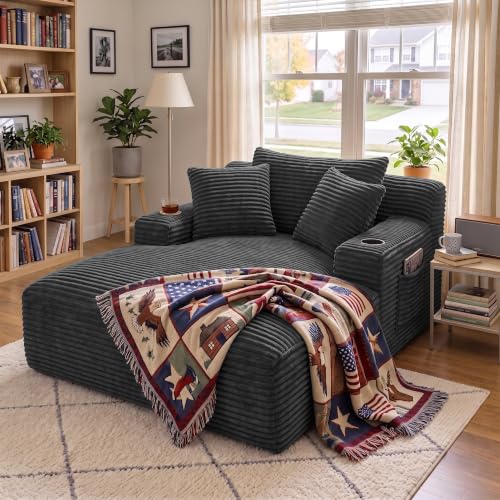
Chorlenimi Chaise Lounge Chair Indoor, Upholstered Reading Boneless Chair with Deep Seat, Cloud Lounge Chair with 3 Pillows for Living Room, Bedroom, No Assembly
Check price on Amazon
Flamaker Futon Sofa Bed, Black Faux Leather Convertible Loveseat Couch | Modern Adjustable Folding Futon Set with 2 Cup Holders & Removable Armrests, Recliner Lounge for Living Room & Apartment
Check price on Amazon
feliz home Boneless Chaise Lounge Couch Indoor, Small Corduroy Upholstered Sleeper Sofa Bed Reading Chairs with 3 Pillows, Fluffy Comfy Cloud Sofas Couches, Compression Boneless Sofa for Small Corner
Check price on Amazon
Korser 108" L-Shaped Modular Sectional Sofa with Chaise, Boneless Comfy Corduroy Fluffy Couch with Deep Seat and Side Pockets, Flexible Module Combination for Living Room, No Assembly, Side Pockets
Check price on Amazon