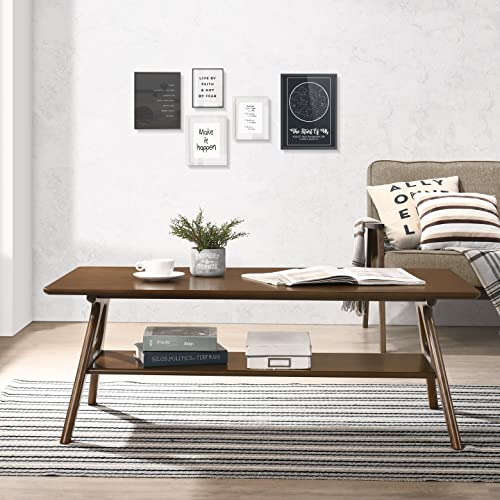
Why Mid Century Modern Tables Still Define the Living Room
Mid century modern design grew out of a simple idea: furniture should serve people, not the other way around. Coffee tables and end tables from this era strip away heavy carvings and bulky frames in favor of tapered legs, clean geometric tops, and warm natural wood. The result is a table that feels light in a room, visually lifts the floor, and pairs easily with both vintage pieces and contemporary upholstery.
If you are furnishing a living room around a new couch, a mid century modern coffee table and end tables combination is one of the most reliable choices you can make. The style is flexible enough for a mid century modern living room couch, a mid century modern sofa, or a more neutral sectional. It also works in apartments, where the open frames keep sightlines clear and the room feels larger than it is.
This guide walks you through the decisions that matter most: table shape, wood and finish, height and proportion, matching versus mixing, and how to place tables so the room actually functions. By the end, you will have a clear checklist you can apply to any product page before you commit.
Quick principle: In mid century modern design, proportion matters more than decoration. A table that is slightly too low or too wide will disrupt a room more than a finish that is slightly off-tone.
The Core Elements of a Mid Century Modern Coffee Table
Not every table with angled legs qualifies as mid century modern. The style is defined by a consistent set of design signals. When you evaluate a product listing, check for these features:
- Tapered legs: Legs that narrow toward the floor are the signature detail. They can be round, square, or slightly splayed, but the taper is what creates the visual lightness.
- Low, horizontal profile: Most mid century coffee tables sit lower than seat height and emphasize width over height, reinforcing the horizontal line of the couch.
- Clean tabletop geometry: Rectangular, oval, round, and kidney shapes are all authentic. What they share is an uncluttered surface with minimal molding.
- Natural wood or honest materials: Walnut, teak, oak, and ash are classic. Stone tops, glass, and lacquered finishes also appear, provided the structure stays simple.
- Visible joinery and structure: Exposed edges, stretchers, and shelf slats are common and should look intentional rather than hidden.
When a listing shows all five signals, you are looking at a genuine mid century modern piece rather than a generic modern table with a marketing label. For a broader survey of the category, our mid century modern end tables set of 2 guide covers how the side tables translate the same design language.
Coffee Table Shapes and What They Do for a Room
Shape is the fastest way to change how a living room feels. Each form solves a different spatial problem:
Rectangular tables
The most common and the most space-efficient against a straight couch. A rectangular top mirrors the couch line and makes a room feel ordered. For long seating, choose a long couch table so the table spans roughly two-thirds of the couch length rather than sitting as a small island in the middle.
Oval and round tables
Curved tops soften rooms with many hard edges and improve flow around tight seating. They are excellent when the coffee table sits in a walkway, because there is no corner to catch a knee. Round tables also work well with modern accent chairs arranged in a conversation circle.
Nesting and multi-piece tables
Nesting tables are a mid century staple. They let you keep a compact footprint day to day and pull out a second surface when guests arrive. A living room table set of 3 can replace both a coffee table and two side tables in a compact room, which is often the most efficient solution for a small apartment.
Square and low-profile tables
Square tops suit sectionals and L-shaped seating where the table sits in the corner of the arrangement. They pair naturally with a mid century modern L-shaped couch or a mid century modern sectional, where the inner corner needs a compact anchor rather than a long span.
| Shape | Best For | Watch Out For |
|---|---|---|
| Rectangular | Straight couches, long sofas, formal layouts | Corners in narrow walkways |
| Oval / Round | Tight circulation, conversation seating, soft rooms | Less usable surface for large trays |
| Nesting set | Small rooms, flexible hosting, dual-purpose spaces | Stability when fully extended |
| Square | Sectionals, corner arrangements, compact seating | Under-scaling next to a very long couch |
Materials and Finishes That Age Well
Mid century modern furniture was built around honest materials, and the finish you choose determines how the table will look after years of daily use.
Walnut
Walnut is the defining wood of the style: rich, chocolate-toned, and visually warm. It shows grain beautifully and pairs with almost any upholstery color. A walnut mid century modern coffee table and end tables set is the classic choice for a living room anchored by a leather or neutral fabric couch.
Oak and ash
Lighter and more contemporary in feel. Oak and ash suit Scandinavian-leaning rooms and bright spaces where walnut would feel heavy. They also show scratches less dramatically than dark finishes.
Teak and acacia
Teak has a golden warmth associated with vintage Danish pieces. Acacia offers a similar look with a more pronounced grain and is common in newer production. Both benefit from occasional oiling.
Stone, glass, and lacquer
Marble or terrazzo tops on a wood base add a premium, high-end tier feel. Glass tops keep a room visually open. Lacquered finishes in white, black, or muted tones work well when the couch is already the visual focal point.
Metal accents
Brass, blackened steel, and powder-coated metal legs appear throughout the style. Metal frames are durable and resist wear at the floor line, which matters in high-traffic rooms.
Durability note: Solid wood and veneer over engineered wood both have a place. Solid wood and reinforced frames hold up longer under heavy use, while well-made veneer offers a more even grain and greater stability in humid rooms.
Getting the Height and Proportions Right
Most buying mistakes are sizing mistakes, not style mistakes. Use these rules as a starting point:
- Height: The coffee table top should sit roughly level with, or slightly below, the couch seat cushion — typically a few inches lower. Tables that are too high block sightlines; tables that are too low force you to lean forward.
- Length: Aim for about two-thirds of the couch length. A very long couch benefits from a long single couch pairing or a long table to avoid a floating, undersized surface.
- Clearance: Leave 14 to 18 inches between the couch and the table. This is enough room to walk through and to reach a drink comfortably.
- End table height: End tables should sit within an inch or two of the couch arm height so a lamp and a mug are both within easy reach.
- Scale with the room: In a large room layout, a single small table can look lost. Either choose a larger top or add a second surface through nesting.
For a compact room, sizing decisions compound quickly. Pair a low, narrow table with a loveseat and chair for small living room arrangement and the room will read as intentional rather than crowded.
Matching Coffee Table and End Tables: Set or Mix?
Both approaches work, but they produce different effects.
Matching sets
A coordinated set creates a calm, cohesive room. It is the safest choice when the couch is patterned, when the rug is busy, or when the room is small and visual noise needs to be limited. A modern coffee and end table sets purchase also removes the risk of clashing wood tones. If you want the traditional mid century look, a mid century modern end tables set of 2 that shares the coffee table's leg profile and wood species delivers a finished result.
Mixed sets
Mixing lets you add personality and solve layout problems. The most reliable approach is to keep one element constant — usually the wood species or the leg shape — and vary everything else. For example, a round walnut coffee table can sit alongside two stone-topped square end tables if both share tapered legs.
When to coordinate with other furniture
If the room already contains a TV stand or media unit, consider whether the tables should echo it. A matching coffee table and TV stand pairing creates a unified media wall, while a deliberately contrasting table can break up an overly uniform look. Similar logic applies when seating is purchased as a group, such as a matching couch, loveseat, and recliner set.
End Tables: The Most Underrated Part of the Layout
The coffee table gets the attention, but end tables do most of the functional work. They hold lamps, drinks, remotes, and books, and they define the outer edges of a seating arrangement.
- One per seat-end: Place an end table at each end of the couch where there is room. If one side is against a wall, a single table is enough.
- Drawer or shelf: A shelf or drawer gives you somewhere to put clutter at the end of the evening. This matters more than most buyers expect.
- Pair with lighting: An end table without a lamp is a missed opportunity. Choose a table with enough top surface for the lamp base you plan to use.
- Consider a C-table: A C-shaped table slides over the couch arm and is ideal for laptops and snacks in a room used for work.
For rooms with a sectional, end tables at the outer arms plus a compact table in the inner corner usually cover every seat. A living room with sectional and chairs layout benefits from this three-point table strategy.
Room Layout: Where the Tables Should Go
Table placement should support how the room is actually used. These arrangements cover the most common situations:
Facing the focal point
When the couch faces a TV or fireplace, the coffee table sits centered between them. Leave enough clearance so people can pass behind the couch and so the table does not block the view from the sides.
Conversation layout
When the goal is conversation, anchor the seating around the coffee table rather than the TV. A round or oval top works best because everyone can reach it. Our conversation seating guide covers the surrounding chair placement in more detail.
Behind-the-couch tables
In open-plan rooms, a narrow table behind the couch defines the boundary between living and dining zones and adds a landing spot for keys and books. A long narrow console table behind couch is the standard solution; if you need closed storage, compare a long narrow console table with storage version. Slimmer options like a long skinny console table behind couch or a long skinny table for behind couch suit tighter footprints.
Small rooms
In small rooms, consider the coffee table as the only table and use a long table behind couch for storage instead of two end tables. The small space layout guide has additional strategies for keeping circulation open.
Ready to compare specific models? Browse curated options for this style below.
Explore OptionsHow These Tables Pair With Mid Century Modern Seating
The table should respond to the couch, not compete with it. A few proven pairings:
- Leather couch + walnut tables: A warm, traditional mid century combination. A mid century modern brown leather couch paired with walnut tables reads as a considered, long-term investment.
- Fabric couch + oak tables: Lighter and more relaxed. Pair an oak table with a mid century modern couch in a neutral fabric for a bright, airy room.
- Sectional + nesting tables: A sectional creates multiple access points, so flexible surfaces work better than one fixed table. Nesting tables let you adapt as seating shifts.
- Couch and chair sets: If you are buying seating as a coordinated group, such as a mid century modern couch and chair set or a mid century modern couch and loveseat, choose tables that repeat the leg taper without duplicating the upholstery tone.
If you have not settled on seating yet, start with the mid century modern sectional or mid century modern sofas guides, then return to tables once the couch dimensions are fixed.
Quality Checklist Before You Commit
Use this checklist on any product page. It catches the majority of disappointing purchases before they happen.
- Leg construction: Tapered legs should be solid wood or metal, not hollow composite. Check that the taper does not create a thin, fragile base.
- Joinery: Look for corner blocks, dowels, or visible quality joinery. Screws into end grain alone are a warning sign.
- Finish consistency: On a set, the stain and sheen should match across pieces. Slight variation is normal in natural wood; large variation is not.
- Weight and stability: A coffee table should not slide when someone leans on it. Anti-slip pads and a weighted base help.
- Edge treatment: Rounded or eased edges are safer in family homes and more comfortable when sitting close to the table.
- Assembly: Mid century tables often ship flat. Confirm that hardware is included and that the leg attachment is metal-to-metal rather than wood-to-wood only.
Tier-based buying guidance
Rather than comparing figures, think in tiers. Entry-level and essential tier tables usually use veneer over engineered wood with simpler assembly. Mid-range tables typically offer solid wood legs, better hardware, and more consistent finishes. Premium and high-end tier pieces use solid hardwood, refined joinery, and hand-finished surfaces that hold up for decades. A top-tier or flagship piece is a long-term investment and usually the right call when the couch is also a lasting purchase.
Care and Maintenance for Wood and Stone Tables
- Dust regularly with a soft, slightly damp cloth. Avoid abrasive cleaners on any wood finish.
- Use coasters for hot and cold drinks. Heat and condensation rings are the most common damage on lacquered and oiled tops.
- Re-oil annually if the finish is oiled rather than sealed. A thin coat of furniture oil restores depth and protects the grain.
- Blot spills immediately. On stone tops, wipe and dry to prevent staining from oils and acidic drinks.
- Protect from direct sun. Wood will shift tone over time, so rotate decorative objects and keep the table out of prolonged direct sunlight.
- Tighten hardware on the legs once or twice a year. Loose legs are the most common failure point on flat-pack mid century tables.
For a full maintenance routine covering upholstery as well, see our couch care and maintenance section.
Common Mistakes to Avoid
- Buying the table before measuring the couch. Length, seat height, and arm height all constrain the table choice.
- Ignoring the walkway. A table that looks right but leaves no path to the far seat will be moved within a week.
- Mixing too many wood tones. Two wood species can work; three usually do not. Anchor the room on one dominant tone.
- Choosing glass without considering visibility. Glass tables look open but show everything stored beneath them and require frequent cleaning.
- Overlooking the end tables. A beautiful coffee table with undersized end tables leaves the room feeling incomplete.
Frequently Asked Questions
What makes a coffee table mid century modern?
Clean lines, tapered legs, organic curves, and natural wood tones such as walnut or teak are the defining signals. The style avoids heavy ornamentation and keeps a low visual profile so the room feels open.
How do I choose the right size coffee table for my couch?
Choose a table about two-thirds the length of your couch and roughly level with the seat cushion, leaving 14 to 18 inches of clearance. For long seating, a long table keeps the proportions balanced rather than leaving a small surface floating in the middle.
Should end tables match the coffee table?
Matching sets create a cohesive look and are the safer choice in small or busy rooms. Mixed sets add personality, but keep one element — usually wood species or leg shape — consistent so the pieces still feel related.
Are mid century modern tables suitable for small living rooms?
Yes. Tapered legs and open frames create visual space, which makes them a strong choice for compact rooms. Pair a low-profile table with a loveseat and chair arrangement to keep circulation clear.
What wood is most authentic for mid century modern tables?
Walnut is the most recognizable, with teak a close second in vintage Danish pieces. Oak and ash appear frequently and suit lighter, Scandinavian-leaning interiors. All four are authentic; the choice is about the tone and weight you want in the room.