
Narrow Console Table for Dining Room: The Complete Guide
Discover how a slim, space-conscious console table can transform your dining room into a more organized, elegant, and functional space. Compare styles, depths, materials, and placement strategies before you choose.
Explore Buying TipsWhy a narrow console table belongs in your dining room: Dining rooms are often asked to do more than serve meals. They double as home offices, homework stations, and hosting hubs. A narrow console table adds a landing surface for serving pieces, linens, and decor without eating into the floor space you need for chairs and foot traffic. Its slim depth is the key advantage: it hugs the wall, leaving your dining table and walkways clear.
This guide walks you through the measurements that matter, the materials that hold up to daily use, the styles that suit different dining room aesthetics, and the placement rules that keep the room feeling open. By the end, you will know exactly which narrow console table fits your dining room and how to style it.
What You Will Learn
What Is a Narrow Console Table?
A narrow console table is a long, slim-profile table designed to sit against a wall. In a dining room, it typically serves as a sideboard alternative, a serving station, or a decorative anchor. Unlike a full-depth buffet or sideboard, a narrow console usually measures 10 to 16 inches in depth, which means it projects very little into the room.
Console tables come in many forms: open-leg designs with a single shelf, wall-mounted floating versions, drop-leaf models that expand when needed, and designs with drawers or cabinets for concealed storage. For dining rooms, the most useful configurations balance a usable top surface with at least one lower shelf or drawer for linens, serveware, and candles.
Because dining rooms often sit adjacent to living areas or entryways, a narrow console can also act as a visual bridge between zones. If you are furnishing a connected space, our guide to living room furniture can help you coordinate the console with the seating and storage pieces nearby.
Measurements That Matter
Before you fall for a design, confirm the numbers. A console table that is too deep will crowd your dining chairs; one that is too tall will feel out of scale. Use the table below as a practical reference.
| Dimension | Typical Range | What to Consider |
|---|---|---|
| Depth | 10–16 inches | Stay near the lower end if the console sits behind dining chairs or in a walkway. |
| Height | 28–34 inches | Match or slightly exceed your dining table height for visual cohesion. |
| Length | 36–72 inches | Leave at least 6 inches of breathing room on each side against the wall. |
| Clearance below | 12–20 inches | Enough for baskets, stools, or a lower shelf you can actually use. |
Traffic flow rule: If the console sits on a path between the kitchen and the dining table, keep at least 36 inches of clear walkway. In tight rooms, a 10-inch-deep wall-mounted console is often the best compromise. If your dining room doubles as a living space, explore types of couches for living room layouts to coordinate the two zones without visual clutter.
Styles and Materials
The right material depends on how hard your dining room works. A formal room used a few times a year can accommodate delicate finishes, while a daily-use family dining room benefits from sealed wood, metal, or glass.
Solid Wood and Engineered Wood
Wood consoles offer warmth and blend with most dining room styles. Solid hardwood is the most durable option, while engineered wood with a quality veneer is a solid choice for the tier. Look for sealed or lacquered finishes if the console will host drinks and serving trays.
Metal Frames
Metal consoles, often paired with wood or glass tops, bring an industrial or modern edge. Powder-coated steel resists scratches and is easy to wipe down. These designs tend to be lighter in visual weight, which is helpful in small dining rooms.
Glass and Acrylic
A glass-top console keeps sightlines open and makes a narrow room feel larger. Acrylic is a lightweight alternative with a similar airy effect. Both require regular cleaning to maintain clarity.
Combination Materials
Many popular designs pair a wood top with a metal base or add a marble-look top. These combinations are feature-rich for their class and suit transitional dining rooms well.
If your dining room connects to a living area with soft seating, coordinate the console's finish with other accent pieces. Our velvet couch guide shows how texture and finish choices can tie adjacent zones together.
Quality Tiers and What to Expect
Instead of focusing on numbers, think in tiers. Each tier describes a relative position in the market and helps you set expectations for construction and finish.
Essential Tier
Typically engineered wood or thin metal frames. Suitable for light use, guest rooms, or as a starter piece. Assembly is common, and finishes may be simpler.
Balanced Tier
Better joinery, more consistent finishes, and often solid wood in key areas. A good match for daily dining room use and serving duties.
High-End Tier
Solid hardwood, refined hardware, and durable finishes. These consoles are built for frequent use and long-term placement in a main dining room.
Flagship Tier
Heirloom-grade materials, hand-finished details, and custom options. A worthwhile investment if the dining room is a focal part of your home.
A mid-range model often provides the best balance for a dining room that is used several times a week. Entry-level designs are fine for occasional use or secondary spaces, while premium and luxury tiers make sense when the console is a permanent anchor piece.
Placement Strategies for Dining Rooms
Where you place the console matters as much as the design you choose. Here are the most effective configurations.
Along a Blank Wall
The classic placement. A console against a long, empty wall balances the room and creates a natural serving station. Hang art or a mirror above it to draw the eye upward, which makes the ceiling feel higher and the room more spacious.
Behind the Dining Chairs
If your dining table sits near a wall, a slim console can act as a buffer between the chair backs and the wall. Keep the depth under 14 inches to preserve comfortable seating clearance. This setup is ideal for a narrow dining room where a full sideboard would block movement.
Between Windows
A short console fits neatly between two windows and provides a spot for a lamp or a seasonal display. Measure the gap carefully and choose a console that leaves a few inches on each side so the window trim is not crowded.
As a Room Divider
In an open floor plan, a long console can subtly separate the dining area from an adjacent living space. Pair it with a low basket or a pair of stools underneath to reinforce the division without blocking light. For coordinating ideas, see our L-shaped sectional for small space guide.
Near the Entryway
If your dining room opens to an entryway, a narrow console can serve double duty as a landing spot for keys and mail. Our entryway furniture guide offers complementary storage ideas.
Styling Your Dining Room Console
A narrow surface benefits from restraint. Aim for two to four intentional groupings rather than a crowded display.
- Anchor the ends: A pair of slim table lamps or a single sculptural lamp gives the console structure. Coordinate the light with the rest of the room using our table lamp sets for living room guide.
- Add a tray: A shallow tray corrals salt cellars, napkins, a small plant, or a candle. It also makes it easy to clear the surface when you need serving space.
- Layer with textiles: A runner or a folded linen adds softness. Keep the fabric simple so it does not compete with the console's finish.
- Use vertical space: A mirror, a piece of art, or a wall-mounted shelf above the console adds depth and function.
- Seasonal touches: Rotate in a small seasonal arrangement. Our summer decor guide has ideas that translate well to dining rooms.
If the console sits near a living area, coordinate with the pillows and throws in that zone. Our throw pillows guide can help you tie the color story together.
Buying Checklist
Use this checklist to evaluate any narrow console table before you commit.
- Measure twice: Confirm depth, height, and length against your wall and walkway. Tape the footprint on the floor.
- Match the scale: A console that is too tall overwhelms the dining table; one that is too short feels disconnected.
- Check the finish: Look for sealed or lacquered surfaces if the console will host drinks and food.
- Confirm stability: A narrow console should not wobble. Check for leveling feet or anti-tip hardware.
- Plan storage: A lower shelf or drawer turns a decorative piece into a functional one.
- Consider assembly: Some designs require significant assembly. Read the details before you buy.
- Coordinate the style: Match the console's finish and lines with the rest of your dining room furniture.
If you are also refreshing the dining room's soft furnishings, our guides to accent pillows and lighting sets are useful complements.
Recommended Narrow Console Tables for Dining Rooms
⚠️ AFFILIATE DISCLOSURE: This website contains affiliate links. As an affiliate Associate, we earn from qualifying purchases. If you make a purchase through these links, we may receive a small commission at no additional cost to you. Read our full affiliate policy.

Epecoya Console Tables for Entryway 63-Inch, Natural Brown | Wooden Sofa Tables Narrow Long, Farmhouse Entryway Tables for Living Room, Hallway, Apartment
Check price on Amazon
FABATO 61” Fluted Long Console Table with 2 Hidden Storage Cabinets, Brown | Wooden Rectangular Sofa Table, Behind the Couch, Narrow Entryway Table for Entrance, Hallway, Living Room, Foyer
Check price on Amazon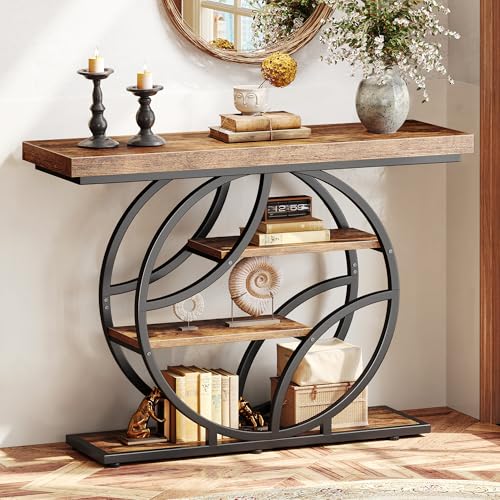
Huuger 41.3 Inch Entryway Table with Artistic Curved Metal Frame,Sofa Table | Modern Console Tables, Entrance Table for Entryway, Hallway, Entrance, Foyer, Living Room, O-Shaped Metal Frame, Rustic Brown
Check price on Amazon
Armocity Console Table for Entryway, 47" Farmhouse Sofa Tables Narrow Long | Entry Way Table Behind Couch, Hallway Table for Entrance, Living Room, Foyer, Brown Oak
Check price on Amazon
SUPERJARE 78.8 inch Narrow Behind Couch Table with 2 Charging Stations | 2 AC Outlets with USB-C Ports, Extra Storage Behind Sofa, Sofa Table Console Table for Entryway Living room, Rustic Brown
Check price on Amazon
Signature Design by Ashley Counter Height Dining Table, 72-in Sofa Table | Seats 3, Veneers, Wood and Engineered Wood, Behind Couch Table, Slim 16-in Depth, Torjin Series
Check price on Amazon
Plank+Beam Classic Console Table, 56 Inch, Blonde | Non-Toxic Finishes, Versatile Design, Elegant Details, Easy Assembly, Quick Setup, Solid Wood
Check price on AmazonFrequently Asked Questions
How deep should a narrow console table be for a dining room?
A narrow console table for a dining room typically measures between 10 and 16 inches in depth. This slim profile allows it to fit against a wall without obstructing walkways, while still providing a usable surface for serving pieces, decor, or table linens. If your dining room has a tight walkway behind chairs, lean toward the 10 to 12 inch range to preserve comfortable circulation.
What is the ideal height for a dining room console table?
Standard console tables stand between 28 and 34 inches tall. For dining room use, a height that aligns with or slightly exceeds your dining table surface feels cohesive. If you plan to use the console as a serving station, a height around 30 to 32 inches is comfortable for most adults. Always measure your chair backs and the distance to any wall before finalizing your choice.
Can a narrow console table be used in a small dining room?
Absolutely. A narrow console table is one of the most space-efficient additions for a small dining room. Its slim depth lets it sit against a wall or behind a sofa without crowding the room. Choose a model with open legs or a glass top to keep visual weight light, and consider a wall-mounted design if floor space is especially limited.
What materials work best for a dining room console table?
Solid wood and engineered wood with a quality veneer offer durability and a warm, classic look. Metal frames paired with wood or glass tops provide a modern industrial feel and are easy to clean. For dining rooms that see frequent use, consider a table with a sealed or lacquered finish that resists moisture and stains from serving items and spills.
How do I style a narrow console table in a dining room?
Keep the surface balanced and functional. A pair of table lamps or a single statement lamp anchors the ends, while a tray corrals smaller items like salt cellars, napkins, or a small plant. Add a piece of artwork or a mirror above the table to draw the eye upward. Avoid overcrowding; a narrow surface benefits from two to four intentional objects rather than a busy arrangement.
Final Thoughts
A narrow console table is a small addition that delivers outsized benefits in a dining room. It adds a serving surface, a storage layer, and a visual anchor without consuming floor space. Focus on depth and height first, then choose a material and tier that match how often the room is used. With the right piece in place, your dining room will feel more organized, more elegant, and better prepared for everyday meals and special occasions alike.
If you are furnishing adjacent spaces at the same time, our guides to entryway furniture and living room furniture can help you keep the look consistent from room to room.