
Replace Reclining Couch Fabric: The Complete Guide
Restore your recliner to its original comfort and style. This complete guide walks you through fabric selection, reupholstery methods, tool requirements, and expert tips for replacing reclining couch fabric.
Explore Fabric OptionsWhy replace reclining couch fabric? Reclining couches are a significant investment in comfort, and their fabric often shows wear long before the frame or mechanism fails. Rather than replacing the entire piece, reupholstering the fabric extends its life, refreshes your living room aesthetic, and lets you upgrade to a more durable material. Whether you are dealing with faded upholstery, pet damage, or simply want a new look, this guide covers the entire process from evaluation to finished results.
When Should You Replace Reclining Couch Fabric?
Before committing to a reupholstery project, evaluate whether fabric replacement makes sense for your specific piece. Reclining couches have a unique combination of mechanisms, cushions, and fabric panels, so the condition of each component matters. The following scenarios typically justify a fabric replacement rather than a full couch replacement.
- Fabric fading and sun damage: Prolonged exposure to sunlight breaks down fibers, causing color loss and weakening the weave.
- Pet damage: Claw marks, snags, and accumulated pet hair embed themselves in fabric and often cannot be cleaned out.
- Stains that resist cleaning: Oil-based stains, ink, or deeply set spills that professional cleaning cannot lift.
- Pilling and abrasion: Worn fabric along armrests, seat cushions, and the footrest area where friction is highest.
- Structural integrity intact: If the reclining mechanism, frame, and cushion foam are still in good condition, fabric replacement is a sensible choice.
- Style refresh: You want to update the color or texture of your living room without buying new furniture.
If the reclining mechanism is broken or the frame has significant damage, fabric replacement alone may not be worthwhile. In that case, consider a professional assessment before investing time in the project. For those exploring alternative seating upgrades, reviewing reclining couches that aren't ugly can provide fresh inspiration.
Choosing the Right Fabric for a Reclining Couch
Reclining couches demand fabric that can withstand the friction of moving mechanisms, frequent footrest extension, and daily use. The fabric you choose must balance durability, comfort, and ease of maintenance. Below is a comparison of the most common fabric categories for recliner reupholstery.
| Fabric Category | Best For | Durability Tier | Maintenance |
|---|---|---|---|
| Performance Fabric | Families, pets, high-traffic living rooms | Top-tier | Stain-resistant, easy to wipe clean |
| Microfiber | Comfort-focused households, casual living | Mid-range | Machine-washable covers, resists spills |
| Woven Polyester | General use, entry-level reupholstery | Essential tier | Regular vacuuming, spot cleaning |
| Cotton Blend | Breathable comfort, classic look | Mid-tier | Professional cleaning recommended |
| Velvet | Luxury aesthetic, low-traffic rooms | Premium | Delicate; requires gentle care |
| Leather and Faux Leather | Modern look, easy maintenance | High-end tier | Wipe clean, condition periodically |
Performance fabrics are usually the safest choice for reclining couches because they resist the abrasion caused by the mechanism and footrest. Mid-range microfiber offers excellent comfort and is straightforward to maintain, making it a balanced option for most households. If you are restoring a vintage recliner or aiming for a luxurious finish, premium velvet or leather can elevate the result, but they demand more careful handling during installation. For complementary ideas on styling and material matching, see our guide on reclining sectionals that don't look like recliners.
Tools and Materials You Will Need
Replacing reclining couch fabric is a hands-on project that requires a specific set of tools. Gathering everything before you begin saves time and prevents interruptions. The list below covers the essentials for a standard fabric replacement job.
- Upholstery staple gun with stainless steel staples in multiple lengths (heavy-duty preferred for recliner frames)
- Staple remover or a flat pry bar to pull old staples without damaging the frame
- Heavy-duty scissors and a rotary cutter for precise fabric cuts
- Seam ripper for opening old seams and preserving original fabric pieces as templates
- Sewing machine with a heavy-duty needle for joining fabric panels (optional if you buy pre-sewn covers)
- Fabric measuring tape and tailor's chalk for accurate pattern marking
- Replacement foam or batting if cushions have flattened during use
- Dust mask and work gloves for safety when removing old staples and dusty fabric
- Recliner mechanism lubricant to service the mechanism while the fabric is off
If you prefer to skip the sewing stage, pre-sewn replacement covers are available for many standard recliner models. These simplify installation but may offer fewer fabric choices. For a more involved restoration, combining fabric replacement with restuffing a couch can revive both the look and the support of your seating.
Step-by-Step: How to Replace Reclining Couch Fabric
The process below assumes you are working with a standard manual or power recliner with removable cushions. Work in a well-ventilated space, and take photos at each stage so you can reference the original assembly when reinstalling panels.
- Disassemble the recliner. Unplug power recliners and remove the backrest from the seat base if the model allows it. Detach the footrest by unscrewing the hinge brackets, and remove seat and back cushions. Label every screw and bolt in separate bags.
- Remove the old fabric carefully. Use a staple remover to pull staples along the underside and frame edges. Work slowly to avoid tearing the fabric, because each panel serves as a template for the new cover. Keep track of how each piece was attached.
- Inspect the frame and mechanism. With the fabric off, check the wooden or metal frame for cracks, loose joints, or rust. Clean and lubricate the reclining mechanism. This is also the ideal time to replace worn foam or webbing.
- Create a pattern. Lay the old fabric pieces flat on the new material and trace their outlines with tailor's chalk. Add a seam allowance of about 1.5 cm on all sides. Mark the orientation of the fabric grain and any staple lines.
- Cut and sew the new panels. Cut each piece with sharp scissors or a rotary cutter. If you are sewing, join panels along the original seam lines, matching patterns where necessary. Test-fit the panels before stapling.
- Staple the new fabric in place. Start at the center of each panel and work outward, pulling the fabric taut as you staple. Fold edges under for a clean finish. Reinstall the footrest and backrest, then reattach all hardware.
- Reassemble and test. Reinstall the cushions and test the reclining mechanism through its full range of motion. Check that the fabric does not bunch or pull when the footrest extends. Make any final adjustments before trimming excess fabric.
DIY Reupholstery vs. Professional Service
Deciding between a DIY approach and professional reupholstery depends on your comfort with tools, the complexity of your recliner, and the finish you expect. Both routes have clear advantages.
| Factor | DIY Reupholstery | Professional Service |
|---|---|---|
| Skill requirement | Moderate to high (sewing and stapling) | None |
| Time investment | Substantial; typically a weekend or more | Minimal for you; turnaround depends on the shop |
| Fabric choice | Unlimited; you source your own material | Often limited to shop suppliers |
| Finish quality | Varies with experience | Consistently professional |
| Best for | Simple recliners, confident crafters | Complex power recliners, premium fabrics |
If your recliner has a complex mechanism or you are working with premium upholstery, professional service can be the safer route. For simpler models and entry-level projects, DIY reupholstery is a rewarding way to refresh your furniture. Reviewing DIY reupholstery guidance and full reupholstery planning helps set realistic expectations before you begin.
Recommended Fabric & Reupholstery Supplies for Reclining Couches
⚠️ AFFILIATE DISCLOSURE: This website contains affiliate links. As an affiliate Associate, we earn from qualifying purchases. If you make a purchase through these links, we may receive a small commission at no additional cost to you. Read our full affiliate policy.

TAOCOCO Recliner Sofa Slipcover, 3 Pieces Polyester Fabric Stretch Sofa Covers for 3 Seat Reclining Couch, Soft Washable Furniture Protector with Pockets (3 Seat, Dark Gray)
Check price on Amazon
GUEAPY Reclining Sofa for Living Room, 75" Manual Reclining Couch with Chenille Fabric, Flip-Down Center Backrest, 4 Cup Holders, Storage Drawer & Side Pockets, Home Cinema Seating,Gray
Check price on Amazon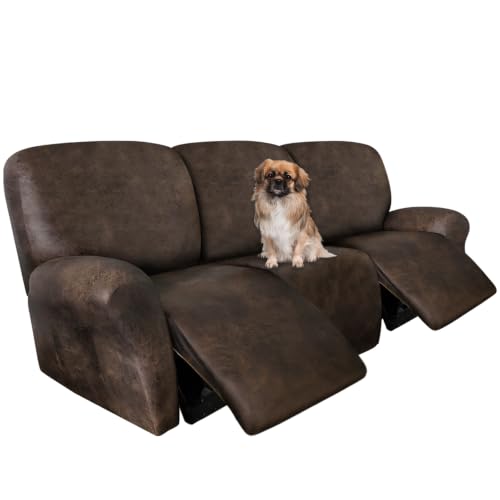
ANARACHON Leather Look Recliner Couch Cover 8-Piece Recliner Sofa Slipcovers 3 Seater for Reclining Couches Furniture Protector Spandex Fabric Washable (Recliner Sofa, Brown)
Check price on Amazon
TAOCOCO Recliner Sofa Slipcover, 3 Pieces Polyester Fabric Stretch Sofa Covers for 3 Seat Reclining Couch, Soft Washable Furniture Protector with Pockets (3 Seat, Coffee)
Check price on Amazon
CANMOV Manual Reclining Sectional Sofa Set, Fabric L Shaped Living Room Furniture Sets, Comfy Recliner Corner Couch and Recliner Chair Set with Center Console, Cup Holder, Light Brown
Check price on Amazon
CANMOV Manual Recliner Sofa Set, 3 Seat Recliner with Side Pockets and Cup Holders, Sofa Couch with Adjustable Footrest for Living Room/Office/Home Theater, Dark Grey
Check price on Amazon
Genina Recliner Sofa Covers - Stretch Reclining Couch Covers with Stripe Jacquard - 3 Seat Cushion Slipcovers with Soft Fabric - Furniture Protector for Pet Kid (Dark Gray)
Check price on AmazonProtecting Your New Reclining Couch Fabric
Once the new fabric is installed, regular maintenance extends its lifespan and keeps the recliner looking fresh. Follow a simple care routine based on the material you chose.
- Vacuum weekly with a soft brush attachment to remove dust and grit that abrades fibers.
- Rotate cushions regularly to distribute wear evenly across the seat.
- Apply a fabric protector designed for your material to repel spills and stains.
- Clean spills immediately by blotting, not rubbing, to prevent stains from setting.
- Keep the recliner out of direct sunlight or use blinds to reduce fading.
- Service the mechanism annually to prevent strain on the fabric from stiff joints.
For a deeper dive into material-specific care, explore our leather cleaning and fabric cleaning guides. If the cushions themselves are the main issue, replacement cushions for a couch may be a smarter companion upgrade to your reupholstery project.
Frequently Asked Questions
Can I replace the fabric on a reclining couch myself?
Yes, many homeowners successfully reupholster standard manual recliners with basic upholstery tools. Power recliners and complex mechanisms are more challenging, so consider professional help if you are unsure about disconnecting wiring or hinges.
How much fabric is needed to reupholster a reclining couch?
The exact amount depends on the couch size and pattern layout. A standard recliner typically requires several yards of 54-inch wide fabric. Always measure each panel and add extra material for pattern matching and seam allowances.
What is the best fabric for a reclining couch?
Performance fabric is generally the top-tier choice because it resists stains and abrasion from the reclining mechanism. Microfiber and woven polyester are solid mid-range alternatives that balance durability and comfort.
Can I replace reclining couch fabric without sewing?
Yes, pre-sewn replacement covers are available for many recliner models and require only stapling. However, fabric selection may be limited compared to a custom sewing approach.
How long does fabric replacement take?
A straightforward manual recliner can take a full weekend for a confident DIYer. Professional shops typically complete the job within a week or two, depending on fabric sourcing and workload.
Ready to Refresh Your Recliner?
Browse our recommended fabric and reupholstery supplies above to start your project. With the right materials and a careful approach, replacing reclining couch fabric can restore comfort and style for years to come.
View Recommended Supplies