
Small Accent Tables for Living Room: The Complete Guide
Every living room has a corner, a gap, or a spot beside the couch that is quietly waiting for the right piece. Small accent tables fill those spaces with purpose — holding a lamp, a cup of coffee, or a book, while tying the room together.
Why this guide matters: If you are researching accent tables for a living room, you already know what you want. What you likely need is clarity on sizing, materials, placement, and how to choose a piece that looks intentional rather than crowded. This guide walks you through each decision so you can buy with confidence.
What Counts as a Small Accent Table?
A small accent table is a compact piece of furniture designed to sit beside or near primary seating. Unlike a coffee table, which anchors the center of a seating arrangement, an accent table serves a specific seat or a specific corner. In living rooms, the most common forms are end tables, side tables, and small nesting tables.
For a table to qualify as “small” in a living room context, it typically measures under 24 inches in width and depth. Height varies, but most accent tables sit between 20 and 26 inches tall — roughly level with a couch arm. These dimensions keep the table functional without overwhelming a compact layout.
Small accent tables are especially valuable in apartments and open-plan homes where furniture must work harder. They provide a surface for a lamp, a drink, a phone, or a decorative object without consuming floor space the way a larger console or sideboard would.
End Tables
Placed at the end of a couch or between two chairs. Usually 18–24 inches wide and roughly couch-arm height.
Side Tables
Similar to end tables but often narrower, designed to slot into tight gaps beside a chair or recliner.
Nesting Tables
A set of two or three tables that tuck under one another. Ideal for rooms that occasionally need extra surface area.
Pedestal Tables
Round or square tops on a single central column. A strong choice for small rooms because they visually occupy less space.
Why Every Living Room Needs One
A living room without an accent table forces guests to balance drinks on their knees or reach awkwardly for the coffee table. That small friction adds up. An accent table solves a practical problem and, when chosen well, contributes to the room’s visual balance.
There is also a design argument. A couch floating in a room without side tables can feel unfinished. An accent table gives the eye a resting point at the end of the seating arrangement and helps define the boundary of the conversation area. In open-plan layouts, that boundary matters because it tells the room where the living zone ends and the next zone begins.
Finally, accent tables offer flexibility. A coffee table is a commitment — it occupies the center of the room and dictates traffic flow. An accent table can be moved, swapped, or added later. For renters and for anyone still refining a living room layout, that flexibility is a real advantage.
Editorial note: If you are still deciding on the primary seating, our guide to small living room couch ideas for small spaces pairs well with this article. The table should follow the couch, not the other way around.
Sizing: The Most Important Decision
Most accent table mistakes are sizing mistakes. A table that is too tall feels like it is looming over the couch. A table that is too short forces you to reach down. A table that is too deep crowds the walkway.
Height: Match the Couch Arm
The top of the accent table should sit within 1 to 2 inches of the couch arm or chair arm it serves. This is the single most reliable rule. If the table is for use with a lamp, aim for the higher end of that range so the shade sits above eye level when you are seated.
Width and Depth: Leave Room to Walk
For small living rooms, a table 16 to 20 inches wide is usually sufficient. Depth should not exceed the depth of the couch arm by more than a few inches. The critical number is clearance: leave at least 15 inches of walkway between the table and the nearest wall or doorway.
Shape: Round Versus Square
Round and oval tables soften tight corners and reduce the risk of bumped hips. Square and rectangular tables offer more usable surface area and align neatly with rectangular couches. In a narrow room, a round pedestal table often reads as less bulky than a square table of the same footprint.
| Room Constraint | Recommended Table Footprint | Shape Suggestion |
|---|---|---|
| Very tight, under 12 inches of gap | 14–16 inch diameter | Round pedestal or C-table |
| Standard small living room | 18–22 inches wide | Square or round |
| Room with occasional extra seating | Nesting set, 16–20 inches each | Nested round or rectangular |
| Room with storage needs | 20–24 inches wide, with drawer or shelf | Rectangular with lower shelf |
Types of Small Accent Tables
The category is broader than it first appears. Each type solves a slightly different problem, and choosing the right one depends on how you actually use the space.
C-Tables
A C-table has a cantilevered top that slides over the arm of a couch or chair. It is the most space-efficient option for a living room because its base tucks under the seat rather than beside it. C-tables are excellent for laptop use, dining in front of the TV, or holding a drink within easy reach. They are less useful for lamps because the surface is narrow.
Nesting Tables
A nesting set gives you two or three tables in the footprint of one. When guests arrive, pull the smaller tables out. When the room is at rest, push them back together. For small living rooms that occasionally host, this is one of the most practical furniture decisions available.
Pedestal Tables
A single column supporting a round or square top. Pedestal tables read as visually light because you can see the floor beneath them. That visual openness matters in compact rooms. They work well beside a couch or between two accent chairs.
Storage Accent Tables
These include a drawer, a lower shelf, or a lift-top compartment. In a small living room, a single drawer can absorb remote controls, coasters, and charging cables that would otherwise clutter the coffee table. If your room lacks a console or closet nearby, prioritize a storage accent table.
Tray-Top Tables
A table with a raised lip or removable tray top. These are useful for serving drinks and snacks because spills are contained. They also make it easy to clear the surface quickly by lifting the tray.
Materials and Construction
The material affects durability, visual weight, and how the table fits the rest of the room. In a living room, where the table will hold drinks, lamps, and possibly feet, durability matters.
Solid Wood
Solid wood offers durable construction and can be refinished if it gets scratched. Oak, walnut, and mango are common choices. Wood tables warm up a room and pair naturally with fabric couches. Look for dovetail joints on drawers and mortise-and-tenon joints on legs.
Metal
Steel and aluminum frames with powder-coated or rust-proof finishes are heavy-duty and easy to clean. Metal tables suit industrial and modern interiors. A metal frame with a wood or glass top combines the best of both materials.
Glass
A glass top visually lightens the room because it lets the floor show through. Tempered glass is the standard for safety. Glass shows fingerprints and smudges, so it requires more frequent cleaning than wood or metal.
Rattan and Woven Materials
Rattan, cane, and seagrass add texture and warmth. They suit coastal, bohemian, and transitional interiors. Woven tables are lighter in weight, which makes them easy to move, but they are less resistant to moisture and heavy loads.
Engineered Wood and Veneer
Engineered wood with a veneer finish is common in entry-level and mid-range accent tables. Quality varies widely. Look for fully wrapped edges and a solid core rather than hollow construction. These tables are a solid choice for the tier when paired with reinforced hardware.
Construction check: Before buying, confirm that the legs attach with metal brackets or bolts rather than wood screws alone. Reinforced joinery is the difference between a table that lasts years and one that wobbles after a season of use.
Placement and Layout Rules
Where the table goes matters as much as what the table is. These placement principles apply to almost every small living room.
Rule 1: Serve a Seat
Every accent table should have a clear job. If it sits beside a couch, it should be reachable from at least one seat without standing up. A table in a corner with no seat nearby becomes a display surface, which is fine, but it should be chosen with that purpose in mind.
Rule 2: Protect the Walkway
Leave at least 15 inches between the table and any wall, doorway, or piece of furniture that people walk past. In a narrow living room, a round table with a small footprint is safer than a square table that catches clothing.
Rule 3: Pair, Don’t Clutter
In a small room, one well-placed accent table often looks better than two. If you need surface area on both ends of a couch, choose matching or deliberately coordinated tables so the room reads as intentional.
Rule 4: Use Vertical Space
An accent table holding a floor lamp or a tall table lamp draws the eye upward, which makes a low-ceilinged room feel taller. Combine the table with lighting rather than treating them as separate purchases.
Rule 5: Coordinate with the Couch
The table finish should either match the couch legs or contrast deliberately with the upholstery. If your couch is a warm fabric, a dark wood or black metal table adds definition. If your couch is dark leather, a lighter wood or glass top prevents the corner from becoming a visual void.
Related reading: If your layout includes a sectional, our guides on sectionals with storage ottomans and sectionals that fit through small doorways explain how to plan circulation in tighter rooms.
Quality Tiers Explained
Accent tables vary widely in construction quality. Rather than focusing on numbers, it helps to understand the tiers of the market and what each tier typically delivers.
| Tier | Typical Construction | Best For |
|---|---|---|
| Entry-level | Engineered wood, basic hardware, flat-pack assembly | Light use, renters, temporary setups |
| Mid-range | Solid wood or metal frame, reinforced joints, some veneer | Everyday living rooms, family use |
| Premium | Solid hardwood, dovetail drawers, high-grade finish | High-traffic rooms, long-term investment |
| Luxury / flagship | Hand-finished hardwood, stone or tempered glass tops, designer joinery | Statement pieces, formal living rooms |
Mid-range models usually offer the best balance for a living room that gets daily use. Entry-level tables are a solid choice for tier if the room is lightly used or the table is temporary. Premium and luxury tiers make sense when the table is intended as a long-term investment and the room’s design is already settled.
Within any tier, check the joinery, the finish, and the weight capacity. A well-specified mid-range table with reinforced brackets will outlast a poorly made premium table with glued joints.
Recommended Small Accent Tables for Living Rooms
⚠️ AFFILIATE DISCLOSURE: This website contains affiliate links. As an affiliate Associate, we earn from qualifying purchases. If you make a purchase through these links, we may receive a small commission at no additional cost to you. Read our full affiliate policy.

XBurmo Small Round Coffee Table - 3 Tier Design Accent Table, Narrow Side or Bedside Stand, Industrial Vintage Nightstand for Bedroom, Living Room, or Small Spaces, Rustic Brown
Check price on Amazon
MaxSmeo Side Table, 3-Tier Small End Table, Modern Oval Night Stand Accent Table for Living Room, Bedroom, Rustic Brown
Check price on Amazon
SLEEPING LAMB Side Table for Living Room, 3-Tier End Table for Small Space with Wide Storage Tabletop, Rustic Brown Narrow Nightstand for Bedroom, Sofa Couch
Check price on Amazon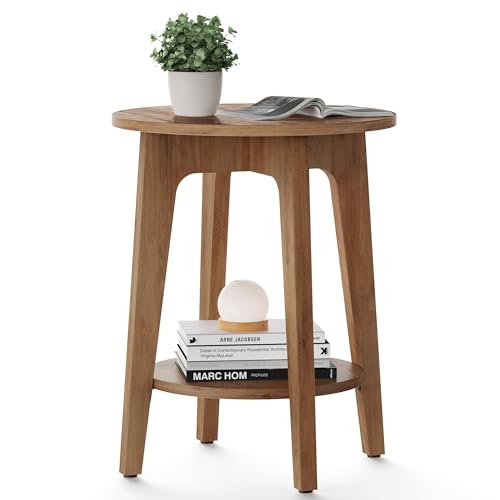
VASAGLE Round Side Table with Lower Shelf, End Table for Small Spaces | Nightstand with Tapered Legs, Curved Transitions, for Living Room, Bedroom, Honey Brown, MAEZO Collection ULET283T41
Check price on Amazon
JUSTOGO Small Side Table, 3-Tier Round End Table for Small Spaces, Greige | S-Shaped Accent Table, Living Room & Bedroom, Beside Sofa, Vintage Nightstand, Wood & Metal Frame, Open Storage
Check price on Amazon
YEAKOO Vintage Small Round Side Table,3-Tier End Table for Small Spaces | Circular Table with Storage Shelf,Compact Tea Sofa Table Corner Table Nightstand for Living Room Bedroom ,Rustic Brown
Check price on Amazon
sthmec Side Table Set of 2, Small Round End Table with Storage Shelf for Small Space, 2-Tier Bedside Table Sofa Couch Table, Nightstands Set of 2 Accent Table for Living Room, Bedroom, Rustic Brown
Check price on AmazonPre-Purchase Checklist
Before you commit to an accent table, run through these checks. They take five minutes and prevent most returns.
- Measure the height from the floor to the arm of the couch or chair the table will serve. Confirm the table top falls within 1–2 inches of that height.
- Measure the gap where the table will sit. Confirm at least 15 inches of walkway clearance remains.
- Check the delivery path. Confirm the table box fits through your doorways and stairwell. Flat-pack tables usually arrive compact, but assembled tables may not.
- Confirm the surface use. If the table will hold a lamp, check the top diameter can support the base. If it will hold drinks, consider a tray-top or a finish that resists rings.
- Inspect the joinery spec. Look for metal brackets, bolts, or dovetail joints. Avoid tables that rely only on wood screws into particle board.
- Check the weight capacity if you plan to place a heavy lamp, a stack of books, or a decorative stone object on top.
- Match the finish to the couch legs or the dominant wood tone in the room.
- Plan for assembly. Most online accent tables require assembly. Confirm the tools included and the time estimate.
One more thing: If your living room doubles as a home office or dining space, consider a C-table or a nesting set. Both adapt to different uses during the day without permanently claiming floor space.
Ready to Complete Your Living Room?
Browse our recommended small accent tables above, then pair your choice with the right seating. A well-chosen table and couch combination is the foundation of a living room that works as well as it looks.
Explore Recommended TablesFrequently Asked Questions
What size should a small accent table be for a living room?
A small accent table should be roughly the same height as the arm of your couch or chair, typically within 1–2 inches. Width and depth usually range between 16 and 24 inches for compact spaces. The table should feel proportionate to the seat beside it without blocking walkways.
Where should I place accent tables in a small living room?
Place accent tables at the ends of your couch, between two chairs, or beside a reading chair. In small rooms, choose a single versatile table or a nesting set that can be tucked away. Leave at least 15 inches of walkway clearance around each table.
What materials work best for small accent tables?
Solid wood and metal offer durable construction for high-traffic living rooms. Glass tops visually lighten compact spaces, while rattan and woven materials add warmth. Match the material to your existing furniture finishes for a cohesive look.
Can a small accent table double as storage?
Yes. Many compact accent tables include drawers, lower shelves, or lift-top compartments. Storage accents are especially useful in small living rooms where every surface needs to serve multiple purposes.
How many accent tables does a small living room need?
Most small living rooms need one or two. One table beside the primary couch seat is the minimum. A second table between two accent chairs completes the arrangement. More than two in a compact room usually creates clutter.
Should accent tables match the coffee table?
They do not need to match exactly, but they should relate. A shared material, finish, or design language keeps the room cohesive. Deliberate contrast also works if the contrast is consistent across the room.
Continue Exploring
Small accent tables are one piece of a larger living room plan. These guides cover the adjacent decisions:
- Sets of side tables for living rooms — coordinated pairs that balance a seating arrangement.
- Narrow console tables with storage — for the wall behind or beside the couch.
- Serving trays — a practical companion for any accent table surface.
- Small apartment couches — the seating that the accent table serves.
- Small living room tables with storage — for rooms where every piece must earn its footprint.