


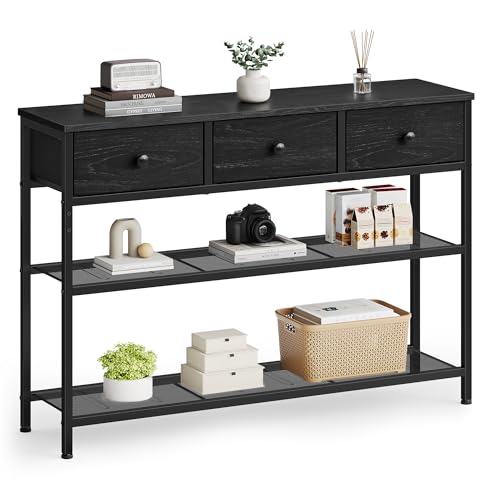


What Is a Small Narrow Console Table with Storage?
A small narrow console table with storage is a slim-profile accent table designed to sit against a wall in tight spaces — entryways, hallways, behind a sofa, or in a narrow bedroom — while providing drawers, shelves, baskets, or compartments to conceal everyday items. Unlike a standard console, these tables typically measure between 8 and 14 inches in depth, making them one of the most space-efficient furniture pieces for small homes.
The storage component is what separates a functional console from a purely decorative one. Instead of a flat surface that collects clutter, a storage console gives you a designated home for keys, mail, gloves, charging cables, and small accessories — which is exactly what research-stage shoppers tend to prioritize when comparing options. If you are also considering the seating side of your entryway, our guide to a small couch for a studio pairs naturally with a slim console for a cohesive compact setup.
Why Choose a Narrow Console with Storage?
The appeal of these tables goes beyond aesthetics. They address real spatial constraints and organizational needs that larger furniture cannot solve. Here are the most common reasons buyers seek them out:
Space Efficiency
A shallow depth keeps walkways clear while still offering a usable top surface and concealed storage.
Entryway Organization
Drawers and shelves create a dedicated drop zone for keys, mail, and small daily essentials.
Visual Tidiness
Closed storage hides clutter that would otherwise sit on an open tabletop and create visual noise.
Versatile Placement
Works in hallways, behind sofas, in bathrooms, bedrooms, and home offices without dominating the room.
For households that entertain or host guests, a slim storage console also doubles as a serving station or display surface without consuming valuable floor area. If you are furnishing a compact living area, combining one with a small living room table with storage creates a consistent, space-conscious approach to organization.
Key Dimensions to Check Before Buying
Dimensions are the single most important factor when shopping for a narrow console. A table that is even two inches too deep can block a doorway or make a hallway feel cramped. Use the following benchmarks as a starting reference:
- Depth: 8 to 14 inches is the sweet spot for narrow spaces. Anything deeper than 16 inches starts to feel like a standard console.
- Width: 24 to 48 inches covers most entryway and hallway applications. Measure the wall span and leave at least 6 inches of breathing room on each side.
- Height: 28 to 32 inches places the surface at a comfortable height for most adults to use as a drop zone.
- Clearance: Allow at least 30 inches of walkway width beside the table so doors can open fully and foot traffic flows naturally.
Storage Types Compared
Not all storage is created equal. The right configuration depends on what you plan to store and how often you need to access it. Below is a comparison of the most common storage formats found in narrow console tables.
| Storage Type | Best For | Considerations |
|---|---|---|
| Drawers | Keys, mail, small accessories, charging cables | Look for smooth-glide hardware; shallow drawers are typical in slim profiles |
| Open Shelves | Baskets, books, display items, shoes | Less concealment; pair with decorative baskets for a tidy look |
| Cabinet Doors | Bulkier items, cleaning supplies, board games | Provides full concealment; check door swing clearance in tight hallways |
| Combination | Mixed storage needs | Most versatile; typically offers drawers plus a shelf or cabinet |
If your priority is keeping the surface clear, a drawer-first design is usually the most practical. If you need to store larger items like shoes or bags, an open-shelf or cabinet configuration works better. For homes where fabric care matters, our guide to sectionals with washable covers offers a useful parallel on choosing easy-to-maintain materials.
Materials and Build Quality
Because narrow consoles are often placed in high-traffic zones, build quality matters more than it might for a decorative accent piece. The most common materials fall into three broad tiers:
Entry-Level Tier
Engineered wood with a laminate or veneer finish. These tables are lightweight and suitable for light use in bedrooms or low-traffic corners. Check that the frame is reinforced at the joints, since slim legs can be a weak point in lower-tier construction.
Mid-Range Tier
Solid wood legs paired with engineered wood panels, or mixed metal-and-wood designs. This tier typically offers smoother drawer glides, more consistent finishes, and better stability. It is the most balanced choice for most households.
Premium Tier
Solid hardwood construction, dovetail drawer joints, and high-grade hardware. These tables are a long-term investment and hold up well under daily use in busy entryways. If you appreciate durable upholstery choices elsewhere in your home, the same quality-first mindset applies here.
Placement Ideas for Tight Spaces
Where you place the console determines how useful it becomes. Consider these common placements:
- Entryway: The classic drop zone. Add a small tray for keys and a basket beneath for shoes.
- Hallway: Use a long, shallow console to break up a blank wall without narrowing the walkway.
- Behind a sofa: A slim console behind a floating sofa adds storage and defines the seating area in open-plan rooms.
- Bedroom: Acts as a compact dresser alternative when closet space is limited.
- Home office: Holds supplies and printer accessories in a footprint smaller than a traditional desk.
If your entryway also needs seating, pairing the console with a small loveseat couch or a set of 2 chairs for the living room can turn a narrow space into a functional receiving area. For homes with an open layout, a sectional with storage ottoman complements the console’s organizational role without adding visual weight.
Styling a Narrow Console Without Clutter
The greatest risk with any console table is that it becomes a landing pad for miscellaneous items. A few simple styling rules keep it functional and attractive:
- Use a tray or shallow bowl to corral small items on the surface.
- Limit surface decor to three objects — a lamp, a plant, and one personal item.
- Choose baskets that fit the open shelves precisely to maximize concealed storage.
- Keep the top 70 percent clear so the table remains usable as a drop zone.
- Add a runner or narrow mat underneath to protect the surface from scratches.
For additional surface organization, a serving tray works well as a corralling tool on console tops. If you are styling a bedroom console, a small couch for bedroom with storage can extend the same organizational logic to the seating side of the room.
Common Mistakes to Avoid
Even well-intentioned buyers run into a few recurring pitfalls. Avoid these to get the most from your purchase:
- Ignoring door swing: A console placed too close to a door can block it from opening fully.
- Choosing depth by appearance: Online photos can make a 16-inch table look slim. Always confirm the listed depth.
- Overlooking weight capacity: Slim tables have lower load limits. Check the specification if you plan to place a heavy lamp or decor on top.
- Skipping wall anchoring: Tall, narrow consoles should be anchored to the wall for safety, especially in homes with children or pets.
- Buying before measuring the walkway: Leave at least 30 inches of clear path beside the table.
If you are also outfitting a compact living area, reviewing options like a small apartment couch or a small 2 person couch alongside your console choice helps maintain a consistent scale throughout the room.
Who Should Buy a Narrow Storage Console?
This furniture piece is particularly well suited to:
- Apartment dwellers with compact entryways or hallways
- Homeowners who want a functional drop zone without sacrificing walkway width
- Renters who need furniture that fits through standard doorways and moves easily
- Anyone organizing a multi-purpose room where floor space is shared between functions
If your space constraints extend to seating, our guides on a small couch for office use and a small couch for dorm room setups cover complementary compact furniture choices.
Frequently Asked Questions
How narrow can a console table with storage be?
Many storage console tables are designed at depths between 8 and 14 inches, allowing them to fit narrow hallways while still offering drawers or shelves for organization.
What is the ideal height for a console table in an entryway?
Most console tables stand between 28 and 32 inches tall, which places the surface at a comfortable height for dropping keys, mail, and small accessories.
Can a narrow console table with storage work in a small apartment?
Yes. Slim storage consoles are ideal for small apartments because they provide a landing surface and concealed storage without projecting into walkways.
Should I anchor a narrow console table to the wall?
It is strongly recommended, especially for taller models. Wall anchoring prevents tipping and is an important safety measure in homes with children or pets.
What should I store in a narrow console table?
Drawers work best for keys, mail, and small accessories. Open shelves suit baskets, books, and shoes. Cabinet compartments handle bulkier items like cleaning supplies or board games.