
Set of Side Tables for Living Room: The Complete Buyer's Guide
Side tables complete a living room. They hold your coffee, your book, and your evening lamp — yet many buyers treat them as an afterthought. This guide walks you through sizing, styles, materials, placement, and pairings so you can choose a set with confidence.
Who this guide is for: You already know you want a set of side tables for your living room. What you need now is clarity on which configuration, material, and size will actually work in your space — and how to avoid the common mistakes that leave a living room feeling cramped or unfinished.
Below, you will find a practical, tier-based breakdown of side table sets, with placement rules, material comparisons, and pairing advice for couches, chairs, and sectionals.
Why a Set of Side Tables Completes Your Living Room
A couch anchors a living room, but side tables make it usable. They hold drinks, lamps, remotes, and reading material within arm's reach. More importantly, a matched or coordinated set creates visual rhythm on either end of a sofa or between two chairs. Without them, a seating arrangement often looks incomplete, and guests are left holding their cups.
Beyond function, a well-chosen set of side tables can balance proportions. A pair of round tables softens a boxy sectional; a pair of nesting tables adds flexibility without crowding a small living room setup. The right set also ties together the material story of the room — for example, wood tones that echo a coffee table or a metal finish that matches floor lamp accents.
What a Set Typically Includes
- Matched pairs: Two identical tables designed for either end of a couch or a pair of accent chairs.
- Nesting sets: Two or three tables of graduated size that tuck under one another, useful for flexible floor plans.
- Coordinated sets: Tables in the same finish but different shapes, such as one round and one rectangular, used to add interest.
If you are still deciding between a set of side tables and a larger living room set, our guide to set couches explains how coordinated furniture groupings work together.
Sizing and Height: The Rules That Actually Matter
Most side table frustration comes down to one issue — the wrong height. A table that sits far above or below the couch armrest feels awkward to use, and no amount of styling fixes that. Follow the rules below before you buy.
Height Guidelines
- Match the armrest: The tabletop should sit within one to two inches of the couch armrest height. This is the most reliable rule for living room side tables.
- Level with the seat: If your couch has low arms or no arms, aim for the tabletop to sit level with the seat cushion for easy reach.
- Between chairs: When placing a table between two accent chairs, the top should be slightly above the chair seat, typically in the same range as a couch armrest.
Top Surface Dimensions
A side table top of roughly 18 to 24 inches wide and deep accommodates a lamp, a drink, and a book. Compact tables in the 14 to 16 inch range work well in tight corners, while larger tops of 26 inches or more suit wide couches and double as occasional perches for a serving tray during gatherings.
Clearance and Walkways
Leave at least 18 inches of clear space around the seating area for foot traffic. In narrow rooms, consider a compact accent table set or a pair of slim consoles that hug the wall. If the room is especially tight, nesting tables let you keep one table in use and tuck the second away when guests need floor space.
Practical tip: Measure your couch armrest height with a tape measure before shopping. Bring the number with you — or note it in your phone — and compare it against listed table heights. This single step prevents the most common side table return.
Side Table Styles and Configurations
The style of your side table set should echo the living room's overall design language while adding a little personality. Below are the most common configurations and where each works best.
| Configuration | Best For | Tier Range | Key Consideration |
|---|---|---|---|
| Matched pair, round | Couches with soft curves; transitional and modern rooms | Entry-level to premium | No sharp corners; easy to walk around |
| Matched pair, rectangular | Sectionals and long sofas; traditional or industrial rooms | Entry-level to luxury | More surface area for lamps and trays |
| Nesting set (2 or 3) | Small rooms, flexible seating, multifunctional spaces | Mid-range to premium | Check the nested footprint before buying |
| C-shaped table set | Sofas and sectionals where you eat or work from the couch | Mid-range to high-end tier | Base must slide under the sofa seat |
| Coordinated mixed shapes | Design-forward rooms that want visual interest | Premium to luxury | Keep finishes consistent across the pair |
Round vs. Rectangular
Round tables reduce sharp edges and feel lighter in a room. They suit couches with rounded arms and work well in busy family spaces. Rectangular tables offer more usable surface, which matters if the tables will hold lamps, plants, or a side table for eating on the couch. Rectangular tops can feel heavy in a compact room, so pair them with open or slim legs.
Nesting and Space-Saving Sets
Nesting tables are the most versatile option for living rooms that serve multiple purposes. Pull one out when you need extra surface, then tuck it back under the larger table. This is especially useful for apartments and studios. For more space-stretching ideas, see our guides to small couch sets and apartment couches.
Pulling Up to the Couch
If you plan to use side tables for meals or a laptop, look at C-shaped or slide-under designs. These have a base that fits beneath the couch seat, bringing the tabletop over your lap. Our article on a side table that goes under the couch covers the measurement details. For a similar function at chair height, see the slide-under chair table option.
Materials: Matching Durability to Your Lifestyle
Side tables take a lot of wear — drinks, keys, books, and the occasional kicked foot. The material you choose should match how the room is used, not just how it looks.
Solid Wood
Solid wood is the gold standard for durability. In the premium and luxury tiers, you will find oak, walnut, and ash with visible grain and joinery that holds up over decades. Mid-range solid wood tables often use a mix of solid frames and veneered panels, which is a sensible balance for most homes. Keep wood out of direct sun and wipe spills promptly to protect the finish.
Metal and Glass
Metal frames with glass or stone tops suit modern and industrial interiors. Powder-coated steel resists scratches, and tempered glass is easy to wipe clean. These sets tend to fall in the mid-range to premium tiers and work well in rooms with leather couches, where the mix of textures adds depth. If you are considering leather seating, our article on whether to get a leather couch covers complementary materials.
Marble and Stone
Marble tops bring a luxury feel and a natural pattern that no two sets share. Real marble needs sealing and careful handling to avoid stains, while marble-effect engineered stone offers a more forgiving option in the premium tier. Stone tops pair beautifully with metal bases and dark wood frames.
Engineered Wood and Laminate
Entry-level and starter-tier side table sets often use engineered wood with veneer or laminate. These are practical for guest rooms, rentals, and first apartments. Look for fully sealed edges and sturdy hardware; well-specified engineered wood can last many years with basic care. If you are furnishing a rental, our guide to small couches for studio spaces pairs well with this approach.
Material matching tip: Keep the side table finish within the same family as your coffee table and couch legs. Matching tones creates a cohesive look, while a deliberate contrast — such as a metal set beside a wood couch — should be repeated elsewhere in the room to feel intentional.
Placement: Where a Set of Side Tables Works Best
Placement determines whether a side table set feels helpful or cluttered. Use these rules as a starting point, then adjust for your room's traffic pattern.
- Anchor both ends of the couch. A matched pair at either end of a sofa is the classic arrangement. Keep both tables within arm's reach of the seats and avoid pushing them tight against the wall — a few inches of breathing room looks better.
- Use a single table between two chairs. In a conversation nook, one side table shared by two accent chairs creates a natural focal point. For chair pairings, see our guide to a set of accent chairs for the living room.
- Respect walkways. Keep at least 18 inches of clear floor around the tables. If a table blocks a path, choose a nesting set and tuck the extra table away.
- Mind lamps and outlets. If a side table will hold a lamp, confirm the cord reaches an outlet and the tabletop is wide enough for the lamp base. A top that is too small lets the lamp wobble.
- Check door swing and drawers. Avoid placing a table where a door, cabinet, or drawer needs clearance. In tight rooms, a wall-hugging console or a narrow console with storage can serve as a side table alternative.
Sectional and Corner Placements
Sectionals change the placement math. A chaise end often does not need a side table, while the open end benefits from one. In an L-shaped arrangement, a corner table behind the sofa can hold a lamp and fill dead space. If you are planning a sectional purchase, our guides to a sectional with storage chaise and pull-out and a sectional with right-side chaise show how side tables fit into those layouts.
Pairing Side Tables with the Rest of the Living Room
A set of side tables never stands alone. It interacts visually with the couch, coffee table, rug, and lighting. A few pairing principles keep the room cohesive.
With Coffee Tables
Side tables should be slightly higher than the coffee table — typically two to four inches — so they read as a supporting layer rather than a competing surface. Matching materials between the coffee table and side tables creates a traditional look; contrasting materials work in modern rooms. If you are also browsing coffee tables, our collection of coffee tables covers the main styles.
With Lighting
Side tables and lamps are natural partners. A table lamp on each side table frames the couch and provides even light. Make sure the lamp shade clears the couch armrest and that the tabletop can support the lamp's base comfortably. A slim floor lamp can supplement a side table when the room needs extra light without more surface area.
With Rugs and Storage
Side tables should sit fully on the rug or fully off it — half-on, half-off looks unintentional. If the room needs storage, look for side tables with drawers or shelves, or use a storage ottoman nearby for blankets and remotes.
With Throw Pillows and Styling
Keep the top of each side table lightly styled. A single object — a lamp, a small plant, or a stack of two books — is usually enough. Our guide to throw pillows explains how to carry the room's color palette from the couch to the surrounding surfaces.
Recommended Set of Side Tables for Living Room
⚠️ AFFILIATE DISCLOSURE: This website contains affiliate links. As an affiliate Associate, we earn from qualifying purchases. If you make a purchase through these links, we may receive a small commission at no additional cost to you. Read our full affiliate policy.

HOOBRO Side Table with Charging Station, Set of 2 End Tables with USB Port and Outlets, Nightstand with 2-Layer Storage Shelves for Small Spaces, Living Room, Bedroom, Rustic Brown BF09UBZP201
Check price on Amazon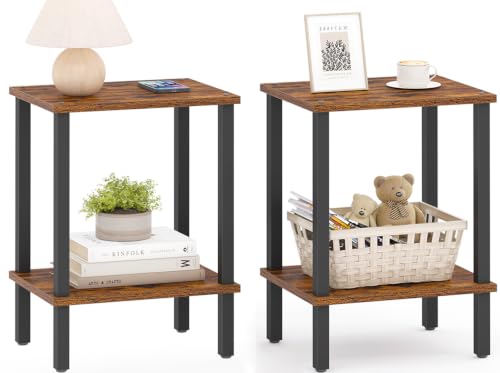
TUTOTAK End Table, Set of 2, Side Table, Nightstand, 2-Tier Storage Shelf | Bedside Table for Small Space, Livingroom, Bedroom, Easy to Assemble, Brown and Black TB01BB035
Check price on Amazon
sthmec Side Table Set of 2, Small Round End Table with Storage Shelf for Small Space, 2-Tier Bedside Table Sofa Couch Table, Nightstands Set of 2 Accent Table for Living Room, Bedroom, Rustic Brown
Check price on Amazon
Furinno JUST Toolless 3-Tier Side Table Set of 2, Columbia Walnut | Open Shelf, Soft-Corner, End Tables, Night Stand, Nightstand, for Living Room, Bedroom
Check price on Amazon
Set of 2 End Table with Charging Station, Heavy Duty Side Table with 2-Layer Storage Shelves for Living Room Bedroom Office Small Space, Modern Tall Night Stand Bedside Table, Black
Check price on Amazon
Nordivale Modern 3-Piece Living Room Table Set Black Finish, Black | LED Light Coffee Table and Pair of End Side Tables with Storage Drawers
Check price on Amazon
MAHANCRIS End Tables Living Room Set of 2, Side Table Beside Sofa, Black | Nightstand for Bedroom, Couch Side Table with Shelf, Modern End Table for Small Spaces, Easy Assembly, Curved Design
Check price on Amazon
VECELO Modern Nightstands X-Design Side End Table Night Stand with Storage Shelf for Bedroom,Living Room,
Check price on AmazonFrequently Asked Questions
How tall should side tables be next to a couch?
Side table height should be within one to two inches of the couch armrest height, or level with the seat cushion for easy reach. A table that is too tall feels awkward to use, while one that is too low forces you to lean down. Measure the armrest before shopping and compare it against the listed table height.
What is the best material for living room side tables?
Solid wood offers timeless durability for mid-range and premium tiers, while metal and glass combinations suit modern interiors. Marble tops provide a luxury feel, and engineered wood with veneer is a practical option in the entry-level tier. Choose the material that matches how often the tables will be used and how much maintenance you are comfortable with.
Can I use a set of side tables in a small living room?
Yes. Nesting side tables and slim round tables are excellent for small spaces because they can be tucked away when not in use. Choose sets with a small footprint and avoid bulky models with oversized tops. For more space-saving ideas, see our guide to small couch sets for the living room.
Where should side tables be placed in a living room?
Place one side table at each end of the couch, ideally within arm's reach of the seating. In corner arrangements, a single table between two chairs works well. Keep at least 18 inches of clear walkway and avoid blocking traffic flow or door swings.
Should a side table be higher or lower than the couch arm?
Slightly lower or level with the armrest is the most comfortable height. Tables that sit well above the armrest force you to lift your arm awkwardly, while tables far below the armrest require leaning down. A one-to-two-inch difference is the accepted range.
Do side tables need to match the coffee table?
Not necessarily. Matching materials create a traditional, cohesive look, while contrasting materials add modern interest. If you choose a contrast, repeat it elsewhere in the room — for example, by matching the side table finish to the lamp bases or couch legs — so the contrast feels intentional.