
Small Futon Couch: Compact Comfort for Smart Living Spaces
Learn how to choose a small futon couch that fits your room, supports daily use, and delivers versatile seating with occasional sleep functionality.
START THE BUYING CHECKLISTWhy a small futon couch deserves a closer look: If you are researching compact seating, you already know the product category and you are now comparing specifications, frame quality, and long-term durability. This guide walks through sizing, frame construction, mattress quality, placement strategy, and the trade-offs between tiers so you can make a confident, well-informed decision.
What Exactly Is a Small Futon Couch?
A small futon couch is a compact convertible seating piece that typically measures between roughly 50 and 70 inches in width. Unlike a standard sofa, a futon uses a folding mechanism that allows the backrest to recline flat, transforming the seat into a temporary sleep surface. For compact rooms, this dual-purpose design is the core appeal: one footprint delivers both a seating area and an occasional bed.
The category overlaps with several adjacent concepts. If your priority is flexibility rather than a traditional frame, explore a portable couch for lightweight relocation. If you want a permanent, full-size seating anchor for a compact lounge, a small apartment couch may suit you better. And if the sleep function is the primary requirement, a dedicated small couch with a pull-out bed offers a different mechanism with its own advantages.
Understanding these distinctions early prevents a common mistake: buying a futon when a different convertible category would better match daily usage. Futons excel at frequent position changes and simple mechanical design. Pull-out sofas generally hide a thicker mattress inside the frame, while futons keep the mattress as the visible seat surface.
How the Folding Mechanism Works
Most small futon couches use one of two folding systems. The first is the classic bi-fold, where the frame folds at a single hinge point and the backrest drops backward into a flat position. The second is the tri-fold or click-clack mechanism, which uses multiple hinge points and a ratcheting joint that locks into several reclining angles before flattening completely.
Click-clack mechanisms are common in mid-range and premium models because they allow incremental recline positions and are simpler to convert with one hand. Bi-fold frames are more common in entry-level and essential-tier products. Regardless of mechanism, the hinge quality determines long-term performance: reinforced steel hinges with a rust-proof finish resist wobble far better than thin stamped hardware.
One practical consideration: the conversion footprint. A futon needs clearance behind and in front of the frame to fully recline. In tight rooms, this is often the deciding factor between models. Measure the recline depth carefully, and consider a small space pull-out couch as an alternative if your room cannot accommodate a backward-folding frame.
Sizing Guide: Matching the Futon to Your Room
Small futons are not a single size. They range from compact two-seat models to slightly wider frames that seat three people in a pinch. The table below compares the most common configurations by use case rather than by numeric dimensions alone, because the right choice depends on how the piece will be used.
| Configuration | Typical Seating Capacity | Best For | Tier Consideration |
|---|---|---|---|
| Compact two-seat futon | Two adults | Home offices, reading corners, studio nooks | Entry-level and mid-range options are widely available |
| Standard small futon | Two to three adults | Studio apartments, guest rooms, small living rooms | Mid-range models balance mechanism quality and mattress density |
| Wide small futon | Three adults | Multi-purpose rooms, family dens | Premium and high-end tiers offer heavier frames and thicker mattresses |
| Loveseat-style futon | Two adults | Bedrooms, sunrooms, secondary seating | Starter tier covers occasional use; mid-tier supports daily use |
Beyond the frame dimensions, account for walkway clearance. Interior design guidance generally recommends 24 to 36 inches of open floor space around primary seating to allow comfortable movement. In a narrow room, a small single couch or a futon oriented along the long wall preserves flow better than a deep, square frame. If the room is genuinely tight, review our couches for a small living room overview before committing to a size.
Frame Construction and Market Tiers
Frame material is the single strongest predictor of long-term durability in a futon. Below is a tier-based comparison that uses universal quality descriptors rather than numeric figures, so the guidance remains relevant regardless of market fluctuations.
Engineered Wood Frames
Common in entry-level futons, engineered wood frames are lightweight and easy to assemble. They suit occasional seating and light guest use. Inspect joint construction carefully and expect to tighten hardware periodically.
Solid Wood Frames
Solid hardwood frames, often combined with reinforced corner blocks, deliver a more stable feel and better resistance to wobble. This tier is the balanced choice for daily seating in apartments and home offices.
Heavy-Duty Metal Frames
Metal frames with high-grade steel tubing and rust-proof finishes handle frequent conversion well. They are heavier but typically offer the smoothest folding action and the most consistent long-term performance.
Hybrid Reinforced Frames
Luxury-tier futons combine hardwood cores with metal reinforcement at stress points. These are the most durable construction available in the category and are suited to daily bed conversion and heavier use.
For a deeper technical overview of convertible construction, our couch that has a pull-out bed guide explains how hidden mattress systems differ from futon mattresses. If you are weighing a futon against a full convertible sofa, the couch with a pull-out bed article compares mechanisms side by side.
Mattress Quality: The Comfort Variable Most Buyers Overlook
On a futon, the mattress is the seat cushion and the sleep surface at the same time. That dual role means density matters more than it does on a standard sofa. Low-density foam compresses quickly under daily seating, while high-density foam with a cotton or polyester wrap holds its loft far longer.
- Filling Type Cotton-wrapped foam is the most common futon filling. It balances support and flexibility, which matters because the mattress must fold.
- Density Higher-density foam resists flattening. Mid-range and premium futons generally use denser filling than entry-level models.
- Thickness Thicker mattresses are more comfortable for sleeping but reduce the number of folds the frame can accommodate. Confirm compatibility with the frame before upgrading.
- Cover Fabric Removable, washable covers extend the practical lifespan of the futon. Performance fabrics resist stains and are worth considering for family use.
If the futon will be used primarily for sleeping, review our guide to couches you can sleep on for a broader comparison of sleep-oriented seating. For everyday comfort expectations, the comfortable couch to sleep on article covers density and support trade-offs in more detail.
Placement Strategies for Compact Rooms
Placement determines whether a small futon feels like a smart space solution or an awkward compromise. These strategies work across studio apartments, home offices, and guest rooms.
Anchor the Long Wall
Position the futon along the longest uninterrupted wall to preserve a central walking path. This keeps the conversion zone clear and makes the room feel wider.
Respect the Recline Zone
Leave enough clearance behind and in front of the frame for the backrest to drop flat. Blocking the recline path is the most common placement error.
Define the Zone
Use a rug or a low shelf to visually separate the seating area from a workspace or sleeping nook. Zone definition makes a compact room feel intentional.
Pair With Slim Tables
A narrow console or a table that slides under the seat keeps essentials close without crowding the floor. The small side table that slides under couch guide covers options.
Lighting also shapes how compact rooms read. If the futon sits opposite a window, check the natural light layout guidance to avoid glare on the seating. For rooms that double as workspaces, the small couch for office article covers ergonomic and spatial considerations specific to that setting.
Small Futon vs. Other Compact Seating Categories
Knowing when a futon is the right category—and when it is not—is as important as choosing the right model within the category.
| Category | Strength | Trade-Off | Best Match |
|---|---|---|---|
| Small futon couch | Simple mechanism, dual seating and sleep function, compact footprint | Mattress quality varies widely; requires recline clearance | Flexible multi-use rooms and guest spaces |
| Small sofa with pull-out bed | Thicker hidden mattress, sofa-like appearance | Heavier, more complex mechanism | Rooms where the sleep function is secondary |
| Portable couch | Lightweight, easy to relocate | Less structural rigidity | Rentals and frequently rearranged spaces |
| Small single couch | Dedicated seating with a clean profile | No sleep function | Reading corners and offices |
If you are furnishing a complete compact seating arrangement rather than a single piece, the small space couch set overview explains how to coordinate multiple pieces. And if the room is a studio, the small apartment couch guide covers scale and traffic flow in more depth.
The Small Futon Couch Buying Checklist
Use this checklist before finalizing any model. Each item addresses a decision point that is difficult or impractical to reverse after purchase.
- Measure twice: Record wall length, room depth, doorway width, and stairwell clearance. Confirm the futon fits the path into the room, not just the room itself.
- Map the recline zone: Mark the floor space needed for the futon to fold flat. Confirm the path is free of furniture, doors, and heating vents.
- Confirm frame material: Prefer solid hardwood or heavy-duty metal for daily use. Engineered wood is acceptable for occasional seating.
- Inspect hinge hardware: Reinforced steel hinges with rust-proof finishes offer smoother, longer-lasting conversion than thin stamped hardware.
- Evaluate mattress density: Higher-density foam resists flattening. If daily sleeping is planned, prioritize the premium and luxury tiers.
- Check cover removability: A washable, removable cover materially extends the practical lifespan of the futon.
- Verify weight capacity: Confirm the frame's rated capacity matches the intended use, especially if multiple adults will sit together.
- Review the warranty: Frame warranties typically outlast mattress warranties. Note both, and keep documentation.
- Plan assembly: Confirm whether assembly is required, what tools are needed, and whether two people are recommended.
- Compare within the tier: A well-specified mid-range futon often outperforms a poorly made premium model. Judge construction, not labels.
Recommended Small Futon Couch
⚠️ AFFILIATE DISCLOSURE: This website contains affiliate links. As an affiliate Associate, we earn from qualifying purchases. If you make a purchase through these links, we may receive a small commission at no additional cost to you. Read our full affiliate policy.

Flamaker Futon Sofa Bed, Black Faux Leather Convertible Loveseat Couch | Modern Adjustable Folding Futon Set with 2 Cup Holders & Removable Armrests, Recliner Lounge for Living Room & Apartment
Check price on Amazon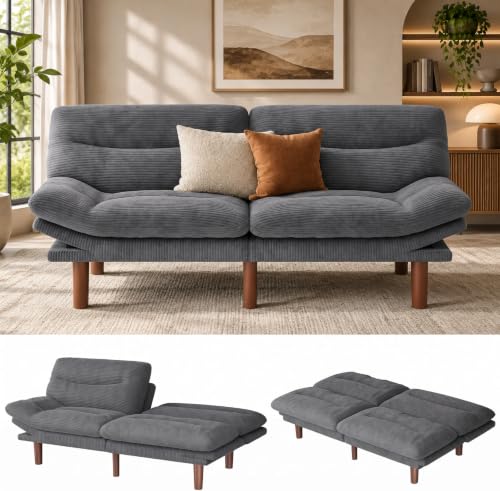
Marsail Futon Sofa Bed, Small Convertible Loveseat Couch, Grey | 66" Versatile 2-in-1 Sleeper Couch with Adjustable Backrest & Armrest, Corduroy Futon Couch for Small Apartment & Living Room
Check price on Amazon
Marsail Futon Sofa Bed, Small Convertible Loveseat Couch, Green | 66" Versatile 2-in-1 Sleeper Couch with Adjustable Backrest & Armrest, Corduroy Futon Couch for Small Apartment & Living Room
Check price on Amazon
COMAX Boneless Futon Sofa Bed, 59" Small Low-Profile Floor Couch, Black | 11.8 In Seat Height, Convertible Loveseat, Folding Couch Bed, Sleepover Bed, Dorm or Bedroom Sofa, Folding Floor Bed
Check price on Amazon
Erament Convertible Sofa Bed, Loveseat Folding Floor Futon Sleeper Sofa Couch Bed- Boneless Foldable Couch, Corduroy Pull Out Sofa Bed with 2 Pillows for Living Room & Bedroom
Check price on Amazon
Marsail 70" Convertible Futon Sofa Bed, Small Recliner Sleeper Sofa with Adjustable Backrest, Corduroy Loveseat Futon Couch for Apartments, Living Room, Office, Guest Room (Grey)
Check price on Amazon
MAXYOYO Folding Sofa Bed, Convertible Chair Bed with Pillow | Foldable Couch with Back Support, Portable Fold Out Chair Comfy Floor Sofa for Living Room Bedroom, Dark Grey, Single
Check price on Amazon
Erament Loveseat Boneless Convertible Sofa Bed, Folding Floor Futon Sleeper Sofa Couch Bed- Boneless Foldable Couch, Corduroy Pull Out Sofa Bed with 2 Pillows for Living Room & Bedroom
Check price on AmazonCare and Maintenance for Long-Term Performance
A small futon couch is a mechanical piece of furniture as much as an upholstered one. Maintenance therefore covers both the fabric and the frame.
Vacuum upholstery weekly to prevent grit from working into the fabric weave. Rotate and flip the mattress regularly so compression is distributed evenly rather than concentrated in the seat area. Tighten frame hardware every few months, particularly on bi-fold models where vibration loosens joints over time. If the cover is removable, follow the manufacturer's wash instructions and air-dry rather than machine-dry to avoid shrinkage.
For stain emergencies, keep a fabric-appropriate spot cleaner on hand and blot rather than rub. Our couch protection cover guide explains how a removable cover reduces wear on high-use futons. If the futon sits in a multi-purpose room with pets or children, the fabric protection overview covers treatment options that extend fabric life.
Frequently Asked Questions
What is a small futon couch best used for?
A small futon couch is best used in compact living rooms, studio apartments, home offices, guest rooms, and dorm spaces where seating must double as an occasional sleep surface. Its convertible design makes it a practical choice for multi-purpose rooms where a dedicated guest bed would consume too much floor space.
How do I measure a space for a small futon couch?
Measure the available wall length, the depth of the room, and the clearance needed for the futon to fully recline. Account for walkways of at least 24 to 36 inches and confirm doorway and stairwell dimensions before ordering. Marking the recline zone on the floor with tape is a reliable way to confirm the futon will convert without obstruction.
What frame materials are used in small futon couches?
Common frame materials include solid hardwood, engineered wood, and metal. Hardwood and heavy-duty metal frames typically offer the most durable construction, while engineered wood is common in entry-level and mid-range models. Reinforced hinges matter as much as the frame material itself, especially on models that convert frequently.
Can a small futon couch be used daily as a bed?
A small futon couch can be used daily as a bed if it has a supportive frame and a higher-density mattress. Models in the premium and luxury tiers generally offer thicker mattresses and better mechanisms for frequent conversion. For daily sleeping, prioritize mattress density and hinge quality over decorative features.
How do I maintain a small futon couch?
Rotate and flip the mattress regularly, vacuum upholstery weekly, tighten frame hardware periodically, and follow the manufacturer's cleaning instructions for the cover fabric. Use a protective cover if the futon is used frequently. Checking hinge lubrication once or twice a year keeps the folding action smooth.
Ready to Choose Your Small Futon Couch?
You now have the sizing framework, construction benchmarks, and placement strategies needed to make a confident decision. Review the recommended models above, compare specifications within the tier that matches your usage, and select the futon that fits your space and daily routine.
Explore Recommended Models