
Turn Your Bed Into a Couch: A Complete Comfort and Conversion Guide
Discover practical, stylish, and comfortable ways to transform your bed into a couch-like seating area — perfect for studio apartments, guest rooms, dorm spaces, and multi-purpose living areas.
Why this matters: Many people live in spaces that must serve more than one purpose. A studio apartment doubles as a living room. A guest room needs to welcome overnight visitors but also provide a comfortable place to sit during the day. A dorm room is both bedroom and lounge. Turning your bed into a couch is one of the most practical furniture hacks for these situations. This guide explains the conversion methods, the accessories that make it work, and the small details that separate a makeshift setup from a genuinely comfortable seating area.
Understanding the Bed-to-Couch Concept
The idea behind turning a bed into a couch is simple: you are not replacing the bed, you are reconfiguring how it is used and presented. The bed frame stays in place. What changes is the layering — the bedding, the back support, the armrests, and the cover that determines whether the setup reads as "bed" or "couch."
This approach works best when the bed sits against a wall, because the wall acts as the back of the couch. A bed placed in the middle of a room can still be converted, but you will need a freestanding backrest or a headboard-style bolster to create the illusion of a couch back.
If you are working with a very compact room, our guide to couch options for small spaces pairs well with this bed conversion method, since both strategies solve the same problem: getting more function out of limited floor area.
Three Proven Methods to Turn a Bed Into a Couch
There is no single correct way to convert a bed into a couch. The best method depends on your bed type, your budget tier, and how permanent you want the setup to be. Here are three approaches, ranging from a quick daily reset to a more structured arrangement.
Method 1: The Pillow-and-Cover Approach
This is the most common and least invasive method. You keep the bed exactly as it is and build a couch-like surface on top of it. Start with a fitted cover or a quilted mattress protector that gives the surface a uniform, upholstered look. Then lean large backrest pillows against the wall or headboard to create the back of the couch. Place bolster pillows at each end to act as armrests.
This method is ideal for daily use in a studio apartment, because you can set it up in the morning and strip it back down at night. The key to making it look intentional rather than improvised is matching the cover and pillow fabrics. A single color family or a coordinated pattern makes the arrangement read as a designed seating area.
Method 2: The Daybed Conversion
If your bed frame allows it, orient the bed so the long side faces the room and the headboard sits against the wall. This instantly creates a daybed silhouette, which is the closest thing to a couch without buying one. Add a row of back cushions along the wall side, a throw blanket across the foot, and a couple of decorative throw pillows for visual interest.
Daybed conversions work particularly well with three-seater couch proportions, because a standard twin or full bed is roughly the same length as a three-seater. The depth is the main difference — beds are deeper than couches — so a body pillow or rolled blanket placed behind the back cushions can reduce the seating depth to a more couch-like 24 inches.
Method 3: The Purpose-Built Conversion Setup
For a more permanent solution, consider a bed frame that is designed to double as seating. Some frames include a built-in backrest or a headboard that doubles as a back cushion. Others are low-profile platform frames that sit at couch height, making the transition seamless. If you are replacing a bed anyway, a small couch with a pull-out bed is the inverse solution — it is a couch first and a bed second, which may suit your space better if seating is the primary need.
Comparing the Three Conversion Methods
Use this table to decide which approach fits your space, your lifestyle, and how much effort you want to invest in the setup.
| Method | Best For | Effort Level | Reversibility |
|---|---|---|---|
| Pillow-and-Cover | Daily use in studios and dorms | Low — set up and strip down daily | Fully reversible in minutes |
| Daybed Conversion | Guest rooms and multi-purpose rooms | Medium — one-time rearrangement | Reversible with furniture moving |
| Purpose-Built Setup | Permanent seating-first rooms | High — requires a frame change | Limited once installed |
Essential Accessories for a Comfortable Bed Couch
The difference between a bed that looks like a couch and a bed that feels like a couch comes down to accessories. These are the items that do the heavy lifting.
Backrest Pillows and Wedges
A large backrest pillow is the single most important accessory. It provides the upright support that a mattress alone cannot offer. Wedge pillows are particularly effective because they angle the back at a comfortable reclining position, similar to the back of a couch. Look for models filled with high-density foam rather than loose fiber, since foam holds its shape through repeated use.
Bolster Pillows for Armrests
Bolsters at each end of the bed define the seating area and give it structure. Without armrests, the setup reads as a bed with pillows. With them, it reads as a couch. Cylindrical bolsters work best, and they can be secured with a fitted cover or simply tucked between the mattress and the wall.
A Quilted Mattress Topper
A quilted topper adds a layer of firmness and a visual texture that mimics upholstery. It also protects the mattress from the compression that comes with regular sitting. Choose a topper with a fitted skirt so it stays in place when people sit down and stand up.
A Couch-Style Cover
If you want the setup to look like a couch rather than a dressed bed, a couch-style cover is the finishing touch. Look for stretch covers designed for daybeds or futons, which drape over the mattress and tuck under the edges. Neutral tones in sage, charcoal, or oatmeal blend well with most interiors and hide wrinkles better than light colors.
A Throw Blanket
A throw blanket folded across the foot of the bed adds warmth and signals that this is a seating area, not just a made bed. It also provides a practical layer for cool evenings, which is exactly what a couch throw is for.
If your space also includes an outdoor seating area, our guide to patio couch cushions covers a similar layering principle for weather-resistant fabrics — useful if you are coordinating indoor and outdoor textiles.
Quick Setup Checklist
Before you start, confirm you have these items:
- A bed placed against a wall or with a sturdy headboard
- A quilted mattress topper or firm mattress pad
- Two large backrest pillows or a wedge pillow
- Two bolster pillows for armrests
- A fitted couch-style cover or daybed cover
- A throw blanket and two to four decorative pillows
- A body pillow or rolled blanket to adjust seating depth
Comfort and Mattress Protection
Sitting on a mattress is not the same as sitting on a couch. Mattresses are designed to support a horizontal body, while couches are designed to support a seated body. This difference matters for both comfort and mattress longevity.
Firmness Matters
A soft mattress will feel comfortable to sleep on but can feel unstable when used as a seat. A medium-firm to firm mattress works better for dual use. If your mattress is soft, a firm topper is the simplest correction. If you are choosing a mattress specifically for a dual-purpose setup, lean toward the firmer end of the range.
Reduce the Seating Depth
Couches typically have a seat depth of 20 to 24 inches. Beds are deeper. To make the setup comfortable for sitting, place a body pillow or a rolled blanket behind the backrest cushions. This pushes the seating surface forward and prevents the "sinking back" feeling that makes a converted bed uncomfortable.
Protect the Mattress Surface
Regular sitting compresses the mattress in the same spots. Rotate the mattress every few months if it is a two-sided model, and use a mattress protector under the topper to keep the surface clean. The same principle applies to upholstered furniture — our guide on couch protection covers explains how protective layers extend the life of seating surfaces.
Layout Tips for a Bed Couch in Small Rooms
How you position the bed matters as much as how you dress it. A few layout adjustments can make the difference between a cramped room and a functional one.
- Place the long side against the wall. This creates a couch-like orientation and frees up floor space in front of the seating area.
- Leave a walkway of at least 24 inches. This is the minimum comfortable clearance between the bed couch and other furniture or doorways.
- Use a small side table. A small side table that slides under the couch is ideal for drinks, lamps, and remotes without taking up permanent floor space.
- Add a rug to define the seating zone. An area rug placed in front of the bed couch visually separates the seating area from the sleeping area, which helps the room feel intentional.
- Light from the side, not above. A floor lamp or a table lamp beside the bed couch creates a warmer, more living-room-like atmosphere than an overhead light.
For rooms where the bed couch is the primary seating, consider how the arrangement supports conversation and TV viewing. Our guide to TV viewing layout covers viewing distances and angles that work in compact rooms.
Common Mistakes to Avoid
Most disappointing bed-to-couch conversions share the same few mistakes. Avoiding them is straightforward.
- Skipping the back support. A bed with decorative pillows but no proper backrest will always feel like a bed. The backrest is non-negotiable.
- Using too many small pillows. Small pillows look cluttered and provide no support. Two large backrests and two bolsters outperform eight small decorative pillows.
- Leaving the bedding visible. A visible duvet or sheets undermines the couch illusion. A fitted cover resolves this instantly.
- Ignoring the seat height. Beds that sit very low or very high feel wrong as couches. A frame that places the seat at roughly 17 to 19 inches from the floor is ideal. If your bed is much lower, a platform riser can help.
- Forgetting the foot of the bed. The foot of the bed is the "front" of the couch. A folded throw or a slim bench in front of it completes the arrangement.
If you are considering a more permanent furniture change instead, our guide on the factors that shape couch selection explains what to evaluate when choosing a dedicated seating piece.
When a Dedicated Couch Makes More Sense
A bed couch is an excellent solution for temporary, occasional, or space-constrained situations. But it is not the right answer for every room. If you sit for hours every day, host regularly, or need proper ergonomic support, a dedicated couch will serve you better.
In those cases, consider a dual-purpose furniture piece instead. A couch that turns into a bed gives you a genuine seating surface with proper cushioning and a sleep surface for guests. A small couch with a pull-out bed is a particularly good fit for studios and guest rooms where both functions matter equally.
If you are furnishing a guest room and want to keep the bed as the primary function, a comfortable couch to sleep on can serve as a secondary seating option while the bed remains the main sleeping surface. And if you are outfitting an apartment from scratch, our guide to apartment sofas covers the size and style considerations that matter most in compact floor plans.
Recommended Bed Couch Conversion Essentials
⚠️ AFFILIATE DISCLOSURE: This website contains affiliate links. As an affiliate Associate, we earn from qualifying purchases. If you make a purchase through these links, we may receive a small commission at no additional cost to you. Read our full affiliate policy.

Thctvous 3 in 1 Pull Out Couch Bed, Convertible Futon Sofa Bed, Velvet Sleeper Loveseat for Small Living Room, Adjustable Backrest, Comfy Pillows, Side Pocket (Black)
Check price on Amazon
Gizoon Convertible Sofa Bed Small Couch Bed & Modern Loveseat Sleeper, Grey | 3 in 1 Sofa Cama, Space-Saving Design, 5-Position Adjustable Futon Sofa Bed for Living Room, Apartment, Guest Room
Check price on Amazon
76" Convertible Sofa Bed, Corduroy Boneless Couch with Cup Holders & Pocket | 2-in-1 Sleeper Sofa, Pull-out Couch Bed with 5 Pillows, Living Room, Small Spaces, Bedroom, No Assembly
Check price on Amazon
65.4" Chenille Pull Out Sofa Bed with USB Charging and Side Pockets | Stretch Out for Movie Nights or Welcome Overnight Guests, Turning Your Living Room into a Cozy Retreat from Day to Night
Check price on Amazon
Manyday 2 in 1 Folding Sofa Bed, Beige | Convertible Sleeper Sofa to Lounger Comfy Bean Bag Chair for Adults, Corduroy Floor Couch Bed with Handle for Living Room
Check price on Amazon
81.1" Convertible Sofa Bed, Chenille Sleeper Couch with Storage Pockets | Stretch Out for Movie Nights or Welcome Overnight Guests, Turning Your Living Room into a Cozy Retreat from Day to Night
Check price on Amazon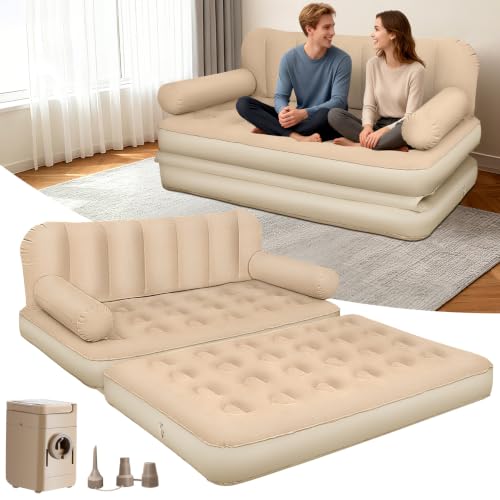
ChlorBlu Small Queen Size Air Sofa Bed Mattress,Blow Up Couch,74"x62"x33'' | Inflatable Bed w/ Pump&Headboard,Flocked Inflatable Bed for Home,Folding Inflatable Couch for Camping,2-in-1 Inflatable Sofa
Check price on AmazonFrequently Asked Questions
Can any bed be turned into a couch?
Most standard beds can be adapted into a couch-like seating arrangement using backrest pillows, bolsters, and proper bedding. However, the success depends on the bed frame height and mattress firmness. Beds with a higher frame work best because they mimic the seat height of a traditional couch. Beds that sit very low to the floor are harder to convert convincingly.
What is the best way to turn a bed into a couch for guests?
For guest use, layer a firm mattress with a quilted mattress topper, add large backrest pillows against the wall or headboard, and use a fitted cover that looks like upholstery. Bolster pillows at each end create armrests and give the arrangement a structured couch appearance. This setup can be left in place for the duration of a visit and stripped down when the guest leaves.
How do I make a bed couch comfortable for sitting?
Comfort comes from three elements: a firm seating surface, proper back support, and adequate depth. Use a mattress topper to firm up soft mattresses, add wedge pillows for lumbar support, and limit the seating depth to about 24 inches by placing a body pillow or rolled blanket behind the backrest.
Will turning my bed into a couch damage the mattress?
Sitting on a mattress regularly can cause compression in the areas where weight is concentrated. To protect the mattress, use a firm topper, rotate the mattress periodically, and avoid prolonged sitting in the same spot. A mattress protector also helps keep the surface clean and reduces wear from friction.
Can I turn a bed into a couch without buying anything new?
Yes, in a basic form. You can use existing pillows, a folded duvet, and a throw blanket to create a temporary backrest and armrests. However, the result will look and feel improvised. Dedicated backrest pillows and a fitted cover are what make the conversion convincing, and they are the items worth adding first.
Is a bed couch a good solution for a studio apartment?
Yes, for many studio apartments it is an excellent solution. It lets a single piece of furniture serve both daytime seating and nighttime sleeping, which is exactly what a studio needs. The caveat is that daily conversion takes a few minutes of effort. If that routine does not suit you, a dedicated couch you can sleep on may be a better long-term choice.
Ready to Set Up Your Bed Couch?
Start with the essentials: a quilted topper, two backrest pillows, and a pair of bolsters. Those four items do most of the work. From there, add a fitted cover and a throw blanket to complete the look.
Explore the Essentials