
Behind the Couch Shelves: Smart Storage & Display Solutions
Turn the overlooked space behind your sofa into a functional asset. Explore slim shelving designs, layout strategies, and practical buying advice to reclaim vertical storage without crowding your living room.
Explore the Buying GuideWhy behind the couch shelves matter: Most living rooms waste a narrow strip of floor space directly behind the sofa. A well-chosen shelf unit transforms that gap into usable storage for books, baskets, and display objects — while also acting as a subtle room divider and a cable management anchor for wall-mounted TVs and lamps.
This guide covers the types of units available, how to measure your space correctly, which materials hold up over time, and how to style the shelf so it looks intentional rather than improvised. If you are still exploring broader behind-the-sofa solutions, the behind the couch table overview is a useful companion read.
Why Add Shelves Behind Your Couch?
A narrow shelf behind the sofa is one of the most efficient upgrades you can make in a living room. It solves several problems at once — storage, cable routing, and visual balance — without requiring a full redesign. Here is what makes it worthwhile.
Reclaims Dead Space
The strip behind a sofa is often too narrow for furniture but wide enough for a 6–12 inch shelf. That reclaimed vertical footprint adds meaningful storage in rooms where floor space is fixed.
Hides Cables and Outlets
A shelf back gives you a mounting point for power strips and cable clips, keeping cords off the floor and out of sight. This is especially useful in rooms with wall-mounted TVs.
Anchors the Sofa
In open floor plans, a shelf unit behind the sofa creates a visual boundary without blocking sightlines. It defines the seating zone while keeping the room feeling connected.
Adds Display Space
Books, plants, framed photos, and small sculptures get a dedicated home. The top surface doubles as a landing spot for a lamp or a drink during movie nights.
Improves Reachability
Items you use frequently — remotes, chargers, reading glasses — stay within arm's reach instead of migrating to the coffee table or getting lost between cushions.
Flexible and Reversible
Freestanding shelf units require no wall drilling and can be repositioned or moved to another room later. That flexibility matters for renters and frequent rearrangers.
Types of Behind the Couch Shelves
The right unit depends on your sofa height, wall clearance, and how much storage you need. These are the main categories worth comparing before you commit.
- Slim Console Shelves: Typically 6–10 inches deep and 30–34 inches tall, these sit flush behind the sofa back. They are the most common choice for standard living rooms and pair well with baskets for concealed storage. For a comparable surface-based alternative, see the console table with stools guide.
- Open-Back Bookshelf Units: A low, open-backed bookcase positioned behind the sofa adds depth without wall-hugging bulk. The open back lets light pass through, which keeps small rooms from feeling boxed in.
- Ladder-Style Shelves: Leaning units with graduated shelves suit casual, transitional interiors. They are lighter visually but generally hold less weight, so reserve them for decor rather than heavy books.
- Modular Cube Shelves: Stackable cube organizers can be arranged in a low row behind the couch. They work well for families because baskets hide clutter quickly and the cubes are easy to reconfigure.
- Built-In or Custom Shelving: A carpenter-built unit matched to your sofa height delivers the cleanest look and the most storage. This is a long-term investment suited to homeowners planning to stay in place.
How to Measure Before You Buy
Measurement errors are the most common reason behind-the-couch shelves get returned. Work through these four checks before ordering anything.
1. Sofa back height. Measure from the floor to the top edge of the sofa back. Your shelf should sit level with or slightly below this line. A unit that rises above the sofa back will look top-heavy and may obstruct the view into the room.
2. Available depth. Measure the distance from the back of the sofa to the wall. Subtract two inches for clearance. The result is your maximum shelf depth. Units deeper than this will push the sofa forward and disrupt the seating layout.
3. Sofa width. Measure the full width of the sofa. A shelf unit that spans 70–90 percent of that width looks proportionate. Significantly narrower units can appear orphaned; significantly wider units crowd adjacent furniture.
4. Walkway clearance. If the back of the sofa faces a walkway or doorway, confirm that the shelf does not narrow the path below 36 inches. In tight rooms, a shallow 6-inch unit preserves circulation.
Material and Build Quality
Behind-the-couch shelves live in a low-traffic zone, so they do not need commercial-grade construction. However, the unit must stay stable when the sofa is pushed back and resist the occasional bump. Use these tier descriptors to compare options consistently.
| Tier | Typical Materials | Best For |
|---|---|---|
| Entry-level | Engineered wood with paper veneer, lightweight metal frame | Renters, temporary setups, low-load decor display |
| Mid-range | Solid wood frame with veneer panels, powder-coated steel | Everyday use, book storage, family living rooms |
| Premium | Solid hardwood, reinforced joinery, thick shelf boards | Long-term placement, heavy books, visible living areas |
| Luxury / custom | Hardwood with integrated cable channels, custom millwork | Built-in look, whole-room design integration |
Within any tier, check three things: whether the unit includes anti-tip hardware, whether the shelf boards are rated for the weight you plan to place, and whether the finish resists moisture in humid climates. A mid-range unit with solid joinery usually outperforms an entry-level unit with a thicker-looking but hollow board.
Styling the Shelf So It Looks Intentional
Keep the top surface functional. Reserve the top for a slim lamp, a small tray for remotes, or a single decorative object. Cluttering the top defeats the purpose because it becomes visible above the sofa line.
Use baskets on lower shelves. Woven or fabric baskets conceal cables, chargers, and board games. Group them in pairs so the shelf reads as designed rather than improvised. This also makes cleaning faster.
Stagger heights. Mix vertical books, horizontal stacks, and one or two taller objects per shelf. A repeating rhythm of tall-short-tall keeps the eye moving and prevents a flat, warehouse look.
Leave breathing room. Fill roughly two-thirds of each shelf. Empty space signals intention; full shelves signal storage overflow. The same principle applies to behind-the-couch storage tables, where concealed compartments reduce visible clutter.
Match the room's palette. Pull two or three colors from your throw pillows or rug and repeat them in book spines and decor. This ties the shelf to the rest of the room without adding new visual noise.
Cable Management and Safety
A shelf behind the couch is an ideal anchor for cable management because it sits out of sight but remains accessible. Mount a power strip to the back of the unit, route cords through adhesive clips, and bundle excess cable with hook-and-loop ties. Avoid running cords across walkways or under rugs where they can overheat.
Safety comes down to two habits. First, secure the unit to the wall or to the back of the sofa frame if the manufacturer provides hardware — this prevents tipping if someone leans on the shelf. Second, keep heavy items on the bottom shelf and distribute weight evenly. If children or pets share the room, choose a unit with a low center of gravity and rounded edges.
For rooms with wall-mounted outlets, the behind-the-couch table with outlet format may integrate power more cleanly than a separate shelf. Compare both before deciding.
Integrating the Shelf into Your Layout
Open floor plans. A shelf unit behind a floating sofa creates a low visual divider between the seating zone and the dining or kitchen area. Keep the unit under 34 inches tall so it does not block sightlines when seated.
Small living rooms. Choose an open-back or ladder-style unit in a light finish. These read as lighter than solid bookcases and preserve the sense of space. Avoid dark, deep units in rooms under 150 square feet.
Rooms with a focal wall. If the sofa faces a TV or fireplace, the shelf behind it should stay visually quiet. Use matching baskets and limit decor to one or two objects per shelf so attention stays on the focal point.
Rental properties. Freestanding units are the safer choice because they require no drilling. Look for models with adjustable feet so the shelf stays level on uneven floors. The DIY behind-the-couch build guide is useful if you want a custom fit without permanent installation.
A Practical Buying Checklist
Run through this list before you finalize any order:
✓ Confirm the shelf depth is at least two inches less than the gap between the sofa and the wall.
✓ Verify the shelf height sits level with or below the sofa back.
✓ Check that the unit includes anti-tip hardware or a wall-anchor strap.
✓ Confirm the shelf board weight rating matches what you plan to store.
✓ Measure the delivery path — doorways, stairwells, and tight corners.
✓ Read the assembly instructions online before purchase; some units require two people.
✓ Check the return window in case the finish does not match your room.
Frequently Asked Questions
What is the ideal depth for behind the couch shelves?
How tall should a behind the couch shelf be?
Can behind the couch shelves be used in small apartments?
What should I place on behind the couch shelves?
Do I need to anchor the shelf to the wall?
Recommended Behind the Couch Shelves
⚠️ AFFILIATE DISCLOSURE: This website contains affiliate links. As an affiliate Associate, we earn from qualifying purchases. If you make a purchase through these links, we may receive a small commission at no additional cost to you. Read our full affiliate policy.

SUPERJARE 78.8 inch Narrow Behind Couch Table with 2 Charging Stations | 2 AC Outlets with USB-C Ports, Extra Storage Behind Sofa, Sofa Table Console Table for Entryway Living room, Rustic Brown
Check price on Amazon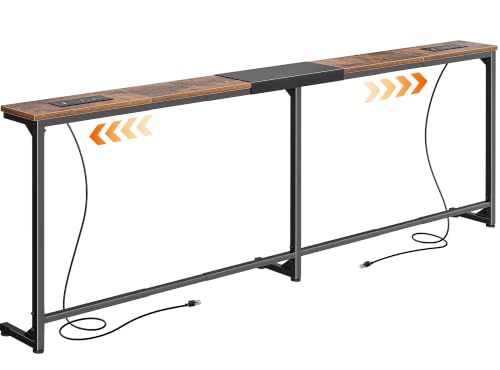
Huuger 63.4-78.3'' Extendable Behind Couch Table with Outlets, Rustic Brown | Stepless Length Adjustment, 2 Power Stations with USB-C Ports, Long Console Table, Slim Sofa Table 1ST082Z
Check price on Amazon
BROTTAR 78.7" Flip Top Behind Couch Table with Outlets and Storage, Brown | Narrow Console Table, Long Sofa Table with Charging Station, Entryway Tables for Living Room, Hallway
Check price on Amazon
Tribesigns Console Sofa Table, 70.9 inch Extra Long Table Behind Couch with Storage Shelves, 3-Tier Industrial Narrow Entryway Hallway Accent Table for Living Room, Rustic Brown
Check price on Amazon
Huuger 102.4 Inch Sofa Table with Power Outlets, Skinny Behind Couch Table | Console Table with USB-C Ports, 23.9’’-34.4’’ Height Adjustable Range, Sofa Tables Narrow Long for Small Spaces, Rustic Brown
Check price on Amazon
Huuger 110.2 Inch Behind Couch Table with 2 Power Outlets and USB-C Ports, Extra Long Narrow Sofa Table for Sectional Sofa, Skinny Console Table with Anti-Bump Pads, for Living Room, Rustic Brown
Check price on Amazon
BROTTAR 79" Long Behind Couch Table with LED Lights and Power Outlet, Brown | Industrial Behind Sofa Table with Bookcase & Human Body Sensor, Skinny Console Table with Storage for Living Room
Check price on Amazon
Tribesigns 70.9 Inch Extra Long Console Table, Modern Sofa Table Behind Couch Table with Storage Shelves, 3-Tier Industrial Hallway Entryway Table for Living Room, 3 Shelf Bookshelf(Brown)
Check price on AmazonReady to Reclaim the Space Behind Your Sofa?
Compare slim shelf units, check clearance requirements, and choose a design that fits your sofa height and room layout. The right unit adds storage, hides cables, and anchors your seating zone — all without expanding your floor plan.
View Shelf OptionsContinue exploring: If you prefer a table format with a flat work surface, the behind-the-couch table with storage pairs well with shelving for mixed storage. For rooms where power access matters, review the DIY outlet table approach. And if you are comparing narrow layouts, the skinny table with outlet guide covers clearance details that apply to shelves as well.