
Coffee Table with Side Table Set: The Complete Buying Guide
Learn how to choose a coordinated coffee table and side table set that anchors your living room, balances proportion, and elevates everyday function. From sizing rules to material tiers and layout planning, this guide gives you everything you need to decide with confidence.
Explore Recommended SetsWhy a coordinated set matters: A coffee table with side table set does more than fill floor space. Matching proportions, finishes, and design language create a visual rhythm that makes a living room feel intentional rather than assembled piece by piece. This guide walks you through the exact decisions buyers face — size, height, material, shape, and layout — so you can select a set that works for your room and your daily life.
What Exactly Is a Coffee Table with Side Table Set?
A coffee table with side table set is a coordinated grouping of living room tables designed to share the same material, finish, and style vocabulary. The set typically includes one central coffee table and two matching side tables (also called end tables), though some configurations offer nesting tables or a coffee table paired with a console or accent table. The purpose is functional and aesthetic: the coffee table anchors the seating area and provides a shared surface, while side tables deliver accessible, personal surfaces beside the couch or chairs for lamps, drinks, books, and remotes.
Buyers often approach this purchase after choosing a couch. If you are still in the seating phase, our couch buying guides can help you align the scale of your seating with the tables that will surround it. For rooms where the couch and tables are purchased together, a coordinated set removes the risk of mismatched heights and clashing finishes — a common frustration when pieces are sourced separately.
Key Benefits of Buying a Coordinated Table Set
Visual Cohesion
Shared finishes and proportions make the room feel designed, not assembled. The eye reads the tables as one deliberate grouping.
Proportion Confidence
Sets are designed to relate to each other in height and scale, reducing the guesswork around whether a side table will sit at a comfortable height beside the couch.
Time Efficiency
One decision instead of three. Coordinated sets simplify the buying process and eliminate the back-and-forth of matching separate pieces.
Consistent Material Quality
Pieces from the same set share construction standards, so you avoid a situation where one table feels sturdier than another.
Resale and Refresh Flexibility
A cohesive set holds its visual logic even if you change throw pillows, rugs, or artwork. The tables remain a stable foundation.
Layout Predictability
Knowing the exact footprint of all three tables lets you plan walkways and seating clearances before delivery day.
How to Size a Coffee Table and Side Table Set Correctly
Sizing is the single most common source of buyer regret with living room tables. A coffee table that is too large crowds the seating area and blocks movement; one that is too small looks lost and fails to serve its function. Side tables that sit too high or too low relative to the couch arm create awkward reach and visual imbalance. Use these rules as your baseline.
Coffee Table Proportions
The coffee table should measure roughly half to two-thirds the length of your couch. For a standard three-seat couch, that usually places the table in a range that leaves comfortable clearance on each side. Height matters too: the tabletop should sit at or slightly below the seat height of the couch, typically within a couple of inches. This keeps the surface within natural reach and maintains a clean sightline across the room. If you are working with a compact couch such as a couch and love seat combination, scale the coffee table down accordingly rather than defaulting to a full-size rectangular piece.
Clearance and Walkways
Leave 14 to 18 inches of clearance between the coffee table edge and the couch. This is the zone where legs swing, people rise, and drinks get set down. On the traffic side, aim for at least 24 inches of walkway clearance so people can pass without turning sideways. In narrow rooms, a round or oval coffee table preserves more usable walking space than a rectangular table of similar surface area. If your room is tight, review our small-room layout guidance for complementary space-planning ideas.
Side Table Height and Placement
Side tables should sit at or slightly below the armrest height of your couch — usually within an inch or two. This makes them comfortable to reach without leaning awkwardly. Place them at the ends of the couch or between the couch and an adjacent chair. In a conversation layout with two couches facing each other, side tables can also sit between the couches at the shared corner. For rooms anchored by a larger sectional, side tables often work best at the open ends, while a couch ottoman can serve the interior corner as a flexible surface.
Table Set Tiers: Matching Quality to Your Needs
Table sets span a wide range of construction quality and material sophistication. Rather than framing this around numbers, use the tier system below to understand what each level typically delivers. Choose the tier that matches your household's usage intensity and your design ambitions.
| Tier | Typical Construction | Best For | Durability Outlook |
|---|---|---|---|
| Entry-Level | Manufactured wood with veneer, basic hardware, simple assembly | First apartments, rental furnishing, low-traffic guest rooms | Adequate for light use; may show wear sooner in busy households |
| Mid-Range | Solid wood or mixed materials, reinforced joinery, better finishes | Family living rooms, everyday use, balanced design and resilience | Solid choice for the tier; handles daily life with reasonable care |
| Premium | Hardwood frames, stone or glass tops, precision hardware | Design-focused living rooms, high-visibility spaces | Long-term investment with proper maintenance |
| Luxury | Exotic woods, full-grain leather accents, artisanal finishing | Formal living rooms, collector-grade interiors | Flagship-tier construction intended for decades of use |
A mid-range set is usually the sweet spot for a primary living room: it offers competitive durability within its class without the upkeep demands of top-tier finishes. If your household includes pets or young children, prioritize reinforced joinery and easy-clean surfaces over delicate materials. Our guide to waterproof couch surfaces offers parallel thinking for seating that faces the same daily challenges.
Material Choices for Coffee and Side Table Sets
Material determines not only appearance but also maintenance rhythm and long-term wear. Here is how the major categories compare.
Solid Wood
Solid wood sets bring warmth, weight, and repairability. Scratches can often be sanded and refinished, making wood a genuine long-term investment. Oak, walnut, and acacia are common choices with distinct grain characters. Wood sets pair naturally with fabric and leather couches and work across traditional, transitional, and modern interiors. Keep wood out of direct sun and use coasters to prevent rings. For a vintage-leaning look, a wood end table set can anchor the grouping alongside a complementary coffee table.
Glass and Metal
Glass-top sets with metal frames create a lighter visual footprint, making them a strong choice for compact rooms. Glass is easy to wipe clean and resists staining, though it shows fingerprints and requires more frequent polishing. Metal frames — especially powder-coated or rust-proof finishes — deliver sturdy support with slim profiles. These sets suit modern and industrial aesthetics and pair well with modular or sectional seating. Consider a glass end table set if you want the side tables to visually recede while the coffee table carries more presence.
Stone and Marble
Stone-top sets sit in the premium and luxury tiers. They offer a cool, formal elegance and exceptional resistance to heat and scratches, but they are heavy and require careful placement to avoid chipping. Marble tops demand sealing and prompt cleanup of spills. These sets work best in low-traffic, design-forward living rooms or formal sitting areas where the table is a focal point rather than a workhorse.
Mixed Materials
Many mid-range and premium sets combine wood bases with stone or glass tops, or metal frames with wood surfaces. Mixed-material sets offer the best of both worlds: visual interest plus practical durability. They also bridge design styles more easily, which helps if you plan to evolve the room over time. If you are coordinating with a leather couch, a white leather couch pairs especially well with wood-and-metal mixed sets for a balanced contrast.
Choosing the Right Shape for Your Room
Shape affects flow as much as style. Rectangular coffee tables suit long, linear seating arrangements and large rooms where the table can sit parallel to the couch. Round and oval tables soften a room, eliminate sharp corners in tight spaces, and encourage circular conversation layouts. Square tables work well in compact, symmetrical seating areas and pair naturally with loveseats. Nesting sets offer flexibility: the smaller tables can be pulled out when guests need a surface and tucked away when the room needs open floor space.
The side tables should echo the coffee table's geometry without being identical. If the coffee table is round, round or drum-style side tables reinforce the language. If the coffee table is rectangular, square or slim rectangular side tables maintain the logic. A round coffee table paired with rectangular side tables can work, but it requires a deliberate design eye to avoid looking accidental. If you are drawn to circular forms, our round coffee table set overview explores how circular groupings behave in different room sizes.
Integrating the Set into Your Living Room Layout
The table set should reinforce the room's primary function. In a TV-viewing layout, the coffee table sits between the couch and the media console, with side tables flanking the couch for lamps and drinks. In a conversation layout, the coffee table anchors the center of the seating group, and side tables sit at the outer edges. In an open floor plan, the set can help define the living zone without walls. For more layout frameworks, see our living room layout guides.
Before ordering, map the footprint on the floor with painter's tape. Walk the path from the doorway to the couch, from the couch to the window, and around the coffee table. Confirm that drawers, doors, and reclining mechanisms have room to operate. If your seating includes a recliner, verify that the reclined footrest does not collide with the coffee table; a wall-hugger reclining loveseat can reduce the clearance needed behind the couch, but the front clearance still matters.
Pre-Purchase Checklist for Coffee and Side Table Sets
- Measure the couch length and confirm the coffee table is roughly half to two-thirds of that length.
- Verify the coffee table height sits at or slightly below the couch seat height.
- Check that side table height aligns with the couch armrest within an inch or two.
- Confirm 14 to 18 inches of clearance between the coffee table and the couch.
- Map walkways and ensure at least 24 inches of passage clearance on traffic sides.
- Match the material to your household: solid wood for repairability, glass for easy cleaning, stone for formal spaces.
- Decide on shape based on room proportions and seating geometry.
- Check assembly requirements and whether tools are included.
- Review the return policy and confirm the set can be delivered through your doorways.
- Plan lamp and decor placement so the side tables serve their intended purpose.
Recommended Coffee Table with Side Table Sets
⚠️ AFFILIATE DISCLOSURE: This website contains affiliate links. As an affiliate Associate, we earn from qualifying purchases. If you make a purchase through these links, we may receive a small commission at no additional cost to you. Read our full affiliate policy.

VEVOR 3 Pieces Living Room Table Sets, 41.3 in Industrial Coffee Table | For Office, Living Room and Apartment, Sturdy and Durable, with 2 Square End Side Tables, Easy Assembly, with Metal Legs
Check price on Amazon
LUXOAK 3 Piece Living Room Table Set with Barn Door, Barnwood | Includes Coffee Table and 2 End Tables, Charging Station &USB Ports, Rustic Farmhouse Style, Living Room Furniture Set
Check price on Amazon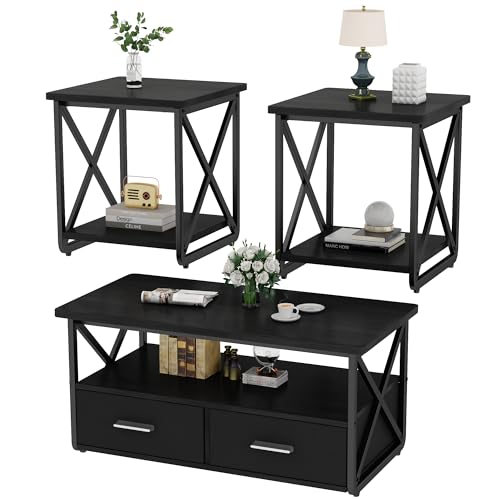
DKLGG 3 Piece Coffee Table Set for Living Room with Fabric Drawers and Storage Shelves, Rustic Wood and Metal Frame, Industrial Farmhouse Table with 2 End Tables for Small Spaces, Apartment, Black
Check price on Amazon
Nordivale Modern 3-Piece Living Room Table Set Black Finish, Black | LED Light Coffee Table and Pair of End Side Tables with Storage Drawers
Check price on Amazon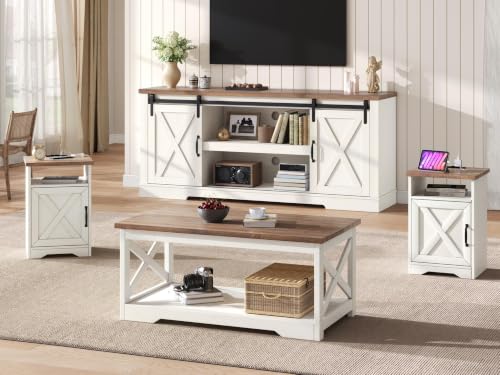
AMERLIFE 4 Piece Farmhouse Table Set with 66" TV Stand, Distressed White | Coffee Table & 2 End Tables, TV Stand with Sliding Barn Door Design, Charging Station, USB Ports, Living Room Furniture
Check price on Amazon
AMERLIFE 3 Piece Farmhouse Living Room Coffee Table Set, Distressed White | Coffee Table & 2 End Tables with Charging Station and USB Ports, Farmhouse Style, Barn Door Design, Living Room Furniture
Check price on Amazon
Rovibek Living Room Tables Set of 3, Large Coffee Table and End Table Sets | Coffee Table Set with Rounded Edges & Open Shelf Storage for Living Rooms, Offices, Walnut
Check price on Amazon
AWQM Coffee Table Set of 3, Industrial Coffee Table with 2 Square End Side Tables, Modern Living Room Table Set with Metal Frame for Apartment Home Office, Black
Check price on AmazonFrequently Asked Questions
A coffee table with side table set is a coordinated furniture grouping that includes a central coffee table and matching side or end tables designed to share the same material, finish, and style language. The set creates visual cohesion in a living room while serving different functions: the coffee table anchors the seating area, while side tables provide accessible surfaces for lamps, drinks, and personal items beside the couch.
Measure your seating area first. The coffee table should be roughly half to two-thirds the length of your couch, with 14 to 18 inches of clearance between the table edge and the couch for comfortable movement. Side tables should sit at or slightly below the armrest height of your couch and fit comfortably in the space between the couch and adjacent walls or chairs. Always map the footprint on the floor with tape before committing to a set.
The best material depends on your lifestyle and design goals. Solid wood sets offer durability and timeless warmth, making them a long-term investment for family living rooms. Glass-top sets create an airy, open feel in compact spaces and are easy to wipe clean. Metal-frame sets provide industrial character and sturdy support with a lighter visual footprint. Manufactured wood with veneer delivers consistent finishes at the entry-level and mid-range tiers, while stone or marble-top sets sit in the premium and luxury tiers for a more formal aesthetic.
Yes, mixing is a legitimate design approach, but it requires a unifying thread. Anchor the look with a shared material, a repeated finish tone, or a consistent geometric language. For example, pair a wood coffee table with metal side tables that share the same blackened finish as your lamp bases. If you prefer a low-effort, polished result, a coordinated coffee table with side table set removes the guesswork and guarantees visual harmony.
They can work beautifully if you choose the right configuration. Look for nesting sets, round or oval tables with no sharp corners, and sets with a slim profile or open bases that let the floor show through. A compact round coffee table paired with two small round side tables keeps the room feeling open while still delivering three functional surfaces. Avoid oversized rectangular sets with thick aprons in narrow rooms.
Maintenance depends on the material. Dust wood and metal surfaces weekly with a soft microfiber cloth. Use coasters under drinks to prevent rings on wood and stone. For wood, apply a furniture conditioner a few times a year to prevent drying and cracking. Glass tops should be cleaned with a non-ammonia glass cleaner. Avoid placing hot items directly on any surface, and lift rather than drag tables when rearranging to protect legs and flooring.