
Comfortable Sectionals for Small Spaces
A complete research-backed guide to choosing a compact, comfortable sectional that fits tight rooms without sacrificing seating, support, or style. Measure, compare, and buy with confidence.
Start the Buying FrameworkWhy this guide exists: If you are researching a sectional for an apartment, a condo, or a snug living room, you already know the product category you want. What you need now is clarity: which dimensions truly fit, which cushion constructions stay comfortable for years, and which layouts keep a compact room from feeling cramped. This guide answers those questions in a single, practical read so you can move from research to a confident purchase.
Recommended Comfortable Sectionals for Small Spaces
⚠️ AFFILIATE DISCLOSURE: This website contains affiliate links. As an affiliate Associate, we earn from qualifying purchases. If you make a purchase through these links, we may receive a small commission at no additional cost to you. Read our full affiliate policy.

Dravonlab Modular Cloud Couch, L Shaped Sofa Small Sectional Couch, Green
Check price on Amazon
110" Boneless Cloud Couch Sectional for Living Room, Oversized Modular L Shaped Sofa with Ottoman, Deep Seat Chenille Sectional Couch for Cloud-Like Comfort (Luxe White)
Check price on Amazon
SUAWY Sectional Sleeper Sofa, Pull Out Couch with Storage,Black,5 Seat | 5 Seat Comfy Couches for Living Room, Apartments, or Guest Spaces; Sectionals Modular Sofa Design, Comfortable Seating.
Check price on Amazon
EASE MOOSE Oversized L Shape Sectional Cloud Modular deep seat Sofa | extra large comfort Wide Deep Seat Couch,Modern Oversized Cloud Modular Sectional couch for Living Room ,Removable cover
Check price on Amazon
SUAWY Sectional Sleeper Sofa, Pull Out Couch with Storage,Lvory,5 Seat | 5 Seat Comfy Couches for Living Room, Apartments, or Guest Spaces; Sectionals Modular Sofa Design, Comfortable Seating.
Check price on Amazon
VINGLI 100" W U Shaped Couch with Ottoman, 22" Deep Seat Comfortable Sectional Couches for Living Room, 3 Seater Chenille Fabric Cloud Sofa for Apartment, Small Spaces, Bedroom, Grey
Check price on Amazon
VINGLI 100" W U Shaped Couch with Ottoman, 22" Deep Seat Comfortable Sectional Couches for Living Room, 3 Seater Chenille Fabric Cloud Sofa for Apartment, Small Spaces, Bedroom, Beige
Check price on Amazon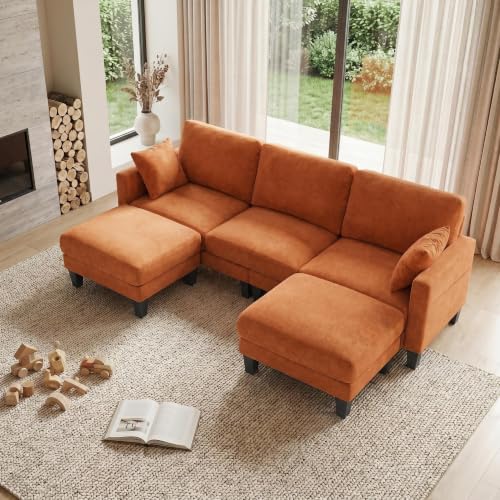
VINGLI 100" W U Shaped Couch with Ottoman, 22" Deep Seat Comfortable Sectional Couches for Living Room, 3 Seater Chenille Fabric Cloud Sofa for Apartment, Small Spaces, Bedroom, Orange
Check price on AmazonWhat Makes a Sectional "Comfortable" in a Small Space?
Comfort in a compact sectional comes from the balance of three factors: seat depth, cushion construction, and back support. A sectional can be small and still feel plush, provided the seat is deep enough for your body and the cushions recover properly after use. The challenge for small rooms is that oversized depth and broad arms consume floor space, so the best compact models use efficient proportions and supportive, high-resilience cores rather than thick, soft fill.
For a broader comparison of compact seating, read our guide to comfortable sectionals for small spaces alongside our comfortable couches for small spaces resource. Together they help you weigh whether a sectional or a standard couch better suits your layout.
Practical comfort signals to look for:
- High-resilience foam or pocketed coil cushions that retain shape under daily use.
- Seat depth between 20 and 23 inches — deep enough to relax, shallow enough to preserve walkways.
- Supportive back cushions that are firm enough to hold you upright while reading or entertaining.
- Sinuous spring or webbed suspension that distributes weight evenly across a compact frame.
- Reversible or flippable cushions to extend the comfortable lifespan of the seat.
Sizing Rules for Compact Sectionals
Small-space buying fails most often because the sofa arrives larger than the room allows. Treat these dimensions as a planning framework rather than a rigid rule:
| Room Type | Typical Sectional Width | Best For |
|---|---|---|
| Studio or very tight living room | 70–80 inches | Two-seat chaise sectionals, reversible loveseat sectionals |
| Apartment living room | 80–95 inches | L-shaped sectionals with a shallow chaise |
| Small family room | 95–110 inches | Modular sectionals with removable end units |
| Open-plan corner | 100–120 inches | Corner sectionals with a reversible orientation |
Tip: measure doorway width, hallway turns, and stairwell clearance before ordering. A sectional that fits the room but not the entry point is a common and avoidable problem.
Use a floor plan sketch to test walkway clearance. Aim for at least 30 inches of clear path between the sectional and nearby furniture or doorways. If your room is especially tight, our comfy couch for small living room guide offers additional layout ideas that pair well with sectional planning.
Layout Strategies That Keep a Small Room Open
The orientation of a sectional determines how open a room feels. A left-facing or right-facing chaise creates a natural conversation zone, while a reversible or modular sectional gives you the flexibility to rearrange as your needs change.
Anchor to a focal point
Place the sectional so the chaise or long side faces the television, fireplace, or window. This creates a single clear sightline and avoids the cluttered feel of furniture pointing in multiple directions.
Float only when there is room
Floating a sectional away from the wall can define a seating zone in open-plan rooms, but it consumes valuable circulation space in truly small rooms. Push the back against a wall or window when floor area is limited.
Choose the chaise side deliberately
If you have a left-facing wall, a chaise on the left keeps walkways clear. Reversible designs remove the guesswork. For alternative compact layouts, see our comfy couches for small spaces collection and the corner couches for small spaces guide.
Materials and Upholstery for Tight, High-Traffic Rooms
Small rooms are often high-traffic rooms, because every path passes close to the furniture. Upholstery choice matters as much as the frame. Performance fabric, microfiber, and tightly woven polyester blends resist stains and clean easily, while top-grain leather offers durability with a premium feel.
- Performance fabric: balanced tier of durability and easy maintenance; ideal for families and pets.
- Microfiber: soft hand feel with strong stain resistance; a solid choice for compact rooms.
- Top-grain leather: premium tier with a long service life; requires periodic conditioning.
- Velvet or textured weaves: high-end tier visual appeal; best in low-traffic corners.
Light neutral upholstery — oatmeal, warm gray, soft cream — makes compact spaces feel larger. If you want a deeper tonal look, pair a mid-tone sectional with light walls and a reflective coffee table. Our comfortable leather sectional couches guide covers leather care in more detail.
Comfort Features Worth Prioritizing
Comfort in a compact sectional is not about bulk; it is about support and adjustability. Prioritize the following features when comparing models:
- Pocketed coil or high-resilience foam seat cores: they hold their shape longer than low-density foam.
- Reversible cushions: flipping extends comfort life and evens out wear.
- Removable, washable covers: practical for small rooms where spills are frequent.
- Modular connectors: keep sections aligned and prevent gaps from opening between seats.
- Low-profile arms: slim or track arms free up seating width within the same overall footprint.
Comfort reality check: a compact sectional with a supportive seat core will feel more comfortable over five years than a soft, deep model that sags early. Spend your attention on cushion construction, not just initial plushness.
Sectional vs. Standard Couch in a Small Room
A sectional offers more seating per square foot because it uses a corner efficiently. A standard couch, by contrast, leaves a corner open for a side table or floor lamp. If your room is rectangular and narrow, a compact sectional with a shallow chaise often seats more people than a standard three-seater of the same width.
If you are undecided, compare our comfortable sectional couch overview with the comfy couch guide. For layouts that need flexible sleeping arrangements, explore comfortable couches to sleep on and the comfy sleeper couch collection.
Assembly, Delivery, and Room Access
Compact sectionals frequently ship in two or three boxes, which makes them easier to maneuver through narrow hallways and stairwells. Before ordering, confirm:
- Doorway and hallway width versus the largest box dimension.
- Whether the sectional ships fully assembled or requires leg and connector installation.
- Whether the chaise is reversible and can be switched after delivery.
- Whether the retailer offers room-of-choice delivery for upper-floor apartments.
Modular sectionals are especially renter-friendly because individual pieces can be moved separately. Our comfy sectional couch for small spaces article highlights modular options that suit frequent rearranging.
Tier Comparison: What Changes as You Move Up
Use this relative tier framework to set expectations. It intentionally avoids absolute figures and focuses on the features that improve as you move up the market.
| Tier | Typical Characteristics | Best For |
|---|---|---|
| Entry-level | Basic foam cushions, simpler frames, limited fabric options | Guest rooms, first apartments, short-term setups |
| Mid-range | High-resilience foam or pocketed coils, reversible cushions, broader upholstery selection | Daily family use, renters who want durability |
| Premium | Reinforced hardwood frames, performance fabrics, modular connectors, deeper seat engineering | Long-term living rooms and high-traffic homes |
| Luxury / high-end tier | Top-grain leather or designer textiles, tailored joinery, custom configurations | Design-led spaces and long-term investments |
Models in the mid-range tier usually offer the best balance of comfort engineering and durability for compact rooms.
Common Mistakes to Avoid
- Buying by width alone: depth and chaise length matter just as much in a small room.
- Ignoring the entry path: a sectional that cannot fit through the door is not a deal.
- Choosing softness over support: plush cushions compress quickly in daily use.
- Overlooking walkway clearance: leave at least 30 inches for comfortable circulation.
- Forgetting cushion maintenance: reversible and removable covers extend comfort life substantially.
Frequently Asked Questions
What size sectional is best for a small living room?
A compact sectional measuring roughly 70 to 90 inches wide with a shallow chaise often suits small living rooms best. Always measure your room, walkways, and doorways before buying, and favor modular or reversible designs that adapt to tight layouts.
Are sectionals comfortable in small spaces?
Yes. Modern compact sectionals use high-resilience foam, sinuous spring decks, and supportive back cushions to deliver full-size comfort in a smaller footprint. Look for models with deep enough seats and firm yet yielding cushion cores.
Should I choose a left-facing or right-facing sectional?
Choose the orientation based on where the chaise should sit in your room. A left-facing sectional places the chaise on the left when you face the sofa. Reversible and modular designs remove this limitation entirely and are ideal for renters or frequently rearranged rooms.
What material is best for a small-space sectional?
Performance fabric, microfiber, and tightly woven upholstery resist stains and wear well in compact high-traffic rooms. Leather and top-grain leather are durable but require conditioning. Light neutral tones make small rooms feel larger, while removable covers simplify cleaning.
How do I make a sectional feel less bulky in a small room?
Choose a low-profile silhouette, exposed or tapered legs, and light upholstery to reduce visual weight. Keep the chaise oriented toward the room's focal point, leave breathing room around walkways, and use a glass or nesting coffee table to preserve sightlines.
Final Buying Checklist
- Room width and depth measured, with walkways marked on a floor plan.
- Doorway, hallway, and stairwell clearance confirmed against box dimensions.
- Seat depth and cushion construction verified for daily comfort.
- Upholstery chosen for traffic level, pets, and cleaning routine.
- Chaise orientation matches the room's focal point.
- Modular or reversible features selected for future flexibility.
- Delivery method and assembly requirements confirmed with the retailer.
When you are ready to broaden your research, our comfortable living room furniture for small spaces guide covers coordinating tables, lighting, and storage. For seating that adapts to overnight guests, compare the comfortable pull-out couch and compact sleeper sofa options before finalizing your sectional choice.