
Corner Couch That Turns Into a Bed: The Complete Guide
One piece of furniture, two purposes: a comfortable corner seat for everyday living and a full sleep surface for guests. This guide explains mechanisms, sizes, materials, and layout so you can choose the right corner sleeper couch with confidence.
Jump to Buying ChecklistWhy this guide matters: A corner couch that turns into a bed is one of the most practical investments for a living room, guest room, home office, or studio. It saves floor space, eliminates the need for a separate guest bed, and gives your room a flexible layout. But the wrong mechanism or an undersized sleep surface can turn a smart purchase into a daily frustration. Below, we break down everything you need to evaluate before you decide.
What Is a Corner Couch That Turns Into a Bed?
A corner couch that turns into a bed is an L-shaped or sectional sofa with a built-in sleep function. Unlike a standard sleeper sofa, the corner configuration uses the chaise or the extended section to create a larger, more stable sleep surface. The conversion can happen in several ways: a pull-out mechanism that slides a mattress frame forward, a fold-down backrest that lays flat, or a trundle section that rises to meet the seat height.
Because the seating area wraps around a corner, these models make efficient use of a room's geometry. They anchor a living zone, define the boundary between seating and circulation, and often include hidden storage in the chaise. For households that host overnight guests regularly, a couch designed for comfortable sleeping is worth prioritizing over a purely decorative model.
It is useful to distinguish three broad categories. A corner couch with a pull-out bed uses a metal frame and a folded mattress. A corner sectional with a pull-out bed adds a larger seating footprint and often a chaise storage compartment. A convertible couch bed may rely on a simpler fold-flat design that suits occasional use. Each has a different footprint, weight, and durability profile.
Sleep Mechanisms Compared
The mechanism determines how often you can use the bed, how much clearance you need, and how comfortable the sleep surface feels. Most buyers underestimate the importance of this component. A sturdy mechanism with a thick mattress is the difference between a guest waking up refreshed and a guest waking up on a bar.
Fold-Down Backrest
The backrest folds flat to create a sleep surface. Simple, lightweight, and easy to operate. Best for occasional hosting in a secondary room. The sleep surface is thinner, so a mattress topper improves comfort.
Trundle Corner Section
A hidden section slides or pops up to meet the main seat. Works well in compact rooms because it does not require deep front clearance. The sleep area is usually narrower than a pull-out.
Pull-Out Frame
A reinforced metal frame unfolds a foam or spring mattress. The most comfortable and durable option for frequent guests. Requires clear floor space in front of the chaise when open.
Premium Pull-Out with Air or Hybrid Mattress
Heavy-duty frame, high-density foam or hybrid mattress, and smooth gliding hardware. Built for daily conversion and long-term use. Typically found in flagship and professional-grade collections.
If the couch will be converted more than twice a week, prioritize a premium pull-out frame. If it is a guest-room backup used a few times a year, a fold-down or trundle design is a sensible, space-efficient choice. For a deeper comparison of sleep-focused seating, see our guide to comfy couch beds and convertible couches.
Sizes, Footprints, and Room Layout
Measure three dimensions before you shop: the closed footprint, the open footprint, and the height of the sleep surface. The closed footprint tells you whether the couch fits the wall. The open footprint tells you whether the bed blocks a doorway, a walkway, or a TV console. The sleep surface height tells you how easy it is to get in and out.
In a small living room, a compact L-shaped model with a chaise on one side and a pull-out on the other preserves circulation. Place the chaise against the wall and leave the pull-out side facing open floor. If the room is narrow, a small corner couch or a compact sleeper sofa keeps the layout workable. For tighter footprints, review corner couches for small spaces and comfortable couches for small spaces.
In an open-plan room, the corner couch can act as a room divider. Orient the back of the chaise toward the dining area and the seat toward the focal wall. Keep at least a comfortable walking path between the extended bed and the nearest furniture. If the room doubles as a home office, confirm that the open bed does not collide with a desk or a filing cabinet. Our living room furniture guide for small spaces covers these trade-offs in more detail.
For a dedicated guest room, a larger comfortable sectional couch with a queen sleep surface offers hotel-like proportions. If the room must serve as a bedroom every night, a queen-size pull-out couch is the more practical long-term choice.
Upholstery and Frame Materials
The upholstery on a convertible corner couch takes more stress than on a fixed sofa. The fabric or leather must tolerate repeated folding, sliding, and compression around the mechanism. Performance fabric and top-grain leather are the most reliable choices. Performance weaves resist stains and spills, which matters in a room used for both lounging and sleeping. Leather is easy to wipe clean and holds its shape around moving parts, but it can feel cool in a guest room and may show scratches in pet households.
Velvet and textured weaves look elegant but require more care around the mechanism. If you choose velvet, confirm that the nap direction and pile height do not interfere with the fold. For a broader material comparison, read our notes on comfy couches and cotton couches.
The frame matters just as much as the fabric. Look for hardwood or engineered hardwood, reinforced corner blocks, and a metal sleep mechanism rated for the size of the mattress. A solid build with a rust-proof finish on the metal parts is a worthwhile investment for a piece you plan to keep for years. Heavy-duty hardware and reinforced joints are especially important on larger corner sectionals, where the sleep surface spans a wider opening.
Corner Sleeper Types at a Glance
| Type | Tier | Best For | Space Consideration |
|---|---|---|---|
| Fold-down corner couch | Entry-level | Occasional guests, secondary rooms | Needs clearance behind the backrest |
| Trundle corner section | Mid-range | Compact apartments, studio living | Minimal front clearance; narrower sleep area |
| Pull-out corner couch | Premium | Frequent hosting, guest rooms | Requires open floor in front of chaise |
| Premium pull-out sectional | Luxury / flagship | Daily conversion, long-term use | Largest footprint; plan the room around it |
| Convertible chaise couch | Mid to premium | Reading nooks, flexible lounging | Chaise length affects walkway width |
Use this table as a starting filter, then narrow your shortlist by mattress thickness, mechanism warranty, and the exact open dimensions. A model that looks ideal on a product page can still fail the doorway-clearance test in your room.
Recommended Corner Sleeper Couches
⚠️ AFFILIATE DISCLOSURE: This website contains affiliate links. As an affiliate Associate, we earn from qualifying purchases. If you make a purchase through these links, we may receive a small commission at no additional cost to you. Read our full affiliate policy.

LITVZ Oversized Modular Sectional Sleeper Sofas with Pull Out Bed, Comfy Cloud Sectional Couches with Storage, Convertible L Shaped, U Shaped, V Shaped Corner Couch That Turns Into Bed for Living Room
Check price on Amazon
Trygoal 95" King Size Sofa Bed, 3-in-1 Convertible Pull Out Couch, Couch with Side Pocket, Couch that Turns into Bed, Sleeper Sofa Bed for Living Room, Apartment, Small Space, Blue
Check price on Amazon
ERYE L-Shaped Pull Out Sleeper Couch Bed, Modern Chenille Upholstered Button Tufted Corner Couch Reversible Sectional Sleeper Sofa Bed W/Storage Chaise, Cup Holders
Check price on Amazon
Trygoal Queen Sofa Bed, 3-in-1 Convertible Pull Out Couch, Corduroy Couch with Pull Out Bed, Couch that Turns into Bed, Sleeper Sofa Bed for Living Room, Apartment, Small Space, Blue
Check price on Amazon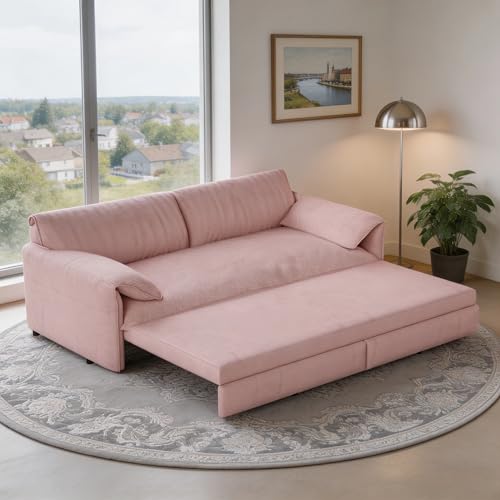
Trygoal 66" Queen Sofa Bed, 3-in-1 Convertible Pull Out Couch, Velvet Couch with Side Pocket, Couch that Turns into Bed, Sleeper Sofa Bed for Living Room, Apartment, Small Space, Pink
Check price on Amazon
Trygoal Queen Sofa Bed, 3-in-1 Convertible Pull Out Couch, Corduroy Couch with Pull Out Bed, Couch that Turns into Bed, Sleeper Sofa Bed for Living Room, Apartment, Small Space, Grey
Check price on Amazon
JASIWAY Convertible Sofa Chair Bed, 37" Mid-Century Sleeper for Adults | 3 in 1 Futon Chair that Turns Into Bed, Guest Bed for Small Spaces, Adjustable Backrest, Throw Pillow, Ergonomic, Linen
Check price on Amazon
ERYE L-Shaped Pull Out Sleeper Couch Bed, Modern Chenille Upholstered Button Tufted Corner Couch Reversible Sectional Sleeper Sofa Bed W/Storage Chaise, Cup Holders
Check price on AmazonBuying Checklist Before You Decide
Use this checklist to verify the practical details that product descriptions often gloss over. A few minutes of measuring and testing prevents most returns.
- Measure the open footprint, not just the closed one. Add the extended sleep surface depth to the sofa depth and confirm the total fits the room.
- Check doorway and stair clearance. A corner sectional often ships in modules; confirm that each module fits through the narrowest door and stairwell turn.
- Test the mechanism in person if possible. Operate the pull-out or fold-down several times. Listen for grinding, wobbling, or uneven travel.
- Confirm the mattress thickness and type. A thicker, high-density foam or hybrid mattress is more comfortable for adults and holds up better over time.
- Verify the sleep surface dimensions. A full or queen surface is comfortable for two adults; a twin or narrower surface suits one person or children.
- Look for reinforced corner joints and a solid frame. Heavy-duty hardware and rust-proof finishes extend the life of the mechanism.
- Choose performance fabric or top-grain leather. These materials resist stains and wear around moving parts and high-traffic seating.
- Check the return policy and mechanism warranty. A sleep mechanism is the most likely component to need service; a clear warranty reduces risk.
- Plan the lighting and outlet placement. A guest sleeping in the living room needs a nearby lamp and a place to charge a phone.
- Consider storage in the chaise. A lift-up chaise compartment holds bedding and pillows, which keeps the room tidy between visits.
Common Mistakes to Avoid
The most frequent regret buyers report is buying a corner sleeper that is too large for the room once opened. The second is choosing a mechanism that is difficult to operate, which discourages use. Before you commit, walk through the conversion in the actual room and imagine the bed fully extended. If the open bed blocks the only path to the kitchen or bathroom, the layout will not work for guests.
Another common issue is skipping the mattress upgrade. Many entry-level models include a thin mattress that is adequate for a night or two but uncomfortable for a longer stay. If hosting is a core use case, a mid-range or premium model with a thicker mattress is a better long-term decision. For more sleep-focused options, explore comfy sleeper couches and comfortable pull-out couches.
Finally, do not ignore the room's other functions. A corner sleeper couch in a living room must coexist with a coffee table, a media console, and lighting. Choose a model with a low back and slim arms to keep sightlines open, and consider a couch and chair arrangement for a small living room if the corner sofa alone leaves the room feeling sparse.
Care and Maintenance for Convertible Corner Couches
Regular maintenance keeps the mechanism smooth and the upholstery presentable. Vacuum the seat and mattress surfaces monthly, and rotate or flip the mattress if the manufacturer allows it. Lubricate the metal mechanism according to the manual, and remove dust and debris from the tracks. For upholstery, follow the cleaning code on the tag: water-based cleaners for most performance fabrics, leather conditioner for top-grain leather, and professional cleaning for delicate weaves.
If you have pets or children, protect the seat with a washable cover and keep the open bed area clear of sharp toys and hard objects. For deeper cleaning guidance, see our couch care resources and the washable couch covers guide.
Frequently Asked Questions
What is the difference between a corner sleeper couch and a regular sleeper sofa?
A regular sleeper sofa is usually a straight three-seater with a fold-out bed. A corner sleeper couch adds an L-shaped or sectional footprint, which creates a larger seating area and often a bigger sleep surface. The corner configuration also uses the room's geometry more efficiently, but it requires more careful measuring because the open bed extends from the chaise.
How much space do I need in front of a pull-out corner couch?
You need the depth of the extended sleep surface plus a small margin for walking. Measure the open footprint from the front of the chaise to the far edge of the mattress, then add a comfortable path. If the room is tight, a trundle or fold-down model may be a better fit than a deep pull-out.
Can I use a corner couch bed as my main bed?
Yes, if you choose a premium or luxury tier model with a thick mattress and a heavy-duty mechanism. These are designed for frequent conversion and provide a stable, comfortable sleep surface. For daily use, prioritize a reinforced frame and a high-density foam or hybrid mattress over a thin entry-level pad.
What is the best fabric for a corner couch that converts into a bed?
Performance fabric and top-grain leather are the most practical choices. They resist stains, clean easily, and hold up around the moving parts of the mechanism. Velvet and delicate weaves look elegant but require more care. Always check the cleaning code before treating a spill.
Do corner sleeper couches come in modular pieces?
Many sectional and modular models ship in two or three pieces that connect on site. Modular designs make delivery easier and let you reconfigure the layout later. Confirm the number of boxes, the weight of each module, and whether the pieces fit through your doorways and stairwell.
How do I keep the sleep mechanism working smoothly?
Vacuum the tracks monthly, remove debris, and lubricate the metal parts according to the manufacturer's instructions. Avoid forcing the mechanism if it binds, and do not exceed the weight rating. If the mechanism becomes difficult to operate, contact the retailer or manufacturer before applying extra force.
Ready to Choose Your Corner Sleeper Couch?
Start with the checklist above, measure your open footprint, and compare the top options in the recommended section. A well-chosen corner couch that turns into a bed gives you a comfortable living space by day and a reliable guest bed by night.
Explore Recommended ModelsRelated Guides
Expand your research with these related articles: corner couch fundamentals, corner sectional couches, couches that convert to beds, compact couch beds, cool couches that turn into beds, comfortable sectional couches, corner couches for bedrooms, and the complete couch buying guide.