
Couch That Flips Into a Bed: The Complete Guide
Understand how flip couches work, which mechanisms and materials matter, and how to choose a dual-purpose couch that fits your space and sleeping needs.
Why this guide matters: A couch that flips into a bed solves a very specific problem — you need comfortable seating by day and a real sleeping surface by night, without the bulk of a traditional sleeper sofa. This guide walks you through the mechanism, the trade-offs, and the practical checks that separate a good flip couch from a frustrating one.
What Is a Couch That Flips Into a Bed?
A flip couch — sometimes called a flip sofa, flip-down couch, or flip sleeper — is a dual-purpose seating piece built around a hinged conversion mechanism. Instead of storing a separate mattress inside the frame like a pull-out sleeper, the flip couch transforms by rotating its seat platform forward and folding the backrest flat. The result is a continuous, level sleeping surface made from the couch's own cushions and support deck.
This design approach has a few practical consequences. Because there is no internal mattress cavity, flip couches tend to have a slimmer profile and lighter frame than conventional sleeper sofas. That makes them a natural fit for apartments, guest rooms, home offices, and any space where furniture has to work twice as hard. If you are exploring the broader category of convertible seating, our guide to a couch that can be a bed covers the full range of options beyond the flip mechanism.
It is worth distinguishing the flip couch from closely related designs. A couch that folds down into a bed typically uses a backrest that reclines flat, while a couch that unfolds to a bed often relies on a bi-fold or tri-fold platform. The flip couch sits in this family of folding designs, and understanding the differences helps you compare models accurately.
How the Flip Mechanism Works
Most flip couches share a similar architecture: a seat deck mounted on a pivot or hinge, a backrest that folds forward or backward, and a locking system that secures the couch in both seating and sleeping positions. When you convert the couch, the seat platform swings out and down while the backrest drops to meet it, creating one flat plane.
The quality of this mechanism is the single most important factor in long-term satisfaction. Entry-level flip couches often use simple pin hinges and lighter steel, which can develop wobble over time. Mid-range models typically add reinforced hinge plates and smoother locking hardware. Premium and high-end tier flip couches use heavy-duty steel frames, precision hinges, and damped folding actions that feel controlled rather than abrupt.
If you are comparing the flip design against other conversion styles, it helps to look at a couch that turns into a bed and a couch that transforms into a bed side by side. The flip mechanism generally offers the fastest conversion — often under ten seconds — with the fewest moving parts.
Types of Flip Couches
Flip couches are not a single product category. They vary by mechanism style, size, and intended use. The table below compares the main types using a neutral tier system rather than any numeric figures.
| Type | Best For | Typical Tier | Key Consideration |
|---|---|---|---|
| Standard flip sofa | Guest rooms and home offices | Entry-level to mid-range | Simple hinge, occasional overnight use |
| Flip sofa with storage | Small apartments and multipurpose rooms | Mid-range | Storage cavity reduces cushion thickness |
| Reinforced flip sleeper | Frequent guest use and rentals | Premium to high-end tier | Heavy-duty hinges and denser foam |
| Modular flip couch | Flexible living spaces | Mid-range to premium | Sectional reconfiguration options |
| Flip loveseat | Compact rooms and studios | Entry-level to mid-range | Twin-size sleeping surface only |
Within these types, the sleeping surface size varies considerably. A compact flip loveseat usually produces a twin-size surface, while a full-size flip sofa can accommodate two sleepers. If you need a larger conversion, explore our guide to a couch that converts to a queen bed to understand what dimensions to look for.
Flip Mechanism vs. Other Conversion Styles
Buyers often arrive at the flip couch after considering other convertible designs. Each mechanism has distinct strengths, and the right choice depends on how often you will convert the couch and how much space you have.
| Mechanism | Conversion Speed | Space Needed | Best For |
|---|---|---|---|
| Flip hinge | Very fast | Moderate | Daily or frequent conversion |
| Pull-out sleeper | Moderate | Large | Dedicated guest rooms |
| Fold-down backrest | Fast | Moderate | Living rooms with open floor space |
| Unfold platform | Moderate | Moderate to large | Flexible lounging and sleeping |
The flip mechanism's main advantage is speed and simplicity — there are no loose mattress sections to retrieve and no deep clearance needed behind the couch. If you are weighing the flip design against a couch that pulls out into bed, the key difference is that a pull-out requires room behind the frame for the mattress to extend.
What to Look For in a Flip Couch
Because the flip couch is a mechanical product, the buying decision should focus on construction quality rather than surface appearance. The following criteria separate durable models from ones that wear out quickly.
1. Frame and Hinge Quality
The frame should be solid hardwood or high-grade steel. Hinges should be reinforced, ideally with locking plates that hold the couch rigidly in both positions. A loose or rattling hinge is the first sign of a weak mechanism. Look for models that specify heavy-duty or commercial-grade hardware if the couch will be converted daily.
2. Cushion Density and Sleeping Comfort
The sleeping surface of a flip couch is formed by its own cushions, so cushion quality directly determines comfort. High-density foam holds its shape and distributes weight better than low-density fill. Many buyers find that mid-range flip couches offer a reasonable balance between seating firmness and sleeping support. Our article on couch cushion types explains the density and fill options in more detail.
3. Sleeping Surface Size
Always check the open dimensions. A couch that looks generous when closed may produce a surface that is shorter or narrower than expected. Measure the length and width of the flat position, and compare against the dimensions of the bed you want to replace. If you need more flexibility in sleeping arrangements, a couch that doubles as a bed guide can help you compare size classes.
4. Upholstery Durability
Flip couches experience more friction than standard sofas because the cushions and fabric flex during every conversion. Tight-weave fabrics and performance upholstery resist wear better than loose knits. Leather and faux leather are easy to clean but can crease along fold lines. Review our guide to couch fabric types before committing to a material.
5. Weight and Mobility
If the couch will be moved or converted often, weight matters. A lighter frame is easier to reposition, but should not come at the expense of stability. Check whether the model includes glides or removable legs that simplify moving.
6. Storage and Accessories
Some flip couches include under-seat storage, which is useful in small rooms but can reduce the thickness of the sleeping cushion. Decide whether storage or sleeping comfort takes priority. If you are furnishing a compact space, our guide to a couch for small space with storage explores the trade-offs.
Advantages and Limitations of Flip Couches
No convertible furniture is perfect for every situation. Understanding the trade-offs helps you set realistic expectations.
Advantages
- Fast conversion: The flip action takes seconds and requires no mattress retrieval.
- Compact footprint: No internal mattress cavity means a slimmer profile than most sleeper sofas.
- Simple mechanism: Fewer moving parts than pull-out designs, which can mean fewer failure points.
- Versatile placement: Works in apartments, home offices, guest rooms, and multipurpose spaces.
- No rear clearance: Unlike pull-out sleepers, flip couches do not need space behind them.
Limitations
- Sleeping surface is cushion-based: Comfort depends heavily on foam density rather than a dedicated mattress.
- Fold lines: The conversion creates seams in the sleeping surface that some sleepers notice.
- Mechanism wear: Entry-level hinges can loosen with heavy use.
- Size constraints: Compact models usually convert to twin or full size, not queen or king.
If your priority is a dedicated mattress feel, a couch set with pull-out bed may be a better fit. If speed and simplicity matter more, the flip design is the stronger choice.
Placement and Room Planning
A flip couch needs clearance in front of it so the seat platform can swing out. As a rule, leave at least the couch's open depth in free floor space when the couch is in sleeping position. In tight rooms, that clearance requirement may rule out certain placements, such as directly facing a wall or a fixed coffee table.
For small living rooms, the flip couch is often the most space-efficient convertible option. Our guide to couch designs for small living room includes layout examples that account for conversion clearance. In a studio or multipurpose room, positioning the couch so that the sleeping surface extends into the room's main walkway usually works better than pushing it against a corner.
If the couch will also serve as the main seating for a living area, consider how the conversion affects surrounding furniture. A couch table or couch tray may need to be moved before converting. Planning the room around the flip action avoids daily frustration.
Maintenance and Longevity
Flip couches reward simple, consistent maintenance. The mechanism is the most vulnerable component, so keep it clean and free of debris. Vacuum the hinge area periodically and check for loose screws or worn hinge plates. Lubricate metal hinges only with products recommended by the manufacturer — silicone-based lubricants are generally safe, while oil-based products can attract dust.
Cushions should be rotated regularly to distribute wear evenly across the seating and sleeping surfaces. If the couch uses removable covers, wash them according to the care label to prevent fabric fatigue along fold lines. For deeper cleaning, our guide to couch deep cleaning service explains when professional cleaning is worthwhile.
Protect the upholstery from sun exposure if the couch sits near a window. Prolonged UV exposure weakens fabric fibers and accelerates fading, especially on fold lines. A couch protection cover can extend the life of the fabric if the couch doubles as a daily sleeper.
Who Should Buy a Couch That Flips Into a Bed?
The flip couch is a strong fit for several specific buyer profiles. It suits apartment dwellers who need a guest sleeping option without dedicating a room to it. It works well in home offices that occasionally host overnight visitors. It is a practical choice for renters who move frequently, since the lighter frame and simpler mechanism are easier to transport than a heavy sleeper sofa.
It is a weaker fit for households that need a permanent, every-night bed with mattress-grade support, or for large families that regularly host multiple overnight guests. In those cases, a dedicated couch that turns into queen bed or a traditional sleeper sofa may serve better.
Pet owners should also consider fabric durability, since claws and fur accelerate wear along fold lines. Our guide to a couch good for pets covers upholstery and frame considerations for households with animals.
Final Buying Checklist
Before you commit to a flip couch, run through these checks:
- Measure the open sleeping dimensions, not just the closed footprint.
- Confirm the hinge type and whether the mechanism locks firmly in both positions.
- Check cushion density and ask whether the foam is high-density or standard.
- Verify clearance requirements for the flip action in your room.
- Review the upholstery care instructions and fold-line durability.
- Confirm assembly requirements and whether the mechanism arrives pre-assembled.
- Check the warranty coverage for the frame and hinge mechanism specifically.
If you are still comparing conversion styles, our overview of a couch that goes into a bed and a couch that lays flat into a bed will help you narrow the field before you decide.
Frequently Asked Questions
How does a couch that flips into a bed work?
A flip couch uses a hinged mechanism that lets the seat platform rotate forward and down, while the backrest folds flat to create a continuous sleeping surface. Unlike pull-out sleeper sofas, there is no separate mattress stored inside the frame.
Is a flip couch comfortable for everyday sleeping?
Comfort depends on cushion density and mechanism quality. Mid-range and premium flip models with high-density foam and reinforced hinges can support regular overnight use, while entry-level models are better suited to occasional guest sleeping.
What size bed does a flip couch create?
Most flip couches convert into a twin or full-size sleeping surface. Some larger models offer a queen conversion. Always verify the open dimensions, not just the closed footprint, before purchasing.
Do flip couches require assembly?
Many flip couches ship with the mechanism pre-assembled and require only leg attachment or minor hardware installation. Check the product documentation for assembly requirements and required tools.
Can a flip couch replace a guest bed?
Yes, for occasional guests. A flip couch with a full-size sleeping surface and high-density cushions can serve as a guest bed in a home office or studio. For frequent, long-term sleeping, a dedicated bed or a sleeper sofa with a mattress is usually more comfortable.
Recommended Flip Couches & Convertible Sofa Beds
⚠️ AFFILIATE DISCLOSURE: This website contains affiliate links. As an affiliate Associate, we earn from qualifying purchases. If you make a purchase through these links, we may receive a small commission at no additional cost to you. Read our full affiliate policy.

AMERLIFE 106" Sleeper Sofa, Sectional with Pull Out Bed with Storage, Gray | Pull Out Couch Bed with Memory Foam Mattress, Resilient Cushion, Fluffy Backrest, Sofa Bed for Living Room
Check price on Amazon
Ressainic Folding Sofa Bed, Convertible Sleeper Chair Bed with Pillow | Foldable Couch Bed, Fold out Chair Bed, Foam Floor Futon Sofa Bed for Living Room Bedroom Guest Room, Dark Grey, Single
Check price on Amazon
79" Convertible Futon Sofa Bed,Boneless Couch for Living Room,Black Couch | Corduroy Boneless Sofa Bed, Modular Loveseat Sleeper Sofa, Couch Bed with Removable Arms and Covers, 2 Pillows, No Assembly
Check price on Amazon
HILERO Folding Sofa Bed, Convertible Sleeper Chair Bed, Floor Sofa with Bag | Fold out chair bed/ couch bed, Foam floor futon sofa bed with pillow for guest/ visitor use as temporary floor bed, for adult
Check price on Amazon
Convertible Sofa Bed ,Boneless Couch Futon sleeper Bed, Modular Couches in a Box with Pull-Out Bed, Boneless Loveseat for Living Room, Small Space Apartment, No Assembly (Beige, 53.15"Double Sofa)
Check price on Amazon
COTOSOF Folding Sofa Bed, Convertible Sleeper Chair with Pillow for Bedroom | 3-in-1 Boneless Futon Couch Bed, Corduroy Foldable Floor Lounger Sofa with Backrest Frame for Living Room, Dark Gray
Check price on Amazon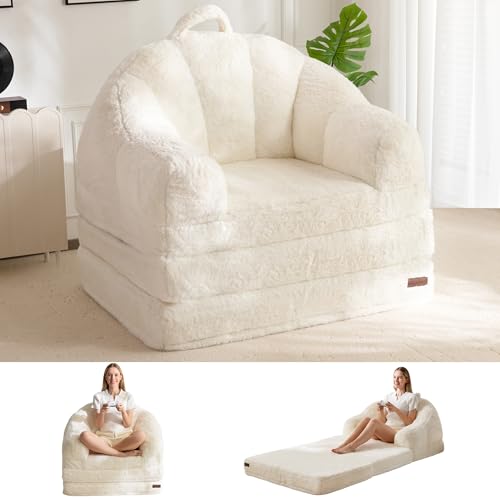
MAXYOYO Folding Sofa Bed, 2 in 1 Convertible Sofa to Lounger | Comfy Single Bean Bag Chair for Adults, Floor Couch with Handle, Faux Fur Couch Bed for Living Room Bedroom, Beige
Check price on Amazon